

The topic of this article in our Vehicle Maintenance and Repair section will be the problem of oil consumption in the engine and its solution. Why does the engine burn too much oil? What is the reason the engine burns too much oil? How can it be prevented? We’ll cover this topic.
Why Does the Engine Burn Too Much Oil
Actually, what’s being discussed here is what’s known as an oil consumption problem in the engine. However, drivers often describe this in a way that can be confused with an oil-burning problem (the engine oil actually burning), saying the engine is burning too much oil.
A problem many drivers run into is the engine consuming too much oil. And the engine burning too much oil doesn’t just mean extra engine-oil expense. This problem is actually caused by certain other faults in the engine components, and if it isn’t diagnosed and fixed, it invites even bigger faults down the road. If the oil consumption problem is taken lightly, it can end up seizing the engine bearings, and that will cost you far more than the maintenance would have.

Diagram showing the circulation of engine oil (above)
So why does the engine burn too much oil? Actually, oil consumption in the engine is seen more often in LPG-fueled vehicles. If the engine’s oil consumption is high, there can be various reasons for this. These are usually issues related to the engine components.
Reasons the Engine Burns Too Much Oil
If the engine is burning too much oil, the first thing to do is diagnose the fault. This problem is usually caused by worn pistons and piston rings, and when encountered, these worn parts need to be replaced before they cause a bigger problem.
The first possibility that should come to mind regarding an engine oil consumption problem is a leak in the engine seals. If that’s the issue, you can fix it cheaply.

Since leaking oil washes away the dirt buildup in that area, it’s easy to tell where the oil is leaking from. The reason for oil around the vent tube area is that oil is being expelled from, or drawn back into, the vent tube.
The amount of oil lost from a small leak point is surprisingly large. If a drop of oil drips every twenty meters, that’s roughly one liter of oil lost from the pan over a thousand kilometers. If you notice how the middle of roads gets dirtied by oil leaking from engines, you’ll understand better why it’s necessary to prevent these leaks. These oil stains are more common on uphill sections of road, because the engine works harder going uphill, so more gases blow by into the crankcase and more oil leaks out through worn gaskets and seals.
An oil leak in the oil pan is one of the reasons an engine burns too much oil. The drain plug on the oil pan may be loose, or the drain plug’s gasket may be worn. There may be a crack or hole in the oil pan.
Crankcase ventilation system: In ventilation systems that operate using the motion of the vehicle, if the air intake filter or the outlet pipe gets clogged, pressure in the crankcase rises and oil leaks increase.
In closed-type crankcase ventilation systems, if the ventilation (PCV) valve on the hose between the crankcase and the intake manifold gets clogged, pressure in the crankcase increases, causing oil to leak from gaskets and seals. If this valve sticks in the open position, a large amount of oil vapor gets drawn into the combustion chamber whenever manifold vacuum is high, and oil consumption increases.
The clearance between the intake valve guides and the valve stems may have increased. This can allow oil to leak into the cylinder, and can therefore be a reason the engine burns too much oil.
Vehicles with vacuum-operated windshield wipers also have a vacuum pump. This pump can cause a large amount of oil consumption. The vacuum pump diaphragm may have a hole in it. This causes oil to be drawn from the crankcase into the intake manifold. This can be the reason the engine is burning a lot of oil.
Piston Ring Wear
Worn piston rings can let oil leak into the combustion chamber and burn, increasing engine oil consumption.
Valve Seal Hardening
Valve seals that harden over time can let oil seep down the valve stems into the combustion chamber.
Blue Exhaust Smoke Sign
Bluish smoke coming from the exhaust is one of the clearest signs that the engine is burning oil.
The Oil Consumption Problem
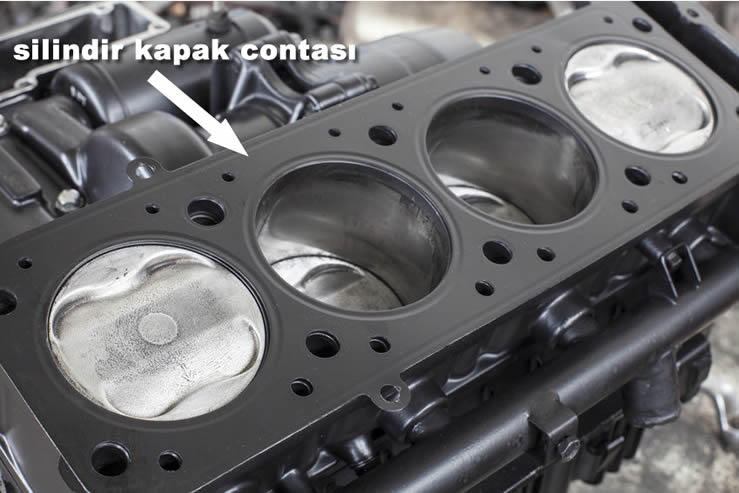
Gaskets loosening due to damage also leads to an oil consumption problem. When the engine gasket (cylinder head gasket) can’t do its job, oil gets mixed into the engine. Black or dark gray smoke comes out of the exhaust.

The piston rings may be worn, letting oil past the pistons.
Carboned-up piston rings can also cause an oil consumption problem.
See our related article: Piston Ring Wear in the Engine
If blue smoke comes out of the exhaust while the engine is running, this usually indicates that the piston rings are letting oil past. Sometimes the rings can get stuck in their grooves due to varnish buildup. In cases like this, by putting a suitable solvent in the tank, the rings can be freed up again without opening the engine.
The pistons and cylinders should be checked. Wear that can occur in the pistons and cylinders can cause oil leakage, and consequently excessive oil consumption due to that leak.
The cylinder block may have become warped from the head bolts being overtightened.
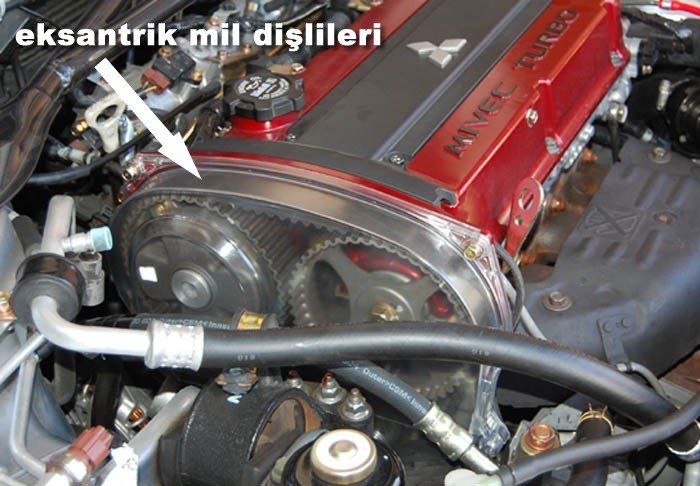
The camshaft gear cover gasket may be damaged, or its bolts may be loose, causing oil to leak.

The reason for the oil consumption problem in the engine may be the valve cover. The valve cover’s mounting bolts are loose, its gasket is damaged or not seated properly, or its edges have become bent. This is causing an oil leak.
If the main and connecting-rod bearings are excessively worn, this causes an excessive amount of oil to splash onto the cylinder walls. This can also be why the engine is burning too much oil.
A faulty or clogged oil pressure relief valve can cause the lubricating oil’s pressure to rise too high. This too can create an oil consumption problem in the engine.
If the piston pins are pressure-lubricated, a loose pin allows more oil to pass into the cylinder.
An oil that’s too thin may have been put in the engine compared to what’s required. Or a low-quality engine oil may have been used. A low-quality oil that has the right thickness in cold weather can become very thin once the engine warms up. This can also be why the engine is losing oil.
For detailed information on this topic, see: How to Choose Engine Oil
Related Questions
This problem is usually caused by the wear of parts like the piston rings or valve seals. If ignored, insufficient lubrication can, over time, lead to much bigger and more expensive damage, up to and including the engine bearings seizing.
LPG combustion creates a different temperature and combustion characteristic inside the engine compared to gasoline. These different operating conditions can cause extra wear on the piston rings and seals over time, increasing oil consumption.
Related Posts
 If the Engine Won’t Start, the Reason. Reasons the Engine Won’t Start
 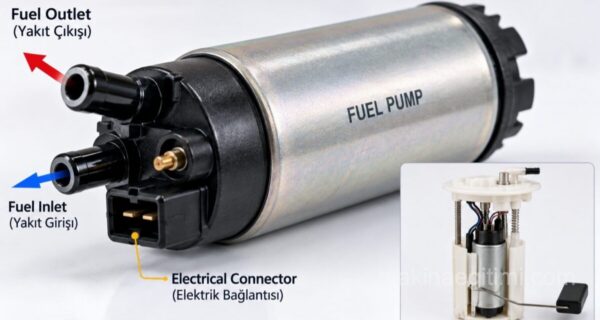 How to Tell the Fuel Pump Has a Fault? Diagnosis
 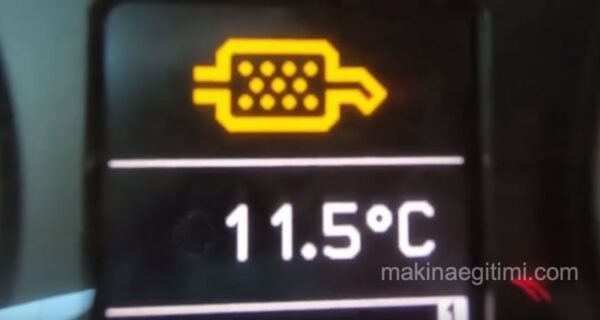 What Is a Diesel Particulate Filter Fault. How Is It Detected
  What Is a Vehicle Ignition System, How Does It Work? What Are Its Failures?
  How Is Engine Oil and Oil Filter Change Done?
  What Does the Noise from the Valves Mean?
  How to Choose Engine Oil
  Spark Plug Faults and Their Causes