

The topic of this article, related to engine knowledge, will be the reasons an engine won’t start. Is this a problem you can fix yourself? Or should you take it to a shop? What could be the reason if the engine won’t start? Your vehicle is a system where various components work together in harmony. Is the problem in the engine itself, or in other parts of the system that affect the engine’s operation?
What Could Be the Reason If the Engine Won’t Start?
For a gasoline-powered engine to run, there are three basic requirements:
1- Air-fuel mixture,
2-Ignition,
3-Compression in the cylinders
The reasons the engine won’t start are most likely one of these. Usually, the reason the engine won’t start is fuel or ignition.
Checking Battery Voltage
A healthy vehicle’s battery should read around 12.4-12.7 volts with the engine off.
Fuel Pump Failure
One of the frequent causes of engine-not-starting complaints is a faulty fuel pump that can’t provide enough pressure.
Checking the Ignition System
Worn spark plugs or a faulty ignition coil can completely prevent the engine from starting.
Reasons the Engine Won’t Start
Engine Not Starting Due to the Battery or Starter Motor
When I crank it, the engine doesn’t turn over like it normally does on the first try:
The reason the engine isn’t starting is a battery or starter motor problem. Turn on the car’s headlights.
If the headlights aren’t bright and normal
The battery is weak, or there’s a battery connection problem. You should charge the battery or jump-start it from another vehicle.
For a related article, SEE: How to Jump-Start a Battery. Illustrated Instructions for a Battery Boost. If your vehicle started and your battery isn’t old, take it to a shop at the earliest opportunity.
If the car’s headlights are bright and normal,
Have someone watch the headlights while cranking again. If the headlights stay bright and don’t change, the problem is probably the starter, ignition switch, or relay. You need to take it to a shop.
If the headlights dim while cranking, the likely problem is the battery, starter, or chassis ground cable.
When I crank it, the engine turns over normally like it does on a first start
In this case, we can say there’s a fuel or electrical/ignition problem.
Make sure you have gasoline in the tank. If fuel is very low, especially on sloped roads, enough fuel may not be pumped to the engine. If there’s enough gasoline, the likely reasons the engine won’t start are: a clogged fuel filter, clogged fuel injectors, a fuel pump that isn’t working, or an electrical/ignition problem.
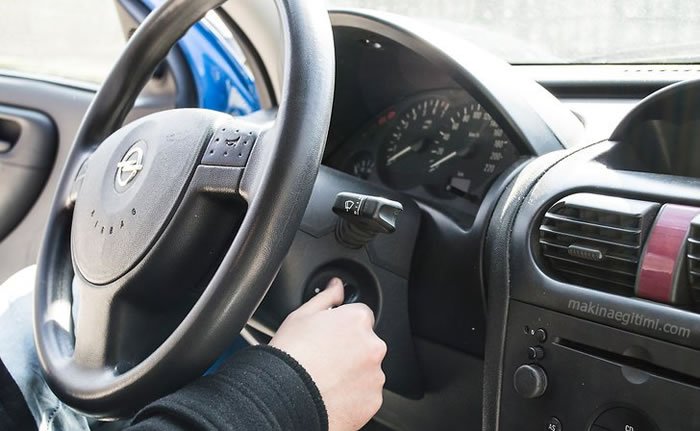
If the Engine Stalled and Won’t Start
If you drove on a wet road or in the rain, or washed the engine:
Open the engine compartment and check the distributor, high-voltage cables, and spark plugs. If they’re wet, wipe them with a dry, clean cloth while the ignition is off (this kind of issue usually shows up as loss of power, misfiring at low RPM)
Important note: Don’t touch the engine while the ignition is on, and the engine may be hot. Be careful.
After drying, crank it again with the throttle pressed all the way down. The engine may have flooded.
Is there gasoline in the tank? Are you sure?
Sometimes the gauge doesn’t work correctly and shows fuel as present when it’s actually empty. The reason the engine won’t start can also be running out of fuel. (The first signs of running out of fuel are misfiring, loss of power, and, in fuel-injected engines, unusually loud operation of the electric fuel pump)
If the engine just came back from repair:
Take it back to the mechanic. One of the reasons an engine won’t start is sometimes that mechanics have forgotten to do something that needed to be done.

If your engine didn’t start after you disconnected and reconnected the battery cables
We said the reasons the engine won’t start are usually fuel and ignition. Check whether the battery connections are clean, and reconnect them firmly. Make sure the positive cable is connected to the battery’s (+) terminal, and the chassis cable to the (-) terminal (even a momentary wrong connection can damage some of the electronic components that control the engine’s operation)

The Engine Stalled After Overheating and Won’t Start After Cooling
You’re most likely facing a serious problem. If the engine starts after cooling down, try to find the causes of the overheating and try to fix this cause before heading out on the road.

Causes of Overheating in the Engine:
The coolant may be low. If you don’t have an antifreeze-water mix, you can also temporarily add plain water (don’t open the radiator while the engine is hot.)

Visually inspect the water pump and its belt. The belt may be broken or loose.

Check whether there’s coolant leaking from the radiator and hoses. Check the front of the radiator — it may be blocked by paper, leaves, etc.
If none of these are the cause, everything looks normal, but the engine keeps overheating anyway, you should take your vehicle to a mechanic immediately.

If you noticed very low oil pressure before the engine stalled: Check the oil level and check for an oil leak underneath the engine.
If you heard abnormal sounds like knocking, rattling, or whistling before the engine stalled: You’re probably facing a serious engine problem. Check the belts on the engine. The reason the engine won’t start could be a broken belt. A knock-like sound can occur when it breaks. If you hear a whistling or squealing sound, the belt may be loose. Knocking sounds are usually caused by low-octane gasoline or excessive ignition advance.
If You Saw Smoke from the Exhaust Before the Engine Stalled;

If dark black smoke is coming from the exhaust, this can be caused by the engine flooding or by some of the spark plugs not firing.

If blue or light blue smoke is coming from the exhaust, this means the engine is burning oil, due to causes such as abnormal wear, broken piston rings, or pistons.

If white smoke (steam) is coming from the exhaust, coolant has entered the engine through a bad gasket or through cracks or breaks.
If you smell a strong gasoline odor from your vehicle, this means there’s a fire risk. You should immediately turn off the ignition and get out of the vehicle — for safety reasons, you shouldn’t even attempt to repair it yourself.
Related Questions
The air-fuel mixture, ignition, and compression are complementary, mandatory conditions for the engine to run. Even if just one of these is missing, combustion can’t occur, and the engine can’t start in any way.
Yes, the starter motor not turning at all usually points to a problem with the battery, starter motor, or electrical connections. In this case, it may not be the engine itself that’s faulty, but the electrical system that’s supposed to turn the engine over.
Related Posts
 What Is Biodiesel? Properties, Production, and Advantages
  How Hydraulic Brakes Work
  Properties of Ethanol (Ethyl Alcohol) Blended Gasoline
  What Does a Vehicle Rear Spoiler Do?
  5 Tips for Fuel Economy
  Engine Parts and Their Functions, Illustrated
  Why Doesn’t the Engine Start? Reasons the Engine Fails to Start.
  What Is a Turbocharger? How Does It Work? Advantages and Disadvantages