Close Menu
  • MAKİNELER ve İMALAT
    • Tools & Equipment
    • Computer-Aided Drawing
    • CAD/CAM Education
    • CNC Machine Programming
    • Casting Technologies
    • Electrical & Electronics Technologies
    • Hydraulics & Pneumatics
    • Manufacturing Processes
    • Manufacturing Technologies
    • Occupational Safety
    • Mold & Die Design
    • Solid Modeling
    • Welding Technology
    • Machine Elements
    • Mechanical Trade Drawing
    • Materials Science
    • Automotive & Vehicle Technologies
    • Robotics Technologies
    • Health Technologies
    • Defense & Aerospace Technologies
    • Descriptive Geometry
    • Technical Drawing
    • Software & Hardware Technologies
    • Innovative Manufacturing Methods
  • TEKNOLOJİ ve YAŞAM
    • OTOMOBİLLER ve TAŞIT
      • Vehicle & Engine Knowledge
      • Safe Driving
      • Sürüş Destek Sistemleri
    • Genel Kültür
      • Movies & TV Shows
      • Görsel ve Grafik Sanat
      • Books & Literature
      • Music
      • Sports
      • History
      • History of Technology
    • GÜNDELİK YAŞAM TEKNOLOJİLERİ
    • Hobbies & Entertainment
    • Internet Technologies
    • Health
    • Mobile Technologies
Makine Eğitimi
  • Machines & Manufacturing
    Machine Elements
    Hydraulics & Pneumatics
    Technical Drawing
    Computer-Aided Design & Manufacturing
    Basic Manufacturing Processes
    Manufacturing Processes
    Industry Technologies
    Other Technical Courses
    Motion & Power Transmission
    Simple Machines
    Chains & Sprockets
    Shafts & Journals
    Gears
    Cams
    Couplings
    Belts & Pulleys
    Springs
    Bearings
    Keys
    Fastening Joining
    Retaining Rings
    Screws, Bolts & Nuts
    Cotter Pins
    Flanges
    Welding
    Rivets
    Pins & Bolts
    Washers
    Calculators
    Gear Ratio Calculator
    Spring Constant Calculator
    Belt Pulley Ratio Calculator
    Other Machine Elements
    Slides & Linear Guides
    Brakes
    Flywheels
    Clamps
    Shock Absorbers
    Gaskets & O-Rings
    Seals & Sealing Elements
    Hydraulics
    Introduction to Hydraulics & Principles
    Hydraulic Systems & Applications
    Accumulators
    Filters
    Motors
    Pumps
    Valves
    Pneumatics
    Introduction to Pneumatics & Principles
    Pneumatic Systems & Applications
    Pneumatic Circuit Components
    Valves
    Cylinders
    Silencers
    Motors
    Compressors
    Dryers
    Conditioning Units
    Common Topics & Maintenance
    Hydraulic & Pneumatic Maintenance
    Study Notes, Exams & Tests
    Technical Drawing
    Introduction to Technical Drawing
    Geometric Drawings
    Perspective & Projection
    Orthographic Views
    Dimensioning
    Sectioning
    Assembly & Detail Drawings
    Tolerances
    Surface Finish Symbols
    Mechanical Engineering Drawing
    Screws, Bolts & Nuts
    Pulley Drawings
    Gear Drawings
    Shafts & Journals
    Bearing Drawings
    Pins & Bolts
    Spring Drawings
    Welds in Technical Drawing
    Washers
    Cotter Pins
    Technical Drawing Exercises
    Mechanical Drawing Exercises
    Gear Exercises
    View Extraction Exercises
    Pulley Exercises
    Pin & Bolt Exercises
    Threaded Fastening Exercises
    Descriptive Geometry
    Computer-Aided Drawing
    AutoCAD Drawing Lessons
    Solid Modeling & Animation
    Solid Model Drawing Files
    Solid Model Assembly Examples
    Solid Model Drawing Lessons
    3D CAD Software Reviews
    Solid Modeling Exercises
    CNC Programming
    CAM
    Measurement & Inspection
    Dial Indicators
    Calipers
    Gauges
    Micrometers
    Materials Science
    Steels
    Cast Iron
    Aluminum
    Plastics
    Material Testing & Hardness Measurement
    Occupational Safety
    Workshop Safety
    Safety When Working With Electricity
    Machine Safety Rules
    Hand Operations
    Filing
    Marking
    Cutting Operations
    Reaming
    Tapping
    Threading With a Die
    Drill Bit Sharpening
    Working With Machines
    Basic Turning Operations
    Basic Milling Operations
    Shaper Machine
    Machining
    Turning
    Milling
    Grinding
    Innovative Manufacturing Methods
    EDM (Electrical Discharge Machining)
    Laser Machining
    Waterjet Machining
    3D Printing
    3D Scanners
    Welding
    Rolling
    Casting
    Mold & Die Design
    Mechanical & Hydraulic Presses
    Blanking & Piercing Dies
    Bending Dies
    Drawing Dies
    Plastic Injection Molds
    Extrusion Dies
    Compound Dies
    Progressive Dies
    Blow Molds
    Spinning Dies
    Spray Molds
    Manufacturing of Machine Parts
    Automotive & Vehicle Technologies
    Motor Vehicle Manufacturing
    Raw Material Production
    History of Technology
    Health & Medical Technologies
    Defense & Aerospace
    Robotics Technologies
    Software & Hardware Technologies
    Mechanics - Strength of Materials
    Physics Topics
  • Technology & Life
    Hobbies & Entertainment
    Sports
    Music
    Vehicle & Engine Knowledge
    Vehicle Maintenance & Repair
    Safe Driving
    Driver Assistance Systems
    History
    Movies & TV Shows
    Books & Literature
    Computers & Internet
    Computer Tips
    Software Reviews
    Hardware & Peripherals
    Practical & Safe Internet Use
    Visual & Graphic Art
    Mobile Technologies
    Travel
    Science
    Health
    First Aid Knowledge
    Everyday Technologies
Makine Eğitimi
Home»Vehicle Maintenance & Repair»Alternator (Charging Dynamo) Faults
29 August 2026Updated:3 September 2026

Alternator (Charging Dynamo) Faults

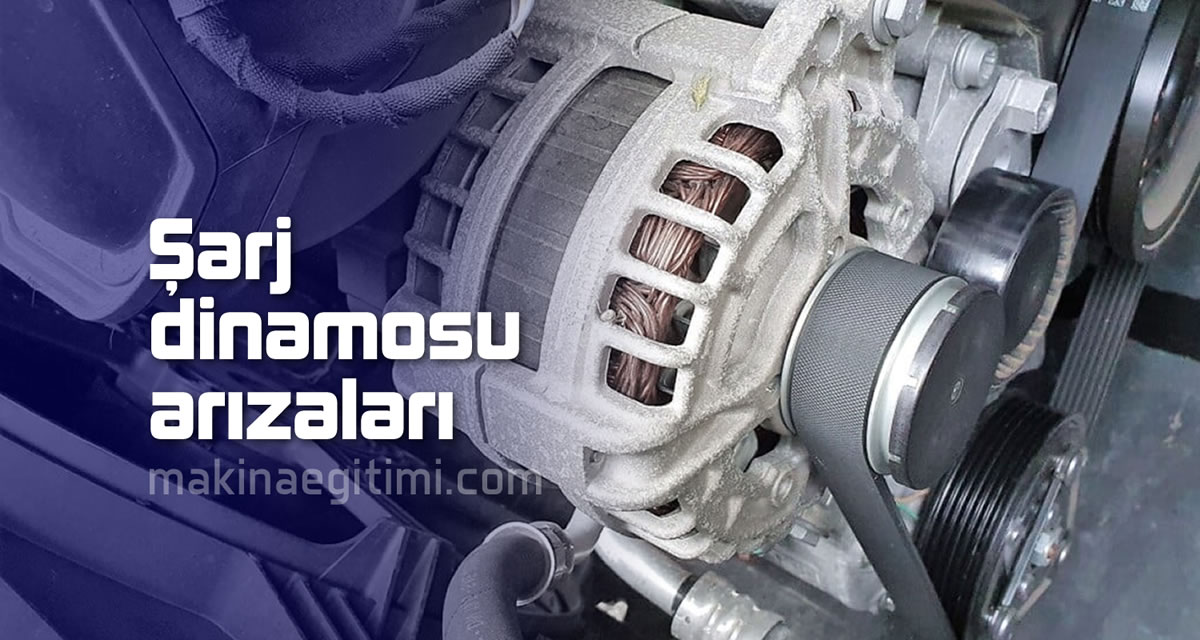
Alternator faults header image

What Happens If the Alternator Fails?

If the alternator (charging dynamo) fails, not enough electricity is produced, and the battery weakens or drains completely. Common alternator faults include the following:

  • What Happens If the Alternator Fails?
  • How Can You Tell If the Alternator Has a Fault?
  • Related Questions

1- Worn-out alternator brushes: If the alternator’s brushes are worn out or depleted, it can’t produce electricity, so the charge warning light stays on continuously.

2- Noise coming from the alternator: A noise coming from the alternator can indicate that the bearings have failed. Especially if a whining noise increases when you press the accelerator, this may indicate an alternator fault.

If this situation isn’t addressed, the bearings inside the alternator can disintegrate and the alternator can seize. When the alternator seizes, the drive belt will stop turning. Since this creates a problem in transmitting speed from the engine, the drive belt can snap. If the drive belt snaps, the coolant pump won’t run and there will be no water circulation inside the engine. As a result, your vehicle will overheat.

Video about noise coming from the alternator

3- Voltage regulator fault: If the voltage regulator fails, excess voltage is sent to the system and the car’s bulbs blow frequently.

4- Diode fault: In this case, the diodes can’t convert alternating current into direct current.

5- Alternator belt breaking or loosening:

alternator belt
If the alternator belt breaks, engine temperature rises because motion can no longer be transmitted to the water pump

If the alternator belt breaks, you may run into situations like these:
1- Since alternator belts usually also drive the water pump, if you keep driving, the engine temperature will rise.
2- If the alternator belt also drives the power steering pump, steering will become stiff.

How much tension should the fan belt have?
The fan belt should be able to flex 1-1.5 cm.
If the fan belt is too tight, the bearings and races can fail.
If the fan belt is too loose, enough voltage cannot be produced.

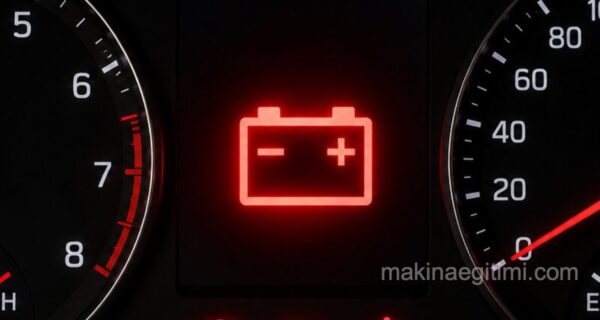
Battery/Charge Warning Light


The battery/charge warning light coming on in the instrument cluster is the clearest sign of an alternator fault.

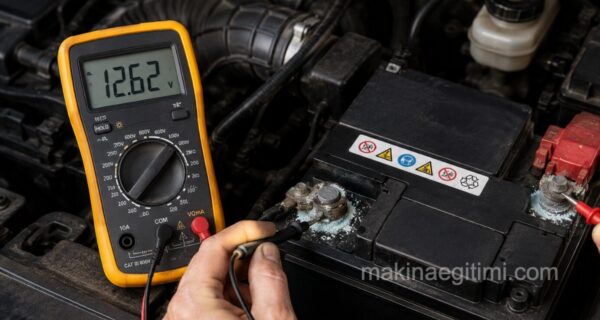
Voltage Check


A healthy charging system usually keeps battery voltage in the 13.5-14.5 volt range while the engine is running.

Belt Tension


A loose or slipping belt that drives the alternator can cause insufficient charging.

How Can You Tell If the Alternator Has a Fault?

While the engine is running, if the headlights dim when you take your foot off the accelerator, the battery may be weak. The alternator may not be producing enough electricity. The fan belt may be loose.

How can you tell if the alternator has a fault? battery icon

If you see the warning light above, this can also indicate an alternator fault.

This light is connected to the computer system that monitors the alternator’s output voltage. If the alternator’s voltage output is outside the set limits, this icon appears. If the voltage is within limits, this icon does not appear.

In the early stages of an alternator problem, the light may flicker on and off intermittently, or it may only come on when you run accessories in the vehicle. For example, you turn on your wipers and notice the warning light comes on. When you turn the wipers off, you notice the light goes out.

car headlights

Dim or overly bright headlights and dashboard lights:
If your vehicle’s headlights are shining weaker than they should, or brighter than they should, this indicates that the alternator is not working properly.

All of these situations could be signs of an alternator fault, but you may also experience things like the speedometer and tachometer stopping for no reason, or power windows moving up and down more slowly.

In recently manufactured vehicles, there is a program that determines where electricity is sent first when there’s an alternator problem. This program operates by prioritizing your safety. For example, before the headlights dim and shut off, heated seats will be turned off or the radio will be disabled.

Note:  In some cases, the reason the system isn’t getting enough power may not be an alternator fault. The problem may be in the battery.

Related Questions

Even if the alternator fails, the vehicle can keep running for a while on the electricity stored in the battery. However, since the battery is no longer being charged, this energy gradually runs out, and eventually the vehicle is left with no electrical power and stops running.

This noise is usually an early sign that the bearings inside the alternator are starting to fail. If ignored, the bearings can disintegrate completely and seize the alternator, which can lead to a chain of problems all the way to the drive belt snapping and the engine overheating.

Related Posts

Vehicle charging system components and operation diagram How Does a Vehicle’s Charging System Work? Components, Jobs, and Failures Engine Knocking Noise Engine Knocking Noise Ways to Tell If Your Car Battery Is Dead Ways to Tell If Your Car Battery Is Dead Why Does the Battery Warning Light Come On? Signs of a Battery Fault Why Does the Battery Warning Light Come On? Signs of a Battery Fault Motordan Gelen Vuruntu Sesi Inspection and Replacement Times for Vehicle Parts How to Jump-Start a Battery, Illustrated How to Jump-Start a Battery, Illustrated What Are Fuel Additives For? Their Benefits What Are Fuel Additives For? Benefits of Fuel Additives Car window fogging header image How Is Car Window Fogging Prevented

Share. Facebook Twitter WhatsApp Tumblr Email Telegram Copy Link

Leave A Reply Cancel Reply

Piston Ring Wear in an Engine
What Is a Starter Motor, What Does It Do?
  • Contact
  • Terms of Service
  • Privacy & Cookie Policy

Type above and press Enter to search. Press Esc to cancel.