Close Menu
  • MAKİNELER ve İMALAT
    • Tools & Equipment
    • Computer-Aided Drawing
    • CAD/CAM Education
    • CNC Machine Programming
    • Casting Technologies
    • Electrical & Electronics Technologies
    • Hydraulics & Pneumatics
    • Manufacturing Processes
    • Manufacturing Technologies
    • Occupational Safety
    • Mold & Die Design
    • Solid Modeling
    • Welding Technology
    • Machine Elements
    • Mechanical Trade Drawing
    • Materials Science
    • Automotive & Vehicle Technologies
    • Robotics Technologies
    • Health Technologies
    • Defense & Aerospace Technologies
    • Descriptive Geometry
    • Technical Drawing
    • Software & Hardware Technologies
    • Innovative Manufacturing Methods
  • TEKNOLOJİ ve YAŞAM
    • OTOMOBİLLER ve TAŞIT
      • Vehicle & Engine Knowledge
      • Safe Driving
      • Sürüş Destek Sistemleri
    • Genel Kültür
      • Movies & TV Shows
      • Görsel ve Grafik Sanat
      • Books & Literature
      • Music
      • Sports
      • History
      • History of Technology
    • GÜNDELİK YAŞAM TEKNOLOJİLERİ
    • Hobbies & Entertainment
    • Internet Technologies
    • Health
    • Mobile Technologies
Makine Eğitimi
  • Machines & Manufacturing
    Machine Elements
    Hydraulics & Pneumatics
    Technical Drawing
    Computer-Aided Design & Manufacturing
    Basic Manufacturing Processes
    Manufacturing Processes
    Industry Technologies
    Other Technical Courses
    Motion & Power Transmission
    Simple Machines
    Chains & Sprockets
    Shafts & Journals
    Gears
    Cams
    Couplings
    Belts & Pulleys
    Springs
    Bearings
    Keys
    Fastening Joining
    Retaining Rings
    Screws, Bolts & Nuts
    Cotter Pins
    Flanges
    Welding
    Rivets
    Pins & Bolts
    Washers
    Calculators
    Gear Ratio Calculator
    Spring Constant Calculator
    Belt Pulley Ratio Calculator
    Other Machine Elements
    Slides & Linear Guides
    Brakes
    Flywheels
    Clamps
    Shock Absorbers
    Gaskets & O-Rings
    Seals & Sealing Elements
    Hydraulics
    Introduction to Hydraulics & Principles
    Hydraulic Systems & Applications
    Accumulators
    Filters
    Motors
    Pumps
    Valves
    Pneumatics
    Introduction to Pneumatics & Principles
    Pneumatic Systems & Applications
    Pneumatic Circuit Components
    Valves
    Cylinders
    Silencers
    Motors
    Compressors
    Dryers
    Conditioning Units
    Common Topics & Maintenance
    Hydraulic & Pneumatic Maintenance
    Study Notes, Exams & Tests
    Technical Drawing
    Introduction to Technical Drawing
    Geometric Drawings
    Perspective & Projection
    Orthographic Views
    Dimensioning
    Sectioning
    Assembly & Detail Drawings
    Tolerances
    Surface Finish Symbols
    Mechanical Engineering Drawing
    Screws, Bolts & Nuts
    Pulley Drawings
    Gear Drawings
    Shafts & Journals
    Bearing Drawings
    Pins & Bolts
    Spring Drawings
    Welds in Technical Drawing
    Washers
    Cotter Pins
    Technical Drawing Exercises
    Mechanical Drawing Exercises
    Gear Exercises
    View Extraction Exercises
    Pulley Exercises
    Pin & Bolt Exercises
    Threaded Fastening Exercises
    Descriptive Geometry
    Computer-Aided Drawing
    AutoCAD Drawing Lessons
    Solid Modeling & Animation
    Solid Model Drawing Files
    Solid Model Assembly Examples
    Solid Model Drawing Lessons
    3D CAD Software Reviews
    Solid Modeling Exercises
    CNC Programming
    CAM
    Measurement & Inspection
    Dial Indicators
    Calipers
    Gauges
    Micrometers
    Materials Science
    Steels
    Cast Iron
    Aluminum
    Plastics
    Material Testing & Hardness Measurement
    Occupational Safety
    Workshop Safety
    Safety When Working With Electricity
    Machine Safety Rules
    Hand Operations
    Filing
    Marking
    Cutting Operations
    Reaming
    Tapping
    Threading With a Die
    Drill Bit Sharpening
    Working With Machines
    Basic Turning Operations
    Basic Milling Operations
    Shaper Machine
    Machining
    Turning
    Milling
    Grinding
    Innovative Manufacturing Methods
    EDM (Electrical Discharge Machining)
    Laser Machining
    Waterjet Machining
    3D Printing
    3D Scanners
    Welding
    Rolling
    Casting
    Mold & Die Design
    Mechanical & Hydraulic Presses
    Blanking & Piercing Dies
    Bending Dies
    Drawing Dies
    Plastic Injection Molds
    Extrusion Dies
    Compound Dies
    Progressive Dies
    Blow Molds
    Spinning Dies
    Spray Molds
    Manufacturing of Machine Parts
    Automotive & Vehicle Technologies
    Motor Vehicle Manufacturing
    Raw Material Production
    History of Technology
    Health & Medical Technologies
    Defense & Aerospace
    Robotics Technologies
    Software & Hardware Technologies
    Mechanics - Strength of Materials
    Physics Topics
  • Technology & Life
    Hobbies & Entertainment
    Sports
    Music
    Vehicle & Engine Knowledge
    Vehicle Maintenance & Repair
    Safe Driving
    Driver Assistance Systems
    History
    Movies & TV Shows
    Books & Literature
    Computers & Internet
    Computer Tips
    Software Reviews
    Hardware & Peripherals
    Practical & Safe Internet Use
    Visual & Graphic Art
    Mobile Technologies
    Travel
    Science
    Health
    First Aid Knowledge
    Everyday Technologies
Makine Eğitimi
Home»Sports»Who Is Eric the Eel? The Funniest Moment in Olympic Swimming History
30 August 2026

Who Is Eric the Eel? The Funniest Moment in Olympic Swimming History

hotel pool

Sometimes the most memorable moments in sports come not from the fastest records, but from the most unexpected struggles. This story from the 2000 Sydney Olympics is proof of exactly that. A young swimmer from Equatorial Guinea, trying to finish 100 meters in an Olympic pool he was seeing for the very first time in his life, created one of the most endearing and unforgettable sporting moments the world has ever witnessed.

  • From a Hotel Pool to Sydney: An Unexpected Journey
  • The Moment He First Saw the Pool
  • The Race: The Moments That Held the Stands’ Breath
  • A Defeat, or a Triumph of the Olympic Spirit?
  • The Rest of the Story: From Swimmer to Coach
  • Watch This Legendary Race
  • Why Is He Still Remembered?
  • Frequently Asked Questions

From a Hotel Pool to Sydney: An Unexpected Journey

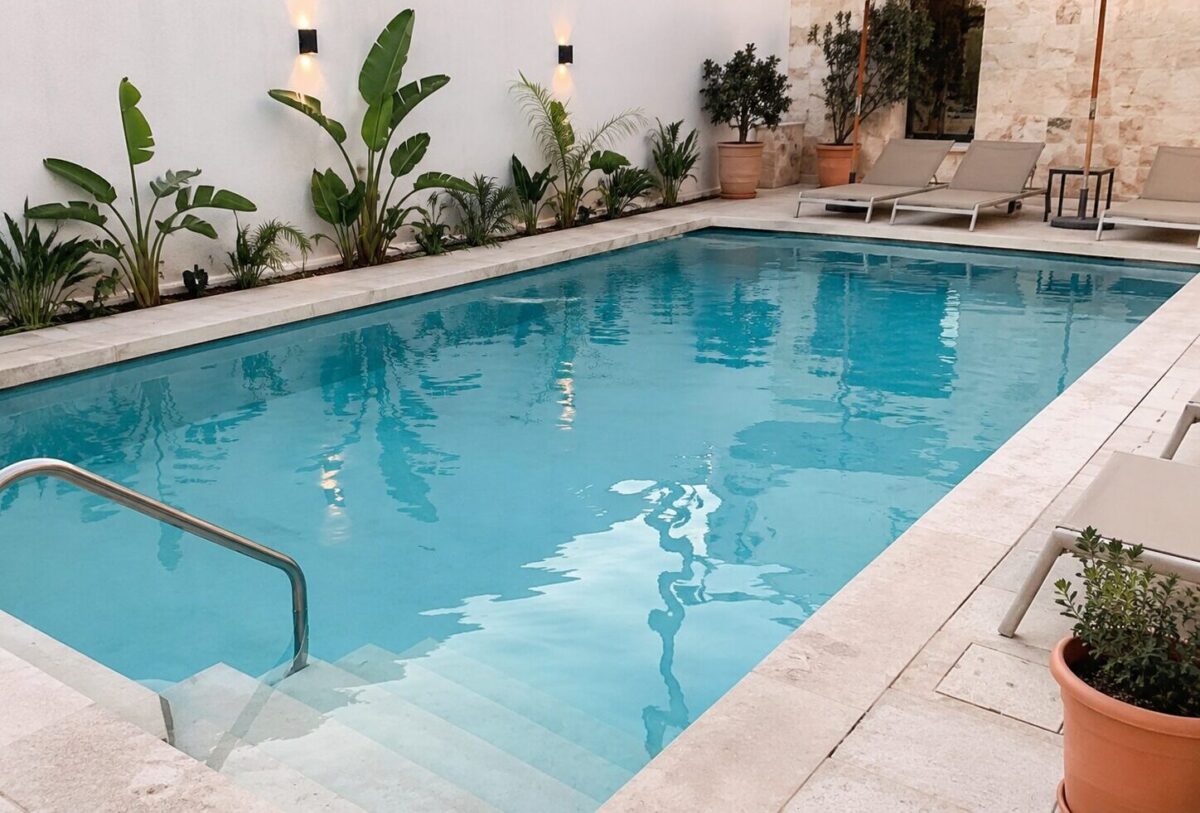
Eric Moussambani was born in Equatorial Guinea, a country that at the time didn’t even have a single Olympic-sized pool. It had been only eight months since he started swimming, and he trained in the early morning hours, just three hours a week, in a small hotel pool that was nearly a quarter the length of a standard Olympic pool.
hotel pool

Thanks to a “wild card” (special invitation) program run by the International Olympic Committee to encourage athletes from developing countries to take part in the Olympics, Moussambani earned the right to compete in the 100-meter freestyle at the 2000 Sydney Olympics. Even the journey to Sydney took more than three days; it was the first time in his life he had ever left his home country.

The Moment He First Saw the Pool
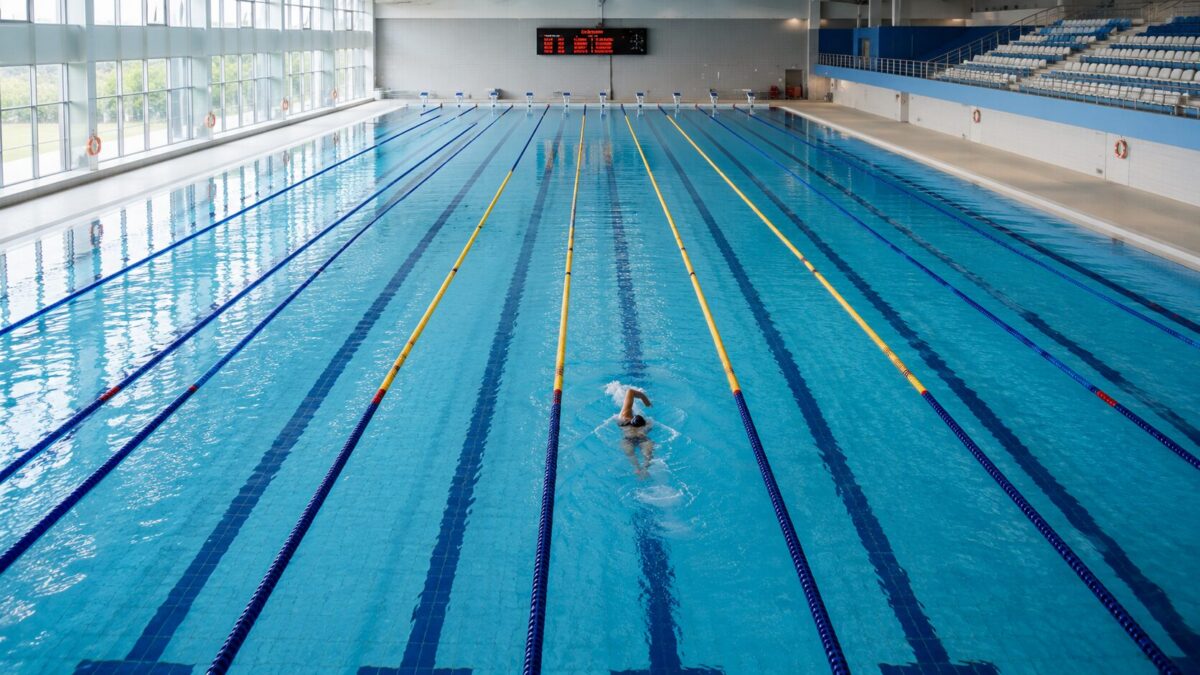
Olympic swimming pool

When Moussambani first saw the Sydney Olympic Pool, he was completely stunned; he was facing a pool roughly four times longer than the hotel pool he was used to. He didn’t even know how to dive in properly, and tried to learn by asking the athletes around him.

South Africa’s swimming coach, noticing that he had shown up to practice wearing only a pair of shorts, gave him a swimsuit and a pair of goggles as a gift.

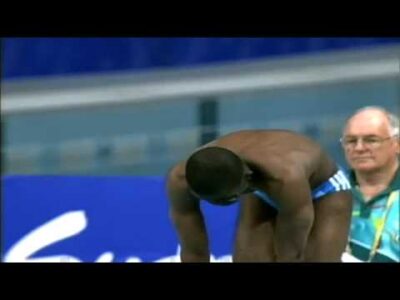
On race day, Moussambani had two competitors scheduled to swim in his heat. However, both were disqualified for false starts, leaving Moussambani to swim completely alone in front of a packed stadium.
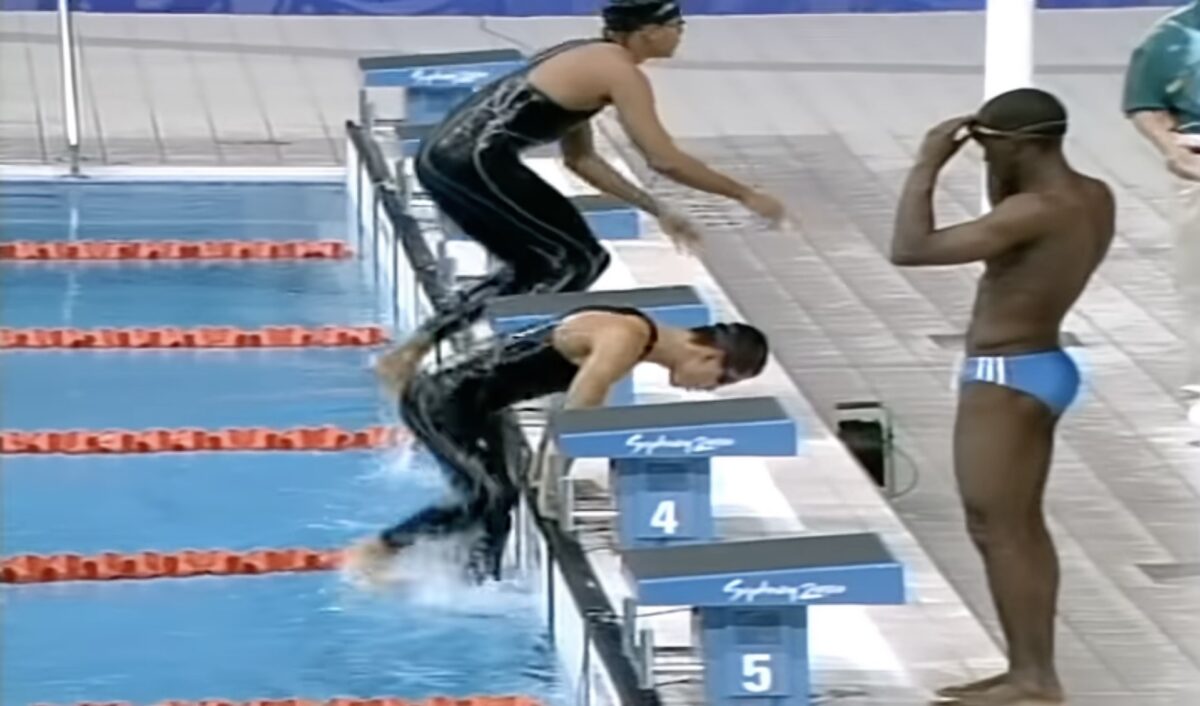
Eric Moussambani, the Eel
Eric Moussambani’s competitors had been disqualified and were leaving the pool.

The Race: The Moments That Held the Stands’ Breath

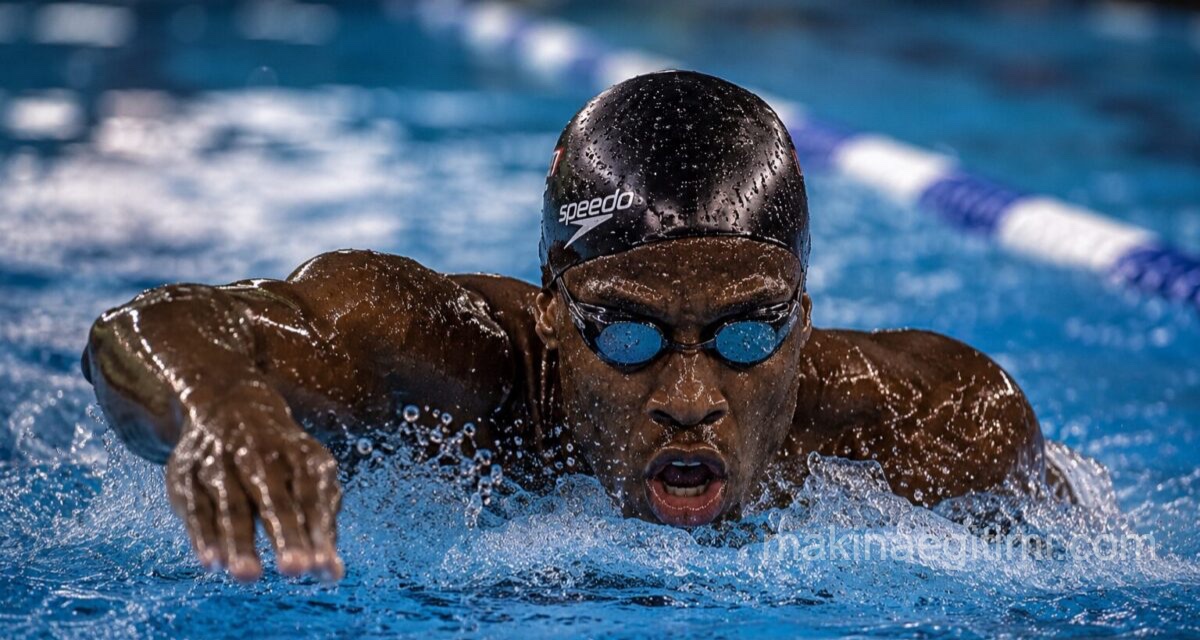
The moment Moussambani dove into the water, spectators quickly realized they were watching something out of the ordinary. His swimming style was thoroughly amateurish, and he was visibly tiring after the first 50 meters. By the second-lap turn, his movements had slowed considerably; some of the poolside officials later admitted they had even considered jumping in to rescue him.
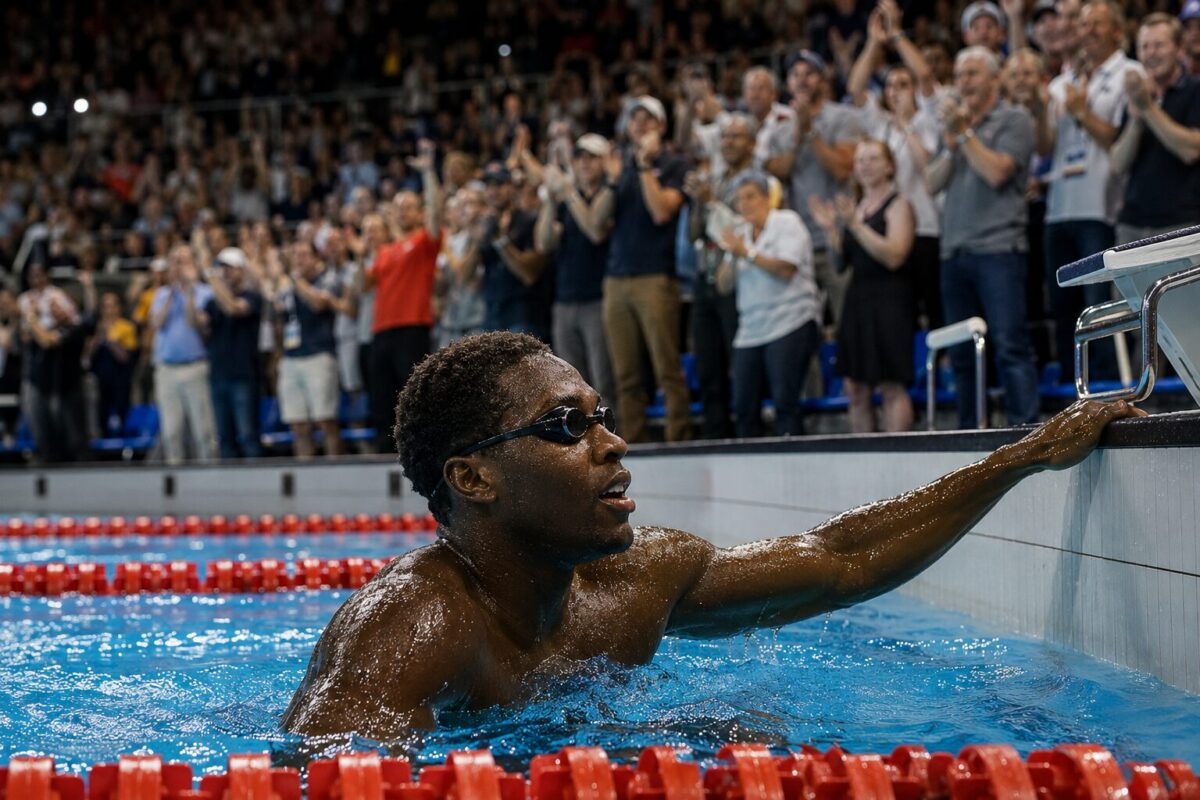
swimmer and spectators

But right at that moment, the crowd in the stands began cheering loudly to support Moussambani. That support gave the exhausted swimmer what felt like a fresh burst of energy in the final meters. When he finally reached the edge of the pool, the clock read 1 minute 52.72 seconds — the slowest time ever recorded for the 100-meter freestyle in Olympic history. For comparison, that time was even slower than most of the finalists in the 200-meter freestyle at the same Olympics.

A Defeat, or a Triumph of the Olympic Spirit?

Because his competitors were disqualified, Moussambani technically “won” his own heat, but his time was far above what was needed to advance to the next round, and that was where his tournament ended.

Despite this, the media instantly turned him into a name recognized around the world; he quickly became known by the nickname “Eric the Eel.” Although the nickname was, ironically, a jab at his less-than-smooth swimming style, over time it turned into a symbol remembered with genuine affection.

Moussambani has said he never forgot the crowd’s support that day in the stadium, and that the cheering kept him from giving up in the final meters. He also had the honor of carrying the flag of Equatorial Guinea at the Sydney Olympics opening ceremony.

The Rest of the Story: From Swimmer to Coach

Moussambani’s story continued long after that unforgettable race. Continuing to train seriously, he eventually brought his personal best down to 57 seconds — nearly half his time from that first Olympic performance.

He became the first male athlete from his country to compete at the 2001 World Aquatics Championships, where he set a new national record. Unfortunately, a visa issue kept him from competing at the 2004 Athens Olympics, so Sydney remained his only Olympic experience.
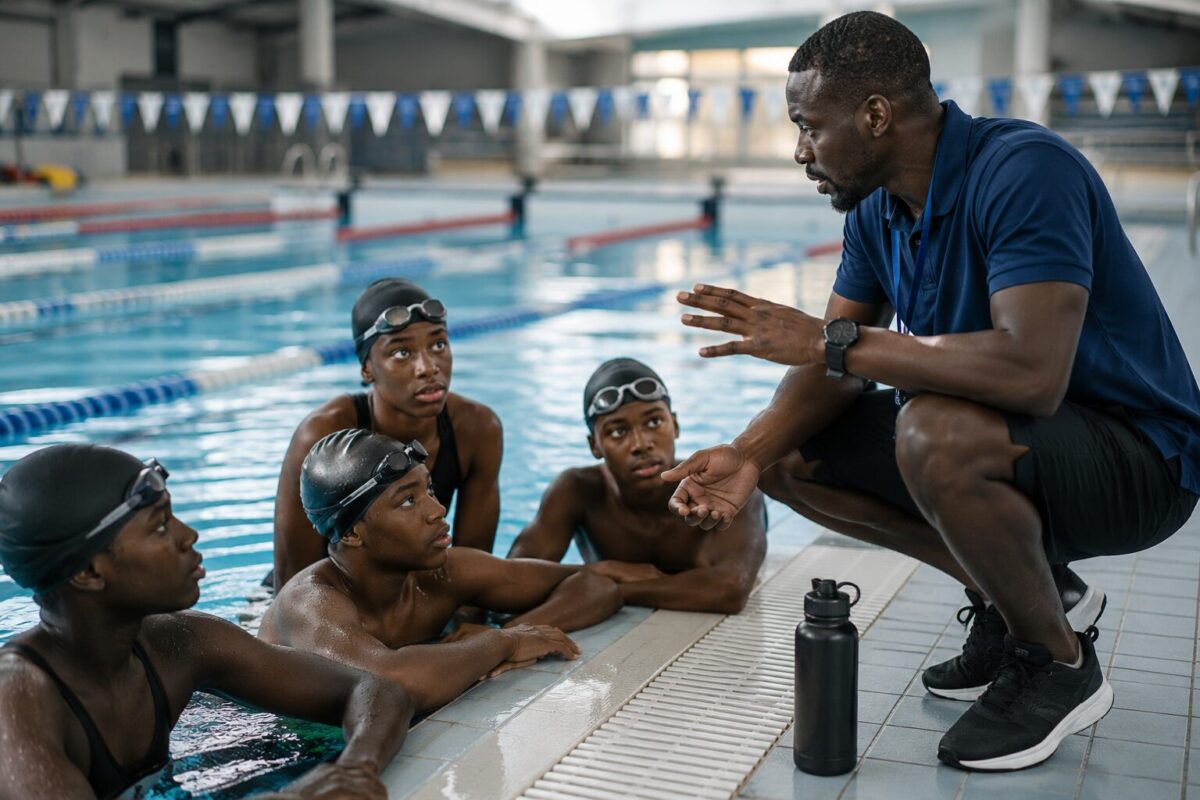
swimming coach and his students

In 2012, Moussambani was appointed head coach of the Equatorial Guinea national swimming team; he still lives in his home country today and also works for an oil company. Thanks to his story, two new Olympic-sized pools were built in his country.

Watch This Legendary Race

If you’d like to relive one of sport’s most heartwarming moments:
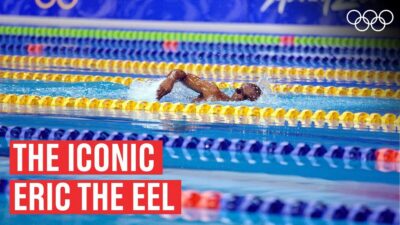
The incredible story of Eric Moussambani | Olympic Memories The incredible story of Eric Moussambani | Olympic Memories
Eric Moussambani OLYMPIC 2000 SYDNEY SWIMMING (HIGH QUALITY) Eric Moussambani OLYMPIC 2000 SYDNEY SWIMMING (HIGH QUALITY)

Eric Moussambani’s historic 100-meter race at Sydney 2000. Two separate video links (above).

Why Is He Still Remembered?

Eric Moussambani’s story is a powerful reminder that sport isn’t only about winning. Although the Olympic motto is “faster, higher, stronger,” the determination and courage Moussambani showed that day revealed another dimension just as valuable as a medal: the spirit of struggle. That’s why “Eric the Eel” is still remembered today as one of the most beloved and most frequently recalled moments in Olympic history.


Frequently Asked Questions

The nickname was given by the media as an ironic jab at his amateurish, less-than-smooth swimming style in his early races; over time it became a symbol remembered with affection.

Moussambani completed the 100-meter freestyle in 1 minute 52.72 seconds, the slowest time ever recorded for that distance in Olympic history.

Both of his competitors in his heat were disqualified for false starts, leaving Moussambani to complete the race entirely on his own.

He kept training and brought his personal best down to 57 seconds, competed at the 2001 World Championships, and became head coach of the Equatorial Guinea national swimming team in 2012.

A visa issue prevented him from competing at the 2004 Athens Olympics, leaving Sydney 2000 as his only Olympic experience.

Related Posts
Ice hockey game with fans throwing hats onto the ice The Story of the Term Hat-trick: A Sports Legend Born from a Hat swimmer How Do Athletes Eat? Nutrition Disciplines Across Different Sports Kenyan athletes training in the Rift Valley Why Is Kenya So Successful at Long-Distance Running? Olympic medal ceremony podium The ‘Mosts’ of Olympic History Milan vs Liverpool 2005 Champions League final moment The Miracle of Istanbul: Football History’s Most Incredible Comeback Michael Jordan in a moment from a basketball game Michael Jordan: The Story of Basketball’s Greatest Name Lionel Messi body feints Lionel Messi’s Legendary Body Feints Muhammad Ali portrait The Story of Muhammad Ali: From a Stolen Bicycle to Sportsman of the Century
Share. Facebook Twitter WhatsApp Tumblr Email Telegram Copy Link

Leave A Reply Cancel Reply

Why Does an Engine Misfire? Engine Misfire Problem
Leonardo da Vinci’s Machines: The Flying, Fighting and Walking Inventions of a Renaissance Genius
  • Contact
  • Terms of Service
  • Privacy & Cookie Policy

Type above and press Enter to search. Press Esc to cancel.