
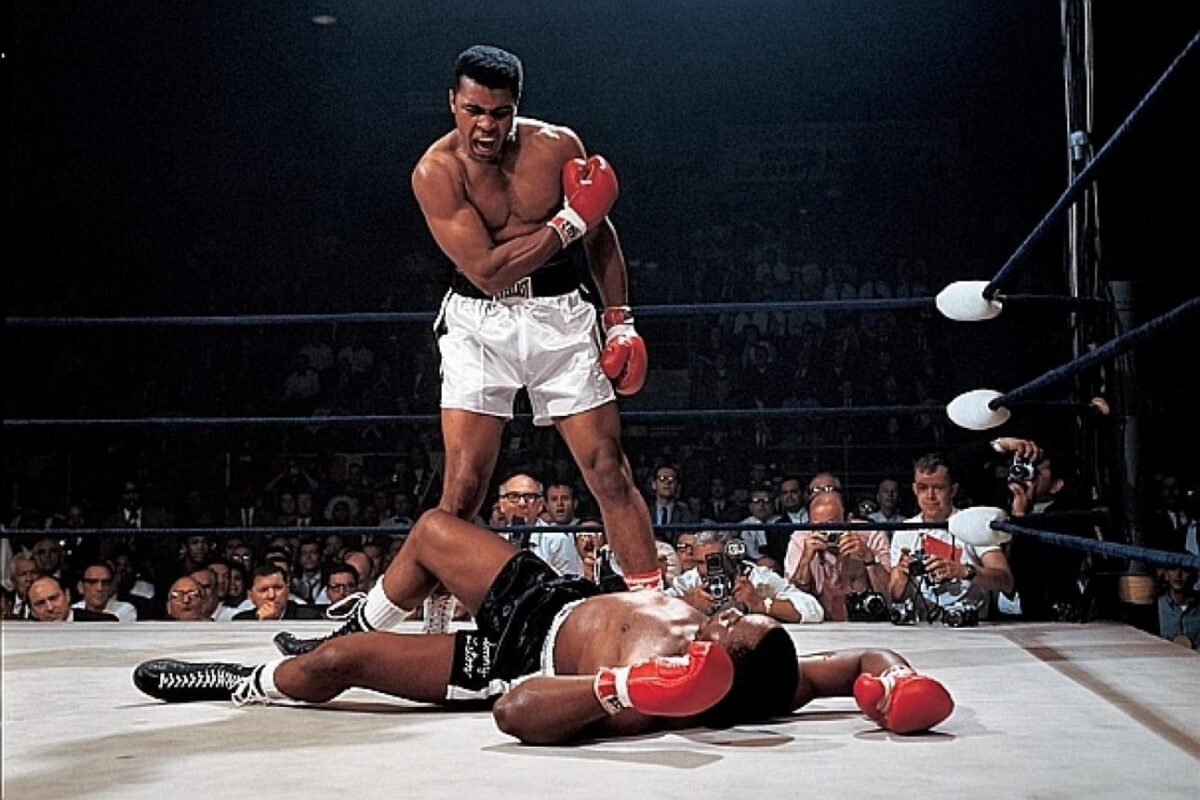
In 1954, in Louisville, Kentucky, a 12-year-old boy discovered that the bicycle he’d ridden to a friend’s wedding had been stolen. Furious, he told a police officer that he wanted to “beat up” the thief when he found him. That police officer also happened to coach at a local boxing gym; he suggested the young boy learn to box first. This small incident was how Muhammad Ali (known at the time as Cassius Clay) was introduced to boxing — a man who would go on to become one of the most influential athletes the world has ever seen.
In this article, we’ll explore Ali’s journey, from this chance beginning to Olympic gold, world championship glory, his struggle for his faith, and finally his legacy beyond the ring.
From a Stolen Bicycle to the Ring
Cassius Marcellus Clay Jr. was born on January 17, 1942, in Louisville, Kentucky. Guided by boxing coach Joe Martin, young Clay stepped into the gym at age 12 and quickly showed he possessed extraordinary talent. He drew attention with both his fast footwork and agile punching techniques rarely seen in heavyweight boxers up to that point.
In 1960, at just 18 years old, Clay competed at the Rome Olympics and won a gold medal in the light heavyweight category. This achievement gave him a strong start to his professional career.
A Shock Against Sonny Liston: World Champion
In 1964, at just 22 years old, Clay faced the era’s feared world heavyweight champion, Sonny Liston. Almost no one saw Clay as the favorite; but the young boxer drew attention both with his agility in the ring and his bold, boastful pre-fight comments about his opponent. In the fight, Liston refused to continue after the sixth round, and Clay earned the title of one of the youngest heavyweight champions in the world.
Following this victory, Clay announced he had converted to Islam and changed his name to Muhammad Ali. This decision sparked major controversy in American society at the time; many sportswriters and media outlets continued referring to him by his old name for a long time.
The Vietnam War and Refusing the Draft
In 1967, Ali refused his call-up for the Vietnam War draft on the basis of his religious beliefs. This decision fundamentally changed the course of his career: his world championship title was stripped from him, his boxing license was revoked, and he was barred from stepping into the ring for three and a half years. This period coincided with what should have been the most brilliant years of Ali’s career; nevertheless, he stood by his decision.

Ali’s stance resonated deeply, not just in the sports world, but also in the civil rights and anti-war movements of the era. In 1971, the US Supreme Court unanimously upheld Ali’s conscientious objector status, opening the way for his return to the ring.
Rumble in the Jungle: The Rebirth of a Legend
After returning to the ring, Ali experienced one of the most unforgettable moments of his career in 1974 in Kinshasa, the capital of Zaire (today’s Democratic Republic of the Congo). In this fight, known as the “Rumble in the Jungle,” he faced the era’s undefeated champion, George Foreman. No one saw Ali as the favorite; Foreman was both younger and physically far stronger.
Throughout the fight, Ali employed a tactic called “rope-a-dope”: leaning back against the ropes, he absorbed Foreman’s punches and waited for his opponent to exhaust his energy. In the eighth round, Ali knocked out an exhausted Foreman with a flurry of quick punches, reclaiming the world championship. This fight is still remembered today as one of the most strategic and unforgettable bouts in boxing history.
Muhammad Ali – George Foreman ”Rumble in the Jungle” (1974)
Thrilla in Manila: Another Legendary Rivalry
Another legendary fight in Ali’s career took place in 1975 in Manila, Philippines, against Joe Frazier. Known as the “Thrilla in Manila,” this match pushed both boxers to their physical limits in an extremely grueling fight.
Ali later described this experience as one of the toughest moments of his life; Frazier’s coach stopped the fight at the end of the fourteenth round to prevent his fighter from sustaining further damage.
Lighting the Olympic torch with trembling hands at the opening ceremony of the 1996 Atlanta Olympics was a moment that deeply moved viewers around the world.
Ali passed away on June 3, 2016, at age 74, due to respiratory failure.
 Atlanta 1996 Opening Ceremony | Atlanta 1996 Replays
Why Was Ali So Talkative?
As much as his success in the ring, Ali’s charisma outside the ring also made him one of the most recognized athletes of his era. His boastful, witty pre-fight remarks about his opponents were an unusual marketing approach for boxing culture at the time; this approach both increased audience interest and aimed to psychologically affect his opponents. Ali stated that he developed this style partly by drawing inspiration from professional wrestling showmen of the era.
A Struggle Beyond the Ring: Parkinson’s Disease
In 1984, following his retirement, Ali was diagnosed with Parkinson’s disease; this condition is thought to be possibly linked to the blows he sustained over his long boxing career. As the disease progressed, Ali’s movement and speech grew increasingly difficult; but even so, he continued to remain active in the public eye.
Lighting the Olympic torch with trembling hands at the opening ceremony of the 1996 Atlanta Olympics was a moment that deeply moved viewers around the world.
Ali passed away on June 3, 2016, at age 74, due to respiratory failure.
Atlanta 1996 Opening Ceremony | Atlanta 1996 Replays
His Legacy: How It Reached Today
Muhammad Ali’s influence isn’t limited to boxing history alone. Sacrificing the most brilliant years of his career for his beliefs made him a civil rights symbol far beyond the world of sports. Today, many athletes cite Ali’s courage as a reference point when openly voicing their own views on social issues. This makes him not just one of the greatest names ever in the ring, but also one of the most influential public figures of the 20th century.
Frequently Asked Questions
Ali was born Cassius Marcellus Clay Jr. in 1942; after converting to Islam in 1964, he changed his name to Muhammad Ali.
Ali began boxing at age 12 after going to a police officer to report his stolen bicycle; the officer, who also happened to be a boxing coach, directed him to the gym.
In 1967, Ali refused the Vietnam War draft based on his religious beliefs; as a result, his championship title was stripped and he was barred from the ring for three and a half years.
The Rumble in the Jungle is the name of the legendary 1974 fight in Zaire in which Ali knocked out George Foreman to reclaim the world championship, famous for his “rope-a-dope” tactic.
Ali died on June 3, 2016, at age 74, due to respiratory failure, following a long struggle with Parkinson’s disease.
Related Posts
 The Story of the Term Hat-trick: A Sports Legend Born from a Hat
  The Miracle of Istanbul: Football History’s Most Incredible Comeback
  Michael Jordan: The Story of Basketball’s Greatest Name
  How Do Athletes Eat? Nutrition Disciplines Across Different Sports
  Hagi or Zidane? Comparing Two Legendary Playmakers
  Why Is Kenya So Successful at Long-Distance Running?
  Who Is Eric the Eel? The Funniest Moment in Olympic Swimming History
  What Is a Panenka Penalty? The Best Panenka Penalties