
Close Menu
  • MAKİNELER ve İMALAT
    • Tools & Equipment
    • Computer-Aided Drawing
    • CAD/CAM Education
    • CNC Machine Programming
    • Casting Technologies
    • Electrical & Electronics Technologies
    • Hydraulics & Pneumatics
    • Manufacturing Processes
    • Manufacturing Technologies
    • Occupational Safety
    • Mold & Die Design
    • Solid Modeling
    • Welding Technology
    • Machine Elements
    • Mechanical Trade Drawing
    • Materials Science
    • Automotive & Vehicle Technologies
    • Robotics Technologies
    • Health Technologies
    • Defense & Aerospace Technologies
    • Descriptive Geometry
    • Technical Drawing
    • Software & Hardware Technologies
    • Innovative Manufacturing Methods
  • TEKNOLOJİ ve YAŞAM
    • OTOMOBİLLER ve TAŞIT
      • Vehicle & Engine Knowledge
      • Safe Driving
      • Sürüş Destek Sistemleri
    • Genel Kültür
      • Movies & TV Shows
      • Görsel ve Grafik Sanat
      • Books & Literature
      • Music
      • Sports
      • History
      • History of Technology
    • GÜNDELİK YAŞAM TEKNOLOJİLERİ
    • Hobbies & Entertainment
    • Internet Technologies
    • Health
    • Mobile Technologies
Makine Eğitimi
  • Machines & Manufacturing
    Machine Elements
    Hydraulics & Pneumatics
    Technical Drawing
    Computer-Aided Design & Manufacturing
    Basic Manufacturing Processes
    Manufacturing Processes
    Industry Technologies
    Other Technical Courses
    Motion & Power Transmission
    Simple Machines
    Chains & Sprockets
    Shafts & Journals
    Gears
    Cams
    Couplings
    Belts & Pulleys
    Springs
    Bearings
    Keys
    Fastening Joining
    Retaining Rings
    Screws, Bolts & Nuts
    Cotter Pins
    Flanges
    Welding
    Rivets
    Pins & Bolts
    Washers
    Calculators
    Gear Ratio Calculator
    Spring Constant Calculator
    Belt Pulley Ratio Calculator
    Other Machine Elements
    Slides & Linear Guides
    Brakes
    Flywheels
    Clamps
    Shock Absorbers
    Gaskets & O-Rings
    Seals & Sealing Elements
    Hydraulics
    Introduction to Hydraulics & Principles
    Hydraulic Systems & Applications
    Accumulators
    Filters
    Motors
    Pumps
    Valves
    Pneumatics
    Introduction to Pneumatics & Principles
    Pneumatic Systems & Applications
    Pneumatic Circuit Components
    Valves
    Cylinders
    Silencers
    Motors
    Compressors
    Dryers
    Conditioning Units
    Common Topics & Maintenance
    Hydraulic & Pneumatic Maintenance
    Study Notes, Exams & Tests
    Technical Drawing
    Introduction to Technical Drawing
    Geometric Drawings
    Perspective & Projection
    Orthographic Views
    Dimensioning
    Sectioning
    Assembly & Detail Drawings
    Tolerances
    Surface Finish Symbols
    Mechanical Engineering Drawing
    Screws, Bolts & Nuts
    Pulley Drawings
    Gear Drawings
    Shafts & Journals
    Bearing Drawings
    Pins & Bolts
    Spring Drawings
    Welds in Technical Drawing
    Washers
    Cotter Pins
    Technical Drawing Exercises
    Mechanical Drawing Exercises
    Gear Exercises
    View Extraction Exercises
    Pulley Exercises
    Pin & Bolt Exercises
    Threaded Fastening Exercises
    Descriptive Geometry
    Computer-Aided Drawing
    AutoCAD Drawing Lessons
    Solid Modeling & Animation
    Solid Model Drawing Files
    Solid Model Assembly Examples
    Solid Model Drawing Lessons
    3D CAD Software Reviews
    Solid Modeling Exercises
    CNC Programming
    CAM
    Measurement & Inspection
    Dial Indicators
    Calipers
    Gauges
    Micrometers
    Materials Science
    Steels
    Cast Iron
    Aluminum
    Plastics
    Material Testing & Hardness Measurement
    Occupational Safety
    Workshop Safety
    Safety When Working With Electricity
    Machine Safety Rules
    Hand Operations
    Filing
    Marking
    Cutting Operations
    Reaming
    Tapping
    Threading With a Die
    Drill Bit Sharpening
    Working With Machines
    Basic Turning Operations
    Basic Milling Operations
    Shaper Machine
    Machining
    Turning
    Milling
    Grinding
    Innovative Manufacturing Methods
    EDM (Electrical Discharge Machining)
    Laser Machining
    Waterjet Machining
    3D Printing
    3D Scanners
    Welding
    Rolling
    Casting
    Mold & Die Design
    Mechanical & Hydraulic Presses
    Blanking & Piercing Dies
    Bending Dies
    Drawing Dies
    Plastic Injection Molds
    Extrusion Dies
    Compound Dies
    Progressive Dies
    Blow Molds
    Spinning Dies
    Spray Molds
    Manufacturing of Machine Parts
    Automotive & Vehicle Technologies
    Motor Vehicle Manufacturing
    Raw Material Production
    History of Technology
    Health & Medical Technologies
    Defense & Aerospace
    Robotics Technologies
    Software & Hardware Technologies
    Mechanics - Strength of Materials
    Physics Topics
  • Technology & Life
    Hobbies & Entertainment
    Sports
    Music
    Vehicle & Engine Knowledge
    Vehicle Maintenance & Repair
    Safe Driving
    Driver Assistance Systems
    History
    Movies & TV Shows
    Books & Literature
    Computers & Internet
    Computer Tips
    Software Reviews
    Hardware & Peripherals
    Practical & Safe Internet Use
    Visual & Graphic Art
    Mobile Technologies
    Travel
    Science
    Health
    First Aid Knowledge
    Everyday Technologies
Makine Eğitimi
Home»Vehicle & Engine Knowledge»Types of Engine Oil Pumps
30 August 2026

Types of Engine Oil Pumps

Motor Yağ Pompası Çeşitleri

The component that draws engine oil from the oil pan and pumps it under a certain pressure to the oil filter and the main oil galleries is called the oil pump. The types of engine oil pumps are:

    • Gear-Type Oil Pump
    • Vane-Type Oil Pump
    • Rotor-Type Oil Pump
  • Related Questions
  1. Gear-type oil pump
  2. Vane-type oil pump
  3. Rotor-type oil pump

Gear-Type Oil Pump

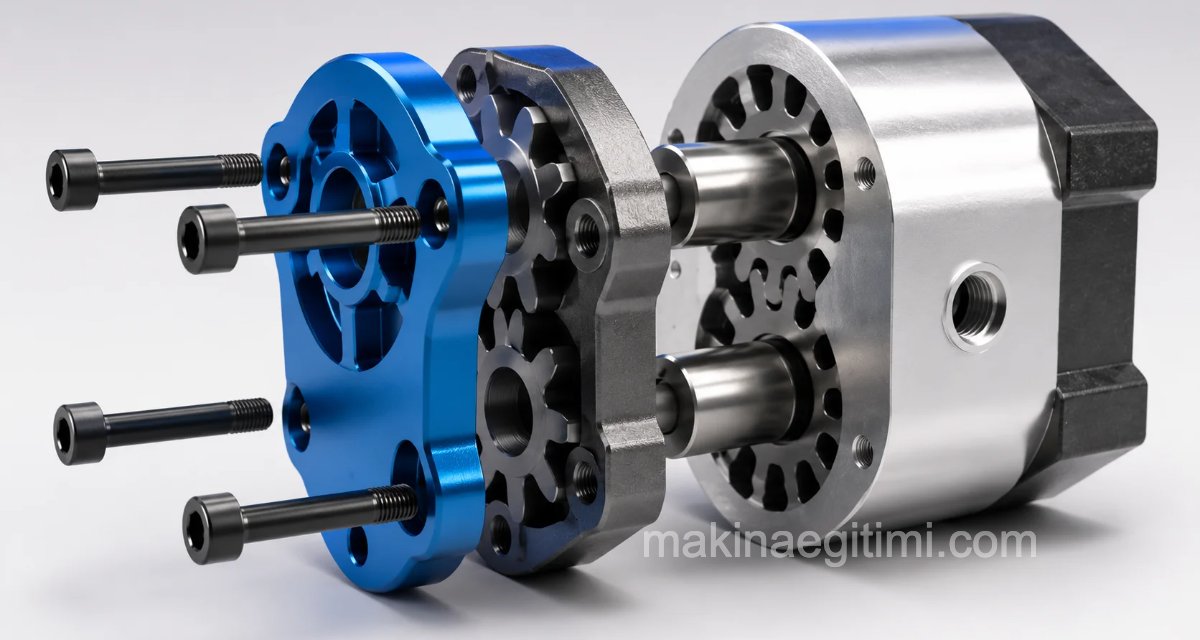
Inside the pump are two intermeshed gears. One gear is the driving gear, the other is the driven gear. The driving gear takes its motion from the camshaft in some engines and from the crankshaft in others. As the gears rotate, oil coming from the inlet passage fills the gaps between the teeth and is carried to the outlet passage. The amount of oil carried depends on the rotational speed of the gears and the thickness of the oil.

How does a gear-type engine oil pump work?

Disassembled view and operation of a gear-type oil pump

When the engine oil is cold, or as engine speed increases, the amount of oil carried by the gears becomes more than necessary. To prevent oil pressure from rising above a certain value, a pressure relief valve is placed in the outlet passage. The pressure relief valve can be located in the pump body or on the main oil gallery. When the pump’s outlet oil pressure rises enough to overcome the spring pressure of the relief valve, the valve opens and allows the oil to return.

Vane-Type Oil Pump

types of engine oil pumps vane type

In a vane-type oil pump, vanes are used instead of gears. The vanes are fitted into slots in a rotor that spins off-center within the pump housing. Springs inside the slots keep the vanes continuously in contact with the housing surface.

The vane rotor is connected to the pump shaft. As the shaft rotates, the vanes create a volume that grows in front of the inlet passage and shrinks to zero in front of the outlet passage. As the volume carrying the oil drops to zero, the oil is forced into the main oil gallery.

Rotor-Type Oil Pump

In a rotor-type oil pump, an inner rotor sits in the rotor housing, and as the pump shaft turns, the outer rotor, which works together with the inner rotor, creates a variable volume that grows at the oil inlet passage and shrinks to zero at the oil outlet passage.

Oil drawn into the large volume at the inlet passage is forced into the main oil galleries as the volume drops to zero at the outlet passage.

In this article, we took a look at the types of engine oil pumps and how they work. Supported by animations, we examined the types of engine oil pumps and their operating systems. See you in our next articles.

Gear-Type Oil Pump


Gear-type oil pumps are the most commonly used type in automotive engines thanks to their simple design and reliability.

Rotor-Type Oil Pumps


Rotor (gerotor) type pumps are frequently preferred in modern engines thanks to their compact design.

Pressure Relief Valve


The pressure relief valve in oil pumps protects the system by draining excess oil when overpressure occurs.

Related Questions

Oil that enters the gaps between the rotating gears is physically carried from the inlet passage to the outlet passage as the gears turn. This simple but effective mechanism ensures the oil is pumped in a continuous, steady flow.

As engine speed increases, the amount of oil the pump carries also increases, which can lead to excessive pressure in the system. The pressure relief valve opens above a certain pressure to return the excess oil and keep the pressure at a safe level.

Related Posts

Mercedes-Benz V8 engine production Mercedes-Benz AMG 63 V8 Engine Manufacturing What is the TCS light? Why does it come on? Why Does the Traction Control System Light (TCS Light) Come On? drive system and transaxle in front-wheel-drive vehicles Front-Wheel-Drive Vehicles: Advantages and Disadvantages tensile force Forces That Affect Engine Parts Motor Yağı Seçimi Nasıl yapılır How to Choose Engine Oil Vehicle charging system components and operation diagram How Does a Vehicle’s Charging System Work? Components, Jobs, and Failures Engine Misfire Problem and Its Causes Why Does an Engine Misfire? Engine Misfire Problem Diesel engine versus gasoline engine performance comparison Diesel Engine vs. Gasoline Engine: Which Is More Powerful?

Motor Yağları
Share. Facebook Twitter WhatsApp Tumblr Email Telegram Copy Link

Leave A Reply Cancel Reply

How to Repair a Rear Window Defroster
Engine Parts and Their Functions, Illustrated
  • Contact
  • Terms of Service
  • Privacy & Cookie Policy

Type above and press Enter to search. Press Esc to cancel.