In this article, we’ll cover steel production methods in detail. There are 4 types of steel production methods. These are:
Examining Steel Production Methods
Bessemer-Thomas Steel Production Method
In steel production technology, liquid steel production is more prevalent. This is a steel production method based on removing elements such as Si, Mn, P, C, and S by blowing air, oxygen-enriched air, or pure oxygen through the melt without any external heating, taking advantage of the heat released by the combustion reactions of these elements.
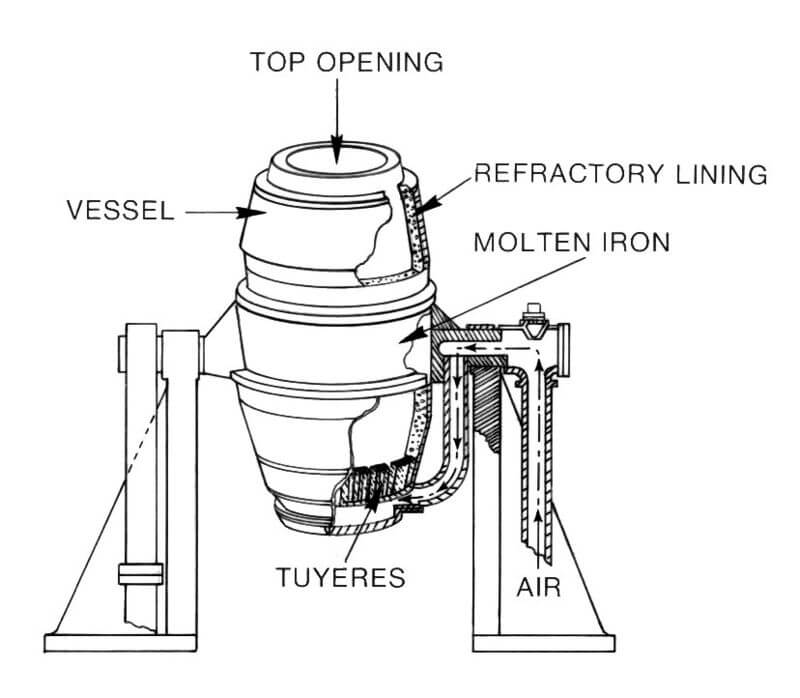
This steel production method was developed in 1856 by the Englishman Henry Bessemer. After this method was developed, there was a significant increase in world steel production. The converter’s internal diameter is about 3.5 meters, its height is 6-7 meters, and its capacity is between 25-100 tons. The processing time is about 25-30 minutes. The furnace’s outer shell is built as a steel construction, while the interior is lined with high-temperature-resistant bricks.
Before air is blown in, solid limestone is added to the furnace to burn off excessive unwanted materials such as carbon, silicon, and manganese during the blowing process, turning them into slag. By the time blowing is finished, sulfur and phosphorus have also burned off. During this, about 15% of the iron also oxidizes and turns into slag.
The steel obtained by this steel production method isn’t of the desired quality. Since air is blown in, its nitrogen content is high. For this reason, it’s among the steel production methods that have gradually been abandoned.
Siemens-Martin Steel Production Method
Until recently, this was among the favorite steel production methods. It’s based on melting and recycling scrap iron and steel products.

This method uses a Siemens-Martin furnace. The furnace is heated with flue gas and air taken from separate channels. The temperature is raised to up to 1700 degrees. Carbon is burned with a hot, oxygen-rich flame. The flame licks the raw material and melts it, and the molten steel is poured into a ladle.
The furnace has two ports, one for gas and one for air intake. Before the hot combusted gases go to the flue, one of these ports is periodically licked from outside while the other lets air in. This way, the port letting air in is continuously heated, increasing combustion efficiency. Quality steel is obtained after 5-10 hours of work. Furnace capacities are around 100-350 tons.
The slag (waste) from Siemens-Martin furnaces is used as a cement additive.
For detailed information, SEE: Siemens-Martin Steel Production Method
Steel Production in Electric Arc Furnaces
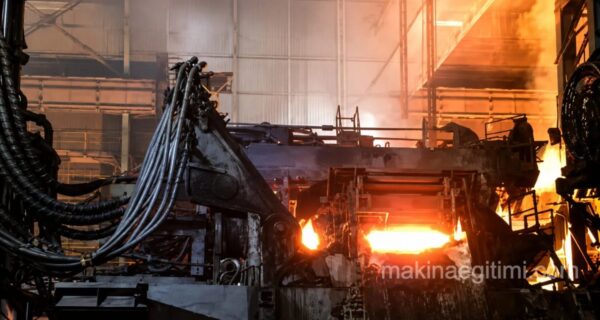
In electric arc furnaces (EAF), scrap steel is melted and converted back into high-quality steel. The basic task of most modern electric arc furnaces is to convert solid raw material into liquid crude iron in as short a time as possible.
One-third of world steel production takes place in electric arc furnaces. By consuming scrap steel, electric arc furnaces can produce low- and high-alloy steel over a wide range (especially stainless steels).
Normally, the capacities of electric arc furnaces range between 50-150 tons. The production time can vary between 45 minutes and 2 hours. When the scrap in the furnace is completely melted, the furnace temperature is above 1650 degrees.

Scrap materials are grouped:
- By chemical composition (such as low-alloy, stainless steel)
- By residual element content (such as S, P, and Cu)
- By physical size and shape.
High-quality scrap means scrap that’s well defined in every respect (physical and chemical content) with low residual content. This type of scrap is very expensive and is consumed at the final stage of steel production.

Steel scrap or other iron-containing materials are first loaded into the EAF. The furnace lid is then closed. This lid has graphite electrodes that can be lowered into and raised out of the furnace. As current is applied to the electrodes and passes from the electrodes to the material inside the furnace, an intense arc forms in between. The heat released by this arc melts the scrap material inside the furnace. The electricity required for this process is enough to power a town of 100,000 people.

During the melting process, other iron-based metals are added to achieve the required chemical composition in the resulting steel. As in basic oxygen furnaces, oxygen is blown into the furnace to purify the steel. Additives are also added to bind non-ferrous impurities in the structure, forming slag. After samples are taken to check the chemical composition, the slag floating on the liquid melt is removed first. Then the steel is tapped from the furnace and sent either to a second refining process or to a continuous casting unit.

Today, modern electric arc furnaces produce 150 tons of steel per melt, and the time required for this process is about 90 minutes. This furnace’s only advantage is providing clean heating without adding internal additives. Among steel production methods, this method is more preferred in countries where electricity is cheap and abundant.
Steel Production in the Basic Oxygen Furnace (BOF)
The basic differences between basic oxygen furnaces and electric arc furnaces are;
1- The reactions occurring in the furnace continue autogenously. That is, it has self-sufficient energy.
2- The raw material for basic oxygen furnaces primarily consists of 70-80% liquid metal (liquid pig iron) coming from the blast furnace. The remaining portion consists of steel scrap or iron ore

The BOF method is the most preferred among steel production methods.
While the basic oxygen furnace is tilted at about 45 degrees, scrap material amounting to about 25-30% of the total load’s weight is loaded into it. Then liquid pig iron is immediately added on top. The furnace is brought to a vertical position and slag-forming material (lime-dolomite) is added from the top. The nozzle that will blow in oxygen is lowered to within a few feet of the furnace floor. The oxygen nozzle is continuously water-cooled
Structure of Basic Oxygen Furnaces
The interior of basic oxygen furnaces is lined with basic-character MgO refractory bricks. The MgO takes up the phosphorus and sulfur in the liquid pig iron loaded into the furnace, forming slag. The capacities of basic oxygen furnaces are typically around 250 tons.
Steel production in basic oxygen furnaces takes about 15-20 minutes. A 250-ton-capacity BOF has a height of 10.33 m, an outer diameter of 7.9 m, a wall thickness of 0.92 m, and a working volume of about 290 m3. The optimum liquid metal and scrap ratios to be loaded into the furnace, the amount of slag-forming additives, the height of the lance blowing oxygen into the furnace, and the blowing time are automatically controlled by computer.

Steel Production in Basic Oxygen Furnaces
After the relevant raw material is loaded into the basic oxygen furnace, pure oxygen more than 99.5% pure is blown in from the top of the furnace at high speed. The oxygen oxidizes the carbon and silicon present in the liquid pig iron, releasing enough heat to melt the roughly 20% solid scrap in the furnace. Additionally, the oxidation of manganese, iron, and phosphorus in the liquid pig iron also contributes some heat to the environment.
After the chemical analysis of the steel produced by the basic oxygen furnace is performed at 1537-1650 °C, it’s sent either to a second refining process or directly to continuous casting units. Here, in the continuous casting units, the solidifying steel is turned into semi-finished billets in the form of squares, rectangles, or slabs.

When oxygen is sent into the furnace and boiling begins, the silicon in the liquid metal converts to SiO2, and this SiO2 reacts with other slag-forming materials. At the same time, CO gas is released as the carbon in the liquid metal burns.
During steel production in the basic oxygen furnace, a significant amount of energy is released through the exothermic oxidation reaction. This extra heat is consumed to melt the steel scrap or iron ore added to the mixture.
Today, systems have also been developed that blow oxygen from the bottom of the furnace converter. Oxygen gas is fed through 14-22 tuyeres. The outer parts of the tuyeres are cooled with hydrocarbon liquid at the entrance to the converter. The oxygen blowing rate into the environment is about 4-4.5 m3/minute. For every ton of steel produced in basic oxygen furnaces, 60 to 100 kg of slag is released.
Basic Oxygen Method
In steel production, the basic oxygen furnace (BOF) rapidly reduces the carbon content by blowing pure oxygen into molten pig iron.
Electric Arc Furnace
Electric arc furnaces are widely used in steel production by melting scrap steel through recycling.
Continuous Casting Method
Continuous casting allows molten steel to be passed directly through molds and turned into billets or slabs.
Related Questions
The air blown into the furnace triggers the combustion of unwanted elements (such as silicon and carbon) in the pig iron. Since these combustion reactions themselves release a large amount of heat, there’s no need for additional external heating.
Limestone combines with unwanted elements like excess sulfur and phosphorus that are being burned off during blowing, forming slag. This slag allows the unwanted substances to separate from the liquid steel and collect on the surface.
Related Posts