
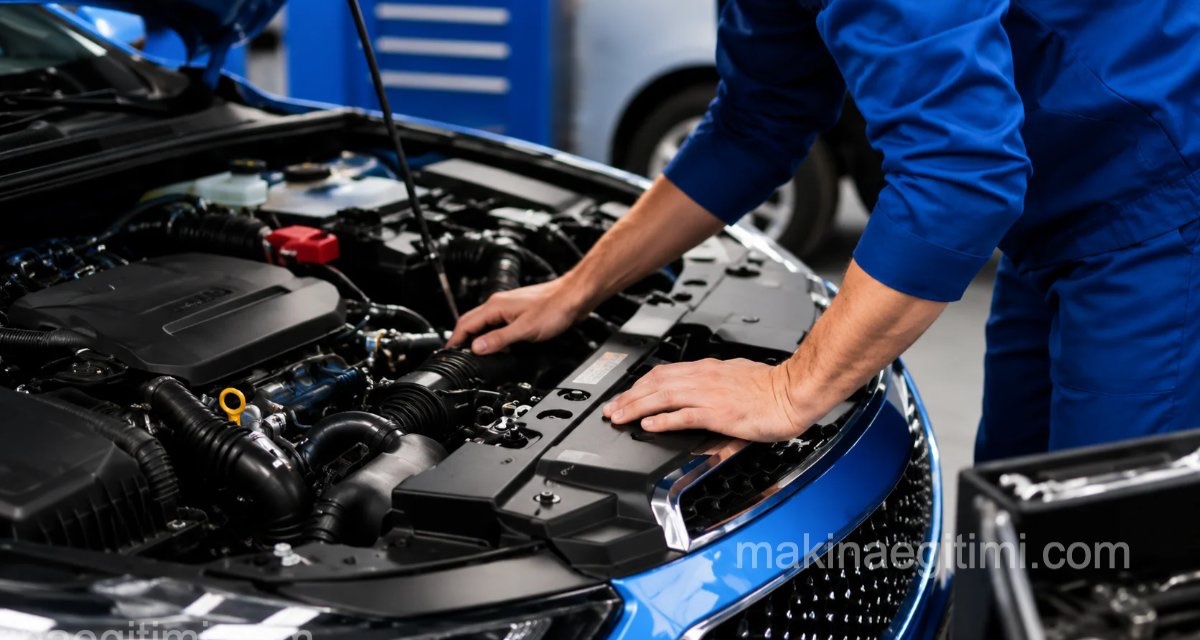
Which parts of your vehicle should you replace, and when? For example, what’s the average replacement time for brake fluid, brake pads, coolant, engine oil and oil filter, automatic transmission fluid, power steering fluid, the battery, the timing belt, spark plugs, or the air filter? Every how many years should they be replaced? Or at how many km should I replace them? This topic, which many drivers wonder about, varies from vehicle to vehicle, but it’s possible to give approximate figures.
Many drivers are especially curious about when to replace the timing belt. And they’re right to be curious, because if you neglect to replace the timing belt when it’s due, it can suddenly snap while you’re driving. A broken timing belt can also cause major damage to your vehicle’s engine components.
For our detailed article on this topic,
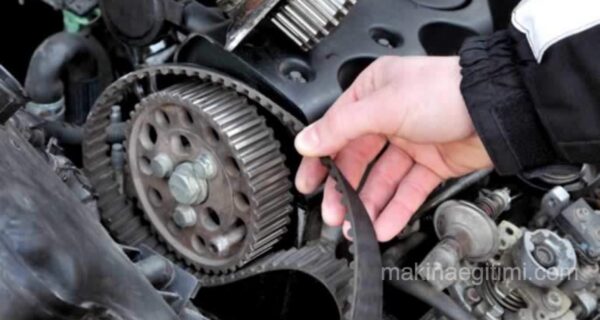
Related Post What Happens If a Timing Belt Breaks? Breakage and Tooth-Skipping
How to tell if a timing belt has failed. What happens if it breaks. How do you know it broke. Why and how does it break. Timing belt tooth-skipping and aging.
The times given in the periodic vehicle maintenance list below have been compiled from the recommendations of many vehicle manufacturers. Still, you should check your vehicle’s manual for exact figures.
Replacement Intervals for Vehicle Parts

Tire Pressure and Tire Condition:
You should check tire pressure before every drive.
You should also check the condition of your tires and their tread depth. It would be wrong to give a specific time interval for this. Wear on your tires will vary depending on your driving habits, the climate of the region you live in, and road conditions. Check your tires periodically (from time to time).

Brakes (Brake Fluid and Brake Pads):
For drivers wondering about brake fluid replacement time: Brake Fluid should be replaced every 2 years or 24,000 miles (39,000 km).
Brake pads: When the thickness of the brake pads reaches the minimum safe thickness.

How often should coolant be changed?
Most vehicle manufacturers recommend changing the coolant every 2 years or 24,000 miles (39,000 km).

How often should engine oil and the oil filter be changed?
Most vehicle manufacturers recommend changing your vehicle’s engine oil and oil filter every 3,000 miles (4,800 km).

Automatic transmission fluid:
For those wondering how often transmission fluid should be changed: Most vehicle manufacturers recommend changing the vehicle’s transmission fluid every 2 years or 24,000 miles (39,000 km).
Power steering fluid:
Most vehicle manufacturers recommend checking your vehicle’s power steering fluid every 3 months.
Battery check time:
Vehicle batteries work on the same principle as rechargeable batteries. For this reason, they’ll lose their efficient energy storage capability over time. Most vehicle manufacturers recommend checking your vehicle’s battery every 4-5 years.
Vehicle lights:
Regularly check your vehicle’s lights to make sure there are no burnt-out bulbs and that all lights are working properly.
Windshield wipers:
It’s important to make sure your windshield wipers are working correctly, so be sure to replace them as soon as they wear out.
How often should the timing belt be renewed?
Most vehicle manufacturers recommend replacing the timing belt every 60,000 to 90,000 miles (96,000 km – 145,000 km).

How often should spark plugs be replaced?
For drivers wondering about spark plug replacement time: Most vehicle manufacturers recommend replacing spark plugs every 30,000 to 100,000 miles (48,000 km-160,000 km).
How many kilometers should the air filter be replaced at?
Most vehicle manufacturers recommend replacing the vehicle’s air filter every year or 24,000 miles (39,000 km).
Timing Belt Life
Timing belts, though this varies by manufacturer, generally need to be replaced every 90,000-120,000 km.
Brake Pad Inspection
Front brake pads generally need to be replaced more often than rear pads, since they carry more load.
Battery Life
A standard vehicle battery has an average lifespan of 3-5 years, depending on usage conditions.
Related Questions
This belt moves the engine’s crankshaft and camshaft in synchronized motion. If the belt suddenly breaks, the pistons and valves stop moving in sync and can collide with each other, causing major internal damage to the engine.
The replacement interval varies depending on how the vehicle is used (city driving, highway), climate, and driving habits. So while the figures given by the manufacturer are an average, it’s best to check the vehicle’s own owner’s manual for the exact interval.
Related Posts
What Happens If a Timing Belt Breaks? Breakage and Tooth-Skipping  Vehicle Dashboard Warning Lights and Their Meanings, Illustrated
 Camshaft Failures. Causes and Prevention
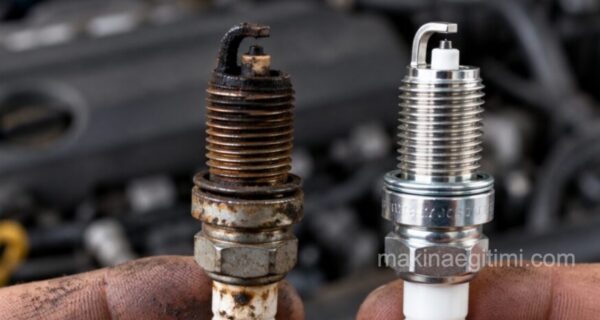 Changing Spark Plugs. How Is a Spark Plug Change Done?
 Why Does the Engine Burn Too Much Oil? The Oil Consumption Problem
 Brake Fluid: Why It Matters and How to Check It
 What Is Piston Ring Replacement? How Is It Done?
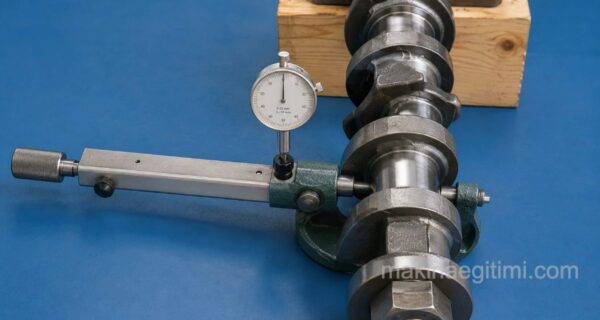 How Is a Camshaft Checked?