Close Menu
  • MAKİNELER ve İMALAT
    • Tools & Equipment
    • Computer-Aided Drawing
    • CAD/CAM Education
    • CNC Machine Programming
    • Casting Technologies
    • Electrical & Electronics Technologies
    • Hydraulics & Pneumatics
    • Manufacturing Processes
    • Manufacturing Technologies
    • Occupational Safety
    • Mold & Die Design
    • Solid Modeling
    • Welding Technology
    • Machine Elements
    • Mechanical Trade Drawing
    • Materials Science
    • Automotive & Vehicle Technologies
    • Robotics Technologies
    • Health Technologies
    • Defense & Aerospace Technologies
    • Descriptive Geometry
    • Technical Drawing
    • Software & Hardware Technologies
    • Innovative Manufacturing Methods
  • TEKNOLOJİ ve YAŞAM
    • OTOMOBİLLER ve TAŞIT
      • Vehicle & Engine Knowledge
      • Safe Driving
      • Sürüş Destek Sistemleri
    • Genel Kültür
      • Movies & TV Shows
      • Görsel ve Grafik Sanat
      • Books & Literature
      • Music
      • Sports
      • History
      • History of Technology
    • GÜNDELİK YAŞAM TEKNOLOJİLERİ
    • Hobbies & Entertainment
    • Internet Technologies
    • Health
    • Mobile Technologies
Makine Eğitimi
  • Machines & Manufacturing
    Machine Elements
    Hydraulics & Pneumatics
    Technical Drawing
    Computer-Aided Design & Manufacturing
    Basic Manufacturing Processes
    Manufacturing Processes
    Industry Technologies
    Other Technical Courses
    Motion & Power Transmission
    Simple Machines
    Chains & Sprockets
    Shafts & Journals
    Gears
    Cams
    Couplings
    Belts & Pulleys
    Springs
    Bearings
    Keys
    Fastening Joining
    Retaining Rings
    Screws, Bolts & Nuts
    Cotter Pins
    Flanges
    Welding
    Rivets
    Pins & Bolts
    Washers
    Calculators
    Gear Ratio Calculator
    Spring Constant Calculator
    Belt Pulley Ratio Calculator
    Other Machine Elements
    Slides & Linear Guides
    Brakes
    Flywheels
    Clamps
    Shock Absorbers
    Gaskets & O-Rings
    Seals & Sealing Elements
    Hydraulics
    Introduction to Hydraulics & Principles
    Hydraulic Systems & Applications
    Accumulators
    Filters
    Motors
    Pumps
    Valves
    Pneumatics
    Introduction to Pneumatics & Principles
    Pneumatic Systems & Applications
    Pneumatic Circuit Components
    Valves
    Cylinders
    Silencers
    Motors
    Compressors
    Dryers
    Conditioning Units
    Common Topics & Maintenance
    Hydraulic & Pneumatic Maintenance
    Study Notes, Exams & Tests
    Technical Drawing
    Introduction to Technical Drawing
    Geometric Drawings
    Perspective & Projection
    Orthographic Views
    Dimensioning
    Sectioning
    Assembly & Detail Drawings
    Tolerances
    Surface Finish Symbols
    Mechanical Engineering Drawing
    Screws, Bolts & Nuts
    Pulley Drawings
    Gear Drawings
    Shafts & Journals
    Bearing Drawings
    Pins & Bolts
    Spring Drawings
    Welds in Technical Drawing
    Washers
    Cotter Pins
    Technical Drawing Exercises
    Mechanical Drawing Exercises
    Gear Exercises
    View Extraction Exercises
    Pulley Exercises
    Pin & Bolt Exercises
    Threaded Fastening Exercises
    Descriptive Geometry
    Computer-Aided Drawing
    AutoCAD Drawing Lessons
    Computer-Aided Drawing Exams
    Solid Modeling & Animation
    Solid Model Drawing Files
    Solid Model Assembly Examples
    Solid Model Drawing Lessons
    3D CAD Software Reviews
    Solid Modeling Exercises
    CNC Programming
    CAM
    Measurement & Inspection
    Dial Indicators
    Calipers
    Gauges
    Micrometers
    Materials Science
    Steels
    Cast Iron
    Aluminum
    Plastics
    Material Testing & Hardness Measurement
    Occupational Safety
    Workshop Safety
    Safety When Working With Electricity
    Machine Safety Rules
    Hand Operations
    Filing
    Marking
    Cutting Operations
    Reaming
    Tapping
    Threading With a Die
    Drill Bit Sharpening
    Working With Machines
    Basic Turning Operations
    Basic Milling Operations
    Shaper Machine
    Machining
    Turning
    Milling
    Grinding
    Innovative Manufacturing Methods
    EDM (Electrical Discharge Machining)
    Laser Machining
    Waterjet Machining
    3D Printing
    3D Scanners
    Welding
    Rolling
    Casting
    Mold & Die Design
    Mechanical & Hydraulic Presses
    Blanking & Piercing Dies
    Bending Dies
    Drawing Dies
    Plastic Injection Molds
    Extrusion Dies
    Compound Dies
    Progressive Dies
    Blow Molds
    Spinning Dies
    Spray Molds
    Manufacturing of Machine Parts
    Automotive & Vehicle Technologies
    Motor Vehicle Manufacturing
    Raw Material Production
    History of Technology
    Health & Medical Technologies
    Defense & Aerospace
    Robotics Technologies
    Software & Hardware Technologies
    Mechanics - Strength of Materials
    Physics Topics
  • Technology & Life
    Hobbies & Entertainment
    Sports
    Music
    Vehicle & Engine Knowledge
    Vehicle Maintenance & Repair
    Safe Driving
    Driver Assistance Systems
    History
    Movies & TV Shows
    Books & Literature
    Computers & Internet
    Computer Tips
    Software Reviews
    Hardware & Peripherals
    Practical & Safe Internet Use
    Visual & Graphic Art
    Mobile Technologies
    Travel
    Science
    Health
    First Aid Knowledge
    Everyday Technologies
Makine Eğitimi
Home»Materials Science»Aluminum Alloys and Their Applications
30 August 2026Updated:3 September 2026

Aluminum Alloys and Their Applications

aluminum alloys and their applications

In this article in our materials science category, we’ll cover the applications of aluminum alloys. So, where are aluminum alloys used?

  • Wrought Aluminum Alloys and Their Applications
  • Cast Aluminum Alloys and Their Applications
  • Classification of Aluminum Alloys
  • Related Questions
aluminum alloy trekking pole

Aluminum alloys are preferred in many fields where the material needs to be light, sturdy, and rust-free. For example, trekking (hiking) poles.

Wrought Aluminum Alloys and Their Applications

Mg-Si-Al: Has good formability and polishing capability, medium strength, and is resistant to corrosion. Used in aircraft construction, decoration work, and manufacturing electrical conductors. These alloys are sold on the market under trade names such as Aludur 533, Anticorodal, Duralumin, K.. Legal, Polital, and Silal V.

Cu-Mn-Al

Has a high tensile strength. Used in constructions requiring high strength, in the manufacture of machine parts, vehicles, lifting equipment, and railway cars. In the hardened state, its strength reaches that of St. 52 steel.
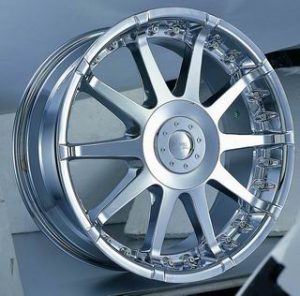
aluminum alloy car wheel rim

Aluminum alloy car wheel rim

applications of aluminum alloys audi A2

A view from Audi A2 manufacturing. Because of their light and sturdy structure, aluminum alloys also have a wide place in automobile manufacturing.

Cu-Ni-Al: Hardens at room temperature as a result of heat treatment. Doesn’t lose its strength when hot. Used in the manufacture of internal combustion engine cylinder heads and pistons.

Cu-Al: Since it has good strength, it’s used for producing highly stressed parts. This alloy is also called Lautal Qualitaet 55 Allautal.

Al-Cu aluminum-copper alloy welding wire

The image above shows Al-Cu aluminum-copper alloy welding wire.

Zn-Mg-Al: Has a higher strength than all other aluminum alloys. For this reason it’s also widely used in aircraft construction.

Mg-Al: Is resistant to seawater and has very high strength.

If we were to manufacture a beverage can, the requirements we’d look for would be: Rust resistance, high tensile strength (for forming in a die), light weight, pressure resistance, and being unaffected by chemicals.

Aluminum-magnesium alloys are used in the manufacture of pressurized vessels and in shipbuilding. They’re resistant to corrosion.

Al Mg 3 and Al Mg 5 alloys are widely used in shipbuilding.
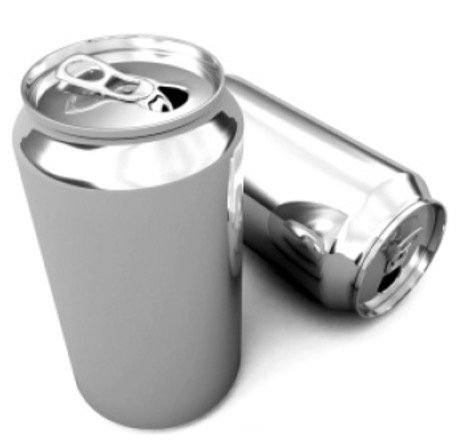
aluminum alloy cola can

An Al-Mg alloy eyeglass frame

Mg-Mn-Al: Resistant to seawater. For this reason it’s widely used in shipbuilding, the chemical industry, and the food industry. This alloy is also sold on the market under the trade names Ks-Seewasser, Peraluman, and Duralumin Mg 25.

Si-Al: Its strength is higher than pure aluminum and it’s resistant to corrosion. This alloy is also called SILUMIN.

Formability of Wrought Alloys


Wrought aluminum alloys can be easily formed through processes like rolling and extrusion.

Complex Shapes of Cast Alloys


Cast aluminum alloys, poured into a mold in liquid form, make it possible to produce parts with complex geometries.

Series Number Classification


Aluminum alloys are classified with a standard 4-digit series number according to their main alloying element.

Cast Aluminum Alloys and Their Applications

Cu-Al: Has good castability.
Zn-Cu-Al: Its strength is higher than pure aluminum
Cu-Ni-Al: Al-Cu-Ni alloys are used in the manufacture of heat-resistant parts such as cylinder heads.
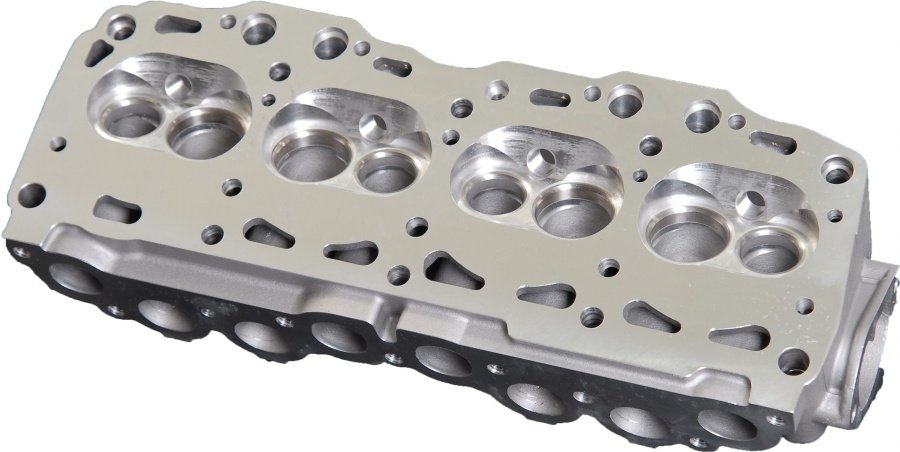
applications of aluminum alloys Al-Cu-Ni alloy cylinder head

Si-Al: Has excellent casting properties. This alloy is also called silumin.
Si-Cu-Al Has quite good casting properties.

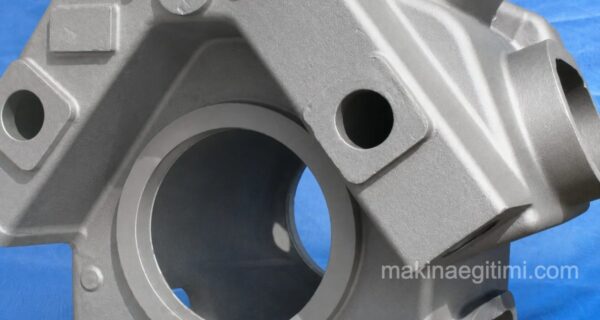
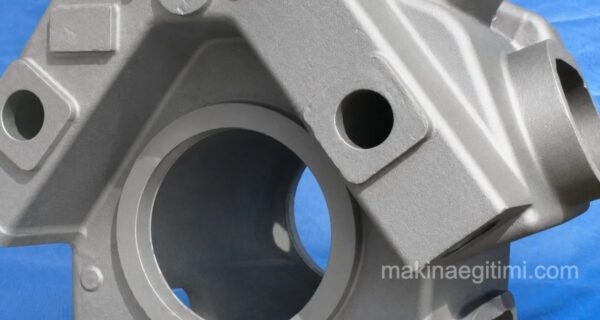
Si-Mg-Al Used in the manufacture of parts subject to high mechanical stress, such as diesel engine blocks and gearbox housings. This alloy is also called “Silumin gamma.”

Al-Si-Mg alloy welding rods used for argon (TIG) welding

Mg-Al: Resistant to seawater.

AlMg3 Alloy: More resistant to seawater, chemicals, and mild alkaline solutions than aluminum and other alloys. It has good polishing capability. Used in the manufacture of certain parts of ships and marine machinery, aircraft construction, and cast parts in the chemical industry.

Al Mg 5 Alloy: Has quite good casting properties.

AlMg 7 Alloy: This is also an alloy with quite good casting properties. It has a high resistance limit against chemicals and seawater.

Mg-Mn-Al: Resistant to seawater.
Mg-Si-Al: Has good castability

Classification of Aluminum Alloys

1000 Series: These are materials that are pure or contain very few alloying elements, and can be easily formed into sheets, foil, and profiles. Also suitable for deep drawing. Used in manufacturing EC-grade conductors, and, for the others where high strength isn’t required, in curtain tracks, doors, window profiles, foil, kitchenware, and various other items.

2000 Series: The main alloying element in this series is copper. Requires heat treatment. The tensile strength of the hardened alloy increases, and it machines well. Tensile strength approaches 490 MPa (490 N/mm²). Has low corrosion resistance and may require galvanic isolation. Mainly used in the automotive, railcar, aircraft, and munitions industries, where high strength and light weight are required.

3000 Series: The main alloying element is manganese, at around 1-1.5%. Very small amounts of iron and silicon also characterize the alloy. These are medium-strength alloys with good machinability. Mostly used in manufacturing tanks, storage vessels, campers, and other sheet metal work.

4000 Series: The main alloying element is silicon. Low melting temperature, flexibility, and decorative appearance are the important properties of this series. Solder wire, architectural applications, and radiator fins are its main uses.

5000 Series: The effective alloying element is magnesium. High tensile strength, hardness, wear resistance, corrosion resistance against marine atmospheres, and good weldability are the important properties. Not well suited to cold forming. Used for special constructions requiring hardness and strength.

6000 Series: This series is characterized by silicon and magnesium together. Moderate mechanical strength, good formability, suitability for heat treatment, and corrosion resistance are the important properties, and these series alloys are used in the pharmaceutical, chemical, and food industries, in packaging, and in the manufacture of machine parts (such as automatic lathe parts).

7000 Series: Zinc, the main additive, is used at around 5% and gives the alloys very high tensile strength. Overhead cranes, truck beds, threaded machine parts, and aircraft, rocket, and munitions industry parts are its main uses.

8000 Series: Lithium, an alloying additive used at around 2%, gives the series light weight and high tensile and yield strength. Used in the aerospace industry. Has high fatigue strength.

Related Questions

These alloys are much lighter while offering a strength close to steel. This light weight reduces the vehicle’s total weight, increasing fuel efficiency and performance.

In its hardened state, this alloy can reach a tensile strength close to some structural steels. This high strength makes it suitable for heavy-load applications such as lifting equipment or vehicle parts.

Related Posts

nickel cast iron The Effect of Alloying Elements in Cast Iron Siemens Martin Çelik Üretim Yöntemi The Siemens Martin Steel Production Method Cast Irons and Types of Cast Iron, featured image Cast Irons and Types of Cast Iron Ductile (Spheroidal Graphite) Cast Iron Ductile (Spheroidal Graphite) Cast Iron Aluminum Production. How Is Aluminum Produced Aluminum Production. How Is Aluminum Produced plastiklerin kullanım alanları Applications of Plastics Properties of aluminum alloys - header image Aluminum Alloys and Their Properties White Cast Iron White Cast Iron
Aluminum
Share. Facebook Twitter WhatsApp Tumblr Email Telegram Copy Link

Leave A Reply Cancel Reply


Who Is Eric the Eel? The Funniest Moment in Olympic Swimming History
Hagi or Zidane? Comparing Two Legendary Playmakers
  • Contact
  • Terms of Service
  • Privacy & Cookie Policy

Type above and press Enter to search. Press Esc to cancel.