
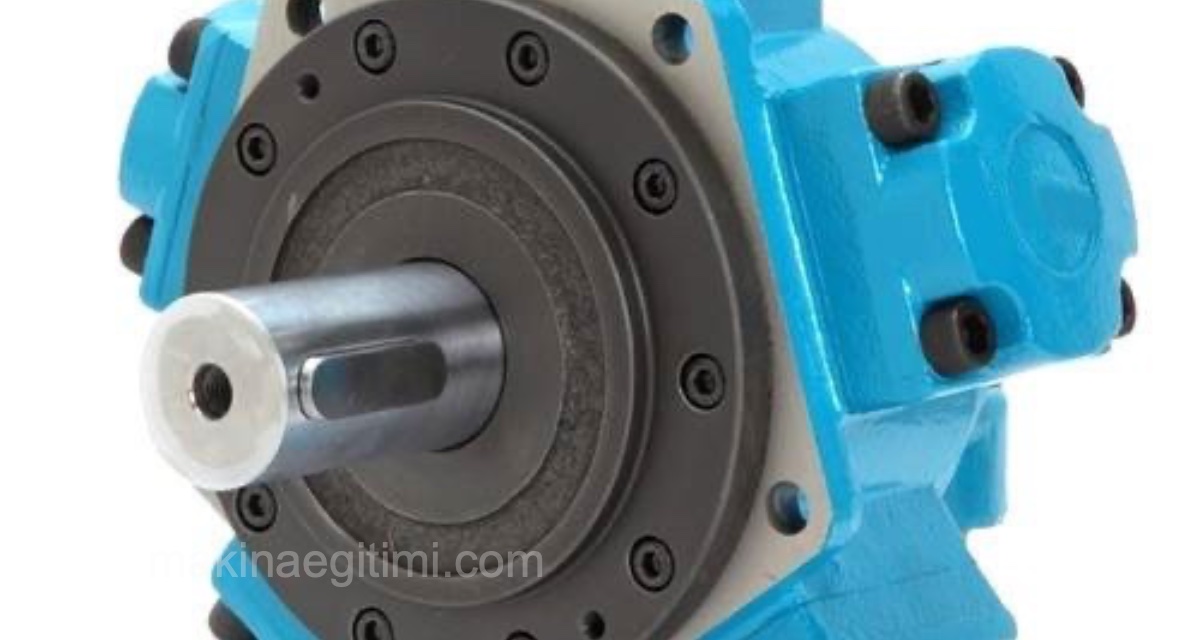
Advantages of Hydraulic Motors (Strengths)
Can be used everywhere, particularly in heavy equipment. We can adjust speed without stopping the motor.
Speed adjustment is infinitely variable between certain values.
They can transmit large forces.
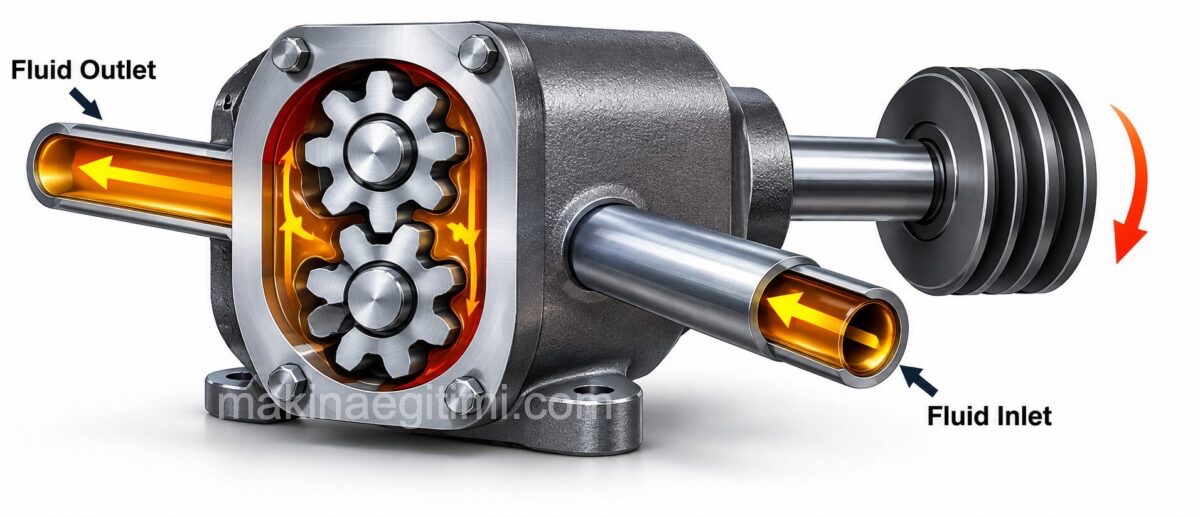
Since hydraulic fluid is incompressible, smooth operating speeds can be achieved. Speed adjustment can be done steplessly.
In hydraulic motors, the direction of rotation can be changed while the motor is still running.
They can be stopped during overload conditions using safety valves.
They are economical in terms of their range of applications.
They have the ability to slow down and brake by reducing fluid flow rate.
They have the ability to be fitted and run on any type of machine.
High Torque Density
Despite their small size, hydraulic motors can provide much higher torque density than electric motors.
Variable Speed Control
The speed of hydraulic motors can be controlled steplessly by varying the fluid flow rate.
Leakage Risk
Wear on hoses and connections in hydraulic motors can lead to oil leaks over time.
Disadvantages of Hydraulic Motors (Weaknesses)
Because hydraulic fluids have high frictional resistance, their rotational speeds are low.
Hydraulic motors are very expensive.
Hydraulic motors are large in size.
They cannot be used at high temperatures.
They are very sensitive to contamination.
Related Questions
Being able to change speed without stopping the motor allows the production machinery or heavy equipment to operate continuously and without interruption. This offers a major advantage in time and efficiency, particularly for heavy equipment that needs to run continuously at different speeds.
The hoses and connection points in the system are constantly exposed to high pressure, so they can wear down over time. This wear can create small gaps at the connection points, leading to oil leaks.
Related Posts
 What Is a Hydraulic Pump. How Does It Work?
 Calculating the Moisture Content of Compressed Air
 What Is a Pneumatic Compressor, What Does It Do?
 Pneumatic Directional Control Valves
 Hydraulic Pressure Line Filter Explained
 Pneumatic Conditioners (FRL Units)
 Force Calculations in Pneumatic Cylinders
 Hydraulic Oil Selection and Properties Required in Hydraulic Oils