Close Menu
  • MAKİNELER ve İMALAT
    • Tools & Equipment
    • Computer-Aided Drawing
    • CAD/CAM Education
    • CNC Machine Programming
    • Casting Technologies
    • Electrical & Electronics Technologies
    • Hydraulics & Pneumatics
    • Manufacturing Processes
    • Manufacturing Technologies
    • Occupational Safety
    • Mold & Die Design
    • Solid Modeling
    • Welding Technology
    • Machine Elements
    • Mechanical Trade Drawing
    • Materials Science
    • Automotive & Vehicle Technologies
    • Robotics Technologies
    • Health Technologies
    • Defense & Aerospace Technologies
    • Descriptive Geometry
    • Technical Drawing
    • Software & Hardware Technologies
    • Innovative Manufacturing Methods
  • TEKNOLOJİ ve YAŞAM
    • OTOMOBİLLER ve TAŞIT
      • Vehicle & Engine Knowledge
      • Safe Driving
      • Sürüş Destek Sistemleri
    • Genel Kültür
      • Movies & TV Shows
      • Görsel ve Grafik Sanat
      • Books & Literature
      • Music
      • Sports
      • History
      • History of Technology
    • GÜNDELİK YAŞAM TEKNOLOJİLERİ
    • Hobbies & Entertainment
    • Internet Technologies
    • Health
    • Mobile Technologies
Makine Eğitimi
  • Machines & Manufacturing
    Machine Elements
    Hydraulics & Pneumatics
    Technical Drawing
    Computer-Aided Design & Manufacturing
    Basic Manufacturing Processes
    Manufacturing Processes
    Industry Technologies
    Other Technical Courses
    Motion & Power Transmission
    Simple Machines
    Chains & Sprockets
    Shafts & Journals
    Gears
    Cams
    Couplings
    Belts & Pulleys
    Springs
    Bearings
    Keys
    Fastening Joining
    Retaining Rings
    Screws, Bolts & Nuts
    Cotter Pins
    Flanges
    Welding
    Rivets
    Pins & Bolts
    Washers
    Calculators
    Gear Ratio Calculator
    Spring Constant Calculator
    Belt Pulley Ratio Calculator
    Other Machine Elements
    Slides & Linear Guides
    Brakes
    Flywheels
    Clamps
    Shock Absorbers
    Gaskets & O-Rings
    Seals & Sealing Elements
    Hydraulics
    Introduction to Hydraulics & Principles
    Hydraulic Systems & Applications
    Accumulators
    Filters
    Motors
    Pumps
    Valves
    Pneumatics
    Introduction to Pneumatics & Principles
    Pneumatic Systems & Applications
    Pneumatic Circuit Components
    Valves
    Cylinders
    Silencers
    Motors
    Compressors
    Dryers
    Conditioning Units
    Common Topics & Maintenance
    Hydraulic & Pneumatic Maintenance
    Study Notes, Exams & Tests
    Technical Drawing
    Introduction to Technical Drawing
    Geometric Drawings
    Perspective & Projection
    Orthographic Views
    Dimensioning
    Sectioning
    Assembly & Detail Drawings
    Tolerances
    Surface Finish Symbols
    Mechanical Engineering Drawing
    Screws, Bolts & Nuts
    Pulley Drawings
    Gear Drawings
    Shafts & Journals
    Bearing Drawings
    Pins & Bolts
    Spring Drawings
    Welds in Technical Drawing
    Washers
    Cotter Pins
    Technical Drawing Exercises
    Mechanical Drawing Exercises
    Gear Exercises
    View Extraction Exercises
    Pulley Exercises
    Pin & Bolt Exercises
    Threaded Fastening Exercises
    Descriptive Geometry
    Computer-Aided Drawing
    AutoCAD Drawing Lessons
    Solid Modeling & Animation
    Solid Model Drawing Files
    Solid Model Assembly Examples
    Solid Model Drawing Lessons
    3D CAD Software Reviews
    Solid Modeling Exercises
    CNC Programming
    CAM
    Measurement & Inspection
    Dial Indicators
    Calipers
    Gauges
    Micrometers
    Materials Science
    Steels
    Cast Iron
    Aluminum
    Plastics
    Material Testing & Hardness Measurement
    Occupational Safety
    Workshop Safety
    Safety When Working With Electricity
    Machine Safety Rules
    Hand Operations
    Filing
    Marking
    Cutting Operations
    Reaming
    Tapping
    Threading With a Die
    Drill Bit Sharpening
    Working With Machines
    Basic Turning Operations
    Basic Milling Operations
    Shaper Machine
    Machining
    Turning
    Milling
    Grinding
    Innovative Manufacturing Methods
    EDM (Electrical Discharge Machining)
    Laser Machining
    Waterjet Machining
    3D Printing
    3D Scanners
    Welding
    Rolling
    Casting
    Mold & Die Design
    Mechanical & Hydraulic Presses
    Blanking & Piercing Dies
    Bending Dies
    Drawing Dies
    Plastic Injection Molds
    Extrusion Dies
    Compound Dies
    Progressive Dies
    Blow Molds
    Spinning Dies
    Spray Molds
    Manufacturing of Machine Parts
    Automotive & Vehicle Technologies
    Motor Vehicle Manufacturing
    Raw Material Production
    History of Technology
    Health & Medical Technologies
    Defense & Aerospace
    Robotics Technologies
    Software & Hardware Technologies
    Mechanics - Strength of Materials
    Physics Topics
  • Technology & Life
    Hobbies & Entertainment
    Sports
    Music
    Vehicle & Engine Knowledge
    Vehicle Maintenance & Repair
    Safe Driving
    Driver Assistance Systems
    History
    Movies & TV Shows
    Books & Literature
    Computers & Internet
    Computer Tips
    Software Reviews
    Hardware & Peripherals
    Practical & Safe Internet Use
    Visual & Graphic Art
    Mobile Technologies
    Travel
    Science
    Health
    First Aid Knowledge
    Everyday Technologies
Makine Eğitimi
Home»Hydraulics & Pneumatics»Hydraulic Oil Selection and Properties Required in Hydraulic Oils
29 August 2026

Hydraulic Oil Selection and Properties Required in Hydraulic Oils

Hydraulic oil selection

Hydraulic Oil Selection

In a hydraulic system, effective transmission of power is achieved with a fluid that has the following properties.

  • Hydraulic Oil Selection
    • Hydraulic oil selection and the pressure factor 
    • The environmental factor in hydraulic oil selection
    • The safety factor in hydraulic oil selection
  • Properties Required in Hydraulic Oils
  • Related Questions

Low Compressibility; so that pressure and power can be transmitted immediately and efficiently;

Air-Release Property; so that compressibility does not increase due to air bubbles remaining in the fluid;
Anti-foaming; so that foam does not enter the hydraulic system;

Appropriate Viscosity; so that it is viscous enough to provide the necessary lubrication while still circulating easily through the system.

hydraulic oil selection

Hydraulic oil selection is made by taking valves and hydraulic pumps into account, because these are the hydraulic circuit components with the tightest tolerances. An oil that is too thin can lead to leakage and insufficient lubrication; one that is too thick creates excessive fluid friction and damages the pump.

In many industrial systems operating at normal temperatures, pumps require oil with a viscosity in the ISO VG 5-100 range. Piston pumps need oil with higher viscosity than vane pumps. Gear pumps operating at high working temperatures need even thicker oil.

The most commonly used viscosity grades are ISO VG 32 and 46.
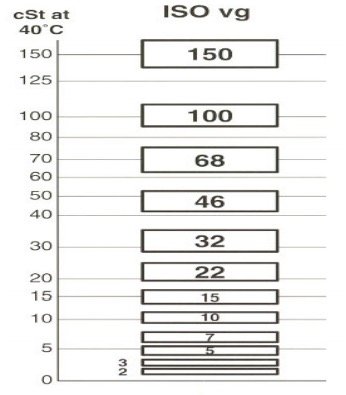
hydraulic viscosity

ISO viscosity grades

Hydraulic oil selection and the pressure factor 

An increase in pressure leads to an increase in viscosity. The viscosity of a typical mineral oil doubles when pressure is raised from atmospheric pressure to 350 bar. At the relatively lower pressures at which most industrial systems operate, the effect of pressure on viscosity is not significant. However, specialized hydraulic equipment—such as extrusion equipment—generates pressures so high that mineral oils cannot be used in these machines. Special synthetic oils can be used instead.

The environmental factor in hydraulic oil selection

Hydraulic equipment expected to operate across a wide temperature range requires a fluid with a high viscosity index.

cold storage forklift hydraulic oil
Oils with a low pour point are preferred for machines operating in cold environments.

If the equipment will operate in a very cold environment—for example, a forklift application in a cold storage facility—the hydraulic oil must also have a low pour point. If the hydraulic equipment operates in an environmentally sensitive area, such as by a lake, riverbank, or in a forest, great care is taken to prevent the fluid from leaking. Biodegradable hydraulic oils should be used whenever possible.

The safety factor in hydraulic oil selection

Among the properties required in hydraulic oils, compliance with safety conditions and occupational safety rules is also important.
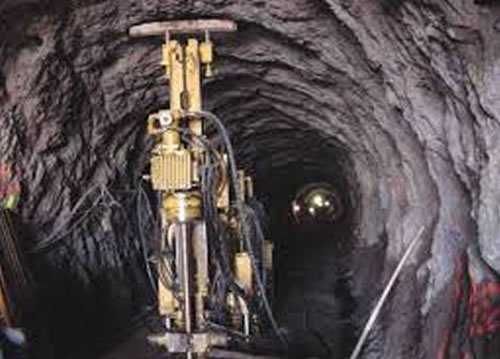
coal mine hydraulic oil
Fire-resistant oils are preferred in places such as coal mines and steel plants.

Mineral oils are not suitable for use in places with fire hazards, such as steel plants and coal mines.

In these cases, fire-resistant hydraulic oils are used. These oils resist the start of a fire and suppress its spread, but they are not required to extinguish it.

The characteristic of fire-resistant hydraulic oils is that they either contain water or are made from non-flammable synthetic oils. Fire-resistant oils that contain a lot of water are not suitable at high temperatures. They are generally weaker lubricants than mineral oils.

Viscosity Stability


A good hydraulic oil should be able to keep its viscosity as stable as possible across a wide temperature range.

Anti-Wear Additives


Hydraulic oils contain additives that protect moving parts such as pumps and valves against wear.

Oxidation Resistance


Quality hydraulic oils are formulated to resist oxidation at high temperatures.

Properties Required in Hydraulic Oils

Hydraulic oils must have the following properties to meet the demands placed on them during operation:

1. They must be thermally stable. Otherwise, they lose their properties at high temperatures;
2. They must be resistant to oxidation; the working life of a hydraulic oil depends on its ability to resist oxidation without degrading.

3. It must be easily separable from water.
4. It must be easy to filter, so that small particles can be easily removed.

Related Questions

An oil that is too thin can leak through the clearances between precision parts, leading to insufficient lubrication. An oil that is too thick offers too much resistance to flow, placing extra load on the pump and potentially causing damage over time.

The moving parts in piston pumps have different tolerance and friction dynamics. A higher-viscosity oil is needed to maintain an adequate lubricating film between these parts.


Related Posts

Directional Control Valves Directional Control Valves piston compressor and its symbol What Is a Pneumatic Compressor, What Does It Do? Types of Pneumatic Motors Types of Pneumatic Motors 2-Way 2-Position Directional Control Valves 2-Way 2-Position Directional Control Valves Birden Fazla Silindirin Yön Kontrol Valfleriyle Kontrolü Controlling Multiple Cylinders with Directional Control Valves Maintenance of Pneumatic Systems Maintenance of Pneumatic Systems Design of Open and Closed Hydraulic Circuits Design of Open and Closed Hydraulic Circuits Pneumatic motors. Their features and working system Pneumatic Motors. Their Features and Working System
Hydraulic & Pneumatic Maintenance
Share. Facebook Twitter WhatsApp Tumblr Email Telegram Copy Link

Leave A Reply Cancel Reply

What Happens If a Timing Belt Breaks? Breakage and Tooth-Skipping
Leonardo da Vinci’s Machines: The Flying, Fighting and Walking Inventions of a Renaissance Genius
  • Contact
  • Terms of Service
  • Privacy & Cookie Policy

Type above and press Enter to search. Press Esc to cancel.