
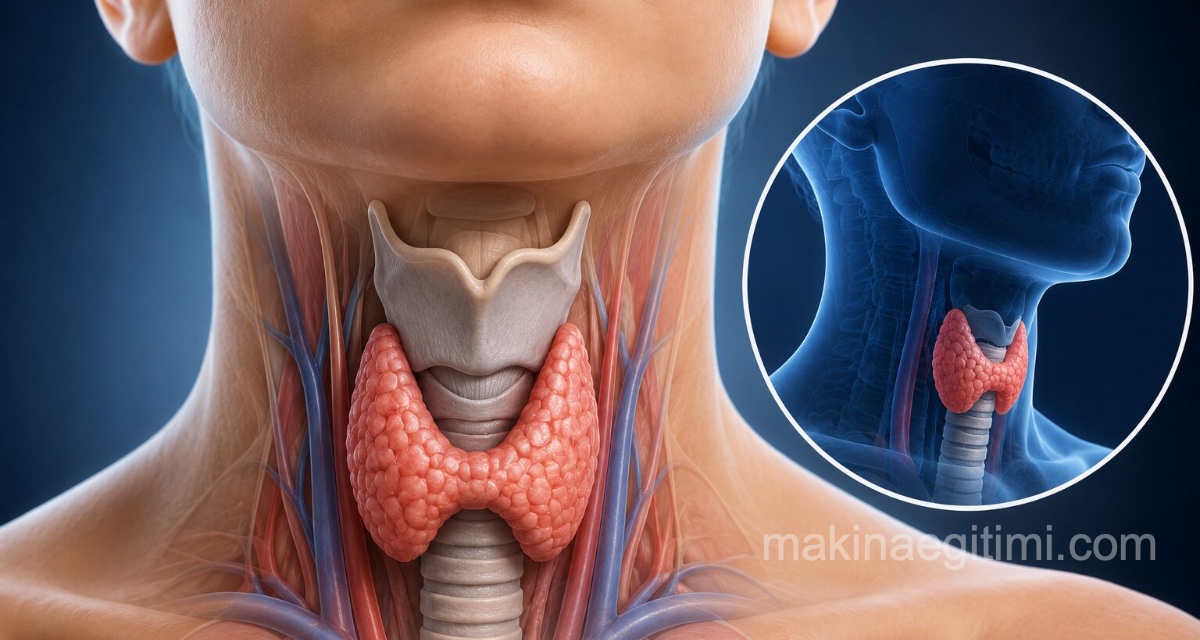
Short answer: The thyroid is a butterfly-shaped gland at the front of the neck that sets the pace of your metabolism. When it is underactive (hypothyroidism), you get fatigue, weight gain, feeling cold, and constipation; when it is overactive (hyperthyroidism), you get heart palpitations, sweating, tremor, nervousness, and weight loss. Diagnosis is made with a simple blood test (TSH), and both conditions can be treated effectively.
You’re constantly tired. While everyone else feels fine, you’re the one who’s cold. Your hair is falling out, you’re gaining weight, and you feel weighed down — yet your test results come back “normal.”
Or the opposite: your heart is racing, your hands are shaking, you’re sweating, you can’t sleep, and you’re losing weight even though your appetite is fine. Everyone around you says “you’re just stressed.”
Both pictures can be a sign of a disorder in how the thyroid gland is working. Thyroid disorders are quite common in Turkey, but because the symptoms tend to get blamed on other causes, diagnosis is often delayed.
The good news is: diagnosis is made with a simple blood test, and treatment is usually very effective.
What is the thyroid and what does it do?
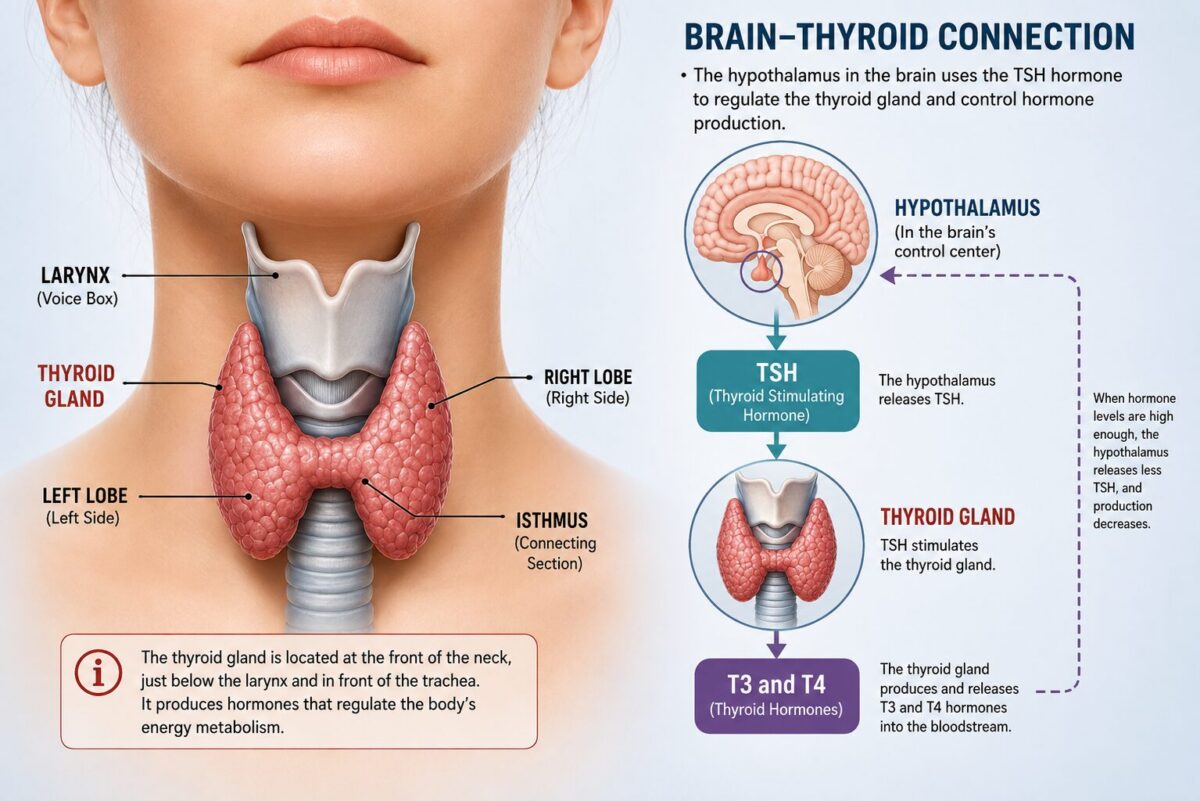
The thyroid is a small, butterfly-shaped gland located at the front of your neck, just below the voice box. It weighs only a few grams, but its effect on the body is far-reaching.
Its job is to produce the hormones called T3 and T4. These hormones act like a kind of “gas pedal” and regulate:
- The speed of your metabolism
- Heart rate
- Body temperature
- Digestive speed
- Energy level and mood
- Skin, hair, and nail health
- Menstrual regularity and fertility in women
- Brain development and growth in children
The thyroid is controlled by the pituitary gland in the brain. The pituitary releases a hormone called TSH, sending the thyroid a “work harder” signal.
Why does TSH read in reverse? This is the most confusing part. A high TSH means the thyroid is underactive (the brain is shouting at it). A low TSH means the thyroid is overactive (the brain has turned the volume down). In other words, TSH and thyroid activity are inversely related.
Two basic patterns
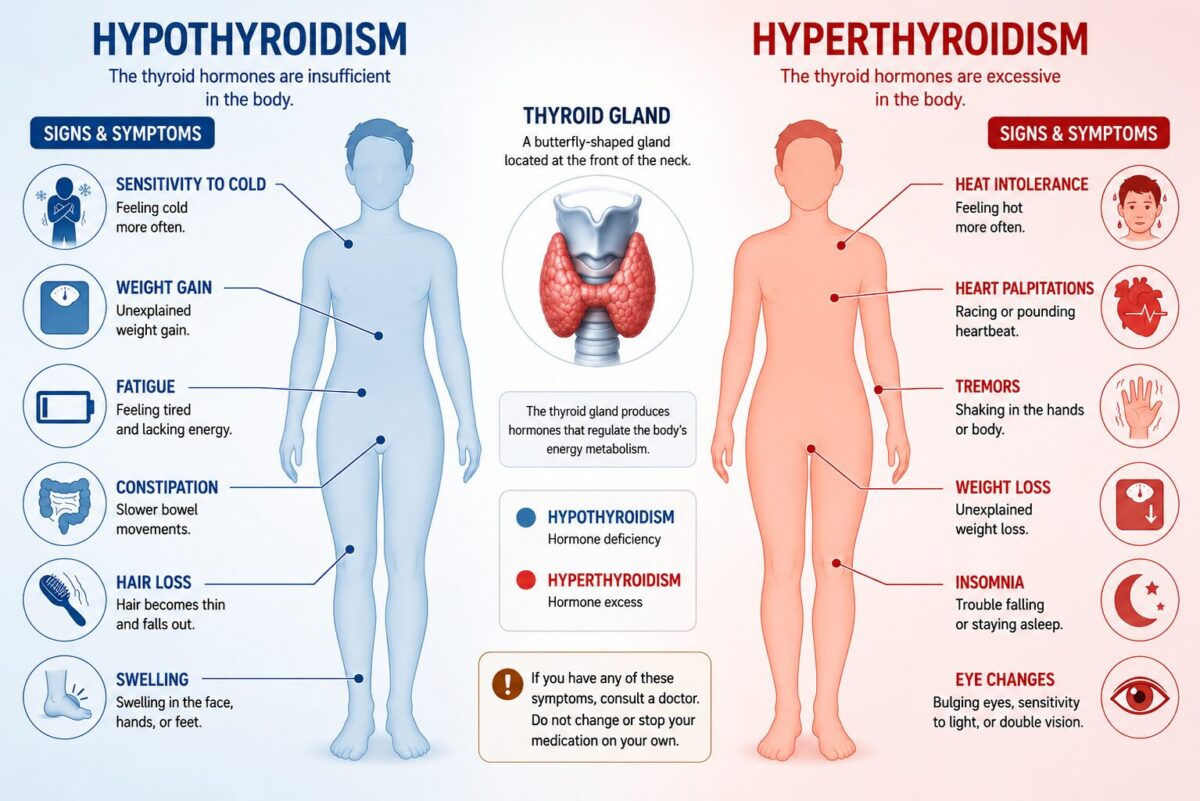
| Hypothyroidism (underactive) | Hyperthyroidism (overactive) | |
|---|---|---|
| Metabolism | Slows down | Speeds up |
| Weight | Increases | Decreases |
| Temperature | Feeling cold | Hot flashes, sweating |
| Heart | Slows down | Palpitations |
| Mood | Sluggishness, depressed mood | Restlessness, irritability |
| Bowel | Constipation | Tendency toward diarrhea |
| TSH | High | Low |
A goiter is not a separate disease; it is the name given to enlargement of the thyroid gland. The gland can enlarge whether it is underactive, overactive, or even working normally.
What causes thyroid disorders?
Causes of hypothyroidism (underactive thyroid)
1. Hashimoto’s thyroiditis — the most common cause. This is an autoimmune disease in which the immune system mistakenly attacks the thyroid gland. Over the years the gland wears down and becomes unable to produce enough hormone. It is much more common in women than in men.
2. Iodine deficiency. This is the most common cause worldwide. In Turkey it has decreased significantly with the spread of iodized salt use.
3. After thyroid surgery or radioactive iodine treatment.
4. Radiation therapy to the neck area.
5. Certain medications.
6. Postpartum thyroiditis. This can appear temporarily in the months after childbirth.
Causes of hyperthyroidism (overactive thyroid)
1. Graves’ disease — the most common cause. Commonly known as “toxic goiter.” This is also an autoimmune disease; but unlike Hashimoto’s, the immune system forces the thyroid to keep working. A distinguishing feature is that it can cause the eyes to bulge forward.
2. Overactive nodules. One or more nodules in the thyroid producing hormone in an uncontrolled way.
3. Thyroiditis (inflammation of the gland). Stored hormone spills into the bloodstream, creating temporary hyperthyroidism; this is often followed by a period of hypothyroidism.
4. Excess iodine intake or taking the wrong dose of thyroid hormone.
Shared risk factors
- Being female — thyroid disorders are notably more common in women
- Family history
- Having another autoimmune disease — type 1 diabetes, rheumatoid arthritis, vitiligo, celiac disease
- Pregnancy and the postpartum period
- Smoking — particularly worsens the eye findings of Graves’ disease
- Periods of intense stress
What are the symptoms of thyroid disorders?
Symptoms of hypothyroidism (underactive thyroid)
- Constant fatigue and weakness — the most common complaint
- Feeling cold, intolerance to cold
- Weight gain without increased appetite
- Dry, coarse skin
- Hair loss and thinning of the outer eyebrows
- Brittle nails
- Constipation
- Swelling/puffiness in the face, eyelids, and hands
- Deepening of the voice
- Forgetfulness, poor concentration, “brain fog”
- Depressed mood
- Muscle pain and weakness
- Slowed heart rate
- Irregular periods, heavier menstrual bleeding in women
- Infertility and recurrent miscarriage
Symptoms of hyperthyroidism (overactive thyroid)
- Palpitations, rapid heartbeat
- Hand tremor
- Excessive sweating, intolerance to heat
- Weight loss — despite increased appetite
- Nervousness, restlessness, anxiety
- Insomnia
- Frequent bowel movements, tendency toward diarrhea
- Muscle weakness — especially in the thigh muscles, noticeable when climbing stairs
- Thinning hair
- Lighter menstrual bleeding in women
- In Graves’ disease: bulging eyes, redness, watering, double vision
A common mistake: Almost all of these symptoms can also be explained by other causes. They can be dismissed for years as “I’m getting older,” “I’m stressed,” or “I’m tired.” The only way to tell the difference is a blood test — and this test is simple, inexpensive, and widely available.
Are thyroid disorders contagious?
No. Thyroid disorders are not contagious. Neither hypothyroidism, hyperthyroidism, Hashimoto’s, nor Graves’ disease is transmitted through contact, sharing the same space, or using the same belongings.
Hashimoto’s and Graves’ are autoimmune diseases — meaning they arise from a malfunction of the person’s own immune system.
The reason they run in families is not transmission but strong genetic predisposition. For this reason, people with a family history of thyroid disease, especially women, are advised to have periodic TSH checks.
How are thyroid disorders diagnosed? Which department should you go to?
The department you should consult: Endocrinology and Metabolic Diseases. Internal Medicine or your family physician is also suitable for an initial evaluation.
Tests performed:
- TSH — The first and most important test. Usually sufficient on its own for screening.
- Free T4 and T3 — Checked when TSH comes back abnormal.
- Antibody tests (anti-TPO, anti-Tg) — Used to diagnose Hashimoto’s.
- Thyroid ultrasound — Evaluates the structure of the gland and any nodules.
- Thyroid scintigraphy — Shows whether nodules are functioning.
- Fine-needle aspiration biopsy — Performed on suspicious nodules. Usually painless and quick.
What is subclinical thyroid dysfunction?
When TSH is abnormal but T4 is normal, this is called a subclinical condition. This does not mean it is “unimportant”; it can be an early stage of the disease. The decision to treat is based on your age, symptoms, antibody status, and pregnancy plans.
Who should get screened?
- People with a family history of thyroid disease
- People with another autoimmune disease
- Women who are planning pregnancy or are pregnant (this group is especially important)
- Women who have recently given birth (within the first year)
- Anyone who notices swelling or a nodule in the neck
- Anyone with unexplained fatigue, weight change, or palpitations
How are thyroid disorders treated?
Treatment of hypothyroidism
The logic of treatment is simple: supply the missing hormone from outside. This is identical to the hormone the body produces on its own — it is not a foreign substance.
How correctly you take the medication directly determines how successful the treatment is. This medication’s absorption is very sensitive, and its effect drops noticeably if taken incorrectly:
- Take it in the morning on an empty stomach, with water only.
- Do not eat, or drink tea or coffee, for at least 30–60 minutes after taking it.
- Leave at least a 4-hour gap between it and iron, calcium, or magnesium supplements and stomach-protective medications — these noticeably reduce absorption.
- If mornings are difficult for you, ask your doctor about the option of taking it at bedtime, at least 4 hours after your last meal.
- Take it at the same time every day, consistently.
- Don’t store the medication in humid, warm places like the bathroom or kitchen.
- Tell your doctor if you switch brands; a dose adjustment may be needed.
We are not giving a medication name or dosage in this article. The dose is entirely individual and is set by your doctor based on your blood values.
⚠️ Critical warning: This medication should never be stopped on your own, and the dose should never be increased or decreased on your own. An excessive dose creates a risk of palpitations, tremor, nervousness, and, over the long term, bone loss and irregular heart rhythm. Using thyroid medication for the purpose of losing weight is a dangerous and incorrect practice.
Treatment of hyperthyroidism
There are three main approaches, and which one is used is decided based on the cause, age, and the patient’s condition:
- Medication: Drugs that suppress the thyroid’s hormone production. Usually the first option. Additional treatment may also be given to bring palpitations under control.
- Radioactive iodine treatment: Iodine taken by mouth is absorbed by the overactive tissue, shrinking it. Hypothyroidism often develops afterward and requires hormone replacement — this is an expected outcome, not a complication.
- Surgery: Removal of part or all of the gland. Preferred for a large goiter, compression symptoms, suspicion of cancer, or when other methods are not suitable.
Monitoring nodules
Thyroid nodules are very common and the large majority are benign. A biopsy is performed if the ultrasound shows suspicious features. For most nodules, regular follow-up is all that is needed.
⚠️ See a doctor without delay if you have these symptoms
- A rapidly growing swelling in the neck
- Difficulty swallowing or shortness of breath — the gland may be pressing on the windpipe
- Hoarseness that becomes permanent
- Severe palpitations, irregular heartbeat, chest pain
- High fever, extreme restlessness, and confusion together with palpitations — this may be a rare but life-threatening flare of hyperthyroidism
- Excessive sleepiness, a marked drop in body temperature, and confusion — this may be a rare and serious presentation of advanced hypothyroidism
- Sudden eye pain, vision loss, or double vision
- If you are planning pregnancy or are pregnant, your thyroid values must definitely be checked
What should you pay attention to during treatment?
Take your medication regularly and correctly. The usage rules above directly determine how effective the treatment is.
Don’t skip your check-ups. After the dose is adjusted, check-ups are usually needed every few months, and once things stabilize, every 6 months is generally enough — but your doctor determines the frequency.
Have your blood test at the right time. Go to your follow-up blood draw without having taken that morning’s medication, and let your doctor know this.
Tell your doctor about all the medications and supplements you take.
If you are planning a pregnancy, be sure to let your doctor know in advance. Thyroid hormone needs increase during pregnancy and a dose adjustment is required. This is critical for the baby’s brain development.
Quit smoking. It noticeably worsens eye findings, especially in Graves’ disease.
Don’t take iodine supplements on your own. This is one of the most common mistakes — we explain it in detail below.
Keep a record of your symptoms. Writing down the course of complaints like fatigue, palpitations, and weight change helps your doctor with dose adjustment.
Be patient. Dose adjustment may take a few tries, and it can take weeks for symptoms to improve.
Diet, herbs, and lifestyle: what can be supportive?
A critical warning about iodine
This is the topic most often gotten wrong in thyroid disorders:
- Iodine deficiency causes thyroid problems — but so does excess iodine. This is not a “more is better” situation.
- In Hashimoto’s patients, excess iodine can raise antibody levels and worsen the disease.
- For this reason, don’t use iodine supplements, kelp/seaweed products, or high-dose iodine-containing blends on your own initiative.
- On the other hand, you don’t need to stop using iodized salt. Restricting iodine or switching to non-iodized salt is generally not necessary for Hashimoto’s patients; your daily iodine needs should still be met. Be sure to discuss this with your doctor.
Foods that may be helpful
- Selenium sources — Brazil nuts (no more than 1–2 per day), eggs, sunflower seeds, mushrooms. Selenium plays a role in converting thyroid hormones. However, supplement use should be under a doctor’s supervision.
- Zinc sources — pumpkin seeds, red meat, legumes
- Iron sources — iron deficiency can reduce the effect of thyroid hormone; if you have anemia, get it treated
- Vitamin D — deficiency is common in thyroid patients, so get your level checked
- Protein and quality fats
- High-fiber foods — help with the constipation seen in hypothyroidism (but take fiber supplements at a different time from your thyroid medication)
Things to watch out for
- Soy products can reduce the absorption of thyroid medication; leave a few hours’ gap after taking it.
- Grapefruit can interact with certain medications.
- Cruciferous vegetables (broccoli, cauliflower, cabbage) are talked about a lot — normal amounts are considered not to cause problems; it’s enough to avoid excessive, raw consumption.
- Caffeine can worsen palpitations and restlessness in hyperthyroidism.
A balanced note on gluten
There is a known association between Hashimoto’s and celiac disease, and a gluten-free diet is mandatory for people diagnosed with celiac disease. However, there is no firm consensus that every Hashimoto’s patient without celiac disease or gluten sensitivity needs to cut out gluten. Make this decision together with your doctor, not on your own — unnecessary restrictions can upset your nutritional balance.
An honest note on herbal supplements
- No herb can replace thyroid hormone.
- Some blends recommended by word of mouth contain high amounts of iodine and can be harmful in Hashimoto’s.
- The absorption of thyroid medication is very sensitive; many supplements interfere with it.
- The rule is clear: tell your doctor about every supplement you want to use.
What helps the most in the long run
Taking your medication regularly, regular check-ups, and enough sleep. When properly monitored, thyroid disorders are conditions that barely restrict a person’s life at all. Adding moderate, regular exercise and stress management on top of that noticeably improves quality of life.
Frequently asked questions about thyroid disorders
In hypothyroidism caused by permanent damage, such as Hashimoto’s, and after thyroid surgery, treatment is usually lifelong. However, in temporary conditions such as postpartum thyroiditis, the medication can be discontinued after some time. This decision is made only by your doctor; the medication should never be stopped on your own.
It should be taken in the morning on an empty stomach, with water only. Do not eat, or drink tea or coffee, for at least 30–60 minutes after taking it. Leave at least a 4-hour gap between it and iron or calcium supplements and stomach-protective medications; these noticeably reduce absorption.
Hashimoto’s is a chronic disease and generally does not disappear completely. However, once hormone levels are kept in the normal range with treatment, a person can lead a completely normal life. Patients whose hormones are still normal may not need medication; regular follow-up is enough in that case.
You should not take them on your own. Excess iodine is just as harmful as a deficiency; in Hashimoto’s patients in particular, excess iodine can raise antibody levels. On the other hand, you generally don’t need to stop using iodized salt either. Be sure to discuss this with your doctor.
You should consult the Endocrinology and Metabolic Diseases department. Internal Medicine or your family physician is also suitable for an initial evaluation and will usually start with a TSH test. If you are planning a pregnancy, it’s important to move the check-up earlier.
Videos you can watch on this topic

Tiroid Nedir? Tiroid Belirtileri Nelerdir?

Tiroid ve Guatr Nedir? Belirtileri, Nedenleri ve Tedavi Yöntemleri

Hipertiroidi (Zehirli Guatr) Nedir?

Graves hastalığı, hipertiroidi ( zehirli guatr)
Related articles
Medical disclaimer: This article is for general informational purposes only; it does not replace a medical examination, diagnosis, or treatment. Please consult a doctor for your symptoms. Do not stop or change your medications without consulting your doctor.
Related Posts
 What Is Reflux? Symptoms, Causes, and Treatment Methods
 What Is Sinusitis? Symptoms, Causes, and Treatment
 What Is a Herniated Cervical Disc? Symptoms, Causes and Treatment
 High Blood Pressure (Hypertension): Causes, Symptoms and Treatment
 Cataract: Symptoms, Causes and Surgery
 What Is a Herniated Lumbar Disc? Symptoms, Causes and Treatment
 Femur Fracture: Symptoms, Treatment, and Recovery Process
 What Is Migraine? Symptoms, Triggers and Treatment Options