
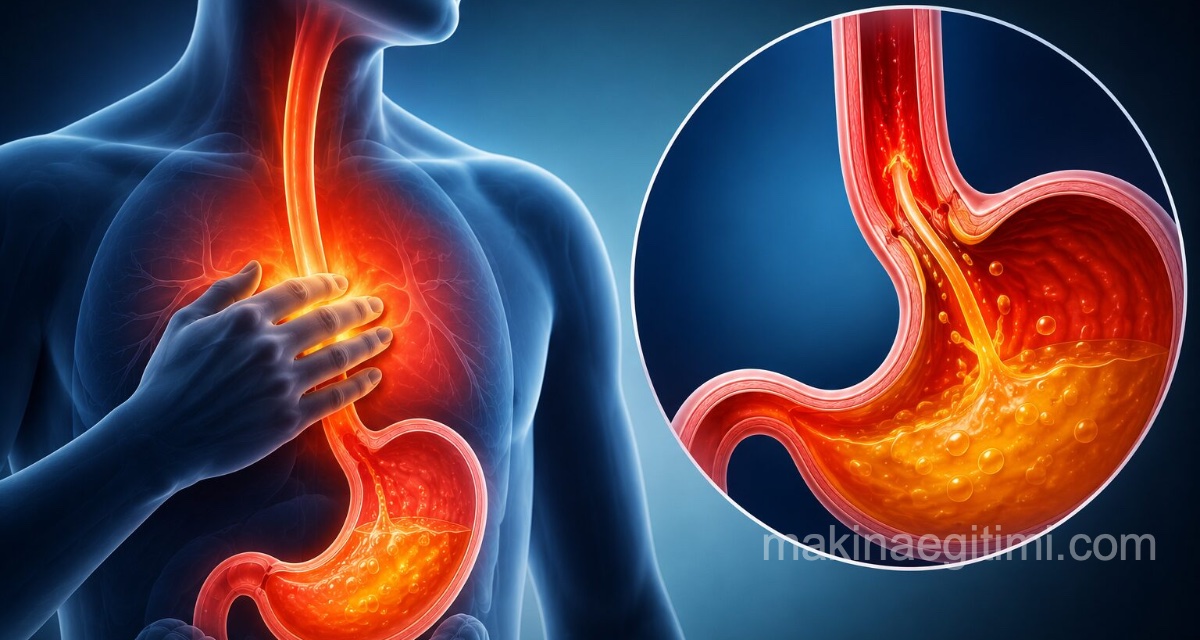
Reflux is the backflow of stomach contents into the esophagus. Its most typical symptoms are burning behind the breastbone and a bitter-sour taste rising into the mouth; complaints worsen after eating, when bending forward, and when lying down. The foundation of treatment is lifestyle adjustment: weight control, leaving at least 3 hours between dinner and sleep, and raising the head of the bed.
A burning sensation starts in the middle of your chest after eating. When you lie down, a bitter fluid rises into your mouth. You wake up coughing at night, and your voice is hoarse in the mornings.
These are the classic symptoms of reflux. It’s a very common condition in the population — a significant portion of adults in Turkey are reported to experience it. Many people brush it off as “my stomach is just sensitive,” but reflux left uncontrolled for a long time can lead to permanent changes in the esophagus.
The good news is: in treating reflux, lifestyle changes are just as decisive as medication. In this article we explain in plain language what works, what doesn’t, and which symptoms should be taken seriously.

What is reflux?
There is a ring-shaped muscle between the esophagus and the stomach. This muscle works like a valve: it opens when you swallow, and closes once the food has passed into the stomach. Its job is to prevent stomach contents from escaping upward.
The stomach is protected by a lining resistant to its own acid. But the esophagus has no such protection.When the valve relaxes or opens prematurely, stomach acid escapes upward and irritates the inner surface of the esophagus. That’s the burning sensation you feel.
In medical terms this condition is called gastroesophageal reflux disease (GERD).
Everyone has some reflux
An important distinction: even healthy people have small amounts of backflow during the day, and this is normal. What we call a disease is when this backflow occurs frequently enough to cause discomfort or creates damage in the esophagus.
Are reflux and gastritis the same thing?
No, they are often confused:
- Reflux: The escape of stomach contents into the esophagus. The main complaint is burning in the chest.
- Gastritis: Inflammation of the stomach’s own lining. The main complaints are pain, nausea, and bloating in the stomach area.
The two can also occur together in the same person.
Relationship with hiatal hernia
When the upper part of the stomach slides through the opening in the diaphragm into the chest cavity, this is called a hiatal hernia. This condition disrupts the valve’s natural barrier function. People with a hiatal hernia experience reflux symptoms more frequently and more severely.
What causes reflux?
Excess weight — one of the strongest factors. Fat accumulation around the abdomen increases intra-abdominal pressure and pushes stomach contents upward. Losing weight is one of the changes that brings the fastest improvement in reflux symptoms.
Lying down right after eating. In a horizontal position, the support of gravity disappears and acid escapes upward easily. This is the main cause of nighttime symptoms.
Eating too much and too fast. When the stomach is overfilled, pressure on the valve increases.

Smoking. It directly reduces the muscle strength of the valve and lowers saliva production — saliva is actually the body’s natural defense that clears acid from the esophagus.
Alcohol and certain drinks. Alcohol and caffeine relax the valve; carbonated drinks increase stomach pressure.
Certain foods. Fatty and fried foods slow stomach emptying. Chocolate, mint, onion, garlic, tomatoes, and citrus fruits trigger symptoms in many people.
Pregnancy. This is very common, both because hormones relax the valve and because the growing uterus presses on the stomach. It generally resolves after delivery.
Tight clothing and belts. These increase intra-abdominal pressure.
Certain medications. Medications you take may be triggering your reflux — ask your doctor about this, don’t stop them on your own decision.
Stress. While it does not directly increase acid production, it noticeably raises the perceived severity of symptoms.
What are the symptoms of reflux?
Typical symptoms:
- Burning behind the breastbone (heartburn) — the most classic symptom
- A bitter or sour fluid rising into the mouth
- Symptoms worsening after eating, when bending forward, and when lying down
- A persistent bitter taste in the mouth
- Belching, bloating, hiccups
Atypical symptoms (which most people don’t associate with reflux):
- Chronic dry cough — especially at night
- Hoarseness — noticeable in the mornings
- A lump-in-the-throat or catching sensation
- A constant need to clear the throat
- Sore throat
- Bad breath
- Erosion and sensitivity of tooth enamel
- Worsening of asthma symptoms

⚠️ A very important warning about chest pain: Reflux can cause chest pain that resembles a heart attack. But the reverse is also true — a heart attack can be mistaken for reflux. If your chest pain is accompanied by cold sweating, shortness of breath, pain radiating to the left arm or jaw, nausea, or a feeling of fainting, or if the pain occurs during physical exertion, do not dismiss it as “just reflux” — call emergency services. Do not try to tell the difference yourself.
Is reflux contagious?
No. Reflux is not a contagious disease. It is not caused by a germ; it is a mechanical problem caused by the valve between the stomach and esophagus not performing its function properly. It cannot be passed to another person through contact, eating from the same plate, or using the same glass.
The reason it’s common within the same family is not transmission, but shared eating habits, shared mealtimes, and hereditary predisposition.
Note: The Helicobacter pylori bacterium, which can live in the stomach and cause gastritis/ulcers, is contagious — but this is a different matter from reflux.
How is reflux diagnosed? Which department should you go to?
The department you should apply to: Gastroenterology. For an initial evaluation, you can also see Internal Medicine or your family physician.
Endoscopy is requested in these situations:
Difficulty swallowing or pain when swallowing, Unintentional weight loss, Signs of anemia or bleeding, Persistent vomiting, New-onset symptoms at an older age, No response to treatment, Symptoms lasting many years
Other tests: Tests that measure the amount of acid in the esophagus over 24 hours, and manometry, which evaluates the function of the esophageal muscles, are used in selected patients.
How is reflux treated?
Lifestyle changes — the foundation of treatment
This section is just as important as medication in reflux, and if it’s skipped, the most critical part of treatment is missing.
a) Leave at least 3 hours between dinner and sleep. This single rule noticeably reduces nighttime symptoms.
b) Raise the head of the bed. Stacking pillows on top of each other doesn’t work — it can even increase abdominal pressure by bending the neck. The correct way is to place 15–20 cm risers under the legs at the head end of the bed (wooden blocks, a thick stack of books). This tilts the entire body, letting gravity work in your favor.

c) Sleep on your left side. Because of the stomach’s anatomical position, lying on your left side makes it harder for acid to escape upward. It’s a simple but effective change.
d) Lose weight. This is the single step that makes the biggest difference in reflux.
e) Eat small, frequent meals. Smaller portions instead of three large meals keep stomach pressure low.
f) Quit smoking.
g) Avoid tight belts and snug clothing.
h) Identify your triggers. Everyone’s triggers are different. Instead of cutting out all suspect foods at once, remove them one at a time and reintroduce them — when symptoms return, you’ve found the culprit. Keeping a daily log is very useful in this process.
Medication
Your doctor may prescribe treatments that reduce or neutralize stomach acid. This article does not give drug names or dosages. Points worth knowing:
Acid-suppressing treatments are generally planned as courses of a set duration; follow the duration your doctor determines.
Do not use them long-term on your own decision. Long-term, uncontrolled use of these medications can affect the absorption of vitamin B12 and iron, and may have effects on bone health. The decision to use them long-term should be made under a doctor’s supervision, at the lowest effective dose.
They can mask symptoms. These medications may temporarily cover up the signs of a more serious underlying problem. That’s why seeing a doctor is important, rather than “buying them at the pharmacy and using them for months.”
Endoscopic and surgical treatments
These are considered in selected patients who do not respond to medication, do not want to use long-term medication, or have a hiatal hernia. The best-known option is laparoscopic (keyhole) surgery, in which the upper part of the stomach is wrapped around the esophagus to create a new barrier. Non-surgical endoscopic methods have also been developed.
These methods are not suitable for everyone; the decision is made after a detailed evaluation.
⚠️ See a doctor without delay if you have these symptoms
- Difficulty swallowing or a feeling that food is getting stuck
- Pain when swallowing
- Unintentional weight loss
- Vomiting blood or material resembling coffee grounds
- Black, tarry stool — may be a sign of gastrointestinal bleeding
- Persistent vomiting
- Weakness and signs of anemia
- Chest pain accompanied by cold sweating, shortness of breath, or pain radiating to the arm or jaw → call emergency services
What should you pay attention to during treatment?
Be patient. Noticeable reduction in reflux symptoms usually takes weeks. Don’t expect complete relief in the first few days.
Don’t stop your medication without consulting your doctor, and don’t extend it indefinitely.
Walk after meals. A light 15–20 minute walk after a heavy meal speeds up stomach emptying.
Don’t exercise right after eating. Movements that work the abdominal area in particular, bending forward, and inverted postures increase symptoms.
Don’t spread out excessive water drinking after meals. Taking in too much fluid along with food overfills the stomach.
Don’t neglect your oral and dental health. Acid erodes tooth enamel. Don’t brush your teeth right after vomiting or a noticeable episode of acid coming up into your mouth — this increases erosion of enamel that’s already softened by acid. Rinse your mouth with water, wait about half an hour, then brush.
Keep a symptom diary. Noting what you ate, when you ate it, and when the symptom started gives your doctor very valuable information.
Diet, Herbs, and Lifestyle
In reflux, diet is a direct part of treatment.
Foods that generally help
- Oatmeal and whole grains — help absorb stomach acid and keep you full
- Bananas and apples — low-acid fruits
- Cucumber, carrot, squash, potato, broccoli, cauliflower — starch-free, low-acid vegetables
- Ginger — can be soothing to the stomach in moderate amounts
- Lean protein sources — grilled chicken, turkey, fish, egg whites
- Yogurt and kefir — soothing for many people (low-fat options are preferred)
- Chamomile tea
- Plenty of water
Foods that commonly trigger symptoms
A surprising note about mint: Mint tea is often recommended for stomach discomfort, but mint also relaxes the lower esophageal valve. For this reason, mint is generally not recommended in reflux — while it can help with gas-related complaints, it can worsen burning in reflux.
- Fatty and fried foods
- Chocolate
- Mint and mint tea
- Coffee and excessive tea
- Carbonated drinks
- Alcohol
- Tomatoes and tomato paste
- Citrus fruits (orange, lemon, grapefruit)
- Onion and garlic (especially raw)
- Spicy and hot dishes
- Vinegar and pickles
These don’t affect everyone; you need to identify your own triggers:
An honest note about herbal remedies
Reflux is a topic with heavy traffic in herbal recommendations. Points to watch out for:
Licorice root is often recommended among the public, but it can raise blood pressure and cause low potassium levels in the body. People with hypertension and those using diuretics should absolutely not use it without consulting their doctor.
Apple cider vinegar is widely recommended online, but it’s a product that can worsen symptoms in reflux. There’s no logical reason to send an acidic substance into an esophagus that’s already irritated.
Baking soda provides instant relief but can increase acid production afterward through a “rebound” effect; it’s also high in sodium. It should not be used regularly.
Peppermint oil is not recommended in reflux because it relaxes the valve.
Tell your doctor about every herbal product you want to use.
What helps the most in the long run
Weight control and the 3-hour gap between eating and sleep. These two habits are the changes that most reduce both symptoms and the need for medication in reflux. When regular, moderate-paced activity is added on top (while avoiding strenuous exercise after meals), the results improve noticeably.
Videos you can watch on this topic

Symptoms and Treatments for Gastroesophageal Reflux Disease (GERD)

GERD: Doctor Explains Gastroesophageal Reflux Disease | UC San Diego Health

Heartburn, Acid Reflux, GERD-Mayo Clinic

How to treat GERD

Gastroesophageal reflux disease (GERD): Mayo Clinic Radio

Mayo Clinic Minute – GERD is not 'just' heartburn

Non-Invasive Treatment for Acid Reflux Disease – Mayo Clinic

Reducing Heartburn, Acid Reflux, GERD-Mayo Clinic
Frequently asked questions about reflux
Reflux is a chronic condition in most patients. Treatment brings symptoms largely under control, but they can recur once medication is stopped. Lasting changes such as losing weight, quitting smoking, and adjusting eating patterns noticeably reduce how often it recurs.
Sleeping on your left side makes it harder for acid to escape upward, due to the stomach’s anatomical position. You should also place 15–20 cm risers under the legs at the head end of the bed. Stacking pillows doesn’t work, and can even increase abdominal pressure.
Don’t try to tell the difference yourself. If your chest pain is accompanied by cold sweating, shortness of breath, pain radiating to the left arm or jaw, or nausea, or if the pain appears during exertion, call emergency services. Reflux can mimic a heart attack, and a heart attack can be mistaken for reflux.
It’s generally not recommended. Mint relaxes the valve at the lower end of the esophagus, which can make it easier for acid to escape and worsen burning. Chamomile tea is a more suitable alternative for reflux.
You should apply to the Gastroenterology department; Internal Medicine or your family physician is also suitable for an initial evaluation. If you have difficulty swallowing, weight loss, signs of bleeding, or persistent vomiting, don’t delay seeking care.
No. In patients with typical symptoms who do not have the “alarm symptoms” listed below, diagnosis is made by evaluating the symptoms and treatment can be started directly.
Medical disclaimer: This article is for general informational purposes only; it does not replace medical examination, diagnosis, or treatment. Be sure to consult a doctor for your symptoms. Do not stop or change the medications you use without consulting your doctor.
Related Posts
 What Is a Herniated Cervical Disc? Symptoms, Causes and Treatment
  Rheumatoid Arthritis: What Is It? Symptoms and Treatment
  What Is Migraine? Symptoms, Triggers and Treatment Options
  What Is Myopia? Symptoms, Causes and Treatment Options
  What Is Arteriosclerosis? Symptoms, Causes, and Treatment
  High Blood Pressure (Hypertension): Causes, Symptoms and Treatment
  Thyroid Disorders: Symptoms of Hypothyroidism and Hyperthyroidism
  What Is Sinusitis? Symptoms, Causes, and Treatment