
In this article, we’ll cover the definitions of a body and a system. What are the differences between them. What is a closed system, and similar topics.
Body
A body is the name given to matter that has taken on a shape. In physics, it refers to anything that occupies volume. Bodies can be perceived by the senses. Objects such as a pen, notebook, food, table, or chair are each a body in space.

If we ask, ”what is the difference between a body and matter?”; matter is anything that occupies space and has a definite volume and mass. A body, on the other hand, is matter that has been shaped by some effect. To explain with an example, plastic is a form of matter. A plastic bottle is a body.
Open System
In open systems, both matter and energy can exchange with the surroundings across the system boundary.
Closed System
In closed systems, only energy is exchanged; matter cannot cross the system boundary.
Isolated System
In isolated systems, neither matter nor energy exchanges with the surroundings; such systems are studied theoretically.
System
System: refers to elements or parts that exchange matter, energy, or information with each other. A system is made up of elements. There are relationships of various dimensions between these elements.
The word system comes from the Latin “Systēma,” which carries the meaning of ‘union,’ ‘formation,’ or ‘coming together.’

(Dictionary meaning: 1-Array 2-Order) System: in general, a whole made up of interrelated and interconnected units and various parts that regularly affect one another, established according to an overall plan, and directed toward a purpose in order to reach a certain result. It’s formed by the coming together of two or more bodies that are related to each other in some way.
Examples of Systems
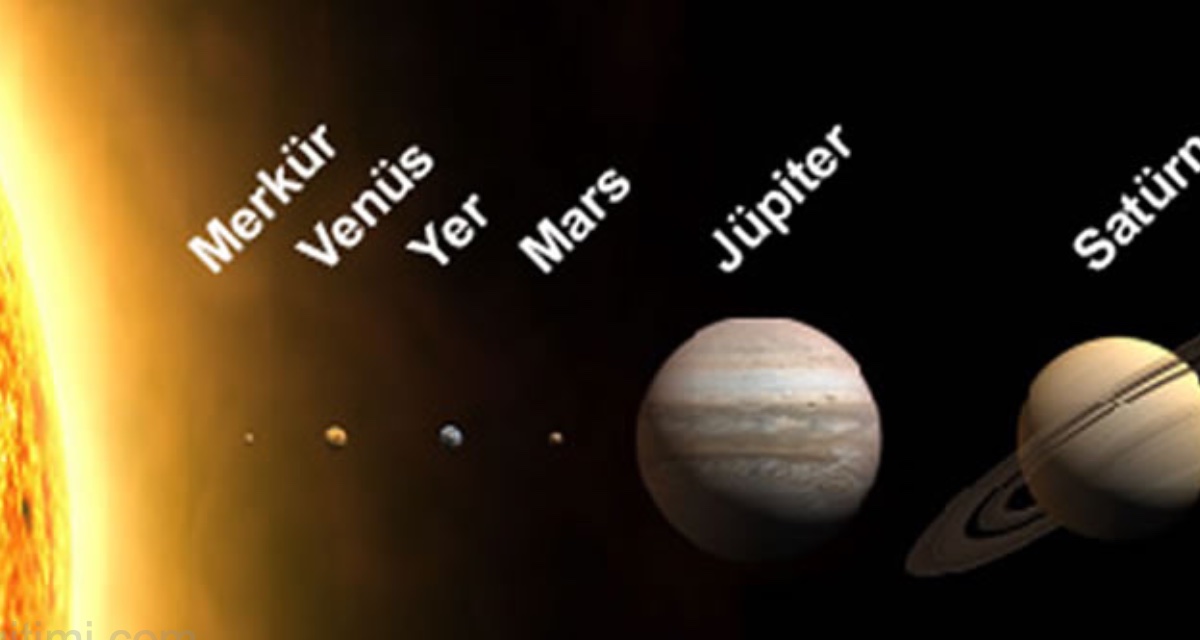
The digestive system in anatomy. The molecular system in chemistry. The binary system in computing. In biology, a specific population of organisms on which measurements are taken. The solar system in astronomy are all examples of a system.
Types of Systems
- Natural Systems: Systems whose size, purpose, structure, and functioning are not designed by humans. The solar system. Biological systems, ecological systems, physiological systems, and the like.
- Artificial Systems: Systems whose size, purpose, structure, and functioning are designed by humans. Computer systems. Mechanical systems, management systems, political systems, economic systems, social systems, and the like.
What Are Open and Closed Systems?
Open System: If there is an exchange of energy, material, or information between the system and the environment in which it operates, and it establishes a relationship with its surroundings, it’s an open system. Biological and social systems, and social systems such as businesses, are open systems. Open systems have the ability to grow and a tendency toward self-preservation.
Closed system: systems that have no interaction or input-output exchange with their surroundings. They have no need to enter into a relationship with their surroundings. Bodies within a closed system can interact with one another, meaning they can exert force on each other. Closed systems are quite important in physics, especially useful in conservation laws. For example, the conservation of energy and the conservation of momentum both deal with closed systems.
Another example we can give is prisons. Prisons are a semi-closed system.
What Is the Difference Between a Body and a System?
Bodies have no internal structure, while systems can. For example, protons, neutrons, and electrons, which have no internal structure, combine to form other systems, such as atoms and molecules, which do have internal structure.

The number and arrangement of an atom’s components is what causes different materials to have different properties. As with gold and silver atoms — both have protons, neutrons, and electrons. However, their arrangement, their order, is different.
Related Questions
Matter refers to a general, raw structure, like plastic. A body is the concrete state of that matter after it’s been shaped into a specific form; for example, a bottle made of plastic is a body.
In a closed system, matter cannot enter or exit, but energy (such as heat) can be exchanged with the surroundings. In an isolated system, neither matter nor energy can interact with the outside in any way; this is a theoretical situation almost never encountered in practice.
Related Posts
 Newton’s Laws
 How to Calculate the Resultant Force Branches of Solid Mechanics – Statics, Kinematics, Dynamics
 Base and Derived Quantities
 Finding the Resultant Force in a System of Forces Basic Topics in the Mechanics Course
 What Is the SI System of Units? Base and Derived Units
 Science Fair Project Examples About Pascal Principle