

Hydraulic Press
Pascal’s principle has inspired many machines used today. One of these is hydraulic presses. A Pascal’s principle application that middle school and high school students can build from easily obtainable materials.

Basis of Pascal’s Principle
Pascal’s principle states that pressure applied to a confined fluid is transmitted equally to every point in the fluid.
Force Multiplication Effect
Hydraulic presses can lift large loads by multiplying the force applied to a small piston through a much larger piston.
Incompressible Fluid
The reliability of hydraulic systems comes from the fluid used (usually oil) being incompressible.
Hydraulic Brake
According to Pascal’s law, the pressure applied to the piston is transmitted exactly to every point the fluid touches. Another example of this is hydraulic brakes. A project you can assign your students as a performance assignment.
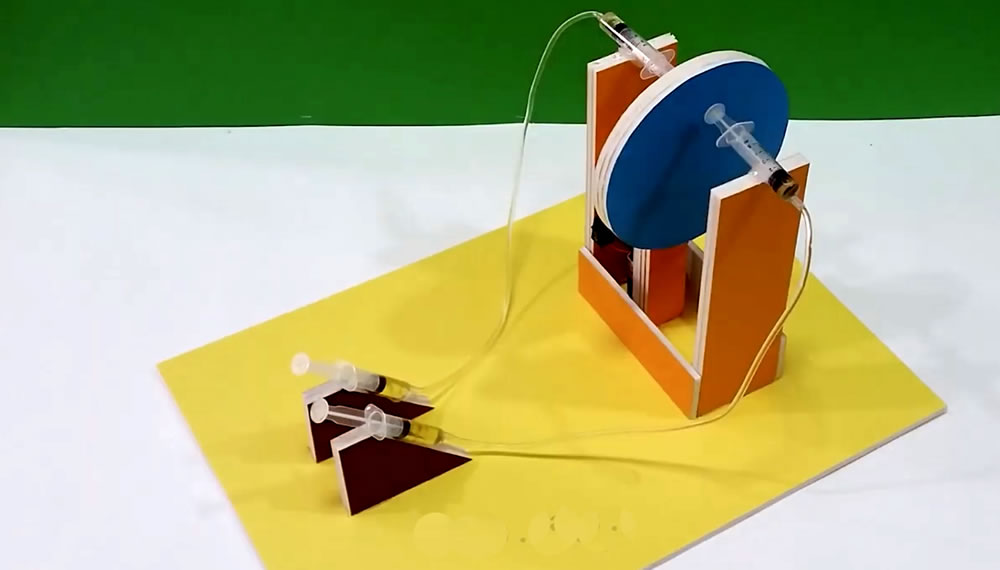
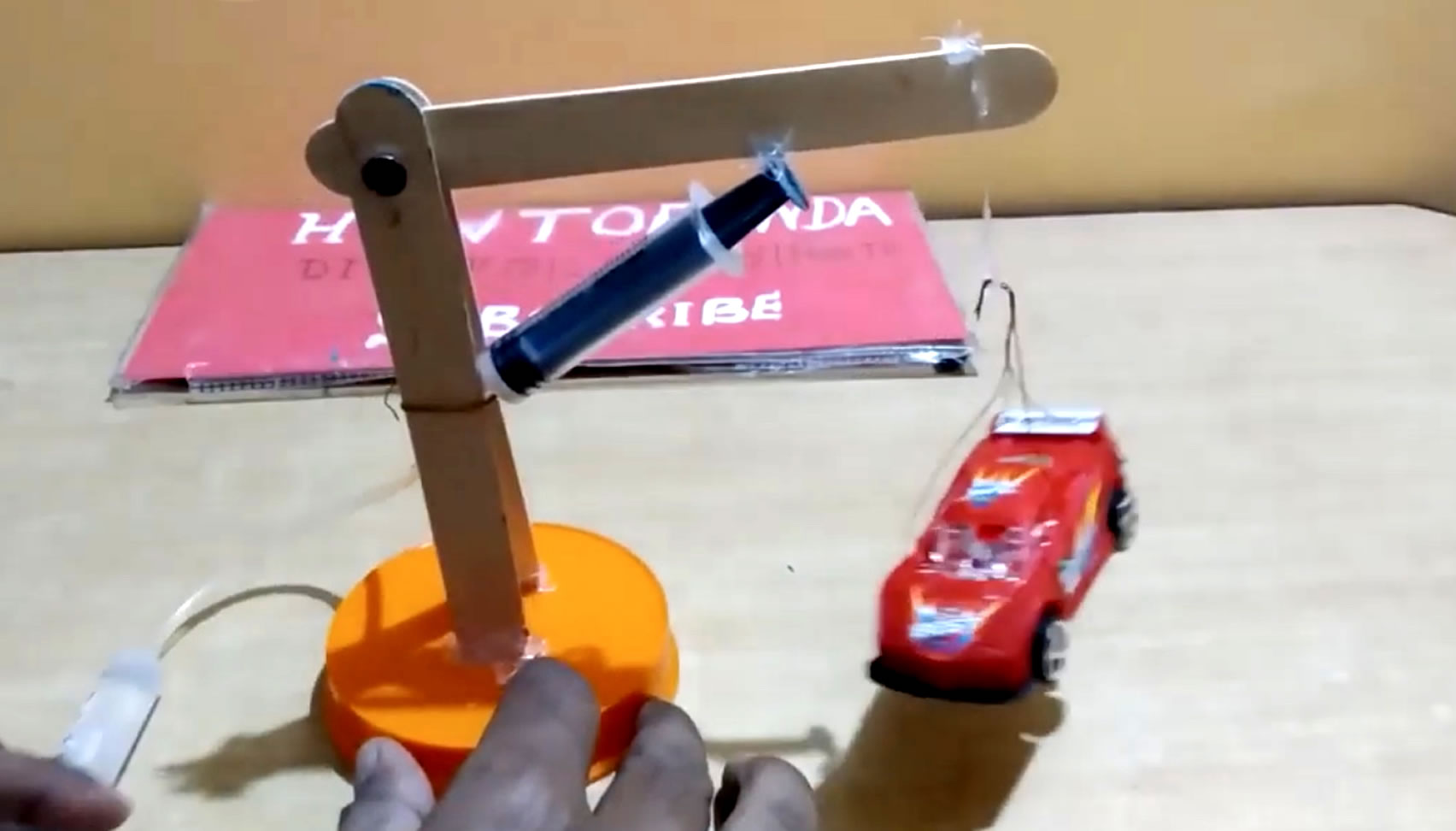
Hydraulic Crane
Pascal’s Law is frequently used in hydraulic systems, especially those we see in heavy machinery. The use of hydraulic power in lifting loads is another example of this. A useful learning-by-doing model for Science-Physics or Hydraulics/Pneumatics lessons.
Related Questions
According to Pascal’s principle, pressure applied to a confined fluid is transmitted equally to every point. When the pressure at the small piston is transferred to the much larger-area piston, the large surface area produces a much greater total force.
If the fluid were compressible, part of the pressure applied to the piston would be spent compressing the fluid and wouldn’t be fully transmitted to the other end. An incompressible fluid guarantees that the applied pressure is transmitted instantly and without loss.
Related Posts
