
Close Menu
  • MAKİNELER ve İMALAT
    • Tools & Equipment
    • Computer-Aided Drawing
    • CAD/CAM Education
    • CNC Machine Programming
    • Casting Technologies
    • Electrical & Electronics Technologies
    • Hydraulics & Pneumatics
    • Manufacturing Processes
    • Manufacturing Technologies
    • Occupational Safety
    • Mold & Die Design
    • Solid Modeling
    • Welding Technology
    • Machine Elements
    • Mechanical Trade Drawing
    • Materials Science
    • Automotive & Vehicle Technologies
    • Robotics Technologies
    • Health Technologies
    • Defense & Aerospace Technologies
    • Descriptive Geometry
    • Technical Drawing
    • Software & Hardware Technologies
    • Innovative Manufacturing Methods
  • TEKNOLOJİ ve YAŞAM
    • OTOMOBİLLER ve TAŞIT
      • Vehicle & Engine Knowledge
      • Safe Driving
      • Sürüş Destek Sistemleri
    • Genel Kültür
      • Movies & TV Shows
      • Görsel ve Grafik Sanat
      • Books & Literature
      • Music
      • Sports
      • History
      • History of Technology
    • GÜNDELİK YAŞAM TEKNOLOJİLERİ
    • Hobbies & Entertainment
    • Internet Technologies
    • Health
    • Mobile Technologies
Makine Eğitimi
  • Machines & Manufacturing
    Machine Elements
    Hydraulics & Pneumatics
    Technical Drawing
    Computer-Aided Design & Manufacturing
    Basic Manufacturing Processes
    Manufacturing Processes
    Industry Technologies
    Other Technical Courses
    Motion & Power Transmission
    Simple Machines
    Chains & Sprockets
    Shafts & Journals
    Gears
    Cams
    Couplings
    Belts & Pulleys
    Springs
    Bearings
    Keys
    Fastening Joining
    Retaining Rings
    Screws, Bolts & Nuts
    Cotter Pins
    Flanges
    Welding
    Rivets
    Pins & Bolts
    Washers
    Calculators
    Gear Ratio Calculator
    Spring Constant Calculator
    Belt Pulley Ratio Calculator
    Other Machine Elements
    Slides & Linear Guides
    Brakes
    Flywheels
    Clamps
    Shock Absorbers
    Gaskets & O-Rings
    Seals & Sealing Elements
    Hydraulics
    Introduction to Hydraulics & Principles
    Hydraulic Systems & Applications
    Accumulators
    Filters
    Motors
    Pumps
    Valves
    Pneumatics
    Introduction to Pneumatics & Principles
    Pneumatic Systems & Applications
    Pneumatic Circuit Components
    Valves
    Cylinders
    Silencers
    Motors
    Compressors
    Dryers
    Conditioning Units
    Common Topics & Maintenance
    Hydraulic & Pneumatic Maintenance
    Study Notes, Exams & Tests
    Technical Drawing
    Introduction to Technical Drawing
    Geometric Drawings
    Perspective & Projection
    Orthographic Views
    Dimensioning
    Sectioning
    Assembly & Detail Drawings
    Tolerances
    Surface Finish Symbols
    Mechanical Engineering Drawing
    Screws, Bolts & Nuts
    Pulley Drawings
    Gear Drawings
    Shafts & Journals
    Bearing Drawings
    Pins & Bolts
    Spring Drawings
    Welds in Technical Drawing
    Washers
    Cotter Pins
    Technical Drawing Exercises
    Mechanical Drawing Exercises
    Gear Exercises
    View Extraction Exercises
    Pulley Exercises
    Pin & Bolt Exercises
    Threaded Fastening Exercises
    Descriptive Geometry
    Computer-Aided Drawing
    AutoCAD Drawing Lessons
    Solid Modeling & Animation
    Solid Model Drawing Files
    Solid Model Assembly Examples
    Solid Model Drawing Lessons
    3D CAD Software Reviews
    Solid Modeling Exercises
    CNC Programming
    CAM
    Measurement & Inspection
    Dial Indicators
    Calipers
    Gauges
    Micrometers
    Materials Science
    Steels
    Cast Iron
    Aluminum
    Plastics
    Material Testing & Hardness Measurement
    Occupational Safety
    Workshop Safety
    Safety When Working With Electricity
    Machine Safety Rules
    Hand Operations
    Filing
    Marking
    Cutting Operations
    Reaming
    Tapping
    Threading With a Die
    Drill Bit Sharpening
    Working With Machines
    Basic Turning Operations
    Basic Milling Operations
    Shaper Machine
    Machining
    Turning
    Milling
    Grinding
    Innovative Manufacturing Methods
    EDM (Electrical Discharge Machining)
    Laser Machining
    Waterjet Machining
    3D Printing
    3D Scanners
    Welding
    Rolling
    Casting
    Mold & Die Design
    Mechanical & Hydraulic Presses
    Blanking & Piercing Dies
    Bending Dies
    Drawing Dies
    Plastic Injection Molds
    Extrusion Dies
    Compound Dies
    Progressive Dies
    Blow Molds
    Spinning Dies
    Spray Molds
    Manufacturing of Machine Parts
    Automotive & Vehicle Technologies
    Motor Vehicle Manufacturing
    Raw Material Production
    History of Technology
    Health & Medical Technologies
    Defense & Aerospace
    Robotics Technologies
    Software & Hardware Technologies
    Mechanics - Strength of Materials
    Physics Topics
  • Technology & Life
    Hobbies & Entertainment
    Sports
    Music
    Vehicle & Engine Knowledge
    Vehicle Maintenance & Repair
    Safe Driving
    Driver Assistance Systems
    History
    Movies & TV Shows
    Books & Literature
    Computers & Internet
    Computer Tips
    Software Reviews
    Hardware & Peripherals
    Practical & Safe Internet Use
    Visual & Graphic Art
    Mobile Technologies
    Travel
    Science
    Health
    First Aid Knowledge
    Everyday Technologies
Makine Eğitimi
Home»Vehicle & Engine Knowledge»Engine Air Intake System and Components
30 August 2026

Engine Air Intake System and Components

Engine Air Intake System and Components

Engine Air Intake System

The engine air intake system is a system found in a vehicle or motorized device that regulates the intake of air to the engine and is designed to improve engine performance. This system controls the airflow needed for the fuel inside the engine to combust.

  • Engine Air Intake System
    • Components of the Engine Air Intake System
      • Air Filter
        • Throttle Position Sensor
      • Throttle Body
      • EGR Valve
      • Mass Air Flow (MAF) Sensor
      • Idle Air Control (IAC) Valve:
      • PCV VALVE
      • Intake System
      • Air Sensors and Monitors
  • Related Questions

The engine air intake system increases engine efficiency, reducing fuel consumption and increasing engine power output. It also works together with the exhaust emission systems designed to reduce engine emissions.

Components of the Engine Air Intake System

The engine air intake system consists of components such as the air filter, intake manifold, throttle body, and intake valves.

Air Filter

air filter

The air filter cleans the air entering the engine. It is your first line of defense against debris being drawn into your engine.

Most filters are disposable, but some can be cleaned and reused. The shape, size, and design of air filters vary greatly by manufacturer.

Throttle Position Sensor
throttle position sensor

The throttle position sensor tells your computer how far open the throttle plate is and how much air is entering the engine.

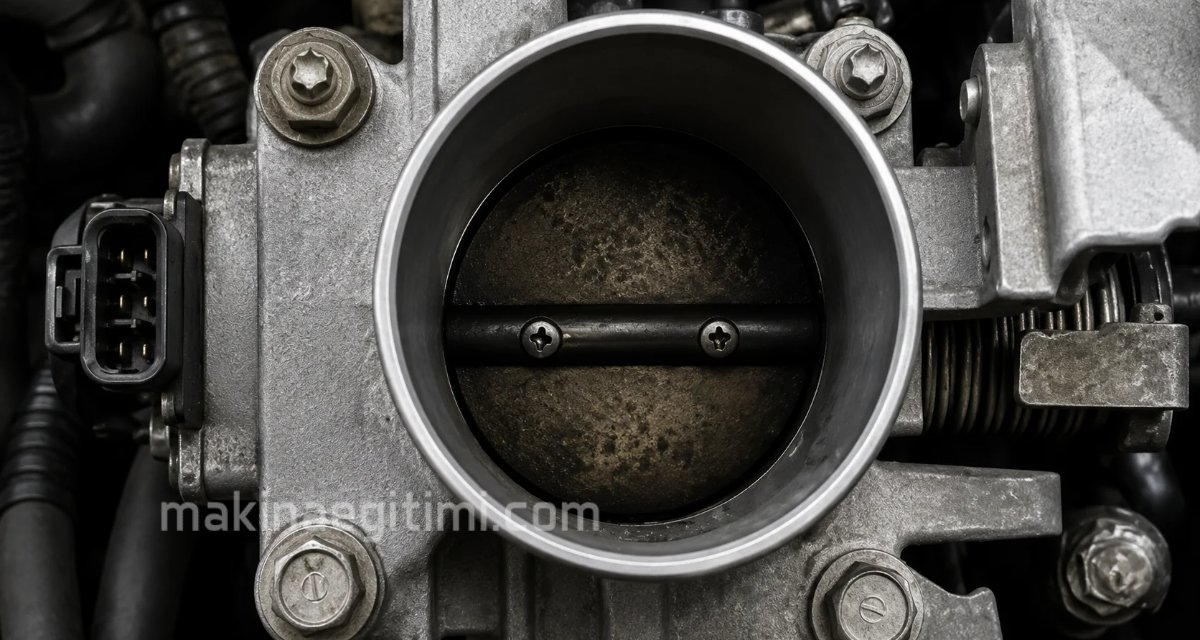
Throttle Body

throttle body

The throttle body controls airflow and adjusts the amount of air needed to increase engine performance. When you press the accelerator pedal, the throttle body opens. It has a large plate inside a tube that allows air into your engine. When you press the pedal, the throttle plate rotates to a horizontal position, allowing air into your engine.

EGR Valve

egr valve

Also called the exhaust gas recirculation valve. The EGR valve
sends exhaust gases back to the engine to be burned again. This helps reduce engine emissions.

Mass Air Flow (MAF) Sensor

maf sensor

This sensor tells the computer how much air is entering the engine.
Air density can vary depending on altitude, climate, and whether your vehicle uses a supercharger or another device to force air into the engine.

Idle Air Control (IAC) Valve:

iac valve

When the throttle plate is closed, this valve allows a small amount of air to pass around the throttle plate so the engine doesn’t stall.

PCV VALVE

pcv valve

Stands for positive crankcase ventilation. This one-way valve is another device designed to reduce emissions. As fuel and oil vapors accumulate in the engine, they build up pressure in the crankcase. The PCV valve opens to allow these vapors to escape the engine crankcase and injects them into the intake manifold to be burned, reducing pressure buildup.

Intake System

intake manifold

The intake system consists of all the plumbing before and after the throttle body. It includes the tubes between the air filter and the throttle body, and the intake manifold, which distributes air to the individual cylinders separately. Intake manifolds usually have separate tubes called runners leading to each cylinder. This helps the air move faster and allows more air to enter the cylinder.

Air Sensors and Monitors

Your computer uses information from various sensors to determine how much fuel to add to the engine. Your mechanic may refer to the following sensors when discussing your intake system.

  • Barometric Air Pressure (BAP) sensor: This measures air density like the MAF sensor, but only measures barometric pressure. Air at sea level is denser than at high altitudes, and this sensor is used by some systems to tell the computer how dense the air entering the engine is.
  • Intake Air Temperature (IAT) sensor: This measures the temperature of the air. Cold air will be denser than warm air, and while cold air requires more fuel, warmer air requires less fuel but can cause the fuel to ignite too early (this is called pre-ignition).
  • Electronic Throttle Control (ETC) motor: In vehicles with an electronically controlled accelerator pedal (drive-by-wire), this motor is used to move the throttle plate instead of a cable.

Air Filter Replacement


The engine air filter is typically replaced every 15,000-20,000 km; a dirty filter increases fuel consumption.

MAF Sensor


The mass air flow (MAF) sensor measures the amount of air entering the engine, allowing the ECU to calculate the correct fuel-air ratio.

Turbo Engine Air Path


In turbocharged engines, intake air is cooled by passing through an intercooler, which improves combustion efficiency.

Related Questions

A dirty filter restricts airflow to the engine. When the engine doesn’t get enough air, the air-fuel mixture becomes unbalanced, which leads to both reduced power and increased fuel consumption.

This sensor measures how far open the throttle is, in other words how much acceleration the driver is requesting. The computer uses this information to decide how much fuel to deliver to the engine.

Related Posts
biggest engines of all time The Biggest and Craziest Engines of All Time Parts of the Engine, Illustrated Explanation Parts of the Engine, Illustrated Explanation Yaprak Yaylı ve Helezon Yaylı Süspansiyonun Farkları Differences Between Leaf Spring and Coil Spring Suspension How Hydraulic Brakes Work How Hydraulic Brakes Work Lastiklerin üzerindeki yazıların anlamı What the Markings on a Car Tire Mean ethanol blended gasoline Properties of Ethanol (Ethyl Alcohol) Blended Gasoline biodiesel production What Is Biodiesel? Properties, Production, and Advantages Spoyler Nedir Ne işe Yarar? What Does a Vehicle Rear Spoiler Do?

Share. Facebook Twitter WhatsApp Tumblr Email Telegram Copy Link

Leave A Reply Cancel Reply

How Is a Camshaft Checked?
The Story of Muhammad Ali: From a Stolen Bicycle to Sportsman of the Century
  • Contact
  • Terms of Service
  • Privacy & Cookie Policy

Type above and press Enter to search. Press Esc to cancel.