
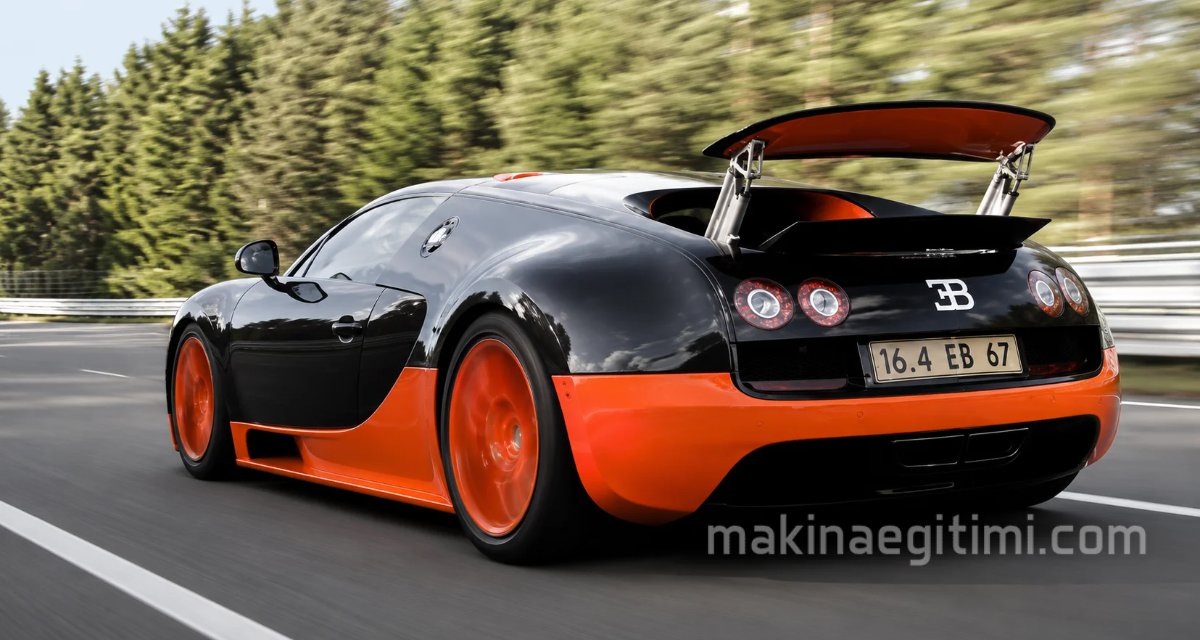
What Is a Vehicle Rear Spoiler?
A rear spoiler, or spoiler, is an aerodynamic device designed to reduce a vehicle’s air resistance . It disrupts or eliminates the effect of the air pressure passing over the vehicle’s body. If the spoiler is at the front of the vehicle, it’s called an Air Dam, which reduces the amount of air flowing beneath the vehicle.
The rear spoiler is the upside-down wing-shaped component. Manufacturers attach it to the trunk or the edge of the roof of the car. It presses the accelerating car onto the road and increases airspeed. Initially, manufacturers created rear spoilers for racing purposes. However, they are now seen as a popular accessory on high-performance automobiles.

What Is a Vehicle Spoiler Made Of?
Spoilers are usually made from materials such as polyurethane, ABS plastic, aluminum, or carbon fiber. Polyurethane and ABS plastic are the most commonly used materials because they are cheap and lightweight. Aluminum and carbon fiber are stronger and more durable materials, but they are more expensive. Carbon fiber is used especially in motorsports.
What Does a Rear Spoiler Do?
When a vehicle moves at high speeds, atmospheric pressure affects its motion. The function of the spoiler is to obstruct the airflow passing over and around a moving vehicle. Manufacturers typically use rear spoilers to disperse air. It reduces the amount of turbulence a vehicle creates as it moves. This helps to “disrupt” or reduce turbulent flow and air resistance.
The function of a spoiler varies depending on where automakers mount it, meaning which effect it is meant to disrupt.
The most common job of the spoiler is to reduce the effect of the turbulence created by airflow. It does this by “disrupting” the aerodynamic airflow and providing a cushion like a boundary layer. However, a spoiler may be needed to work differently for different types of airflow.
For this reason, manufacturers may need to place spoilers in different positions to control various types of air resistance.

Manufacturers use spoilers on race/sport cars together with other features on the vehicle’s body or chassis. This alters the handling characteristics of the automobile, which are affected by the atmosphere. Manufacturers usually design these devices to be highly adjustable. For this reason, they suit the needs of racing on a particular track, or may even suit the abilities of a particular driver.
Does a Spoiler Make the Car Faster?
A spoiler does not make the car faster, but it reduces the aerodynamic drag created while the car is moving. This allows the car to travel faster, or causes it to consume less fuel. Spoilers can also improve the car’s road grip and help the car remain more stable on the road.
Aerodynamic Downforce
A rear spoiler improves road grip by applying additional downforce to the rear axle at high speeds.
Fuel Savings
A well-designed spoiler can positively contribute to fuel consumption at high speeds by reducing air resistance.
Active Spoiler Deployment Speed
Active spoilers typically raise automatically above a certain speed threshold (for example, 80-120 km/h).
Advantages of Using a Rear Spoiler
Manufacturers also use rear spoilers to improve high-speed stability and reduce rear lift on high-speed/sport cars.
Today, automakers offer rear spoilers even on passenger cars to increase stability.
However, some automakers install them purely for styling/aesthetic purposes. Due to their earlier associations with the sports segment, rear spoilers are often favored simply because they are a sporty/fashionable design feature.

Manufacturers place spoilers in different locations. These include areas like the roof edge above the rear windshield and the rear deck. The top of the rear windshield and the trunk are the most common locations.
Installing and Removing a Spoiler
What Is Used to Attach a Car Spoiler?
Spoilers are usually attached to cars using adhesives such as epoxy, polyurethane mastic, or liquid nylon. These adhesives provide excellent grip suited to the car and ensure it stays in place while the vehicle is being driven. Epoxy and polyurethane adhesives are especially popular because they are weather-resistant and waterproof. Liquid nylon, on the other hand, is particularly high-strength, flexible, and durable, but it is harder to clean up and more difficult to apply.
How Is a Spoiler Removed?
The spoiler is removed from the upper surface of the vehicle. First, a solvent (for example, acetone) is used to dissolve the spoiler’s adhesive. The solvent reduces the adhesive’s grip, allowing you to remove the spoiler from the vehicle more easily. The solvent should be applied until the spoiler’s adhesive has completely dissolved. Care should be taken when removing the spoiler from the vehicle, as it can damage the vehicle’s upper surface. If the spoiler is secured with screws, rivets, or other mechanical fasteners, these must be removed first. It may be better to get support from a professional auto technician when removing the spoiler from the vehicle.
What Happens If a Spoiler Is Installed Incorrectly?
This is one of the questions many enthusiast drivers ask. For example, can a spoiler damage the vehicle? A spoiler that is not installed correctly can create many problems for the car. First, the spoiler can affect the vehicle’s aerodynamic performance. A spoiler is designed to reduce the car’s air resistance, but if it’s not installed correctly, it can actually increase the car’s air resistance instead. This can cause the car to travel more slowly or consume more fuel.
Additionally, an incorrectly installed spoiler can disrupt the car’s road grip. A spoiler is designed to keep the car more stable on the road, but if it’s not installed correctly, the car can become less stable on the road.
Finally, an incorrectly installed spoiler can spoil the vehicle’s aesthetic appearance. If the spoiler is placed on the front or rear of the car, an incorrect installation can spoil the vehicle’s appearance and ruin its aesthetics.
What Is an Active Spoiler?
Today, manufacturers use active spoilers. Active spoilers use motors to adjust the spoiler’s position and angle. Active spoilers automatically change the angle based on the vehicle’s speed. Manufacturers adjust active spoilers according to changes in the car’s speed.
Watch an Active Spoiler in Action:
In this article, we tried to provide information about the part known as the spoiler that can be mounted on vehicles. We covered topics such as why spoilers are chosen, why and when they shouldn’t be, how they are installed and removed, and whether they can damage the vehicle if not installed correctly. See you in our next articles.
Related Questions
The spoiler directs the air passing over it to create a downward force (downforce) at the rear of the vehicle. This force improves road grip, especially at high speed, by increasing the tires’ contact with the road.
Carbon fiber offers similar durability at a much lighter weight. Since every gram matters in motorsports, this weight advantage makes it the preferred choice despite the higher cost.
Related Posts
 What Does the Noise from the Valves Mean?
  Differences Between Leaf Spring and Coil Spring Suspension
  Why Do Electric Cars Use a Single Gear?
  What Is a Camshaft? What Does It Do? How Does It Work?
  What Is a Diesel Particulate Filter (DPF)? What Does It Do?
  Diesel Engine vs. Gasoline Engine: Which Is More Powerful?
  Why Does the Traction Control System Light (TCS Light) Come On?
  What Is Biodiesel? Properties, Production, and Advantages