
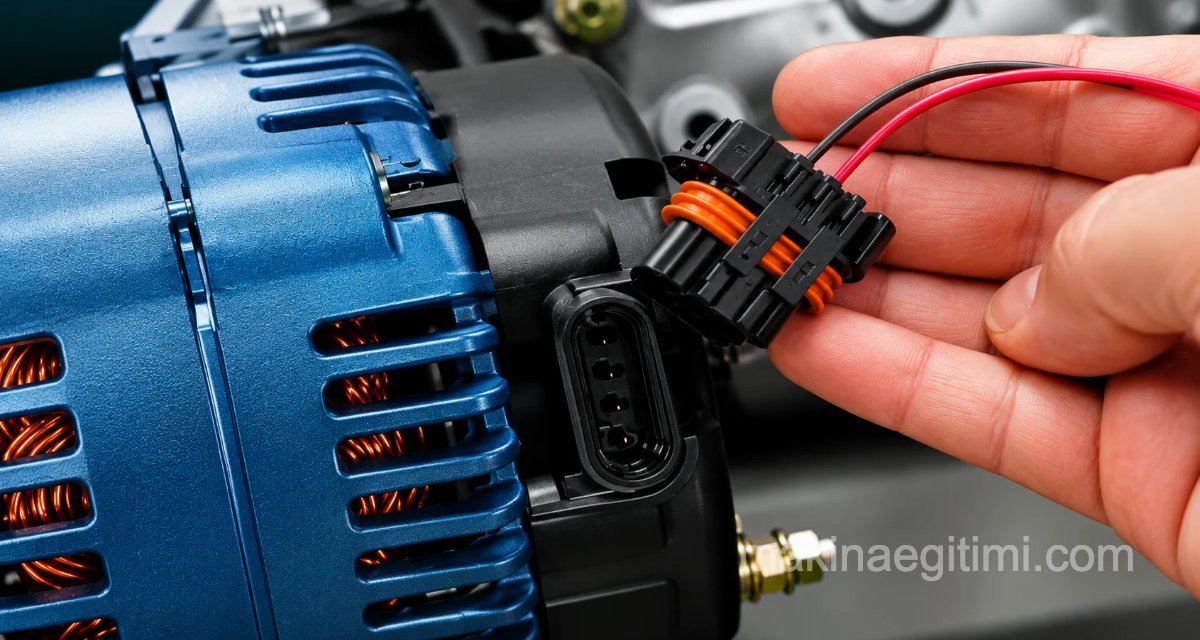
As we know, motor vehicles have a part called the battery. Put simply, a battery is a device that stores electricity through a chemical method. Using the electric current stored in the battery, the headlights and interior electrical components can operate while the vehicle is parked, even when the engine isn’t running. So where does the electricity stored in the battery come from? When the battery runs down, which part charges it back up? Have we ever thought about this?
What Is an Alternator?
The alternator is also known by another name, the charging dynamo. It’s the part that converts mechanical energy into electrical energy as long as the engine is running. The alternator kicks in when the engine is running.
What Does the Alternator Do?
The alternator produces electric current based on engine speed. It charges the battery, filling it back up. The alternator’s job is to meet the vehicle’s electrical needs.

Electromagnetic Induction
The alternator generates electricity through the principle of electromagnetic induction between the rotor and stator.
Belt-Driven
The alternator operates using the rotational motion it receives from the crankshaft by way of a belt.
The Rectifying Diode’s Role
The alternating current produced by the alternator is converted into direct current by the diodes inside it, which charges the battery.
How Does the Alternator Work?
When the ignition is turned on, the oil and charge indicator lights in the driver’s area come on. When the starter is engaged and the engine starts, the oil and battery lights go out. The electricity the alternator produces varies with engine speed. The charge indicator light tells the driver whether the system is working.

The alternator gets its motion from the crankshaft pulley by way of the fan belt. If the fan belt breaks, the charge light comes on. For this reason, the engine should be stopped whenever the battery charge light comes on.
In this article, we tried to explain what the alternator, also known as the charging dynamo, does and how it works. You can also check out related articles until we meet again in new ones.
Related Questions
The relative motion between the rotor and stator produces an effect called electromagnetic induction, generating electric current. This is a fundamental physics principle based on generating electricity by moving a magnet inside a coil.
An alternator naturally produces alternating current (AC), but a battery can only be charged with direct current (DC). The diodes convert this alternating current into direct current, making it suitable for the battery.
Related Posts
 How Does a Vehicle’s Charging System Work? Components, Jobs, and Failures
 What’s Under the Hood? A Guide to the Engine Bay
 What Is a Clutch? How Does It Work? Failures and What Drivers Should Know
 The Importance of Using Original Parts on a Motorcycle
 What Is Engine Braking? Does It Damage the Vehicle?
 Mercedes-Benz AMG 63 V8 Engine Manufacturing
 10 Basic Things Every Driver Should Know
 Engine Noises and What They Mean