
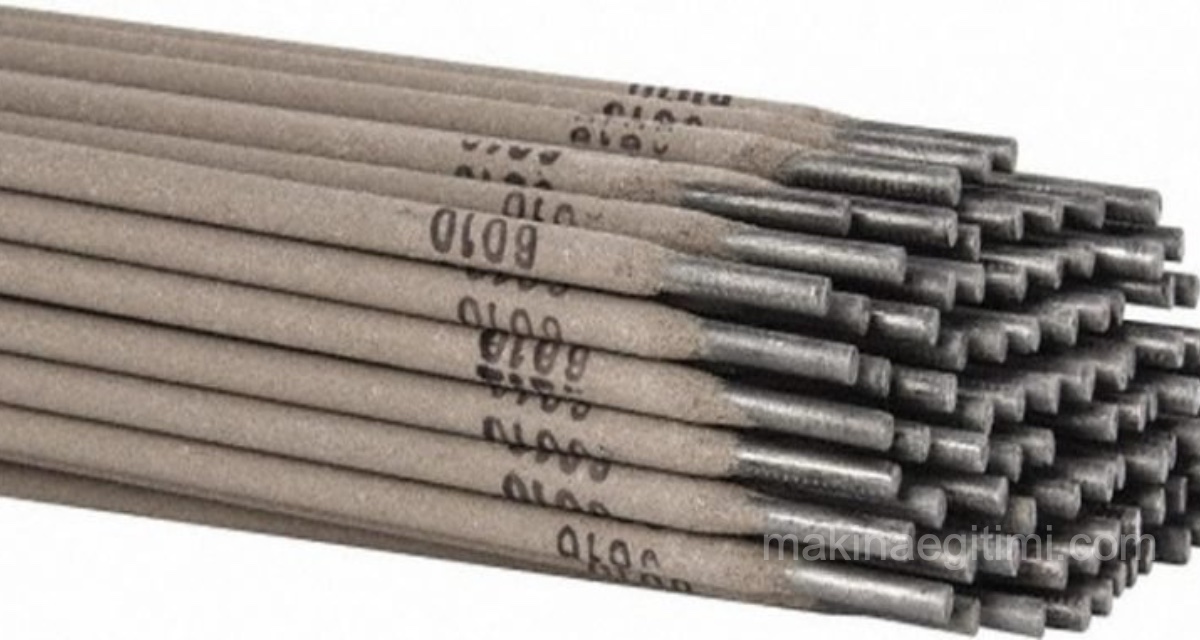
In electric arc welding, the arc is struck by touching the tip of a coated electrode to the workpiece. The electrodes used are generally metal wire, 230-460 mm long and 1.6-9.5 mm in diameter, coated with a covering that contains chemical compounds providing all or some of the following properties needed.

Although electrode coatings come in various colors on the market, they’re usually gray or off-white. So what does the electrode coating do? Why are welding electrodes coated?

Roles of the Electrode Coating
Although the electrode coating might seem like just a sheath that prevents the electrode wire from rusting, it actually has important roles. The roles of the electrode coating can be listed as follows:
Shielding Role
The electrode coating produces a shielding gas, such as carbon dioxide, under heat, which can protect the molten metal from atmospheric oxygen, nitrogen, and hydrogen. This shielding is necessary to prevent gas pockets in the weld and contamination of the weld joint.

Arc Stabilization Role
Because the electrode coating melts and vaporizes, it creates a protective atmosphere that stabilizes the arc (keeps it continuous) and protects the molten, hot metal from contamination. It provides arc stabilizers that help maintain a stable arc. The arc is an ionic gas (plasma) that conducts electric current. Arc stabilizers are compounds, such as potassium oxalate and lithium carbonate, that readily dissociate into ions within the arc. They increase the arc’s electrical conductivity and help the arc conduct electric current more smoothly.

Metal Alloying Role
Special alloying elements like nickel, vanadium, and molybdenum can be added to the weld joint by being incorporated into the electrode coating, to improve the properties of the weld metal.
The electrode coating adds alloying elements to alloy the molten metal. It supplies alloying elements and/or metal powder to the weld pool. The former helps control the weld metal’s composition, while the latter helps increase the deposition rate. It provides alloying additives to influence the weld pool’s shape, wetting, and viscosity, and also to control grain growth and achieve the desired microstructure.
Role in Preventing Oxidation and Rapid Cooling
The electrode coating forms a protective slag to prevent oxidation and allow the weld metal to cool slowly. It supplies deoxidizers and fluxing agents to deoxidize and clean the weld metal. The solid slag that forms protects the already-solidified but still-hot weld metal from oxidation.
Other Roles of the Electrode Coating
The electrode coating also acts as a cleaning agent, removing impurities from the molten metal.
One of the benefits of the electrode coating is that it reduces spatter during welding and increases the amount of molten metal deposited.
It affects the arc’s penetration ability, providing the desired weld depth.
It affects the shape of the weld bead, helping form the desired shape.
Although a minor point compared to the electrode coating’s other benefits, it should be added that the electrode coating also supplies additional filler metal.

To increase their effectiveness, they need to be baked right before use, to make sure all moisture is removed from the coating.
Related Posts
 Oxy-Fuel (Oxy-Acetylene) Welding: Working Principle and Uses
 Laser Welding, Its Properties and Working Principle
 The History of Electric Arc Welding
 What Is Spot Welding. How Is It Done?
 What Is Submerged Arc Welding, How Is It Done
 Welding Methods – Techniques – Types
 How Is Underwater Welding Done? Underwater Welding
 Welding Electrode Types