
Close Menu
  • MAKİNELER ve İMALAT
    • Tools & Equipment
    • Computer-Aided Drawing
    • CAD/CAM Education
    • CNC Machine Programming
    • Casting Technologies
    • Electrical & Electronics Technologies
    • Hydraulics & Pneumatics
    • Manufacturing Processes
    • Manufacturing Technologies
    • Occupational Safety
    • Mold & Die Design
    • Solid Modeling
    • Welding Technology
    • Machine Elements
    • Mechanical Trade Drawing
    • Materials Science
    • Automotive & Vehicle Technologies
    • Robotics Technologies
    • Health Technologies
    • Defense & Aerospace Technologies
    • Descriptive Geometry
    • Technical Drawing
    • Software & Hardware Technologies
    • Innovative Manufacturing Methods
  • TEKNOLOJİ ve YAŞAM
    • OTOMOBİLLER ve TAŞIT
      • Vehicle & Engine Knowledge
      • Safe Driving
      • Sürüş Destek Sistemleri
    • Genel Kültür
      • Movies & TV Shows
      • Görsel ve Grafik Sanat
      • Books & Literature
      • Music
      • Sports
      • History
      • History of Technology
    • GÜNDELİK YAŞAM TEKNOLOJİLERİ
    • Hobbies & Entertainment
    • Internet Technologies
    • Health
    • Mobile Technologies
Makine Eğitimi
  • Machines & Manufacturing
    Machine Elements
    Hydraulics & Pneumatics
    Technical Drawing
    Computer-Aided Design & Manufacturing
    Basic Manufacturing Processes
    Manufacturing Processes
    Industry Technologies
    Other Technical Courses
    Motion & Power Transmission
    Simple Machines
    Chains & Sprockets
    Shafts & Journals
    Gears
    Cams
    Couplings
    Belts & Pulleys
    Springs
    Bearings
    Keys
    Fastening Joining
    Retaining Rings
    Screws, Bolts & Nuts
    Cotter Pins
    Flanges
    Welding
    Rivets
    Pins & Bolts
    Washers
    Calculators
    Gear Ratio Calculator
    Spring Constant Calculator
    Belt Pulley Ratio Calculator
    Other Machine Elements
    Slides & Linear Guides
    Brakes
    Flywheels
    Clamps
    Shock Absorbers
    Gaskets & O-Rings
    Seals & Sealing Elements
    Hydraulics
    Introduction to Hydraulics & Principles
    Hydraulic Systems & Applications
    Accumulators
    Filters
    Motors
    Pumps
    Valves
    Pneumatics
    Introduction to Pneumatics & Principles
    Pneumatic Systems & Applications
    Pneumatic Circuit Components
    Valves
    Cylinders
    Silencers
    Motors
    Compressors
    Dryers
    Conditioning Units
    Common Topics & Maintenance
    Hydraulic & Pneumatic Maintenance
    Study Notes, Exams & Tests
    Technical Drawing
    Introduction to Technical Drawing
    Geometric Drawings
    Perspective & Projection
    Orthographic Views
    Dimensioning
    Sectioning
    Assembly & Detail Drawings
    Tolerances
    Surface Finish Symbols
    Mechanical Engineering Drawing
    Screws, Bolts & Nuts
    Pulley Drawings
    Gear Drawings
    Shafts & Journals
    Bearing Drawings
    Pins & Bolts
    Spring Drawings
    Welds in Technical Drawing
    Washers
    Cotter Pins
    Technical Drawing Exercises
    Mechanical Drawing Exercises
    Gear Exercises
    View Extraction Exercises
    Pulley Exercises
    Pin & Bolt Exercises
    Threaded Fastening Exercises
    Descriptive Geometry
    Computer-Aided Drawing
    AutoCAD Drawing Lessons
    Solid Modeling & Animation
    Solid Model Drawing Files
    Solid Model Assembly Examples
    Solid Model Drawing Lessons
    3D CAD Software Reviews
    Solid Modeling Exercises
    CNC Programming
    CAM
    Measurement & Inspection
    Dial Indicators
    Calipers
    Gauges
    Micrometers
    Materials Science
    Steels
    Cast Iron
    Aluminum
    Plastics
    Material Testing & Hardness Measurement
    Occupational Safety
    Workshop Safety
    Safety When Working With Electricity
    Machine Safety Rules
    Hand Operations
    Filing
    Marking
    Cutting Operations
    Reaming
    Tapping
    Threading With a Die
    Drill Bit Sharpening
    Working With Machines
    Basic Turning Operations
    Basic Milling Operations
    Shaper Machine
    Machining
    Turning
    Milling
    Grinding
    Innovative Manufacturing Methods
    EDM (Electrical Discharge Machining)
    Laser Machining
    Waterjet Machining
    3D Printing
    3D Scanners
    Welding
    Rolling
    Casting
    Mold & Die Design
    Mechanical & Hydraulic Presses
    Blanking & Piercing Dies
    Bending Dies
    Drawing Dies
    Plastic Injection Molds
    Extrusion Dies
    Compound Dies
    Progressive Dies
    Blow Molds
    Spinning Dies
    Spray Molds
    Manufacturing of Machine Parts
    Automotive & Vehicle Technologies
    Motor Vehicle Manufacturing
    Raw Material Production
    History of Technology
    Health & Medical Technologies
    Defense & Aerospace
    Robotics Technologies
    Software & Hardware Technologies
    Mechanics - Strength of Materials
    Physics Topics
  • Technology & Life
    Hobbies & Entertainment
    Sports
    Music
    Vehicle & Engine Knowledge
    Vehicle Maintenance & Repair
    Safe Driving
    Driver Assistance Systems
    History
    Movies & TV Shows
    Books & Literature
    Computers & Internet
    Computer Tips
    Software Reviews
    Hardware & Peripherals
    Practical & Safe Internet Use
    Visual & Graphic Art
    Mobile Technologies
    Travel
    Science
    Health
    First Aid Knowledge
    Everyday Technologies
Makine Eğitimi
Home»Manufacturing Technologies»What Is Steel, How Is It Made? Video Explanation of Steelmaking
29 August 2026

What Is Steel, How Is It Made? Video Explanation of Steelmaking

Çelik nedir nasıl yapılır? Çeliğin yapılışı video anlatım

In our Manufacturing Operations Materials Science section, this article will cover what steel is and how steel is made. The answer to the question of what iron needs to be mixed with to obtain steel will be in our article. We’ll share detailed information about how steel is made, along with a video about steelmaking.

  • What Is Steel
  • How Is Steel Made?
    • How Steel Is Made, Brief Explanation
    • Video Explanation of How Steel Is Made
  • How Steel Is Made
    • Methods Used in Steelmaking
  • Related Questions
watch the video

What Is Steel

Steel is an iron-carbon alloy containing up to 1.7% carbon, up to 1% manganese, up to 0.5% silicon, and less than 0.05% sulfur (S) and phosphorus (P).

Iron-Carbon Alloy


Steel is an alloy of iron with generally less than 2% carbon; the carbon ratio directly affects hardness.

Blast Furnace Process


In the first stage of steel production, iron ore is converted into pig iron by being reduced with coke in a blast furnace.

Oxygen-Blowing Method


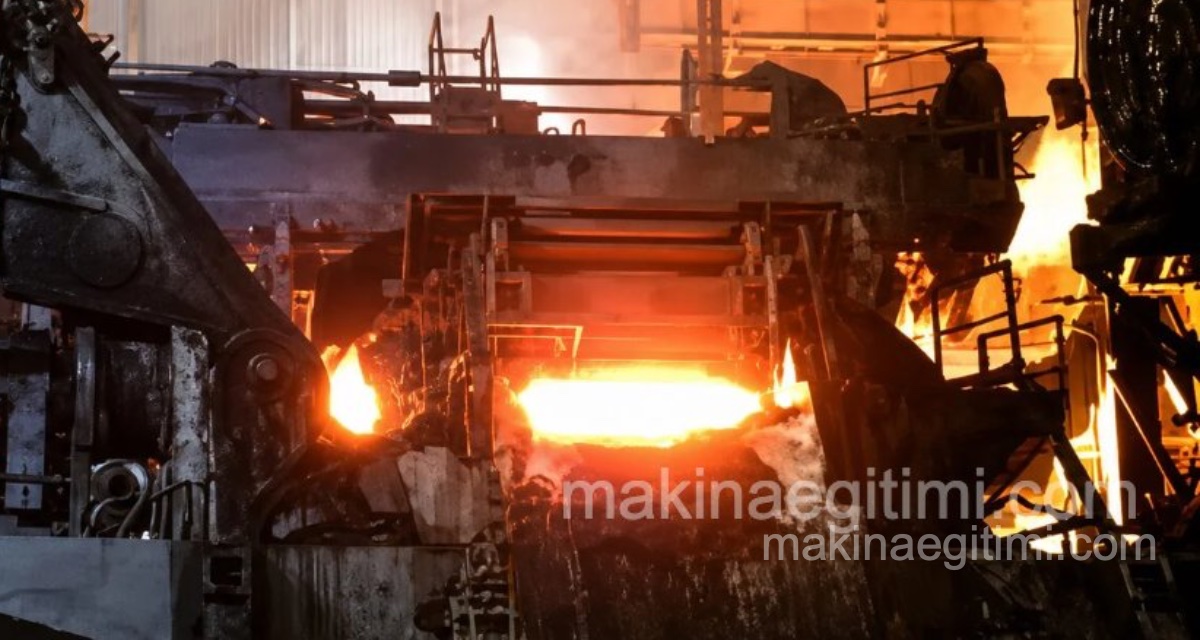
In the basic oxygen furnace, pure oxygen is blown into the molten pig iron, rapidly removing excess carbon to produce steel.

How Is Steel Made?

There are basically two current routes followed in steel production today.

Route 1: Producing pig iron from iron ore in blast furnaces at integrated plants, followed by steel production from this pig iron in Basic Oxygen Furnaces (BOF)

Route 2: Producing steel by re-melting existing iron and steel scrap in electric arc furnaces.

how is steel made
Steel is made from either pig iron or iron and steel scrap

About 1/3 of the world’s steel production comes from steel scrap, while the rest comes from iron ore.

Iron and steel production plants in Turkey include: Zonguldak Iron and Steel, Karabük Iron and Steel, and İskenderun Iron and Steel factories.

How Steel Is Made, Brief Explanation

For steel to be made, iron and carbon need to be combined. Steel is made either by adding the required carbon to iron produced in blast furnaces through certain processes, or by re-melting steel scrap in electric arc furnaces. Carbon is an element that hardens iron, and as the carbon ratio in the resulting mixture increases, the steel’s hardness and brittleness increase proportionally as well.

In today’s industry, carbon content ranging from 0.02% to 2% is used in steel production. Elements such as tungsten, vanadium, chromium, and nickel can also be added to give the produced steel various properties such as corrosion resistance, heat resistance, and elasticity.

Video Explanation of How Steel Is Made

How steel is made

Alternative link for the video

How Steel Is Made

Steel, which isn’t an element found on its own in nature, is an alloy formed by combining the element Iron (Fe) with Carbon (C) in ratios ranging from 0.02% to 2%. The quality of the steel used in today’s industry is largely determined by the ratio of Carbon in the alloy.

Although the Carbon atom has a major effect on steel classification, elements such as Chromium, Magnesium, Tungsten, and Vanadium are also used in converting Iron into an alloy. Carbon and the other elements form a tight bond with Iron atoms, ensuring the resulting Steel is a very strong material in terms of physical properties.

Steel production can also be done using different ratios of elements depending on the intended use of the resulting alloy. The ratio of elements used to convert Iron into an alloy determines the resulting Steel’s properties such as yield point, ductility, and durability.

For this reason, some changes can be made to the ratio of elements used during the alloying stage so that the Steel alloy to be used in different fields has the desired physical properties. For example, Steel alloys very rich in Carbon are much harder than Iron, but have much lower ductility.

Methods Used in Steelmaking

Various methods are used in steelmaking. These are:

  • Bessemer-Thomas steel production method
  • Siemens-Martin steel production method
  • Steel production in electric arc furnaces
  • Steel production in basic oxygen converters

You can examine these steel production methods in detail by clicking the links above.

Some of these steel production methods have lost their importance today, and steel production is mostly carried out with newer production techniques. As of 2002, of the approximately 900 million tons of steel produced worldwide, 60% is produced in Basic Oxygen Converters, 33.9% in Electric Arc Furnaces, 3.8% in Siemens-Martin furnaces, and 2.2% with other production methods. In Turkey, 31% of the steel produced is made in basic oxygen converters, and the remaining 69% in electric arc furnaces.

Related Questions

Pig iron contains a much higher ratio of carbon than steel, and this excess carbon makes the material brittle. To obtain steel, this excess carbon must be reduced in a controlled manner by blowing in oxygen.

This method reuses existing scrap material instead of processing iron ore from scratch. This both reduces the need for raw material and can make the production process less energy-intensive compared to the blast furnace stage.

Related Posts
What is submerged arc welding, title image What Is Submerged Arc Welding, How Is It Done Dişli Çark Üretim Yöntemleri Gear Manufacturing Methods How Are Piston Rings Made How Are Piston Rings Made? How Are Piston Rings Manufactured? Steel sheets being processed at a rolling mill What Is Rolling? How Is It Done? Rolled Products in Our Lives Rulman nasıl yapılır ? video How Are Bearings Made? Video Properties of Laser Beams and Their Working Principle Properties of Laser Beams and Their Working Principle Çelik Üretim Yöntemleri Steel Production Methods What Is a Pantograph? How Does It Work? What Is a Pantograph? How Does It Work?
Steels Raw Material Production
Share. Facebook Twitter WhatsApp Tumblr Email Telegram Copy Link

Leave A Reply Cancel Reply

What Is the Difference Between Classical Guitar and Acoustic Guitar?
The Birth and Golden Age of Rock ‘n’ Roll: From Memphis to the World
  • Contact
  • Terms of Service
  • Privacy & Cookie Policy

Type above and press Enter to search. Press Esc to cancel.