Close Menu
  • MAKİNELER ve İMALAT
    • Tools & Equipment
    • Computer-Aided Drawing
    • CAD/CAM Education
    • CNC Machine Programming
    • Casting Technologies
    • Electrical & Electronics Technologies
    • Hydraulics & Pneumatics
    • Manufacturing Processes
    • Manufacturing Technologies
    • Occupational Safety
    • Mold & Die Design
    • Solid Modeling
    • Welding Technology
    • Machine Elements
    • Mechanical Trade Drawing
    • Materials Science
    • Automotive & Vehicle Technologies
    • Robotics Technologies
    • Health Technologies
    • Defense & Aerospace Technologies
    • Descriptive Geometry
    • Technical Drawing
    • Software & Hardware Technologies
    • Innovative Manufacturing Methods
  • TEKNOLOJİ ve YAŞAM
    • OTOMOBİLLER ve TAŞIT
      • Vehicle & Engine Knowledge
      • Safe Driving
      • Sürüş Destek Sistemleri
    • Genel Kültür
      • Movies & TV Shows
      • Görsel ve Grafik Sanat
      • Books & Literature
      • Music
      • Sports
      • History
      • History of Technology
    • GÜNDELİK YAŞAM TEKNOLOJİLERİ
    • Hobbies & Entertainment
    • Internet Technologies
    • Health
    • Mobile Technologies
Makine Eğitimi
  • Machines & Manufacturing
    Machine Elements
    Hydraulics & Pneumatics
    Technical Drawing
    Computer-Aided Design & Manufacturing
    Basic Manufacturing Processes
    Manufacturing Processes
    Industry Technologies
    Other Technical Courses
    Motion & Power Transmission
    Simple Machines
    Chains & Sprockets
    Shafts & Journals
    Gears
    Cams
    Couplings
    Belts & Pulleys
    Springs
    Bearings
    Keys
    Fastening Joining
    Retaining Rings
    Screws, Bolts & Nuts
    Cotter Pins
    Flanges
    Welding
    Rivets
    Pins & Bolts
    Washers
    Calculators
    Gear Ratio Calculator
    Spring Constant Calculator
    Belt Pulley Ratio Calculator
    Other Machine Elements
    Slides & Linear Guides
    Brakes
    Flywheels
    Clamps
    Shock Absorbers
    Gaskets & O-Rings
    Seals & Sealing Elements
    Hydraulics
    Introduction to Hydraulics & Principles
    Hydraulic Systems & Applications
    Accumulators
    Filters
    Motors
    Pumps
    Valves
    Pneumatics
    Introduction to Pneumatics & Principles
    Pneumatic Systems & Applications
    Pneumatic Circuit Components
    Valves
    Cylinders
    Silencers
    Motors
    Compressors
    Dryers
    Conditioning Units
    Common Topics & Maintenance
    Hydraulic & Pneumatic Maintenance
    Study Notes, Exams & Tests
    Technical Drawing
    Introduction to Technical Drawing
    Geometric Drawings
    Perspective & Projection
    Orthographic Views
    Dimensioning
    Sectioning
    Assembly & Detail Drawings
    Tolerances
    Surface Finish Symbols
    Mechanical Engineering Drawing
    Screws, Bolts & Nuts
    Pulley Drawings
    Gear Drawings
    Shafts & Journals
    Bearing Drawings
    Pins & Bolts
    Spring Drawings
    Welds in Technical Drawing
    Washers
    Cotter Pins
    Technical Drawing Exercises
    Mechanical Drawing Exercises
    Gear Exercises
    View Extraction Exercises
    Pulley Exercises
    Pin & Bolt Exercises
    Threaded Fastening Exercises
    Descriptive Geometry
    Computer-Aided Drawing
    AutoCAD Drawing Lessons
    Solid Modeling & Animation
    Solid Model Drawing Files
    Solid Model Assembly Examples
    Solid Model Drawing Lessons
    3D CAD Software Reviews
    Solid Modeling Exercises
    CNC Programming
    CAM
    Measurement & Inspection
    Dial Indicators
    Calipers
    Gauges
    Micrometers
    Materials Science
    Steels
    Cast Iron
    Aluminum
    Plastics
    Material Testing & Hardness Measurement
    Occupational Safety
    Workshop Safety
    Safety When Working With Electricity
    Machine Safety Rules
    Hand Operations
    Filing
    Marking
    Cutting Operations
    Reaming
    Tapping
    Threading With a Die
    Drill Bit Sharpening
    Working With Machines
    Basic Turning Operations
    Basic Milling Operations
    Shaper Machine
    Machining
    Turning
    Milling
    Grinding
    Innovative Manufacturing Methods
    EDM (Electrical Discharge Machining)
    Laser Machining
    Waterjet Machining
    3D Printing
    3D Scanners
    Welding
    Rolling
    Casting
    Mold & Die Design
    Mechanical & Hydraulic Presses
    Blanking & Piercing Dies
    Bending Dies
    Drawing Dies
    Plastic Injection Molds
    Extrusion Dies
    Compound Dies
    Progressive Dies
    Blow Molds
    Spinning Dies
    Spray Molds
    Manufacturing of Machine Parts
    Automotive & Vehicle Technologies
    Motor Vehicle Manufacturing
    Raw Material Production
    History of Technology
    Health & Medical Technologies
    Defense & Aerospace
    Robotics Technologies
    Software & Hardware Technologies
    Mechanics - Strength of Materials
    Physics Topics
  • Technology & Life
    Hobbies & Entertainment
    Sports
    Music
    Vehicle & Engine Knowledge
    Vehicle Maintenance & Repair
    Safe Driving
    Driver Assistance Systems
    History
    Movies & TV Shows
    Books & Literature
    Computers & Internet
    Computer Tips
    Software Reviews
    Hardware & Peripherals
    Practical & Safe Internet Use
    Visual & Graphic Art
    Mobile Technologies
    Travel
    Science
    Health
    First Aid Knowledge
    Everyday Technologies
Makine Eğitimi
Home»Machine Elements»What Is a Bolt? Bolt Types and Their Properties
29 August 2026

What Is a Bolt? Bolt Types and Their Properties

Bolt Types and Their Properties

In this article, we’ll cover what a bolt is, what types of bolts there are, and what the properties of each type are. The table of contents is below:

  • About Bolts
    • What’s the Difference Between a Bolt and a Screw?
  • Bolt Types (by Head Shape)
    • Hex Head Bolts
    • Allen (Socket Head) Bolts
    • Countersunk Head Bolts
    • Slotted Head Bolts
    • Phillips (Cross) Head Bolts
  • Bolt Types by Shank Shape
    • Stud Bolts (Headless Bolts)
    • Stretch (Tension) Bolts
    • Waisted (Reduced-Shank) Bolts
    • Fitted (Reamer) Bolts
  • Special-Purpose Bolts
  • Related Questions

About Bolts

A bolt is a cylindrical threaded fastener with a head (hexagonal, etc.) that joins parts together in a removable way using a nut, with tightening torque usually applied to the nut.

What’s the Difference Between a Bolt and a Screw?

Bolts, when tightened with a wrench, provide much more clamping force than screws. They’re also larger in size than screws.
Bolts generally clamp together with a nut. Screws, on the other hand, are usually threaded directly into a body.
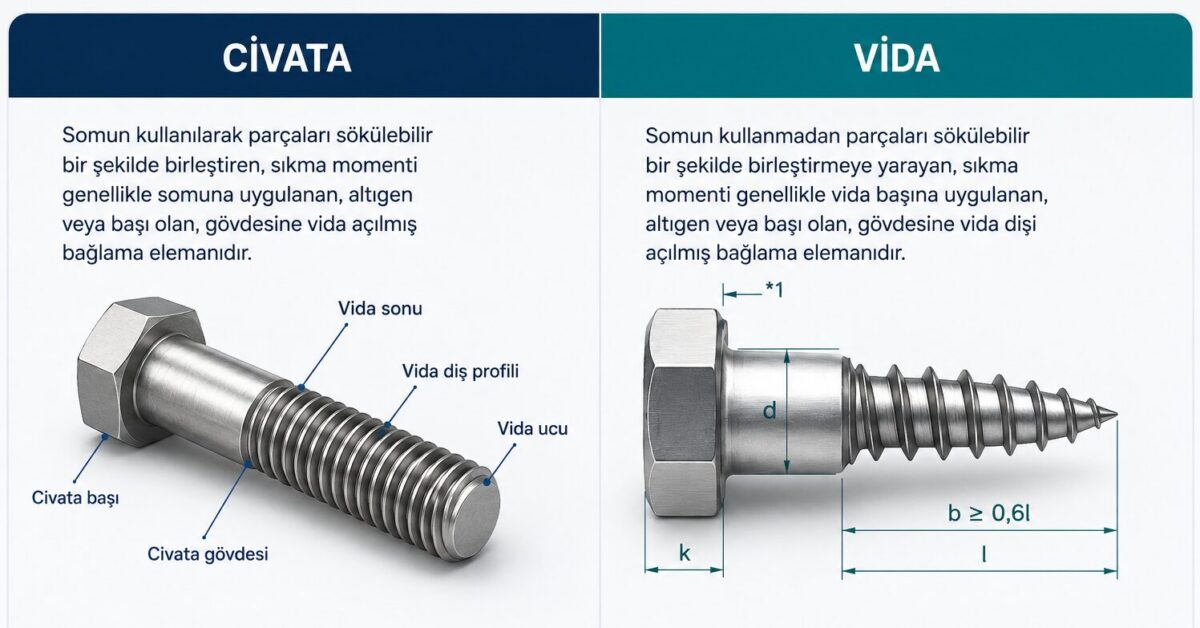
the difference between a bolt and a screw

NOTE: According to Turkish standards, both are technically called “civata” (bolt). The distinction given above generally reflects terms used in the market.

Bolts and screws can be made by hand. But meeting industrial demand this way isn’t feasible. Also, the extra labor and material waste make manual production very costly. That’s why bolts and screws are made automatically, without removing material, on special machines. Special machines have been built for this purpose that can produce thousands of bolts and screws per hour.
Not all bolts are used under the same conditions. Some are used in very cold environments, others in hot ones. The connection needs to stay secure under these conditions too. That’s why bolts need to be manufactured with technical and environmental properties suited to the working environment.

NOTE: Under no circumstances should the threaded portion of a bolt be extended afterward with a die. Since bolts are thread-rolled on automatic machines, the root of the thread isn’t a full thread profile. Because of this, a die will cut and damage the threads instead of forming them properly. A secure connection can’t be made with a bolt whose threads have been damaged this way.

Bolt Types (by Head Shape)

Hex Head Bolts

Hex head bolts are frequently used in machining for joining machine parts, and in construction for assembling steel structures. Depending on the requirements of the job, bolts are made with either normal or fine threads.
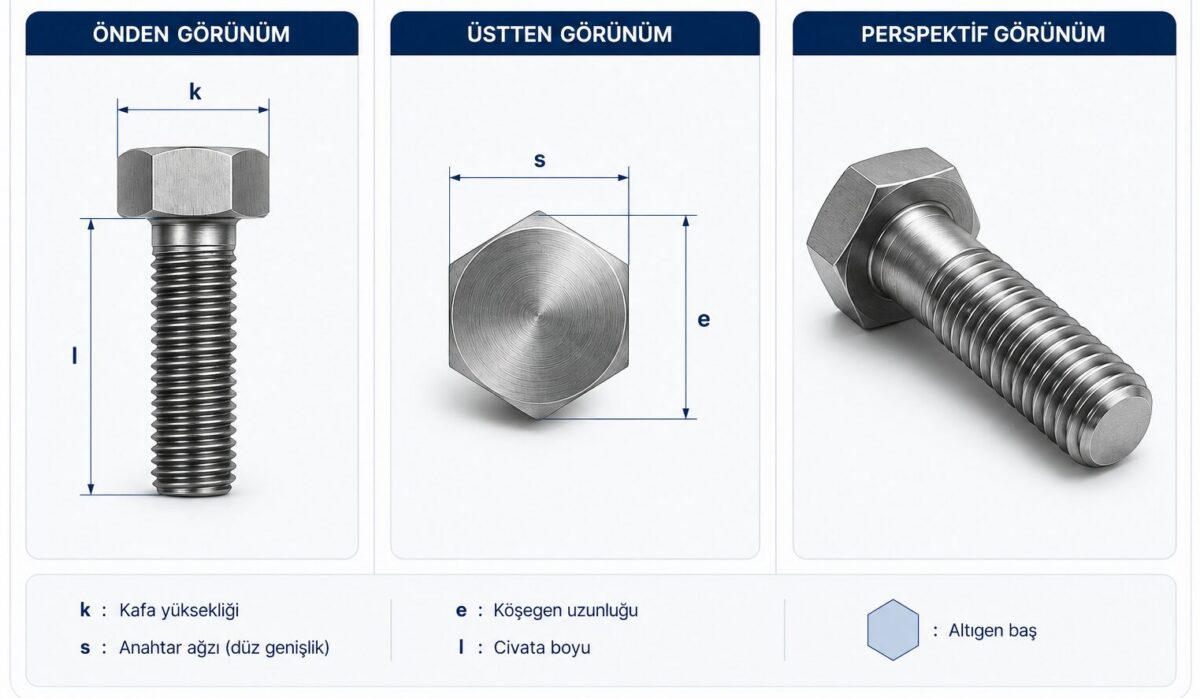
hex head bolt, front, top, and isometric views

The bolt’s threaded length is determined by its intended use. Depending on the application, it may be made with a partial thread or fully threaded along its length.

Related Post Çeşitli Civata Çizim Örnekleri Teknik Resimler

Allen (Socket Head) Bolts

allen (socket head) bolt

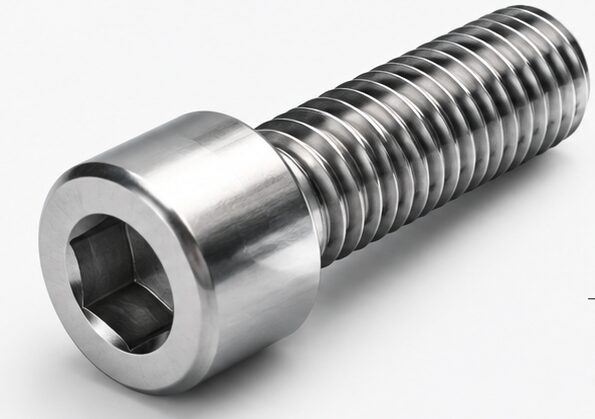
Also known as an Allen bolt. When the space around the bolt head is too tight for a wrench to fit, or when the bolt head shouldn’t stick out, cylindrical socket-head (Allen) bolts, or their smaller counterparts, Allen screws, are used.

Countersunk Head Bolts

bolt types, countersunk head bolt

Countersunk socket-head bolts have a thinner head than cylindrical head bolts. When joining thin materials where the bolt head shouldn’t protrude, countersunk head bolts are used. The countersunk shape of the bolt head also keeps it centered in the hole as it’s tightened.

Slotted Head Bolts

bolt types, slotted head bolt

Cylindrical head bolts with a screwdriver slot cut into the head are used for connections small enough to be tightened and loosened with a screwdriver.

Sheet-metal-thickness parts are joined with cylindrical head screws; thicker parts are joined with countersunk or oval-countersunk head screws.

Phillips (Cross) Head Bolts
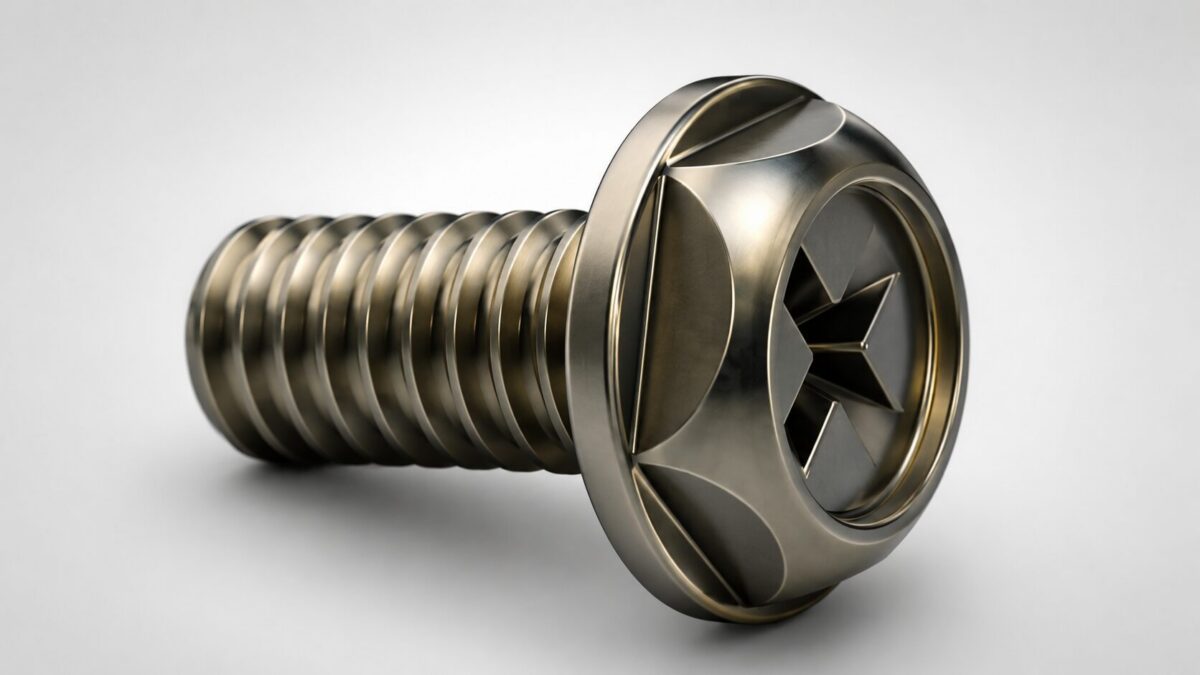
phillips (cross) head bolt

Phillips-head screws provide stronger tightening than slotted screws of the same size. The main advantage of Phillips-head screws is that the head doesn’t get damaged while tightening or loosening.

Since the tightening force is distributed across four arms via the cross-shaped screwdriver tip, this achieves strong tightening while keeping the head from wearing out.

Bolt Types by Shank Shape

Stud Bolts (Headless Bolts)

A stud bolt is a headless bolt threaded on both ends. Studs are used in connections that are removed and reinstalled frequently. One end is tightened very firmly into the machine body so it stays fixed. After the part to be attached is placed over it, it’s secured with a nut threaded onto the stud.

bolt types, stud bolt
A stud is a headless bolt threaded on both ends.

When the joined parts need to be removed, only the nuts are taken off. The stud stays in place. This method prevents the threads in the main body from wearing out.

Stretch (Tension) Bolts

stretch bolt and a sample application

Used for large shaft lengths that experience dynamic loading, such as connecting rods and high-pressure flange connections. During tightening, its long, thin shank stretches elastically. Because of this, stretch bolts don’t rely on friction alone for security. Its shank diameter is around 90% of the thread’s minor diameter. For these bolts to do their job properly, they need to be installed with a high preload tension.

Waisted (Reduced-Shank) Bolts

Waisted bolts are designed to prevent permanent physical changes in a connection that could otherwise result from forces stressing the joint axially.

A waisted bolt’s shank diameter can be reduced to as little as 10% of the thread root diameter. Under the forces acting on the bolt, this thinned section stretches slightly. Once the force is removed, the bolt returns to its original shape. This happens because of the elasticity of the bolt material. Waisted bolts don’t need an additional locking system to prevent loosening — being very firmly tightened and elastic solves this problem on its own.

Fitted (Reamer) Bolts

Some machine elements that transmit large torques are joined with special bolts that have precision-ground shanks with tight tolerances. The holes the bolts pass through are also reamed. (See: Reamers and Reaming)

If elements that transmit large forces aren’t joined this precisely — meaning the bolt hole is oversized — the bolt suddenly encounters a large shear force the moment it starts operating. Bolts repeatedly subjected to these sudden shear forces have a short lifespan. They can fail unexpectedly, taking the system down with them.

Special-Purpose Bolts

Used in the automotive sector, heavy equipment, vehicles of all kinds, industrial machinery, and anywhere a fastening is needed. Depending on the grade, they’re made from materials like C35, 41Cr4, or 42CrMo4. We call them “special” because they’re made in dimensions different from standard bolts.

special-purpose bolt types
Various special-purpose bolts

For example, depending on nominal size, the d2 diameter can be larger or smaller. There may be a cotter pin hole at the tip. The same bolt may have different thread pitches cut at different sections.

bolt types, special-purpose bolt
Ring head bolt
bolt types, ring head bolt
eye bolt usage and wing nut
An eye bolt and a sample application

An eye bolt is an example of a special-purpose bolt. Here, we see a sample application together with a wing nut.

special-purpose bolt types, U-bolt
U-BOLT
flange bolt
FLANGE BOLT

Thread Standard Compatibility


Bolts are made to different thread standards, like Metric or Whitworth, and mixing them up can damage the threads.

Strength Class Marking


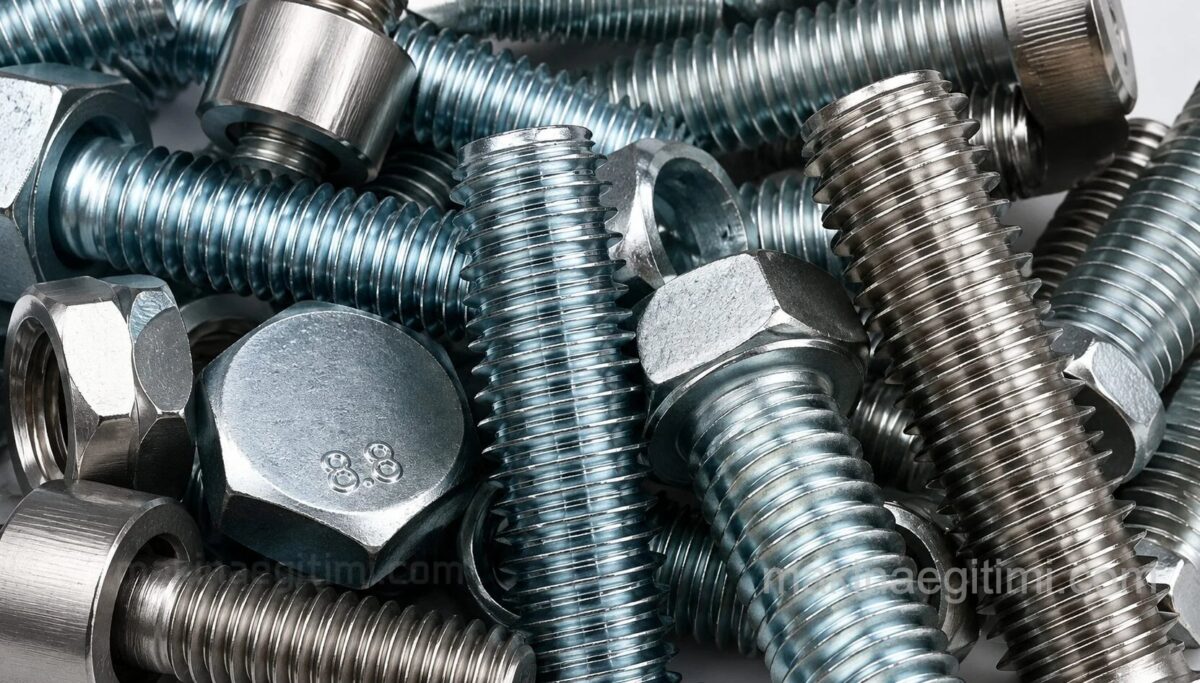
Codes like 8.8 or 10.9 stamped on the bolt head indicate the material’s tensile and yield strength.

Variety of Head Shapes


Bolts are made with different head shapes — hex, cylindrical, countersunk — tailored to the application.

Related Questions

Bolts are designed to work together with a nut, and a wrench can apply a large amount of torque to that nut. Screws, on the other hand, are usually threaded directly into a body and aren’t intended to generate this level of clamping force.

Manual production is both time-consuming and wastes a lot of labor and material, which drives the cost up significantly. Special machines make the process economical by producing thousands of bolts per hour, both quickly and at consistent quality.


Related Posts

Strength Calculation for Gears Strength Calculation for Gears What is a washer. What does it do What Is a Washer. What Does It Do Making a Worm Wheel Making a Worm Wheel Types of Belts Belt Types Used in Industry Couplings and Types of Couplings Couplings and Types of Couplings Metric and Whitworth Thread Systems Metric and Whitworth Thread Systems Metric-Whitworth Thread Tables Metric-Whitworth Thread Tables Helical Gear Technical Drawings Helical Gear Technical Drawings
Threaded Fasteners
Share. Facebook Twitter WhatsApp Tumblr Email Telegram Copy Link

Leave A Reply Cancel Reply

The Best Dash Cams of 2026: Tested Picks for Every Budget
Genghis Khan: From an Abandoned Child to History’s Greatest Emperor
  • Contact
  • Terms of Service
  • Privacy & Cookie Policy

Type above and press Enter to search. Press Esc to cancel.