
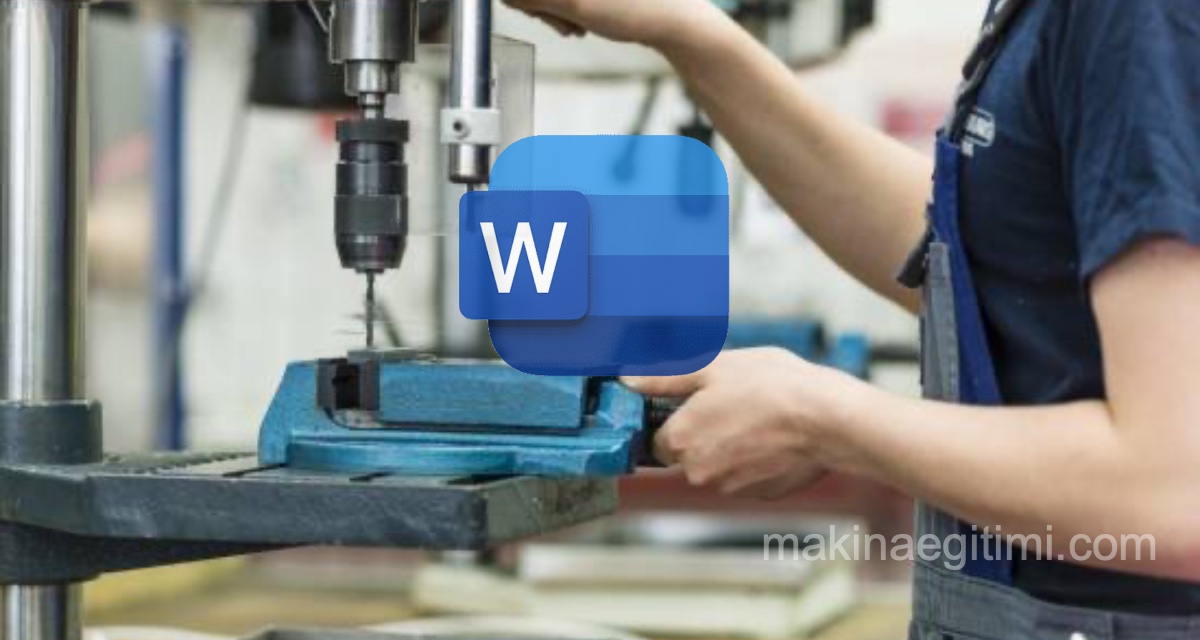
Safe working rules for drill presses should be posted next to drill presses in the workshops of vocational and technical high schools. This also covers the workplace safety precautions to take at a drill press. At the end of the article, a download link for the drill press work instructions in MS Word format is provided.
Steps to Take Before Working at a Drill Press
- Check whether the drill press is fit for use.
- Make sure the vise is fastened to the table.
- Fit a properly sharpened drill bit into the chuck.
- Center-punch the workpiece to be drilled with an appropriate punch (60° point angle).
- Clamp the workpiece tightly in the vise.
- Set the appropriate drill bit speed for the job and material from the table.
- Clear away any tools, equipment, or materials on the drill press and in the work area that won’t be used.
- Don’t wear gloves, necklaces, bracelets, rings, or ID tags while working at a drill press.
- Your work clothes shouldn’t be excessively loose, and cuffs should be elasticated, not hanging loose.
- Always wear safety glasses and use a face shield against flying chips.
- Have cutting oil ready for cooling.
- Take the proper stance for drilling.

Securing the Workpiece
The workpiece to be drilled must be firmly secured with a vise or clamp so it doesn’t spin loose during drilling.
Choosing the Right Speed
Drill speed should be chosen correctly based on the type of material being drilled and the drill bit’s diameter.
Wearing Safety Glasses
Wearing safety glasses is mandatory against flying chips during drilling.
Steps to Take for Safe Work at a Drill Press
This section primarily covers the safe working rules for a drill press.
- If the proper conditions are set up, start your drill press.
- Remember that you’ll be centering the drill bit as it engages the punch mark.
- Start the job with light pressure, taking care to keep the hand pressing the rotating drill against the material, and the other supporting hand, firm and steady.
- Watch out for chips coming off the workpiece toward you during the job. Use an air gun to clear away small, short chips.
- Don’t try to grab chips coming off the work with your hand. You can use a hook instead.
- For safe work at a drill press, don’t touch the rotating drill bit. Don’t wipe it with a rag or cotton waste. Only a brush should be used on a drill press.
- Don’t let people who might distract you approach or stand in front of the machine while you’re working.
- If the drill bit overheats, use an appropriate cutting fluid.
- Don’t step away from a drill press while it’s running.
- Keep your head away from the rotating spindle.
- Watch the feed and the chips to tell when the workpiece is finished, and always reduce pressure at that point.

What to Pay Attention to After Working at a Drill Press
- For safe work at a drill press, stop the machine once drilling is finished. Don’t stop the chuck by hand.
- Only wear gloves while collecting long chips.
- Safely remove the workpiece and the drill bit. Use hoists when mounting and removing heavy parts.
- Clean the table and vise with a brush or air.
- Clean the machine and the work area.
- Lubricate the parts that need it. Check the oil level periodically so the machine doesn’t run dry.
- If your work is finished and you’re leaving the workshop, don’t forget to switch off the main power switch.
Note: YOU CAN DOWNLOAD THIS DOCUMENT IN MS WORD FORMAT (Turkish document)
Related Questions
A rotating drill bit can catch a loose-fitting glove and pull the hand into the tool along with it. This serious injury risk is why any accessory that could get caught on rotating parts, like gloves, must be removed.
Center-punching keeps the drill bit from wandering off the desired position at the start of drilling. Without this pre-marking, the drill bit can skate across the surface, and the hole can end up in the wrong place or drilled at an angle.
Related Posts
 Cutting a Square Thread on a Lathe
 Drilling and Boring on a Lathe
 Turning with the Aid of a Mandrel
 Safe Working Rules on a Milling Machine
 How to Calculate Cutting Speed, Feed and Spindle RPM: A Practical Guide With Worked Examples
 Gear Manufacturing Methods
 Micrometer Reading Questions
 Work Instructions for a Surface Grinding Machine