
In this article, in the Machine Education Hydraulics/Pneumatics lessons, you’ll find comprehensive information about check valves. If you’re curious about how a check valve works, its function, and what it’s used for, read on. Here are the topics covered:
What Is a Check Valve?

Valves that allow flow in one direction while closing off the flow passage in the other direction are called check valves.
Widely used in hydraulic systems, these valves ensure the fluid moves in only one direction. It is represented in a hydraulic circuit by the symbol above.
Allows One-Way Flow
Check valves allow fluid to pass in only one direction, completely blocking backflow.
Spring-Loaded Ball Mechanism
Simple check valves usually operate by a spring-loaded ball or conical element opening and closing depending on the direction of flow.
Pump Protection Role
By preventing backflow in the system, check valves protect the pump from damage in the reverse direction.
How Does a Check Valve Work?
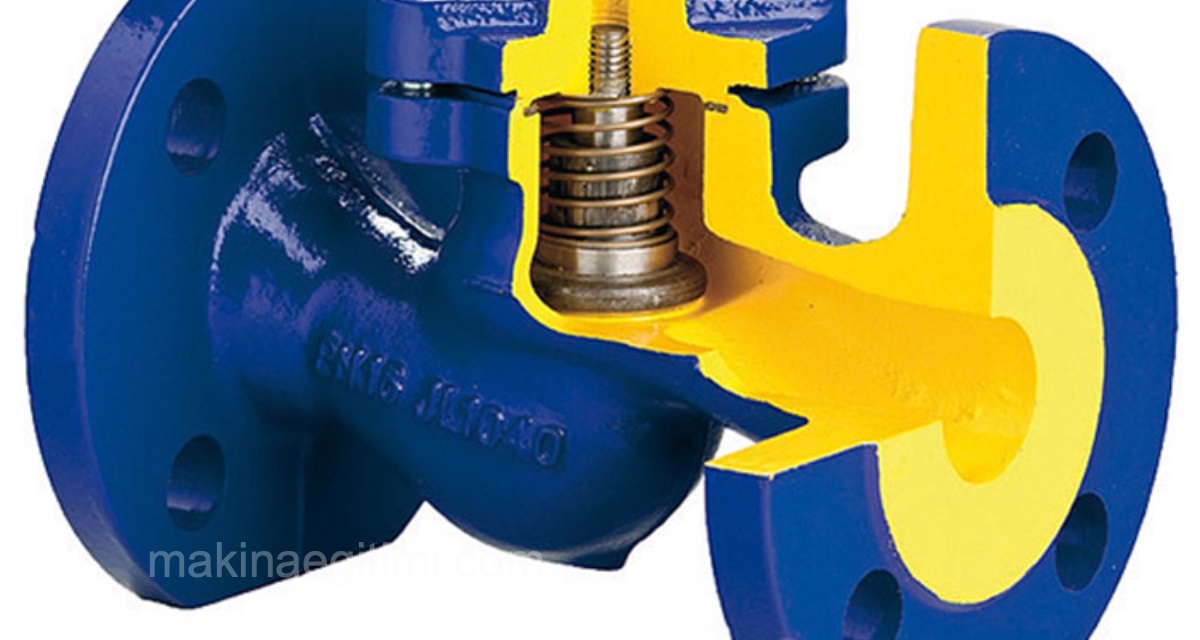
As seen in the animation below, the most common types consist of either a conical part or a ball combined with a spring.
We can compare how a check valve works to the valve stems found in car or bicycle tires. When you want to inflate the tire, they allow air to pass through, but the ball inside prevents the air from escaping. Only when you push that ball inward does it let air escape.
Working Principle of a Check Valve
The system in hydraulic check valves works similarly. Whether it’s a ball-and-spring type or a poppet type, the purpose is to allow passage in only one direction. Fluid passes through easily from one direction, but fluid coming from the other direction is not allowed to pass.


Images of different types of check valves:


3D cross-section view of a ball-and-spring check valve (figure above) and the check valve symbol (right below it)

What Is the Function of a Check Valve

Example application:
Used in LPG conversion of carbureted vehicles, in systems where fuel only returns to the tank via the carburetor.
It allows flow only toward the tank, and blocks flow from the tank to the carburetor. If a check valve isn’t used, gasoline leaking into the carburetor while the engine runs on LPG will cause the engine to run erratically. It isn’t needed in first- and second-generation systems.
The example above shows the use of a check valve to safeguard a lifting platform against the possibility of an oil leak in the hydraulic circuit, so the platform does not descend unintentionally.
Check Valve Example Use: Suction-Discharge Lift Pump
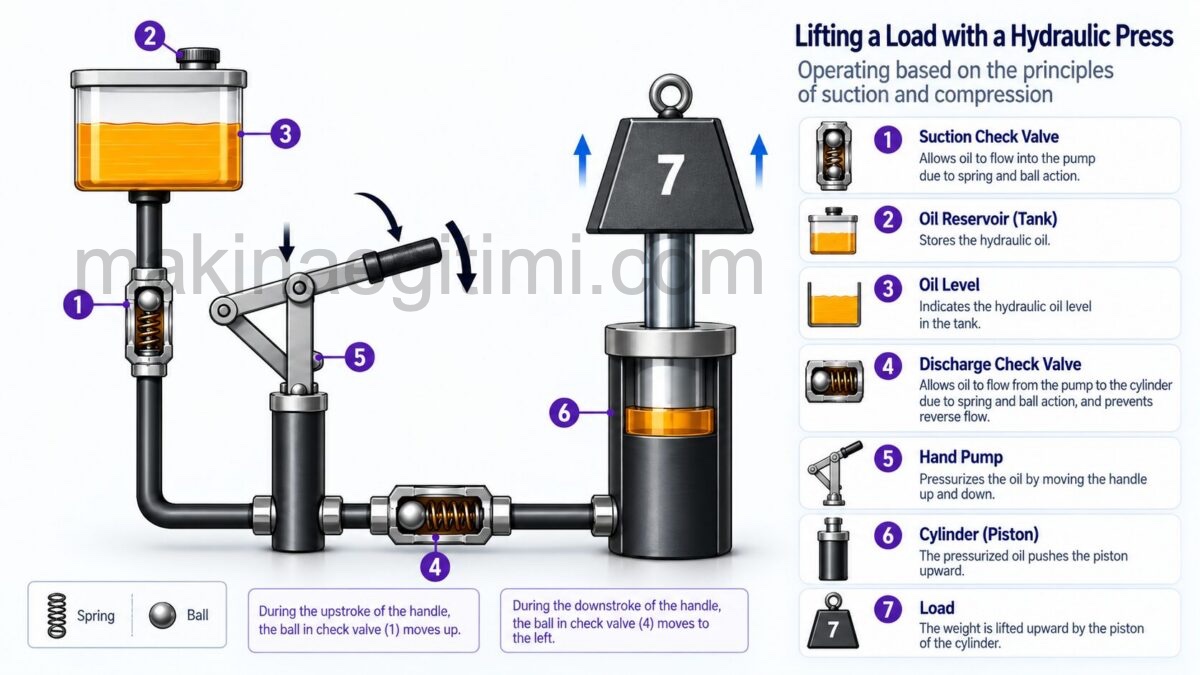
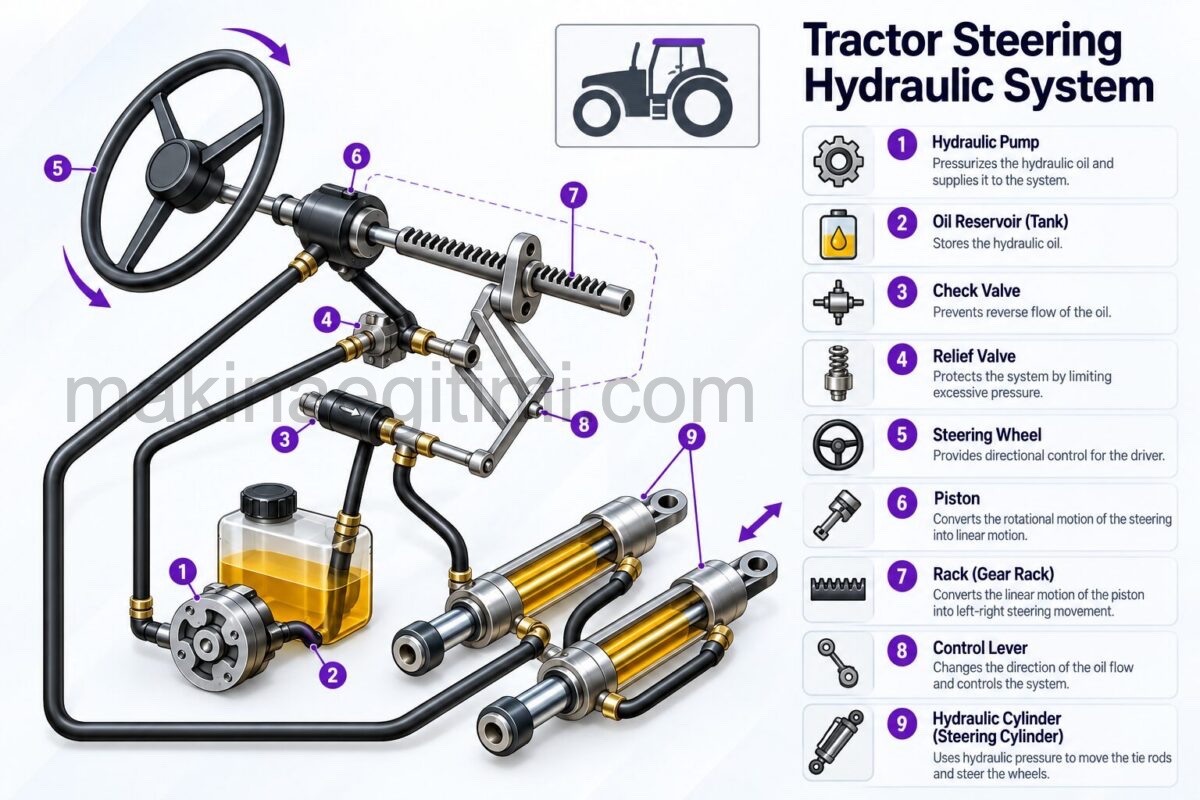
Check Valve Example Use: Tractor Steering
Another Example of Check Valve Use: Hydraulic Jack
In hydraulic jacks, a check valve is used to prevent the oil from returning on its own after it is pumped into the reservoir.
In this article, we tried to cover a topic of major importance in hydraulic/pneumatic systems, especially in the machinery and automotive sectors. We covered what a check valve is, how a check valve works, and how a check valve’s operating system functions. We covered this together with cross-section and exterior view images, animated explanations, example uses in hydraulic systems, and hydraulic circuit diagrams. See you in new publications, goodbye.
Related Questions
Check valves allow fluid to pass in only one direction, completely blocking backflow.
Simple check valves usually operate by a spring-loaded ball or conical element opening and closing depending on the direction of flow.
By preventing backflow in the system, check valves protect the pump from damage in the reverse direction.
Related Posts
 Hydraulic System Applications in Machine Tools
 What Is a Hydraulic Return Filter. Return Line Filters
 Hydraulic Filtration Arrangements
 Pneumatic Motor Selection
 Advantages and Disadvantages of Hydraulic Motors
 What Is a Pneumatic Compressor, What Does It Do?
 Controlling Multiple Cylinders with Directional Control Valves
 Pneumatic Directional Control Valves