
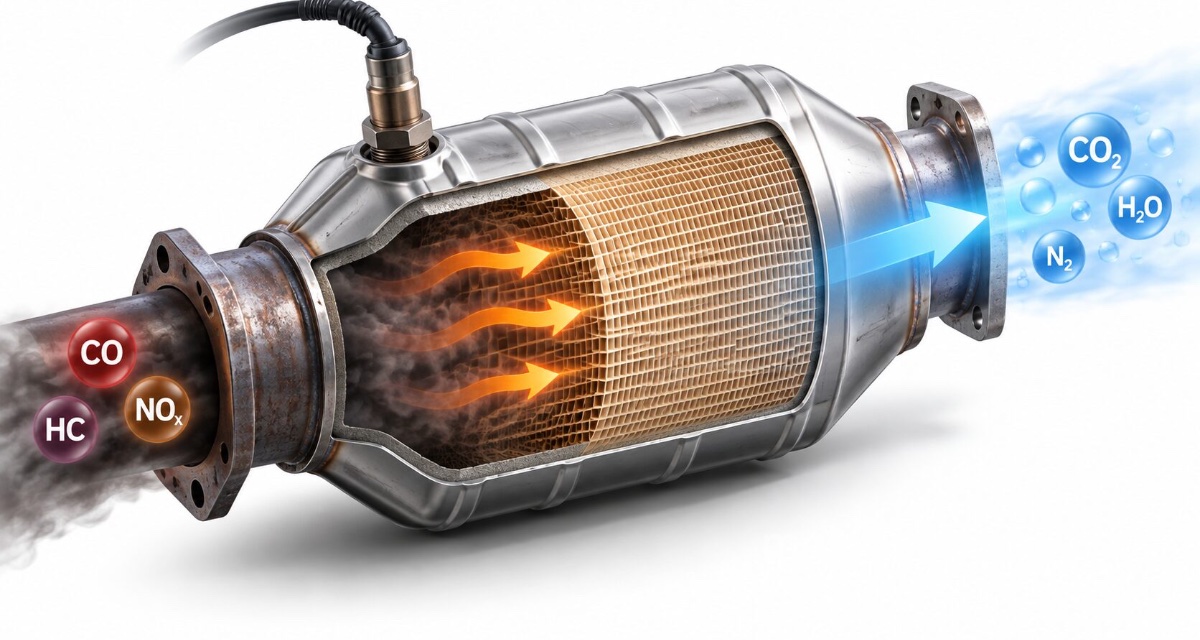
In this article we’ll cover why the catalytic converter fails. What the causes of failure are. How we can tell if the catalytic converter has failed. What the symptoms of failure are.
Why Does the Catalytic Converter Fail
Catalytic converter failure can generally result from causes such as the vehicle being operated improperly, the wrong fuel being used, or many foreign substances being present in the vehicle. For this reason, to prevent catalytic converter failure, it’s important to operate the vehicle correctly and use the recommended fuel type. The causes of catalytic converter failure are as follows:
Poor Road Conditions

The ceramic catalyst inside a catalytic converter is made of a light, thin-walled, fragile material. However, potholes, rocks, or debris on poor road conditions can cause the catalyst to crack. Once the ceramic catalyst cracks, the broken pieces loosen and break into smaller pieces as they rattle around. Flow is blocked and back-pressure in the exhaust system increases. This leads to heat buildup and power loss.
Use of Improper Fuel
Vehicles with catalytic converters must use unleaded gasoline. Otherwise, lead molecules found in regular and premium leaded gasoline damage the catalytic converter, causing it to fail. When leaded gasoline is put into a vehicle with a catalytic converter, the converter’s surface becomes coated with lead, and the reactions that need to occur to convert harmful gases into less harmful ones don’t take place, so the converter cannot do its job.

However, unleaded gasoline also has a certain handicap: the only place in the engine that the lubrication system can’t lubricate is the valve heads. The lead molecules found in regular gasoline help lubricate these parts. When unleaded gasoline is used, faults can occur in the valve mechanism.
Oil or Antifreeze Entering the Exhaust
Oil or antifreeze entering the exhaust system can form a heavy carbon soot that coats the ceramic catalyst and can block air passages. This heavy carbon buildup creates two problems. First, carbon buildup prevents the catalytic converter from reducing harmful emissions in the exhaust flow. Second, carbon buildup clogs the pores in the ceramic catalyst and blocks exhaust flow, increasing back-pressure and causing heat and exhaust gas to flow back into the engine bay. Your engine can actually draw burned exhaust gases back into the combustion chamber, reducing the efficiency of the next combustion cycle. The result is power loss and overheated engine components.
Excess Fuel Entering the Exhaust
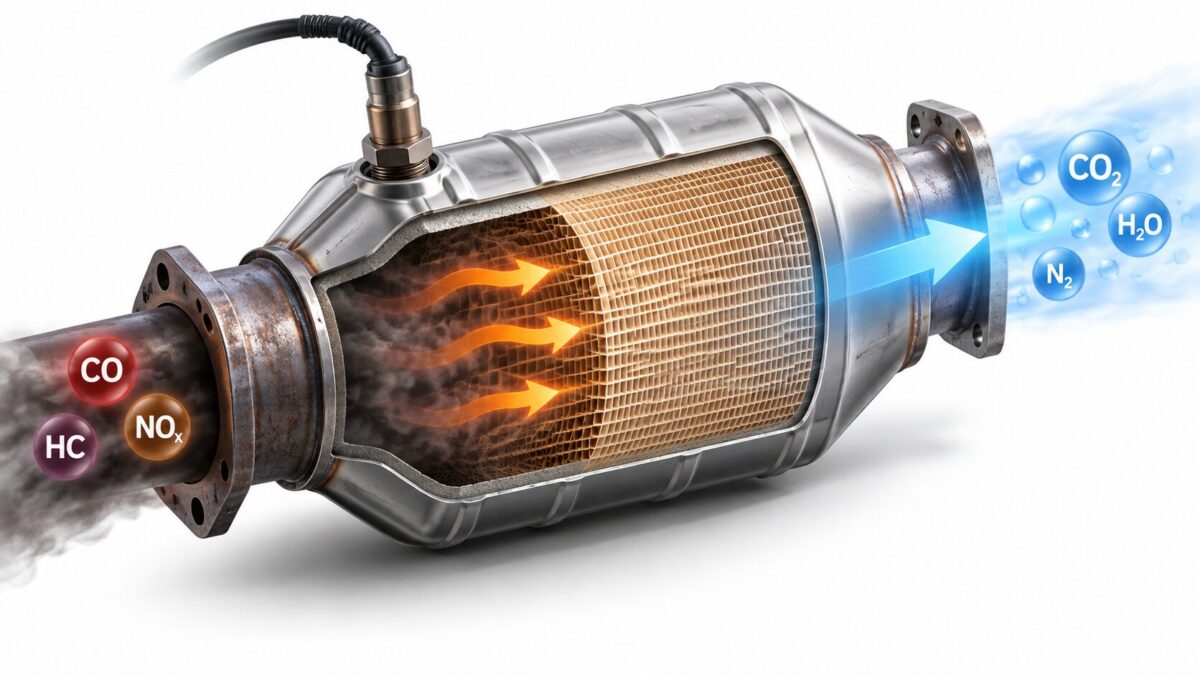
The fuel that powers your vehicle is only intended to burn in the combustion chamber. Any fuel that leaves the combustion chamber unburned will enter the exhaust system and ignite once it reaches the catalytic converter. This can overheat the converter far beyond its normal operating conditions and cause it to melt. Possible causes include an incorrect fuel mixture, incorrect timing, corroded spark plugs, a faulty oxygen sensor, a stuck float, a faulty fuel injector, or a faulty check valve.
Damaged Spark Plugs or Spark Plug Wires
Spark plugs that fail to fire cause unburned fuel to enter the exhaust system. Unburned fuel ignites inside the converter and can cause the ceramic catalyst to partially or completely melt. Spark plugs and spark plug wires should be checked regularly and replaced if damaged, or if the wires are worn or cracked.
Getting the vehicle regularly serviced and following up on any fault warning allows you to catch the problem early and resolve it. It’s also recommended that you replace a faulty catalytic converter in the vehicle as soon as possible to avoid legal liabilities arising from the vehicle’s fault.
Operating Temperature
Catalytic converters generally need temperatures between 400-800°C to operate efficiently.
Sulfur Smell Symptom
A faulty catalytic converter can reveal itself through a rotten egg (sulfur) smell coming from the exhaust.
Increased Fuel Consumption
A clogged catalytic converter can restrict exhaust gas flow, increasing the engine’s fuel consumption.
How Is Catalytic Converter Failure Diagnosed?
If we notice any of the following, catalytic converter failure might come to mind:
- A bad smell occurs while the car is running.
- Noises occur inside the car or at the rear.
- The car’s performance drops or drive power decreases.
- Smoke appears inside the vehicle or at the rear.
- The car’s check engine light turns on.
If you notice some abnormalities in the car, and some of them include the symptoms we mentioned, the catalytic converter may be considered faulty. But remember that these symptoms can also be signs of other problems in the vehicle.
Symptoms of Catalytic Converter Failure
So what happens when a catalytic converter fails? Given the role the part plays in a vehicle’s exhaust system, a range of symptoms can appear as it starts to experience wear and tear.
The symptoms of catalytic converter failure are as follows:
- Reduced fuel efficiency: If a catalytic converter becomes clogged, it can reduce the amount of airflow passing through your engine. To compensate, your engine may start burning more fuel than normal, which can cause a noticeable drop in fuel efficiency.
- Check engine light: The check engine light can indicate a number of things. If your converter is faulty, the air-fuel ratio sensors may trigger the warning light to come on.
- Rotten egg smell: The catalytic converter can sustain internal damage that causes it to struggle to convert exhaust gases. The result can be a sulfuric “rotten egg” smell.
- Problems starting the engine: The exhaust gases in your vehicle need to be able to exit. A clogged catalytic converter can prevent this from happening effectively. This can cause exhaust pressure to build up and cause your car to sputter or stall when you try to start it.
- Poor acceleration: Again, exhaust gases need to be able to escape somehow. The trapped exhaust and increased pressure from the clogged converter can cause you to have trouble accelerating your car. You may notice jerking or hesitation when you try to do so.
- Failed emissions test: If an emissions test comes back poor, the culprit could be the catalytic converter. Failing this test can be combined with the other symptoms mentioned above.
Related Questions
The ceramic catalyst inside the converter has a thin, fragile structure. A pothole or a hard impact can crack this ceramic, and the broken pieces then damage the system by blocking exhaust flow.
Lead coats the catalyst’s surface, blocking its ability to carry out chemical reactions. This “poisoning” effect can permanently impair the converter’s ability to convert harmful gases.
Related Posts
 Spark Plug Lifespan. How Do You Know When Its Time to Replace It?
 Black Smoke from the Exhaust and Its Causes
 How to Prevent an Engine From Burning Too Much Oil
 Spark Plug Faults and Their Causes
 How to Tell a Shock Absorber Has a Fault. Shock Absorber Fault Diagnosis
 The Cause of Bad Smells From a Cars AC and How to Fix It
 If You Just Bought a New Vehicle, Read This. What Is the Break-In Period?
 What Is Piston Ring Replacement? How Is It Done?