
Close Menu
  • MAKİNELER ve İMALAT
    • Tools & Equipment
    • Computer-Aided Drawing
    • CAD/CAM Education
    • CNC Machine Programming
    • Casting Technologies
    • Electrical & Electronics Technologies
    • Hydraulics & Pneumatics
    • Manufacturing Processes
    • Manufacturing Technologies
    • Occupational Safety
    • Mold & Die Design
    • Solid Modeling
    • Welding Technology
    • Machine Elements
    • Mechanical Trade Drawing
    • Materials Science
    • Automotive & Vehicle Technologies
    • Robotics Technologies
    • Health Technologies
    • Defense & Aerospace Technologies
    • Descriptive Geometry
    • Technical Drawing
    • Software & Hardware Technologies
    • Innovative Manufacturing Methods
  • TEKNOLOJİ ve YAŞAM
    • OTOMOBİLLER ve TAŞIT
      • Vehicle & Engine Knowledge
      • Safe Driving
      • Sürüş Destek Sistemleri
    • Genel Kültür
      • Movies & TV Shows
      • Görsel ve Grafik Sanat
      • Books & Literature
      • Music
      • Sports
      • History
      • History of Technology
    • GÜNDELİK YAŞAM TEKNOLOJİLERİ
    • Hobbies & Entertainment
    • Internet Technologies
    • Health
    • Mobile Technologies
Makine Eğitimi
  • Machines & Manufacturing
    Machine Elements
    Hydraulics & Pneumatics
    Technical Drawing
    Computer-Aided Design & Manufacturing
    Basic Manufacturing Processes
    Manufacturing Processes
    Industry Technologies
    Other Technical Courses
    Motion & Power Transmission
    Simple Machines
    Chains & Sprockets
    Shafts & Journals
    Gears
    Cams
    Couplings
    Belts & Pulleys
    Springs
    Bearings
    Keys
    Fastening Joining
    Retaining Rings
    Screws, Bolts & Nuts
    Cotter Pins
    Flanges
    Welding
    Rivets
    Pins & Bolts
    Washers
    Calculators
    Gear Ratio Calculator
    Spring Constant Calculator
    Belt Pulley Ratio Calculator
    Other Machine Elements
    Slides & Linear Guides
    Brakes
    Flywheels
    Clamps
    Shock Absorbers
    Gaskets & O-Rings
    Seals & Sealing Elements
    Hydraulics
    Introduction to Hydraulics & Principles
    Hydraulic Systems & Applications
    Accumulators
    Filters
    Motors
    Pumps
    Valves
    Pneumatics
    Introduction to Pneumatics & Principles
    Pneumatic Systems & Applications
    Pneumatic Circuit Components
    Valves
    Cylinders
    Silencers
    Motors
    Compressors
    Dryers
    Conditioning Units
    Common Topics & Maintenance
    Hydraulic & Pneumatic Maintenance
    Study Notes, Exams & Tests
    Technical Drawing
    Introduction to Technical Drawing
    Geometric Drawings
    Perspective & Projection
    Orthographic Views
    Dimensioning
    Sectioning
    Assembly & Detail Drawings
    Tolerances
    Surface Finish Symbols
    Mechanical Engineering Drawing
    Screws, Bolts & Nuts
    Pulley Drawings
    Gear Drawings
    Shafts & Journals
    Bearing Drawings
    Pins & Bolts
    Spring Drawings
    Welds in Technical Drawing
    Washers
    Cotter Pins
    Technical Drawing Exercises
    Mechanical Drawing Exercises
    Gear Exercises
    View Extraction Exercises
    Pulley Exercises
    Pin & Bolt Exercises
    Threaded Fastening Exercises
    Descriptive Geometry
    Computer-Aided Drawing
    AutoCAD Drawing Lessons
    Solid Modeling & Animation
    Solid Model Drawing Files
    Solid Model Assembly Examples
    Solid Model Drawing Lessons
    3D CAD Software Reviews
    Solid Modeling Exercises
    CNC Programming
    CAM
    Measurement & Inspection
    Dial Indicators
    Calipers
    Gauges
    Micrometers
    Materials Science
    Steels
    Cast Iron
    Aluminum
    Plastics
    Material Testing & Hardness Measurement
    Occupational Safety
    Workshop Safety
    Safety When Working With Electricity
    Machine Safety Rules
    Hand Operations
    Filing
    Marking
    Cutting Operations
    Reaming
    Tapping
    Threading With a Die
    Drill Bit Sharpening
    Working With Machines
    Basic Turning Operations
    Basic Milling Operations
    Shaper Machine
    Machining
    Turning
    Milling
    Grinding
    Innovative Manufacturing Methods
    EDM (Electrical Discharge Machining)
    Laser Machining
    Waterjet Machining
    3D Printing
    3D Scanners
    Welding
    Rolling
    Casting
    Mold & Die Design
    Mechanical & Hydraulic Presses
    Blanking & Piercing Dies
    Bending Dies
    Drawing Dies
    Plastic Injection Molds
    Extrusion Dies
    Compound Dies
    Progressive Dies
    Blow Molds
    Spinning Dies
    Spray Molds
    Manufacturing of Machine Parts
    Automotive & Vehicle Technologies
    Motor Vehicle Manufacturing
    Raw Material Production
    History of Technology
    Health & Medical Technologies
    Defense & Aerospace
    Robotics Technologies
    Software & Hardware Technologies
    Mechanics - Strength of Materials
    Physics Topics
  • Technology & Life
    Hobbies & Entertainment
    Sports
    Music
    Vehicle & Engine Knowledge
    Vehicle Maintenance & Repair
    Safe Driving
    Driver Assistance Systems
    History
    Movies & TV Shows
    Books & Literature
    Computers & Internet
    Computer Tips
    Software Reviews
    Hardware & Peripherals
    Practical & Safe Internet Use
    Visual & Graphic Art
    Mobile Technologies
    Travel
    Science
    Health
    First Aid Knowledge
    Everyday Technologies
Makine Eğitimi
Home»Vehicle Maintenance & Repair»Is It Harmful to Drive Off Without Warming Up the Engine?
29 August 2026

Is It Harmful to Drive Off Without Warming Up the Engine?

Is It Harmful to Drive Off Without Warming Up the Engine?

This article, in our Vehicle Maintenance and Engine Knowledge section, will look for answers to questions like ”is it harmful to drive off without warming up the engine? Is it harmful to warm up the engine at idle? How long should I warm up the engine in winter? How many minutes should I wait before driving off?” 

  • Does Driving Off Without Warming Up the Engine Damage It?
    • Is It Harmful to Drive Off Without Warming Up the Engine in Winter?
      • Should I Wait for the Oil or Gasoline to Warm Up in Winter?
    • Is It Harmful to Warm Up the Engine at Idle?
  • Related Questions

Does Driving Off Without Warming Up the Engine Damage It?

Engines are designed to run at a certain temperature. Engines strained before reaching their ideal operating temperature will definitely suffer damage in the long run.

For those asking, should I wait a few minutes for my car or motorcycle to warm up after starting it, or can I drive off right away? let’s clarify; 

engine lubrication system
Engine lubrication system

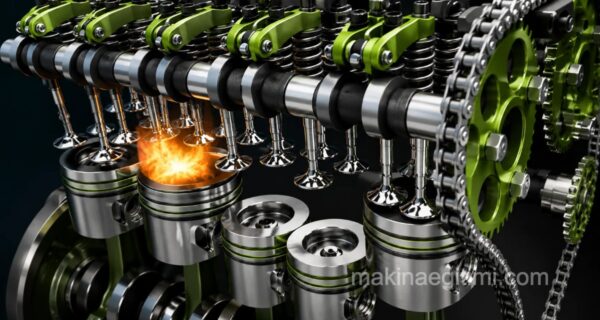
Ideally, you should wait about 1 minute after starting the engine before driving off. Oil reaches the top of the engine last, meaning some of the most active parts — the camshaft, valves, valve springs — have to get by (relatively) for a while with minimal lubrication. 

Your car’s engine is most prone to wear during startup. Protecting the metal parts during these first few seconds is the job of the oil that’s clung onto them from the previous run. Engines and oils are designed with these operating conditions in mind, but only for unloaded or lightly loaded operation. 

clutch gears

Another point is metal’s property of expanding. Heated metal expands. The clearances between engine parts are designed with an engine that’s heated up to its optimum operating temperature in mind. For example, the gears between the clutch plate and the crankshaft are nearly touching each other when cold. As the engine warms up, the gap between them opens up, providing an acceptable, proper clearance.

It’s recommended to drive off gently right after starting the engine, meaning without revving excessively. All engines need a richer fuel mixture on first startup. In carbureted engines, this job is done by the choke (manual or automatic). Fuel-injected engines adjust automatically. However, gasoline is a very effective oil solvent. If unburned gasoline stays inside the cylinder, it can dissolve the oil film on the cylinder wall. In an environment left without oil, the pistons start to scrape against the cylinder wall. Wear is something you never want for your vehicle. 

running the engine at high revs and pulling away
Running the engine at high revs on the initial pull-away should be avoided.

Running the engine at idle for a short time is good, since it lets the lubrication system do its job first and lets the oil circulate fully through the engine. This way, we protect the engine parts against friction.

Is It Harmful to Drive Off Without Warming Up the Engine in Winter?

Does driving off without warming up the engine in winter months damage the engine? Or is this just an unnecessary worry?

Yes, driving off without warming up the engine does damage it. However, it causes more damage in some vehicles, especially older-type vehicles.

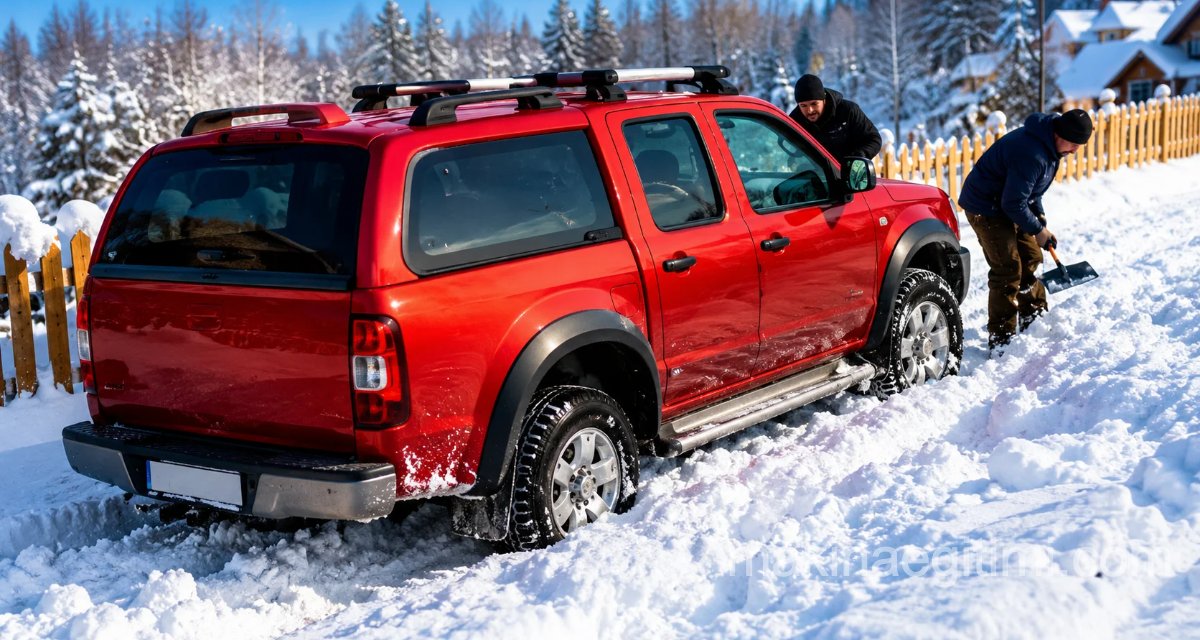
driving off without warming up the engine in winter
It’s possible to drive off in winter without warming up the engine. But only at low revs.

Older vehicles used carbureted engines. These needed to be warmed up. But in the 1980s, automakers switched from carburetors to fuel injection systems. More recently, direct injection, which sprays fuel directly into the cylinders, has been in use.

When it’s cold out, vehicle owners believe they need to warm up the engine for a few minutes before driving off. As a result of developments in the automotive industry, what we used to believe was correct can be wrong today. Modern engines are ready to drive off as soon as you turn the key. Unless you have a reason like warming up the cabin, you don’t need to wait for the engine to warm up.

Should I Wait for the Oil or Gasoline to Warm Up in Winter?

Yes. Logically, your car’s engine oil will indeed be less fluid in winter than in summer. But we can say that advancing engine and oil technologies have made things a lot easier now.

car engine oil
Nowadays, engine oils are available in types suited for winter.

20-30 years ago, there was no 0w oil group. Since vehicle owners had to use thick oil, vehicles especially struggled to start in winter, and after starting, people waited for the oil to reach the right consistency. With 0w or 5w oil groups, waiting 1-2 minutes is enough.  In winter, this time is accepted as 2-3 minutes.

For our detailed article on choosing engine oil, see: How to Choose Engine Oil 

Since oil pressure is high during these first 2-3 minutes in cold weather, you shouldn’t go above 2000 RPM.

Trying to warm up the fuel is also unnecessary. Yes, gasoline flows better when warm, but the fuel will reach a suitable temperature shortly after the vehicle starts moving. Just make sure not to speed excessively on the initial pull-away, that’s enough.

Wear happens faster in a strained cold engine. When the engine starts, it will take a few seconds for the oil to reach everywhere. That’s why it’s best to avoid the sudden, powerful launches we see in action movies.

Is It Harmful to Warm Up the Engine at Idle?

Besides the damage it causes to the engine, warming up the engine at idle is also one of the main things that increases fuel consumption. Your vehicle burns as much gasoline idling the engine for three minutes as it would driving 1 km. That’s why it’s beneficial to shut off the engine during long stops.

Running the engine at idle for 5-10 minutes hurts both your wallet and your engine. After the first minute, it’s most ideal to warm it up gradually on the road at low or medium revs. This saves both time and fuel.

In conclusion, if we take 1-2 minutes when the engine first starts for the lubrication circulation and pre-warming, and avoid high revs for the first 5 minutes until our temperature gauge needle passes the “Cold” section, we’ll have extended the engine’s life and achieved fuel economy. 

Lubrication Delay


Since oil hasn’t yet fully spread to all parts in a cold engine, the risk of wear is higher in the first moments of driving.

The Idle-Warming Myth


Instead of warming up the engine at idle for a long time, warming it up by driving slowly at low revs is a more effective method that uses less fuel.

Optimum Operating Temperature


Engines typically deliver their most efficient performance once they reach an operating temperature of around 90°C.

Related Questions

In a cold engine, oil hasn’t yet fully reached all the moving parts, especially the valves and camshaft at the top. Revving high at this moment of insufficient lubrication can cause metal parts to rub against each other and wear.

This is the minimum time needed for the oil pump to carry oil to the engine’s most remote and active points, such as the camshaft. This wait significantly reduces the most critical wear risk during the first moments of driving.

Related Posts

coilover suspension advantages and disadvantages Coilover (Coil Spring Shock Absorber) Advantages and Disadvantages drive system and transaxle in front-wheel-drive vehicles Front-Wheel-Drive Vehicles: Advantages and Disadvantages Vehicle charging system components and operation diagram How Does a Vehicle’s Charging System Work? Components, Jobs, and Failures Engine Parts and Their Functions Engine Parts and Their Functions, Illustrated rear-wheel-drive vehicle drivetrain Characteristics and Advantages of Rear-Wheel-Drive Vehicles scooter Properties and Advantages of Scooters biodiesel production What Is Biodiesel? Properties, Production, and Advantages What is the TCS light? Why does it come on? Why Does the Traction Control System Light (TCS Light) Come On?
Share. Facebook Twitter WhatsApp Tumblr Email Telegram Copy Link

Leave A Reply Cancel Reply

Why Is Kenya So Successful at Long-Distance Running?
How Does a Vehicle’s Charging System Work? Components, Jobs, and Failures
  • Contact
  • Terms of Service
  • Privacy & Cookie Policy

Type above and press Enter to search. Press Esc to cancel.