

The use of industrial robots today spans an extremely wide range, from automotive plants to operating rooms, from warehouse aisles to farmland. Each sector’s unique requirements have driven the development of different robot types and design approaches. In this article we look at robot technology’s applications across major sectors, the types of robots used, and the technical reasoning behind these choices.
Automotive Sector: Articulated Arms and Welding Robots
Automotive manufacturing is historically the first and most intensive sector for industrial robots. Six-axis articulated arm robots are predominantly used for tasks such as body welding, painting, assembly, and material handling.
Thanks to a range of motion similar to a human arm, this robot type can follow complex three-dimensional trajectories. On spot welding lines, robots can complete dozens of weld points per minute with sub-millimeter repeatability. On paint lines, specially designed spark-free (ATEX-certified) robot models are used to reduce explosion risk.
Electronics and Precision Assembly: SCARA and Delta Robots
In the electronics sector, tasks such as circuit board assembly, microchip placement, and small-part joining require high speed and high positioning precision. SCARA (Selective Compliance Assembly Robot Arm) robots stand out in this field. Because SCARA robots are compliant in the horizontal plane but rigid along the vertical axis, they offer high speed and repeatability for vertical assembly movements.
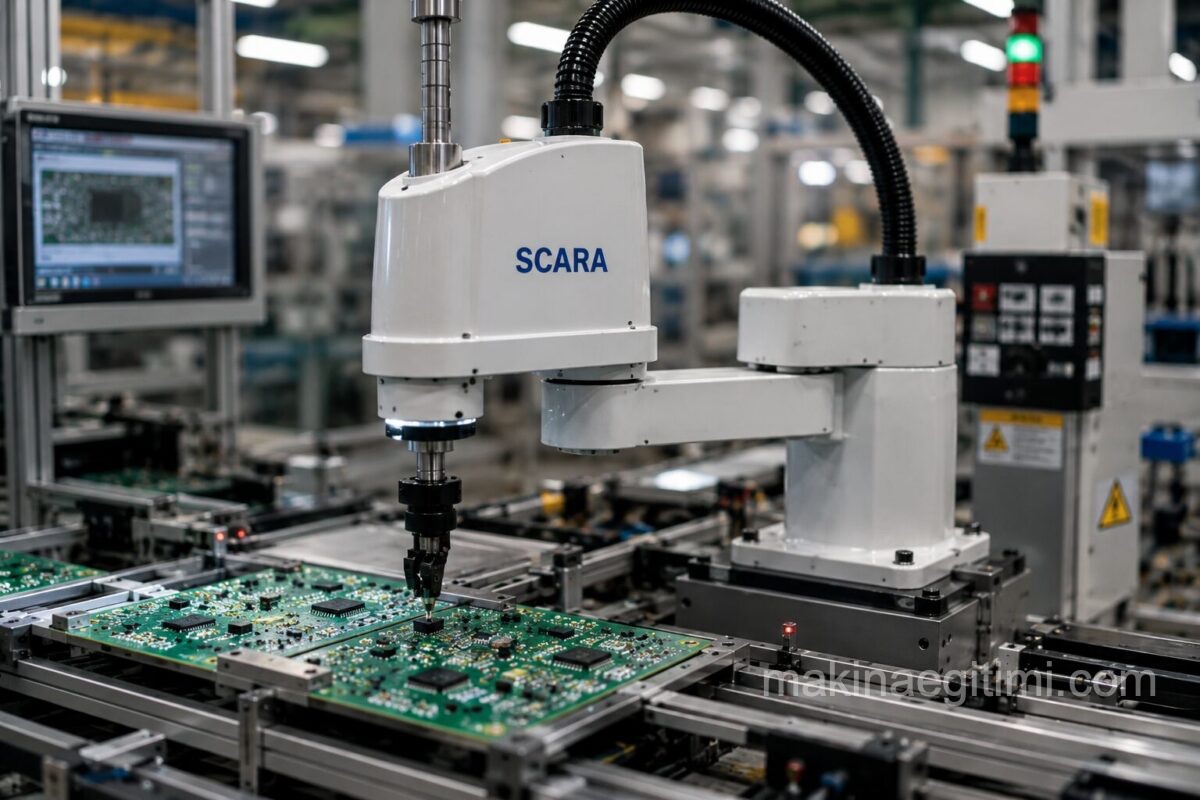
In the packaging and food sector, delta robots are preferred for applications that require picking and placing lightweight objects at very high speed. The parallel kinematic structure of delta robots reduces moving mass, allowing them to reach speeds of multiple cycles per second.
Logistics and Warehouse Management: AGV and AMR Systems
With the growth of e-commerce volume, logistics and warehouse automation has become one of the fastest-growing application areas for robotic technology. Automated guided vehicles (AGVs) move along fixed routes via predefined magnetic strips or laser reflectors.
Autonomous mobile robots (AMRs), on the other hand, can perform dynamic, safe route planning in a changing warehouse environment without being tied to a predefined path, thanks to LIDAR- and camera-based SLAM (Simultaneous Localization and Mapping) algorithms. These systems are typically used for tasks such as shelf transport, order picking, and inventory counting.
Healthcare Sector: Surgical and Rehabilitation Robots
In the healthcare sector, robotic technology has a broad range of applications, from minimally invasive surgery to physical therapy. Surgical robot systems transfer a surgeon’s hand movements to robotic arms with high precision, offering functions such as tremor filtering and motion scaling, which increases precision in operations performed through small incisions.
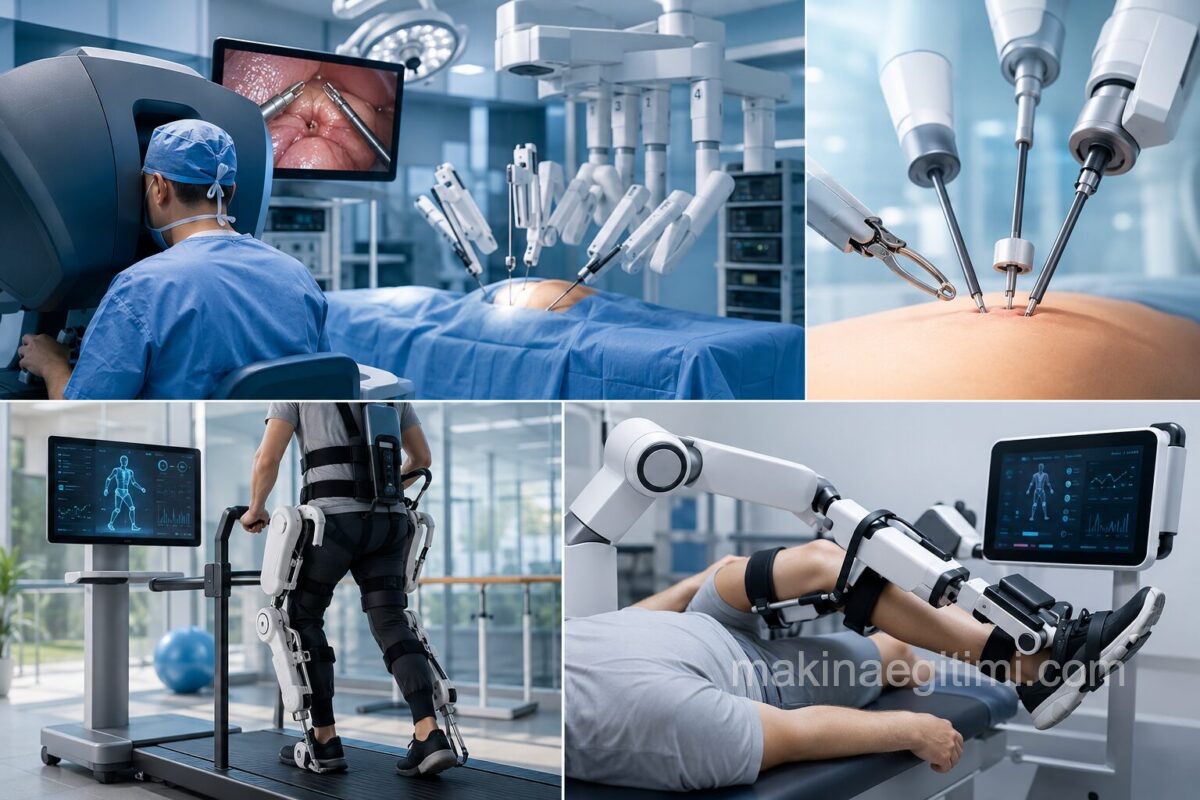
Rehabilitation robots, meanwhile, are designed as exoskeleton systems that support repetitive movement therapies in post-stroke patient rehabilitation. Robots in this field can personalize the treatment protocol by measuring the force the patient applies, using sensors that provide force feedback.
Agriculture Sector: Precision Farming Robots
In agriculture, robotic technology is developing within the framework of precision agriculture. Weed-clearing robots that use image-processing-based systems can distinguish plant species from camera data and apply mechanical or laser-based intervention only to unwanted plants.
Fruit-picking robots use soft grippers and depth cameras to visually assess ripeness levels and perform precise picking. Autonomous tractors, using GPS-based positioning and predefined field maps, can carry out planting, fertilizing, and irrigation tasks without human intervention.
Defense and Space Sector: Remote Operation Robots
In the defense industry, bomb disposal robots and reconnaissance robots are typically controlled through tracked mobility systems and teleoperation; these robots aim to reduce risk by keeping the operator away from a dangerous environment.
In space research, systems such as Mars rovers are designed with a high degree of autonomous decision-making capability due to communication delay, and use long-lasting solar-powered power systems.
Collaborative Robots (Cobots): Shared Use Across Sectors
Another category that has become widespread across many of the sectors above in recent years is collaborative robots (cobots), designed to share the same workspace as humans.
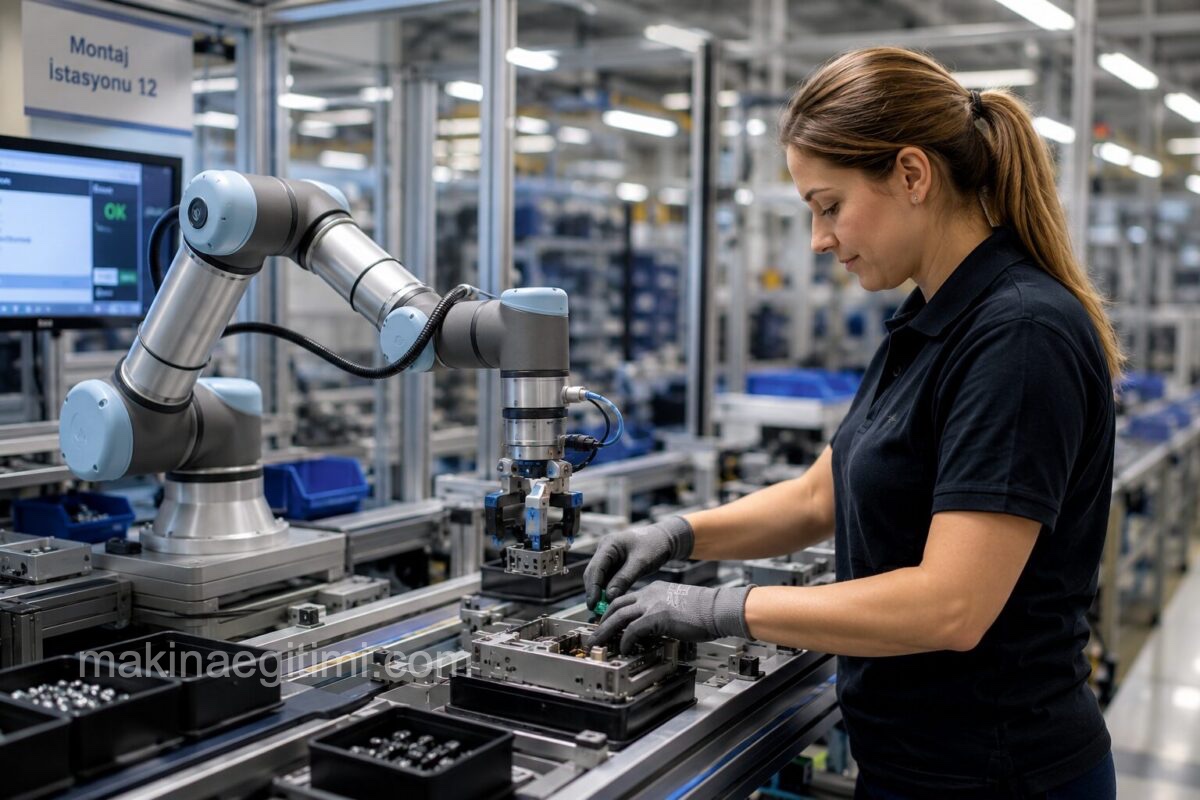
To operate without needing safety barriers, these robots can instantly stop their motion upon unexpected contact, using torque sensors and series elastic actuators. Cobot adoption is rapidly increasing among small and medium-sized businesses setting up flexible production lines.
Conclusion
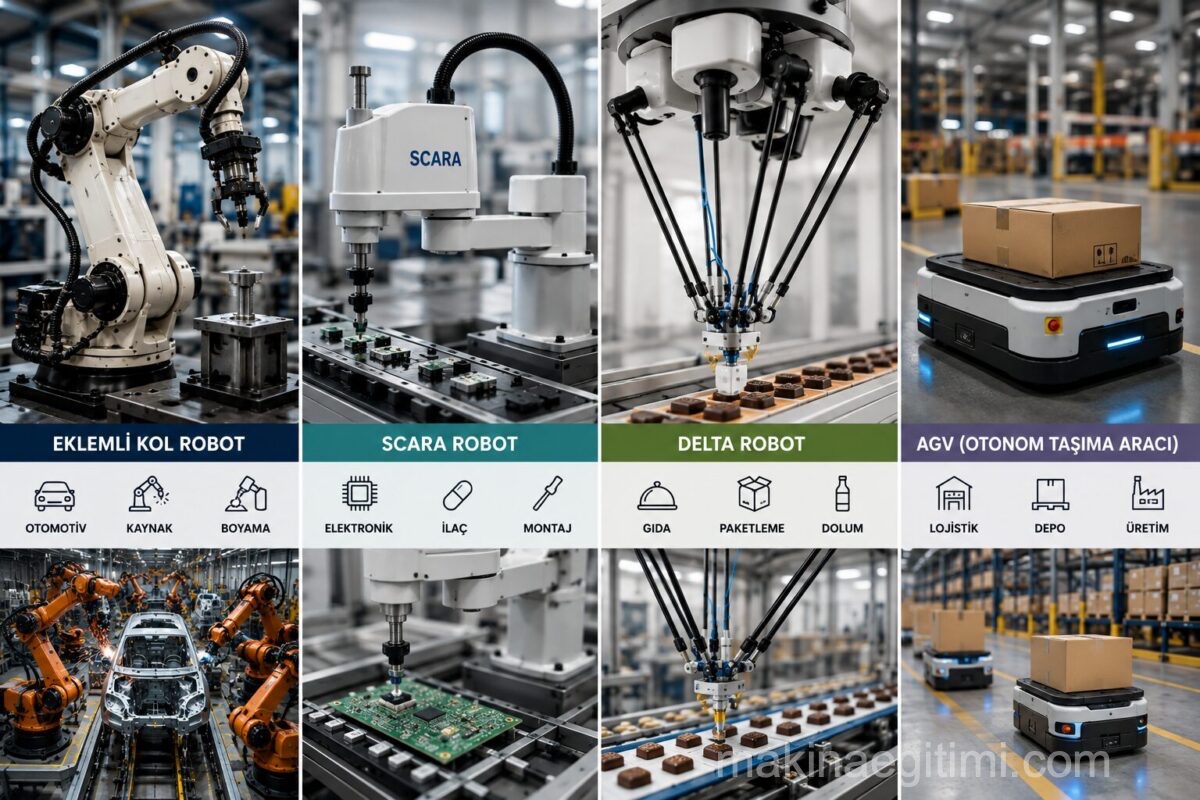
The use cases of industrial robots span a wide variety of robot types shaped by each sector’s requirements. Articulated arms in automotive, SCARA and delta robots in electronics, AGV and AMR systems in logistics, surgical robots in healthcare, precision farming robots in agriculture, and teleoperation systems in defense all demonstrate robotic technology’s capacity to produce sector-specific solutions. In the next article we’ll look at current news and developments in robotic technology.
Frequently Asked Questions
Industrial robots have historically been used most intensively in the automotive sector; articulated arm robots are common on body welding, painting, and assembly lines.
SCARA robots have a rigid structure along the vertical axis and are used for precise vertical assembly movements, while delta robots, thanks to their parallel kinematic structure, are preferred for very high-speed pick-and-place operations with lightweight objects.
AGVs move along fixed guides such as magnetic strips or laser reflectors, while AMRs can perform autonomous route planning in a dynamic environment without needing a predefined path, thanks to SLAM algorithms.
A cobot is a type of robot designed to share the same workspace as humans without safety barriers, capable of stopping its motion upon unexpected contact thanks to torque sensors.
Surgical robot systems transfer a surgeon’s hand movements to robotic arms with functions such as tremor filtering and motion scaling, increasing precision in minimally invasive operations.
Related Posts
 Drone (UAV) Technology: Structure, Applications, and Current Developments
 Fundamental Components of Robot Technology: Sensors, Actuators, and Control Systems
 How to Build a Robot? Part 4: Testing, Calibration, and Moving to Autonomy
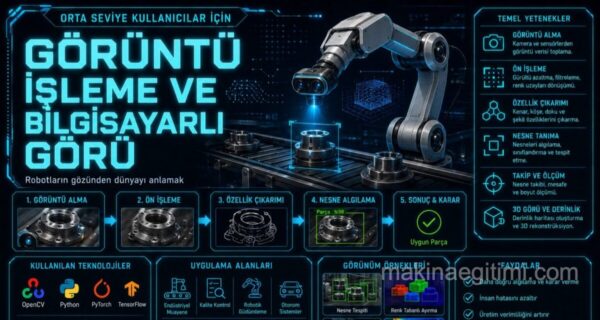 Robot Perception Through Image Processing and Computer Vision
 2026 Developments in Robotics Technology: The Age of Physical AI
 How to Build a Robot? Part 3: Software and Control Algorithms
 Robot Films Worth Watching: The Best Recent Robot-Themed Movies
 How to Build a Robot? Part 1: Planning and Design Stage