In this article, we cover the basic structure of drones, their main areas of use, and the key developments that stood out in 2026.
Unmanned aerial vehicles (UAVs), commonly known as drone technology, represent the intersection of robotic technology and aviation, and have become one of the fastest-developing fields of the last two decades. With a wide range of applications from agriculture to cargo delivery, from disaster management to the defense industry, drone technology forms a concrete field of application for robotic engineering in both civilian and military domains.
Basic Structure of a Drone
A drone falls into three main categories based on its airframe type. Multirotor drones (with four, six, or eight propellers) offer vertical take-off and landing, hovering capability, and high maneuverability; thanks to these features, they are widely preferred for photography, inspection, and short-range missions.

Fixed-wing UAVs are designed similarly to an airplane fuselage, offering longer flight time and range, but they require a runway or launch ramp since they cannot perform vertical take-off and landing; this type is preferred for long-duration reconnaissance and surveillance missions.
VTOL (Vertical Take-Off and Landing) hybrid designs combine the vertical take-off and landing advantage of multirotor systems with the range advantage of fixed-wing systems, and are becoming increasingly common, particularly in military and industrial applications.

The basic subsystems of a drone include the flight controller, a positioning system made up of GPS and IMU modules, brushless DC motors and electronic speed controllers (ESCs), lithium polymer batteries, and camera, sensor, or cargo-carrying units that vary depending on the payload.
On the communications side, short-range missions use a direct radio frequency link, while long-range military UAVs use satellite-based command and control links.
Civilian Areas of Use
In the agricultural sector, drone technology has become an important component of precision farming applications. Agricultural drones equipped with multispectral cameras can perform early disease detection by imaging plant health at wavelengths invisible to the naked eye, while precision spraying systems used in pesticide and fertilizer application can significantly reduce chemical use.
In 2026, the Turkish UCAV platform Bayraktar TB-3 performed take-off and landing from an amphibious ship as part of NATO’s Steadfast Dart exercise, demonstrating its sea-based operational capability in an international exercise.
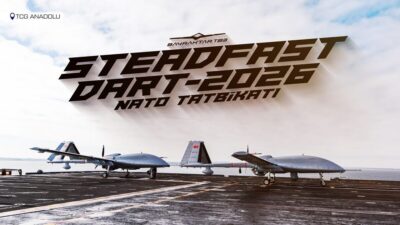 #BayraktarTB3 | Steadfast Dart-2026 NATO Tatbikatı
In cargo and logistics, drone projects delivering medical supplies and small packages, especially to rural or hard-to-reach areas, are approaching commercial maturity through VTOL cargo UAVs.
In the energy sector, visual inspection of high-voltage power lines and wind turbines is carried out using drones, eliminating the need to send workers up to risky heights. In disaster management, thermal-camera-equipped drones are used to detect hot spots during firefighting operations and to locate missing persons during search-and-rescue efforts.
Military Uses: UCAV Technology
Armed unmanned aerial vehicles (UCAVs) constitute one of the most strategic fields of the modern defense industry. UCAV platforms developed by Türkiye have drawn international attention in missions requiring both reconnaissance and surveillance, as well as the use of precision-guided munitions.
In 2026, the Turkish UCAV platform Bayraktar TB-3 performed take-off and landing from an amphibious ship as part of NATO’s Steadfast Dart exercise, demonstrating its sea-based operational capability in an international exercise.
#BayraktarTB3 | Steadfast Dart-2026 NATO Tatbikatı
Beyond this, platforms developed in the unmanned combat aircraft class aim for higher performance and more complex mission profiles compared to conventional UCAVs.
The low-cost, first-person-view (FPV) based kamikaze drone usage observed in the Russia-Ukraine war has shown that drone technology has fundamentally changed the scale and cost balance on the modern battlefield; this development has pushed defense industries worldwide to develop next-generation defense systems against low-cost drone threats.

BAYKAR 2015: BAYRAKTAR TB2
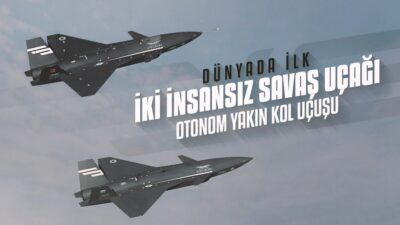
Bayraktar #KIZILELMA | Dünyada İlk Defa: Otonom Yakın Kol Uçuşu
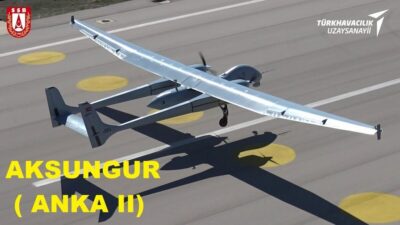
Aksungur ( Anka II ) İnsansız Hava Aracını Tanıyalım

Türkiye'den Dünyada Örneği Olmayan Yeni Teknoloji – Talay Kamikaze Drone

Türkiye'nin SİHA'sı Bayraktar TB3

AKINCI BELGESELİ
Anti-Drone (C-UAS) Systems
With the increase in drone threats, counter-UAS (C-UAS) systems that detect and neutralize unmanned aerial vehicles have also become a rapidly developing subfield of robotics and defense technology.
These systems generally follow a multi-layered architecture: radar and event-based imaging sensors detect small, fast-moving drones at low altitude, while electronic warfare systems can jam a drone’s command signal, preventing it from completing its mission.
Against very close-range threats, rapid-fire automatic weapon systems come into play as the last line of defense. Decentralized, distributed C-UAS systems offer a more resilient defense structure against swarm drone attacks by preventing the entire defense line from collapsing if a single command center is disabled.
Notable Developments in 2026
One of the notable developments in drone technology throughout 2026 has been progress in AI-powered autonomous mission planning and drone swarm technologies. Defense industry organizations continue to test swarm technologies that enable multiple UAVs to carry out coordinated missions without remaining continuously tied to a central operator.
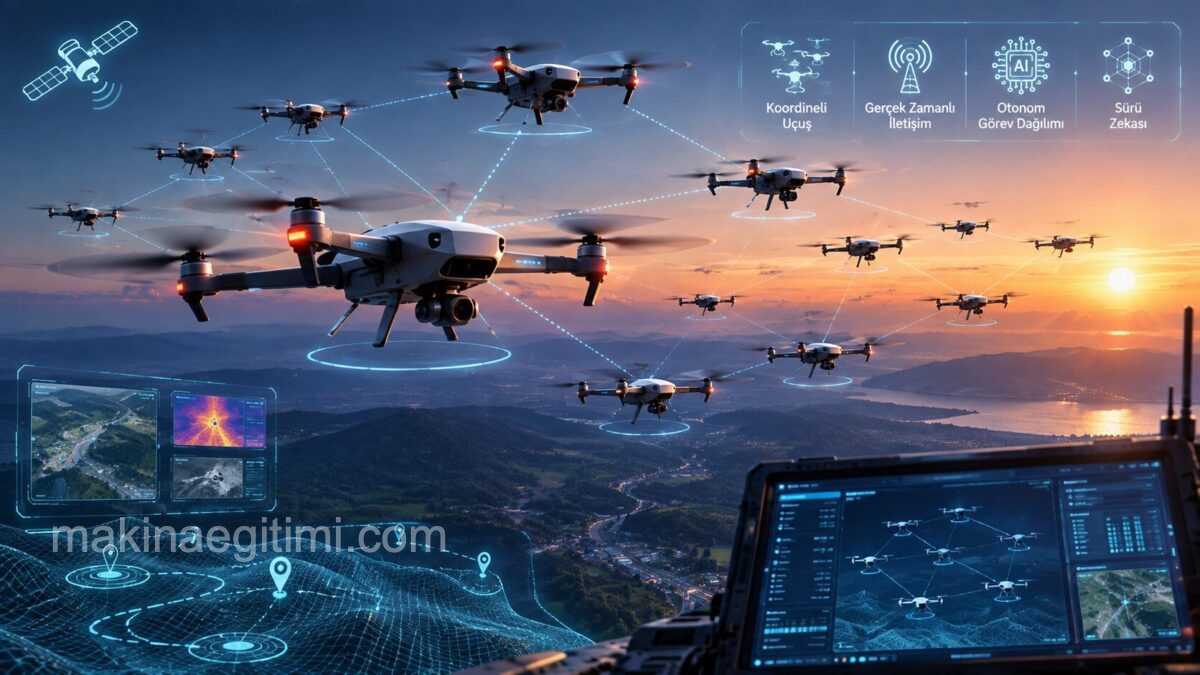
In addition, the “manned-unmanned teaming” concept, in which manned and unmanned platforms carry out joint missions, stands out as one of the fundamental building blocks of future air operations. On the civilian side, increasing the carrying capacity of cargo UAVs and improving the efficiency of electric propulsion systems are expanding the applicability of drone technology in the commercial logistics field.
Regulatory Framework and Flight Safety
The widespread use of drones has made it necessary for civil aviation authorities to develop regulatory frameworks for these vehicles. In Türkiye, the UAV directives published by the Directorate General of Civil Aviation categorize drones by weight class, defining different flight permit, registration, and pilot qualification requirements for each category.
These regulations aim both to protect air traffic safety and to prevent unauthorized flights over critical infrastructure and crowded areas. As the commercial and military use of drone technology expands, these regulatory frameworks are expected to be updated to accommodate new drone classes and levels of autonomy.
Drones | How do they work? : DON'T SUBSCRIBE

What is precision agriculture? UGA expert explains drones, AI and the future of ag tech

Drone warriors – Autonomous weapon systems and the wars of the future | DW Documentary
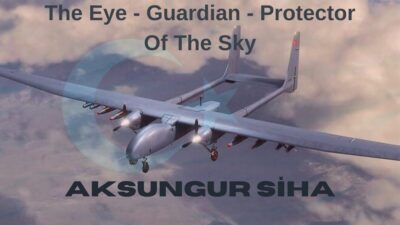
AKSUNGUR SIHA: A New Technology in Turkey's Defense Industry!
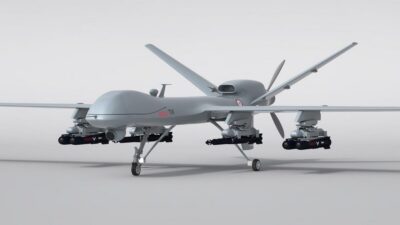
Top 10 Best Armed Drones in the World
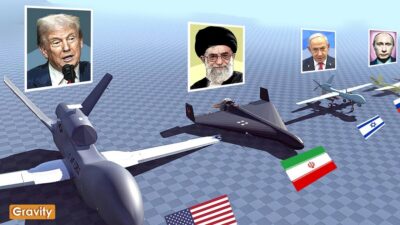
Drone Size Comparison
Conclusion
Drone (UAV) technology is one of the most concrete and rapidly growing applications of robotic engineering in aviation. Multirotor, fixed-wing, and VTOL hybrid airframe designs serve a wide range of applications, from agriculture to the defense industry.
The swarm technologies, manned-unmanned joint operation concepts, and evolving anti-drone defense systems observed in 2026 show that drone technology continues to grow in strategic importance in both civilian and military domains.
Frequently Asked Questions
Multirotor drones can perform vertical take-off and landing and can hover in place, while fixed-wing UAVs offer longer flight time and range but require a runway or ramp for take-off and landing.
A VTOL hybrid UAV is a drone design approach that combines the vertical take-off and landing advantage of multirotor systems with the long-range advantage of fixed-wing systems.
UAV (unmanned aerial vehicle) is a general term covering unarmed missions such as reconnaissance and surveillance, while UCAV (armed unmanned aerial vehicle) refers to platforms that can carry and deploy precision-guided munitions.
C-UAS systems detect drones using radar and imaging sensors, can jam a drone’s command signal using electronic warfare systems, and can use automatic weapon systems against very close-range threats.
Drone swarm technology is an approach that enables multiple unmanned aerial vehicles to carry out a shared mission in a coordinated and autonomous manner without remaining continuously tied to a central operator.
Related Posts