Close Menu
  • MAKİNELER ve İMALAT
    • Tools & Equipment
    • Computer-Aided Drawing
    • CAD/CAM Education
    • CNC Machine Programming
    • Casting Technologies
    • Electrical & Electronics Technologies
    • Hydraulics & Pneumatics
    • Manufacturing Processes
    • Manufacturing Technologies
    • Occupational Safety
    • Mold & Die Design
    • Solid Modeling
    • Welding Technology
    • Machine Elements
    • Mechanical Trade Drawing
    • Materials Science
    • Automotive & Vehicle Technologies
    • Robotics Technologies
    • Health Technologies
    • Defense & Aerospace Technologies
    • Descriptive Geometry
    • Technical Drawing
    • Software & Hardware Technologies
    • Innovative Manufacturing Methods
  • TEKNOLOJİ ve YAŞAM
    • OTOMOBİLLER ve TAŞIT
      • Vehicle & Engine Knowledge
      • Safe Driving
      • Sürüş Destek Sistemleri
    • Genel Kültür
      • Movies & TV Shows
      • Görsel ve Grafik Sanat
      • Books & Literature
      • Music
      • Sports
      • History
      • History of Technology
    • GÜNDELİK YAŞAM TEKNOLOJİLERİ
    • Hobbies & Entertainment
    • Internet Technologies
    • Health
    • Mobile Technologies
Makine Eğitimi
  • Machines & Manufacturing
    Machine Elements
    Hydraulics & Pneumatics
    Technical Drawing
    Computer-Aided Design & Manufacturing
    Basic Manufacturing Processes
    Manufacturing Processes
    Industry Technologies
    Other Technical Courses
    Motion & Power Transmission
    Simple Machines
    Chains & Sprockets
    Shafts & Journals
    Gears
    Cams
    Couplings
    Belts & Pulleys
    Springs
    Bearings
    Keys
    Fastening Joining
    Retaining Rings
    Screws, Bolts & Nuts
    Cotter Pins
    Flanges
    Welding
    Rivets
    Pins & Bolts
    Washers
    Calculators
    Gear Ratio Calculator
    Spring Constant Calculator
    Belt Pulley Ratio Calculator
    Other Machine Elements
    Slides & Linear Guides
    Brakes
    Flywheels
    Clamps
    Shock Absorbers
    Gaskets & O-Rings
    Seals & Sealing Elements
    Hydraulics
    Introduction to Hydraulics & Principles
    Hydraulic Systems & Applications
    Accumulators
    Filters
    Motors
    Pumps
    Valves
    Pneumatics
    Introduction to Pneumatics & Principles
    Pneumatic Systems & Applications
    Pneumatic Circuit Components
    Valves
    Cylinders
    Silencers
    Motors
    Compressors
    Dryers
    Conditioning Units
    Common Topics & Maintenance
    Hydraulic & Pneumatic Maintenance
    Study Notes, Exams & Tests
    Technical Drawing
    Introduction to Technical Drawing
    Geometric Drawings
    Perspective & Projection
    Orthographic Views
    Dimensioning
    Sectioning
    Assembly & Detail Drawings
    Tolerances
    Surface Finish Symbols
    Mechanical Engineering Drawing
    Screws, Bolts & Nuts
    Pulley Drawings
    Gear Drawings
    Shafts & Journals
    Bearing Drawings
    Pins & Bolts
    Spring Drawings
    Welds in Technical Drawing
    Washers
    Cotter Pins
    Technical Drawing Exercises
    Mechanical Drawing Exercises
    Gear Exercises
    View Extraction Exercises
    Pulley Exercises
    Pin & Bolt Exercises
    Threaded Fastening Exercises
    Descriptive Geometry
    Computer-Aided Drawing
    AutoCAD Drawing Lessons
    Solid Modeling & Animation
    Solid Model Drawing Files
    Solid Model Assembly Examples
    Solid Model Drawing Lessons
    3D CAD Software Reviews
    Solid Modeling Exercises
    CNC Programming
    CAM
    Measurement & Inspection
    Dial Indicators
    Calipers
    Gauges
    Micrometers
    Materials Science
    Steels
    Cast Iron
    Aluminum
    Plastics
    Material Testing & Hardness Measurement
    Occupational Safety
    Workshop Safety
    Safety When Working With Electricity
    Machine Safety Rules
    Hand Operations
    Filing
    Marking
    Cutting Operations
    Reaming
    Tapping
    Threading With a Die
    Drill Bit Sharpening
    Working With Machines
    Basic Turning Operations
    Basic Milling Operations
    Shaper Machine
    Machining
    Turning
    Milling
    Grinding
    Innovative Manufacturing Methods
    EDM (Electrical Discharge Machining)
    Laser Machining
    Waterjet Machining
    3D Printing
    3D Scanners
    Welding
    Rolling
    Casting
    Mold & Die Design
    Mechanical & Hydraulic Presses
    Blanking & Piercing Dies
    Bending Dies
    Drawing Dies
    Plastic Injection Molds
    Extrusion Dies
    Compound Dies
    Progressive Dies
    Blow Molds
    Spinning Dies
    Spray Molds
    Manufacturing of Machine Parts
    Automotive & Vehicle Technologies
    Motor Vehicle Manufacturing
    Raw Material Production
    History of Technology
    Health & Medical Technologies
    Defense & Aerospace
    Robotics Technologies
    Software & Hardware Technologies
    Mechanics - Strength of Materials
    Physics Topics
  • Technology & Life
    Hobbies & Entertainment
    Sports
    Music
    Vehicle & Engine Knowledge
    Vehicle Maintenance & Repair
    Safe Driving
    Driver Assistance Systems
    History
    Movies & TV Shows
    Books & Literature
    Computers & Internet
    Computer Tips
    Software Reviews
    Hardware & Peripherals
    Practical & Safe Internet Use
    Visual & Graphic Art
    Mobile Technologies
    Travel
    Science
    Health
    First Aid Knowledge
    Everyday Technologies
Makine Eğitimi
Home»Hydraulics & Pneumatics»Hydraulic Accumulator Applications
30 August 2026

Hydraulic Accumulator Applications

Hidrolik Akümülatör Uygulamaları

Examples of various hydraulic accumulator applications in hydraulic systems;

  • Examples of Hydraulic Accumulator Applications
    • Emergency Brakes on Trains
    • Use of Hydraulic Accumulators in Vehicle Suspensions
    • Hydraulic Accumulators in Machine Tools
    • Hydraulic Accumulator in a Plastic Injection Molding Machine
    • Shock Damping in Positive Displacement Pumps
    • Shock Damping in Servo Valve Systems
    • Separation of Fluids:
      • Separation of Liquids and Gases
      • Separation of Two Fluids
    • Using an Accumulator as a Spring and for Chain Tensioning
      • Hydraulic Springs
      • Chain Tensioning
      • Tensioning Power Transmission and Suspension Cables

Hydraulic accumulators are used for the following purposes:

  1. Using an accumulator in emergency situations
  2. Compensating for oil leaks
  3. Using a hydraulic accumulator for emergency lubrication
  4. Shortening stroke time
  5. Preventing system failures
  6. Use in pressure fluctuations
  7. Using an accumulator to dampen pressure spikes resulting from on-off conditions
  8. Reducing shock and oscillation
  9. Balancing forces
What Is a Hydraulic Accumulator Used For

Related Post What Is a Hydraulic Accumulator Used For

Where is a hydraulic accumulator used. What is it used for. The functions of hydraulic accumulators. Where they are used. Application examples

Read Article →

Examples of Hydraulic Accumulator Applications

Emergency Brakes on Trains

Accumulators can be used in vehicles such as trains, electric trains, cable cars, and automobiles to engage brakes and doors in emergency situations. This way, the energy needed for emergencies is always kept ready in the accumulator.
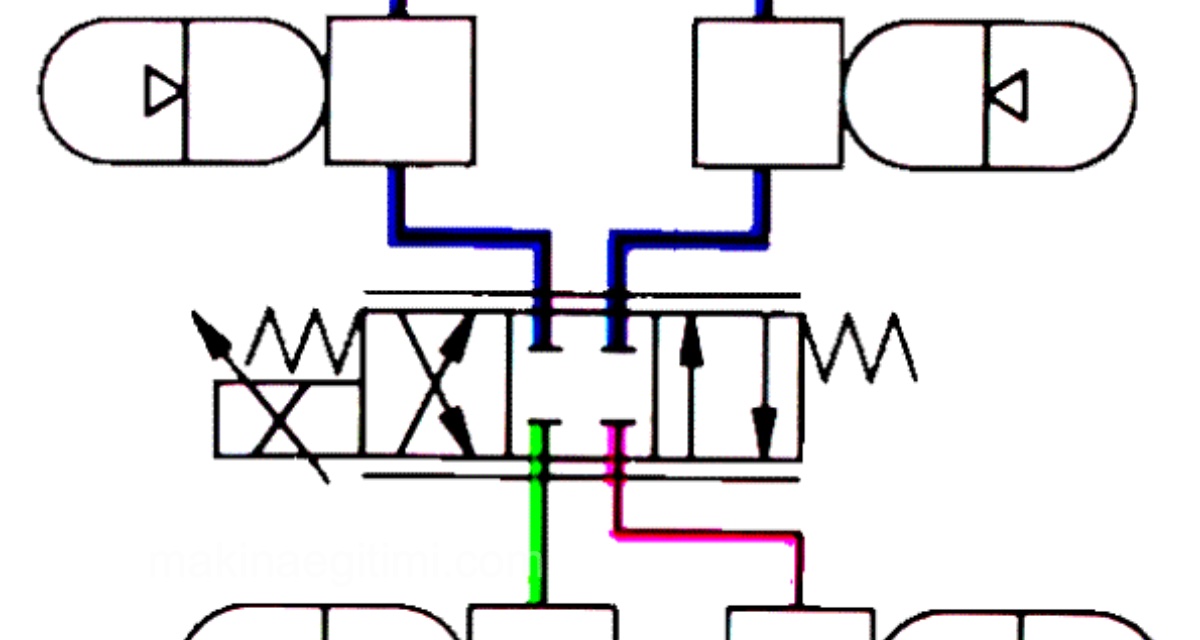
The control system usually works in reverse — that is, spring force is what operates the brake. Thanks to the accumulators, the brake cylinders remain in the closed position against this spring force.

hydraulic schematic of the emergency brake on trains

Use of Hydraulic Accumulators in Vehicle Suspensions

Mechanical shocks that occur while driving on rough roads or rails can damage the main body and chassis. By using hydro-pneumatic suspension, mechanical shocks can be converted into hydraulic shocks by way of cylinders. The job of the accumulators is to dampen these hydraulic shocks.

circuit diagram of hydraulic accumulator use in vehicle suspension
use of hydraulic accumulator in vehicle suspension

Using hydro-pneumatic suspension in vehicles reduces the risk of accidents. The vehicle’s lifespan increases. Corners can be taken at higher speeds. The load is positioned as desired. Material wear decreases and operating costs are reduced.

Hydraulic Accumulators in Machine Tools

With an accumulator placed directly in front of the user, the inertia of the fluid column is faster than in the case where all of the fluid has to pass through the drive unit. In other words, the system starts operating more quickly. In addition, accumulators meet the user’s varying flow-rate needs.
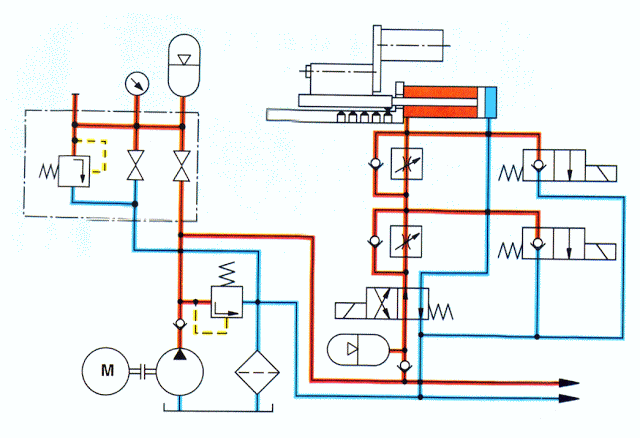
hydraulic circuit diagram

Hydraulic Accumulator in a Plastic Injection Molding Machine

an example of accumulator use

Shock Damping in Positive Displacement Pumps

Depending on the type of pump, fluctuations can occur in the flow rate. These fluctuations lead to noise and vibration. These, in turn, can damage the hydraulic system.

It’s recommended that shock-damping elements be selected considering the requirements of the equipment, such as high power, short shock duration, and low noise level.

This type of accumulator reduces the flow rate fluctuation created by the machine’s motion, as well as reducing the transfer of the noise from these fluctuations to conducting devices. This lowers the noise level. In addition, the service life of the components and the machine is extended.

example of accumulator use in hydraulic circuits

Shock Damping in Servo Valve Systems

Fast-opening control valves

For control valves (such as servo and proportional valves) to be controlled quickly but smoothly, an accumulator should be placed on both sides of the valve.

It’s also important to avoid negative pressure reaching peak values (which, for example, can damage the pressure filter in the hydraulic system).

hydraulic accumulator applications

Separation of Fluids:

In systems that require 100% separation of fluids, accumulators are used to separate the fluids. The fluids are separated by a bladder or diaphragm placed inside the accumulator.

Separation of Liquids and Gases

Since very large forces are required for hydraulically operated components to function (for example, press cylinders), there’s no need to install a hydraulic power unit up front — starting these components pneumatically and only later switching to hydraulic power is possible.

By using accumulators, hydraulically and pneumatically operated components can be separated from one another. This way, there’s no need to install an additional hydraulic power unit.

Separation of Two Fluids

For example, in floating-ring seal compressors used in the petrochemical industry, the compressed gas inside the compressor must not mix with the sealing fluid, for reasons of contamination and function.

When this type of sealing is involved, this isolated fluid is needed at the seals. The pressure level of this isolated fluid must be between 0.5 and 1 bar, and above the compressor’s gas pressure level.

hydraulic accumulator application examples

A tall tank is mounted above the compressor to maintain high pressure at the sealing zone.

Using an Accumulator as a Spring and for Chain Tensioning

Hydraulic Springs

Hydraulic accumulators can also be used as a hydraulic spring to dampen shock fluctuations.
In these cases, the compressible gas inside the hydraulic accumulator acts as the spring.
Hydraulic spring applications are as follows:

Chain Tensioning

In machines and vehicles, accumulators are used to tension drive chains, to prevent shocks in the drive chain from being transmitted through the system.

vehicle chain tensioning

Tensioning Power Transmission and Suspension Cables

For example, in cable cars and elevators, the length tolerance of the cables used to ensure trouble-free operation must be low.

By using a hydraulic accumulator, varying cable lengths during the movement of cable cars, or temperature or load changes in elevators, can be compensated for.
This is how the tolerances needed for the desired cable lengths and pulling forces are achieved.

cable car tensioning diagram

Related Posts

What Is a Hydraulic Accumulator Used For What Is a Hydraulic Accumulator Used For pneumatic cushioned cylinder and its symbol Cushioning in Pneumatic Cylinders Reciprocating Compressor | Working Principle, Parts, Types Reciprocating Compressor | Working Principle, Parts, Types hydraulic circuit return line filter Hydraulic Filtration Arrangements Hydraulic Pump Selection Criteria Hydraulic Pump Selection Criteria 4 yollu 2 konumlu yön kontrol valfleri 4-Way 2-Position Directional Control Valves OR valve explanation and applications OR Valve Explanation and Applications hydraulic technician safety rules General Safety Rules for Hydraulic Technicians
Hydraulic Systems & Applications
Share. Facebook Twitter WhatsApp Tumblr Email Telegram Copy Link

Leave A Reply Cancel Reply

Front-Wheel-Drive Vehicles: Advantages and Disadvantages
What’s Under the Hood? A Guide to the Engine Bay
  • Contact
  • Terms of Service
  • Privacy & Cookie Policy

Type above and press Enter to search. Press Esc to cancel.