
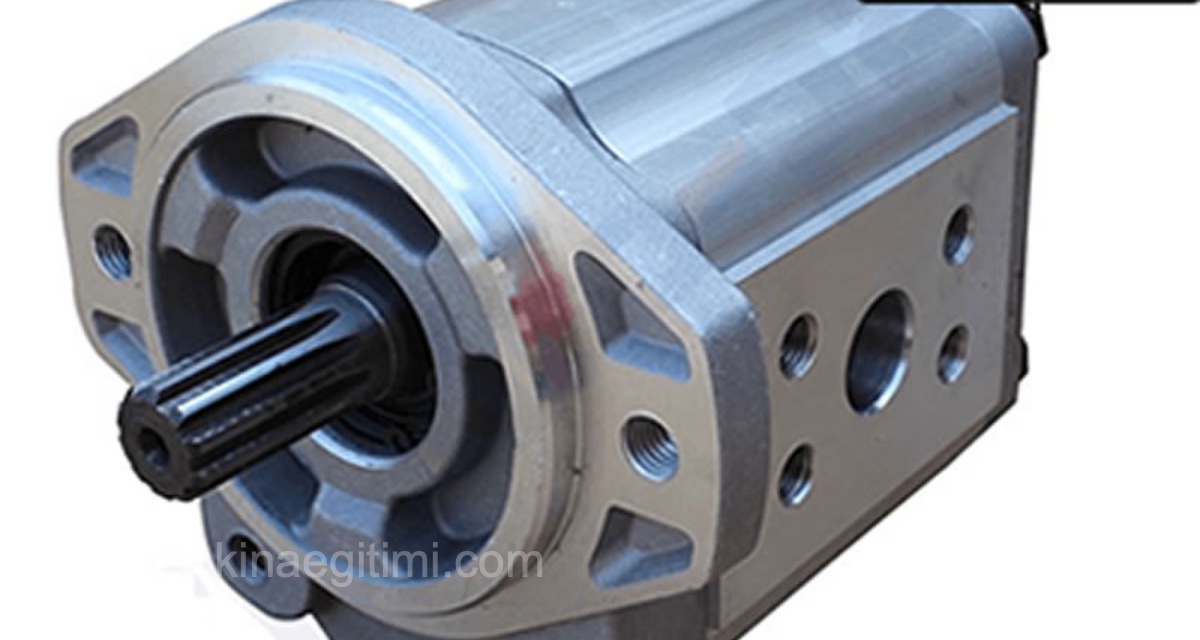
Hydraulic pumps are one of the pieces of equipment that people working in the machinery field, and mechanical engineers, encounter frequently. Hydraulic pumps come in various types. But which hydraulic pump should be used in which situations? When factors like efficiency, power, cost, and savings come into play, hydraulic pump selection becomes difficult. That’s why hydraulic pump selection is important. So what should it be based on? What are the hydraulic pump selection criteria?
In our previous article, we covered see: types of hydraulic pumps in detail. Let’s briefly recap:

Hydraulic Pump Selection
The compressed hydraulic oil inside a hydraulic system can always be subjected to sudden and excessive loads. Pressure drops or spikes can occur in various ways. In such cases, pumps can be subjected to the effects of overloading and sudden resistance. A hydraulic pump must be resistant to these kinds of resistances. Another property required of pumps is quiet, vibration-free operation. A pump that operates with excessive vibration creates air bubbles in the compressed fluid and looseness at the connection points in the system. This leads to oil leaks at pipes and fittings, which is an undesirable situation — pumps should be compact and easy to maintain and repair.
Flow Rate and Pressure Matching
In pump selection, correctly calculating the flow rate and pressure values the system requires is critically important.
Efficiency Factor
High-efficiency pumps reduce energy consumption, lowering operating costs in the long run.
Noise Level
In some applications, low operating noise is also an important criterion in pump selection.
Hydraulic Pump Selection Criteria
The fluid to be used
The desired pressure range
The desired speed
Operating temperatures
Noise level
Control type
Maintenance possibilities
Cost
In the table below, hydraulic pump types are scored for properties such as speed, pressure, viscosity, maximum noise level, service life, and price.

In this table:
1- very good / very wide
2- good / wide
3- medium
4- poor means the following.
EGP: EXTERNAL GEAR PUMP
IGP: INTERNAL GEAR PUMP
OP: ORBIT PUMP
SP: SCREW PUMP
SCVP: SINGLE-CHAMBER VANE PUMP
DCVP: DUAL-CHAMBER VANE PUMP
ESRPP: ECCENTRIC-SHAFT RADIAL PISTON PUMP
ECBRPP: ECCENTRIC-CYLINDER-BLOCK RADIAL PISTON PUMP
BAAPP: BENT-AXIS-PRINCIPLE AXIAL PISTON PUMP
SWAPP: SWASHPLATE-PRINCIPLE AXIAL PISTON PUMP
Other Criteria That Determine Pump Selection:
Whether a tandem pump will be used
The pump’s (system’s) control type
Whether the system is open- or closed-loop
Sensitivity to oil contamination
Operating personnel’s skill level

As can be seen, as pump size increases, the maximum continuous operating pressure and maximum speed decrease, while the noise level increases.
Related Questions
The pump must also be resistant to sudden pressure fluctuations and overloading within the system. A pump selected only based on flow rate but with insufficient durability can fail in a short time.
Excessive vibration can cause air bubbles to form in the fluid and connection points in the system to loosen over time. These loosened connections lead to oil leaks at pipes and fittings.
Related Posts
 An Overview of How Pneumatic Systems Work
 Maintenance of Pneumatic Systems
 Advantages and Disadvantages of Hydraulic Motors
 Pneumatic Valves and Their Types
 What Is a Pneumatic Muffler, What Does It Do?
 Safety Rules for Workers on Hydraulic and Pneumatic Machines
 What Are the Differences Between Hydraulic and Pneumatic Systems?
 What Is a Hydraulic Accumulator Used For