

In our vehicle maintenance section, this article covers fuel pump failures and their symptoms. What are the symptoms of a failing fuel pump? How can you tell a fuel pump has failed? We’ll try to inform you on these topics, supported by videos.

You might think the engine is a vehicle’s most important component, but without a fuel pump, your engine is practically useless. The fuel pump is the part that supplies the fuel your vehicle’s engine needs to run.
Fuel Pump Failures
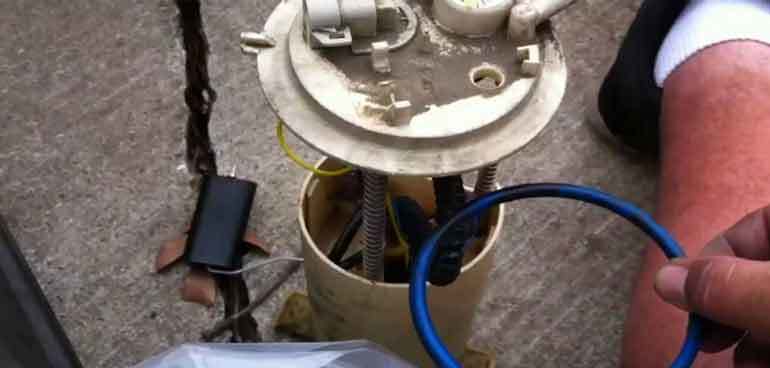
Fuel pump failures are among the most common faults in both gasoline and diesel vehicles. Damage to the fuel pump’s sealing components (like O-rings), blockages in the pump filter, or damage, crushing, or corrosion in the pump relay, fuse, or wiring can prevent the fuel pump from delivering the fuel the engine demands — and can leave you stranded on the road.
Now let’s look at the symptoms of fuel pump failure to help diagnose the problem.
Sign of Power Loss
A weakening fuel pump can cause noticeable power loss, especially when climbing hills or accelerating.
Engine Stalling
A failing fuel pump that overheats can cause the vehicle to suddenly stall while driving.
Loud Noise Symptom
An abnormal humming or whining sound coming from the fuel tank can be an early sign the pump is failing.
Symptoms of Fuel Pump Failure
The symptoms of fuel pump failure are:
- If the engine starts hard, especially in the mornings and cold weather
- If the engine doesn’t respond to the throttle during first start and stalls
- If the vehicle struggles on hills,
- If the car can’t accelerate on a straight road.
- If the vehicle’s idle is rough, or the engine misfires
- If there’s an abnormal increase in fuel consumption.
- If the starter cranks the engine, but it won’t start.
- If the vehicle’s speed fluctuates
- If your vehicle bogs down at idle after starting
- If there’s a hesitation problem when the fuel tank is low

If you notice one or more of these symptoms, there’s a possibility of fuel pump failure. However, these symptoms can also come from other problems. So replacing the fuel pump without a definitive diagnosis can end up wasting your money.
1- The vehicle starts slowly
This is a fuel pump failure symptom seen especially in the mornings and in cold weather. You crank the starter repeatedly, and it only starts after a few tries. Yes, the fuel pump is sending you a message. There may be a blockage in its filter. There may be a blockage in the connections. As the blockage grows, one day the vehicle’s engine won’t start at all.
This problem has become more common especially in dual-fuel LPG/gasoline vehicles, due to constant LPG use. The video above explains why a vehicle running on both LPG and gasoline starts slowly when the gasoline changeover unit fails.

Slow starting in the mornings is a common symptom associated with fuel pump failure. However, the problem isn’t always related to the fuel pump — sometimes it can be related to sensors instead. More videos on this topic:
Map sensörü nedir?
Hyundai Getz sabahları sogukken geç çalışma problemi ve map sensörü temizliği
Fiat Palio geç calışma problemi,rolanti dengesizliği
2- The engine doesn’t respond to throttle during first start and stalls
When you first start your vehicle, the engine doesn’t respond properly even though you’re giving it throttle. Engine warning lights come on. After a while, it even stalls, as seen in the video above. This problem is also one of the symptoms of fuel pump failure.
3- The vehicle loses power on hills
Perhaps the first and most commonly seen symptom of fuel pump failure. Your vehicle struggles more than normal when climbing hills or traveling with a heavy load. This means an already-weakened fuel pump can’t keep up with the car’s fuel demands. As a result, the car loses power.

4- The vehicle struggles to accelerate
If the engine slows down when you accelerate, struggles to reach higher RPM, and returns to normal when you slow down — this too is a symptom of fuel pump failure. This happens because at higher speeds, the pump struggles to maintain a steady fuel flow at the correct pressure to the engine.
5 – The engine misfires and doesn’t idle properly
If fuel pressure is higher than it should be, carbon and deposits form on the spark plugs. It also disrupts the vehicle’s idle, producing a rough, wavering idle.
If fuel pressure is lower than it should be, your vehicle’s engine will either knock or not run at all. Since the fuel-air mixture in the engine will run lean on fuel, you may experience engine misfiring, fluctuation, or power loss at idle. If the fuel pump failure symptoms described so far aren’t addressed in time, you could end up stranded on the road.
An unstable idle can also have other causes. For example, on carbureted vehicles a clogged throttle body can cause this same problem. Example video:
Rölanti Titremesi Ve Rölanti Dalgalanması, Stop Etme
6- Fuel consumption increases for no reason
If fuel consumption has started increasing without any obvious cause, this could be caused by fuel pump failure.
With fuel pump failures, the pump can’t deliver enough fuel for the vehicle to run stably, for various reasons. Because of this, the quality of the burned fuel mixture drops. Even though more fuel enters the engine, the energy produced decreases. The system burns more fuel to try to produce the energy it needs. If fuel consumption is increasing for no visible reason, that’s another reason to suspect fuel pump failure.
The video above explains how a failure in the gasoline pump of a dual-fuel LPG/gasoline vehicle causes gasoline consumption to drop unexpectedly.
7 – The starter cranks, but the engine doesn’t start
Your vehicle’s starter cranks the engine when you turn the key, but it doesn’t start.
8- Fluctuation while driving at a steady speed
If your vehicle experiences sudden fluctuations even while driving at a steady speed (as if you’re briefly stomping the gas pedal at short intervals), this too is a symptom of fuel pump failure. This happens because of the irregular resistance caused by the fuel pump motor.
If the fuel pump failure symptoms listed above are ignored, the worst-case outcome is this: once the fuel pump completely fails, fuel can no longer reach the engine after ignition, and the engine won’t run at all.
The fuel pump plays an important role in your engine system. Don’t neglect your vehicle’s maintenance if you want to avoid fuel pump failures and keep your vehicle in good condition for a long time.
Related Questions
At these moments, the engine needs more fuel than normal. When a weakened pump can’t meet this increased demand, the power loss is first noticed during these moments of high demand.
When these components fail, the system loses pressure and the pump can’t provide the fuel pressure the engine needs. This can cause the engine to run erratically or not run at all.
Related Posts
 What Is AdBlue, What Does It Do?
  Vehicle Dashboard Warning Lights and Their Meanings, Illustrated
  How to Clean Leather Seats. What Should Leather Seats Be Cleaned With?
  When Is Shock Absorber Replacement Time?
  White Smoke Coming from the Exhaust and Its Causes
  Seasonal Vehicle Battery Maintenance: Why and How
  What Is Piston Ring Replacement? How Is It Done?
  Why Does an Engine Develop an Oil Leak?