Close Menu
  • MAKİNELER ve İMALAT
    • Tools & Equipment
    • Computer-Aided Drawing
    • CAD/CAM Education
    • CNC Machine Programming
    • Casting Technologies
    • Electrical & Electronics Technologies
    • Hydraulics & Pneumatics
    • Manufacturing Processes
    • Manufacturing Technologies
    • Occupational Safety
    • Mold & Die Design
    • Solid Modeling
    • Welding Technology
    • Machine Elements
    • Mechanical Trade Drawing
    • Materials Science
    • Automotive & Vehicle Technologies
    • Robotics Technologies
    • Health Technologies
    • Defense & Aerospace Technologies
    • Descriptive Geometry
    • Technical Drawing
    • Software & Hardware Technologies
    • Innovative Manufacturing Methods
  • TEKNOLOJİ ve YAŞAM
    • OTOMOBİLLER ve TAŞIT
      • Vehicle & Engine Knowledge
      • Safe Driving
      • Sürüş Destek Sistemleri
    • Genel Kültür
      • Movies & TV Shows
      • Görsel ve Grafik Sanat
      • Books & Literature
      • Music
      • Sports
      • History
      • History of Technology
    • GÜNDELİK YAŞAM TEKNOLOJİLERİ
    • Hobbies & Entertainment
    • Internet Technologies
    • Health
    • Mobile Technologies
Makine Eğitimi
  • Machines & Manufacturing
    Machine Elements
    Hydraulics & Pneumatics
    Technical Drawing
    Computer-Aided Design & Manufacturing
    Basic Manufacturing Processes
    Manufacturing Processes
    Industry Technologies
    Other Technical Courses
    Motion & Power Transmission
    Simple Machines
    Chains & Sprockets
    Shafts & Journals
    Gears
    Cams
    Couplings
    Belts & Pulleys
    Springs
    Bearings
    Keys
    Fastening Joining
    Retaining Rings
    Screws, Bolts & Nuts
    Cotter Pins
    Flanges
    Welding
    Rivets
    Pins & Bolts
    Washers
    Calculators
    Gear Ratio Calculator
    Spring Constant Calculator
    Belt Pulley Ratio Calculator
    Other Machine Elements
    Slides & Linear Guides
    Brakes
    Flywheels
    Clamps
    Shock Absorbers
    Gaskets & O-Rings
    Seals & Sealing Elements
    Hydraulics
    Introduction to Hydraulics & Principles
    Hydraulic Systems & Applications
    Accumulators
    Filters
    Motors
    Pumps
    Valves
    Pneumatics
    Introduction to Pneumatics & Principles
    Pneumatic Systems & Applications
    Pneumatic Circuit Components
    Valves
    Cylinders
    Silencers
    Motors
    Compressors
    Dryers
    Conditioning Units
    Common Topics & Maintenance
    Hydraulic & Pneumatic Maintenance
    Study Notes, Exams & Tests
    Technical Drawing
    Introduction to Technical Drawing
    Geometric Drawings
    Perspective & Projection
    Orthographic Views
    Dimensioning
    Sectioning
    Assembly & Detail Drawings
    Tolerances
    Surface Finish Symbols
    Mechanical Engineering Drawing
    Screws, Bolts & Nuts
    Pulley Drawings
    Gear Drawings
    Shafts & Journals
    Bearing Drawings
    Pins & Bolts
    Spring Drawings
    Welds in Technical Drawing
    Washers
    Cotter Pins
    Technical Drawing Exercises
    Mechanical Drawing Exercises
    Gear Exercises
    View Extraction Exercises
    Pulley Exercises
    Pin & Bolt Exercises
    Threaded Fastening Exercises
    Descriptive Geometry
    Computer-Aided Drawing
    AutoCAD Drawing Lessons
    Solid Modeling & Animation
    Solid Model Drawing Files
    Solid Model Assembly Examples
    Solid Model Drawing Lessons
    3D CAD Software Reviews
    Solid Modeling Exercises
    CNC Programming
    CAM
    Measurement & Inspection
    Dial Indicators
    Calipers
    Gauges
    Micrometers
    Materials Science
    Steels
    Cast Iron
    Aluminum
    Plastics
    Material Testing & Hardness Measurement
    Occupational Safety
    Workshop Safety
    Safety When Working With Electricity
    Machine Safety Rules
    Hand Operations
    Filing
    Marking
    Cutting Operations
    Reaming
    Tapping
    Threading With a Die
    Drill Bit Sharpening
    Working With Machines
    Basic Turning Operations
    Basic Milling Operations
    Shaper Machine
    Machining
    Turning
    Milling
    Grinding
    Innovative Manufacturing Methods
    EDM (Electrical Discharge Machining)
    Laser Machining
    Waterjet Machining
    3D Printing
    3D Scanners
    Welding
    Rolling
    Casting
    Mold & Die Design
    Mechanical & Hydraulic Presses
    Blanking & Piercing Dies
    Bending Dies
    Drawing Dies
    Plastic Injection Molds
    Extrusion Dies
    Compound Dies
    Progressive Dies
    Blow Molds
    Spinning Dies
    Spray Molds
    Manufacturing of Machine Parts
    Automotive & Vehicle Technologies
    Motor Vehicle Manufacturing
    Raw Material Production
    History of Technology
    Health & Medical Technologies
    Defense & Aerospace
    Robotics Technologies
    Software & Hardware Technologies
    Mechanics - Strength of Materials
    Physics Topics
  • Technology & Life
    Hobbies & Entertainment
    Sports
    Music
    Vehicle & Engine Knowledge
    Vehicle Maintenance & Repair
    Safe Driving
    Driver Assistance Systems
    History
    Movies & TV Shows
    Books & Literature
    Computers & Internet
    Computer Tips
    Software Reviews
    Hardware & Peripherals
    Practical & Safe Internet Use
    Visual & Graphic Art
    Mobile Technologies
    Travel
    Science
    Health
    First Aid Knowledge
    Everyday Technologies
Makine Eğitimi
Home»Machine Elements»Five Ways to Cool Roller Bearings
30 August 2026

Five Ways to Cool Roller Bearings

cooling roller bearings

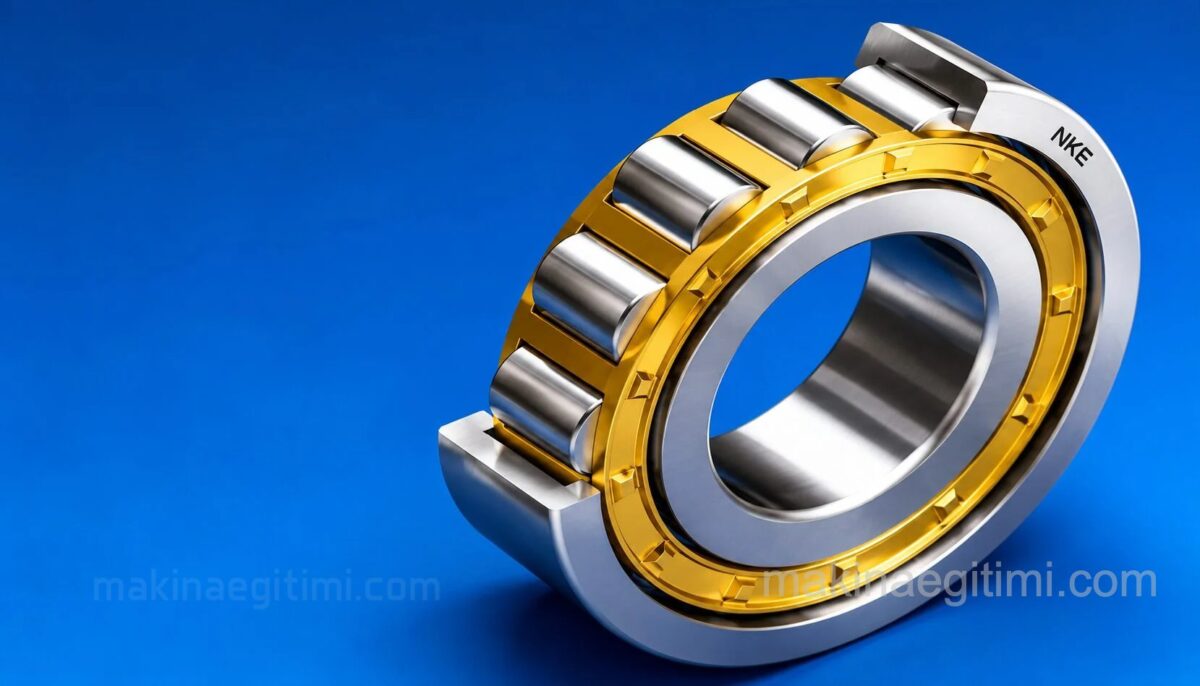
Straight cylindrical ball and roller bearings are machine elements well-suited to heavy loads and high speeds. Under at least “normal” operating conditions, there’s little need to worry about temperature rise in bearings. However, there are a number of different conditions that can turn the temperature of the rolling elements into a problem. For example, exposure to extremely high loads and speeds, high ambient temperatures, and hot process fluids can be problematic. Here are five factors engineers can adjust for cooling roller bearings:

  • Cooling Roller Bearings
    • The Bearing Type Factor in Cooling Roller Bearings
    • The Oil Type Factor in Cooling Roller Bearings
    • The Oil Flow Factor in Cooling Roller Bearings
    • Oil Level:
    • Airflow:

Cooling Roller Bearings

The Bearing Type Factor in Cooling Roller Bearings

There are several reasons a rolling-element bearing heats up: micro-slip of the rolling elements on the races; hysteresis of the rolling elements and race materials due to contact stresses; slip between the cage and the rolling elements or the guiding surfaces; slip between the rollers and the guide flanges; and shearing and turbulence in the lubricant.

The amount of heat from each of these sources varies greatly depending on the bearing’s geometry, load, speed, and the type, viscosity, and quantity of the lubricant. Under light loads and high speeds, ball bearings generally run cooler than roller bearings; at low speeds and higher loads, roller bearings may run cooler. While the choice of bearing type usually depends on cost and life factors, differences in temperature rise can also influence the decision in some cases.

The Oil Type Factor in Cooling Roller Bearings

Grease lubrication offers simple design, low cost, and reliable operation, but it doesn’t carry heat away. Circulating oil, on the other hand, provides an effective means of temperature control. It’s especially useful in applications such as gas turbines and pumps for hot fluids, particularly where process heat is introduced into the bearing. Laboratory tests show that bearing temperatures are nearly the same for oil-mist lubrication and grease lubrication.

The Oil Flow Factor in Cooling Roller Bearings

Rolling-element bearings only need a thin film of oil for satisfactory lubrication. High flow rates cool the bearing but don’t otherwise improve lubrication. However, the relationship between bearing temperature and oil flow rate is complex. While higher flow rates increase heat transfer, they also increase the amount of heat generated by turbulence and oil churning.

In general, bearing temperatures tend to drop with increasing flow rates, then level off or even rise again. In high-speed applications such as gas turbines, most of the oil can be circulated around the bearing to provide cooling while reducing oil turbulence.

For existing machinery, the optimum oil flow can be determined experimentally. For new designs, especially those involving active heat sources, computer simulation is preferred.

Oil Level:

In systems using an oil bath or splash lubrication, bearing temperatures are quite sensitive to the oil level in the sump. Setting the nominal oil level at the center of the lowest ball (so that the oil depth or height, h, divided by the bearing diameter, d, is 0.5) is common practice and will work in most cases.

However, even this level may not be adequate at extremely high speeds. And if the h/d value is below 0.5, poor maintenance or abnormal operating conditions risk causing oil starvation and catastrophic bearing failure. In such cases, an oil mist generator should be used. It creates an oil mist without precisely controlling the oil level.
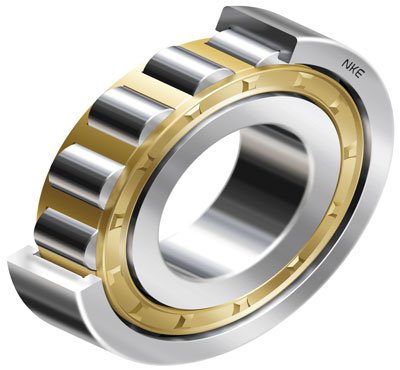
cooling roller bearings

Airflow:

In systems that don’t use circulating oil, most bearing cooling occurs by convection from the bearing housing to the surrounding air. Since moving air has a much higher convection coefficient than still air, bearing temperatures can be significantly reduced by moving air around the housing. However, airflow should not be directed into the housing itself, since it brings in dirt that shortens bearing life. Sealed, grease-lubricated bearings help keep air from entering the housing.

Air cooling is used as a quick fix, since it can be retrofitted without changing the design. In new designs, adding an axial-flow fan wheel mounted on the shaft extension is a better alternative. It not only moves cooling air over the housing, but also acts as a heat sink on the shaft, and prevents the outer ring from creeping in the bearing housing.

Related Posts

Pulley Drawings, Pulleys in Technical Drawing Pulley Drawings. Pulleys in Technical Drawing Maintenance of Belts and Pulleys Maintenance of Belts and Pulleys Spring Constant Calculator Spring Constant Calculator friction materials in clutches - sintered bronze Friction Materials Used in Clutches Types of Cotter Pins and Dimensional Standards Types of Cotter Pins and Dimensional Standards Rack Gear Drawings Rack Gear Technical Drawings Couplings and Types of Couplings Couplings and Types of Couplings Structure and properties of rolling bearings Rolling-Element Bearings
Bearings
Share. Facebook Twitter WhatsApp Tumblr Email Telegram Copy Link

Leave A Reply Cancel Reply

5 Tips for Cleaning Pet Hair
The Birth and Golden Age of Jazz: From New Orleans to the World
  • Contact
  • Terms of Service
  • Privacy & Cookie Policy

Type above and press Enter to search. Press Esc to cancel.