In this article, we’ll cover countersinking, which has an important place in machine manufacturing operations. We’ll talk about the countersink drill and its types.
Countersinking
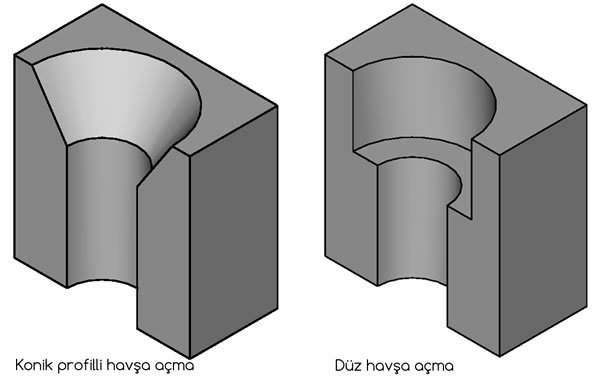
Countersinking is the method of producing profiled or conical surfaces perpendicular to the rotation axis on previously drilled or punched holes. It is divided into the following groups:
- Flat (Spot-Facing) Countersinking:
- Straight Counterboring:
- Profiled Counterboring:
Flat (Spot-Facing) Countersinking
For example, to produce a hex bolt head seating surface or a raised flat surface.
Straight Counterboring
For example, to produce a cylindrical counterbore for a socket-head bolt, or a deepened flat surface.
Profiled Counterboring
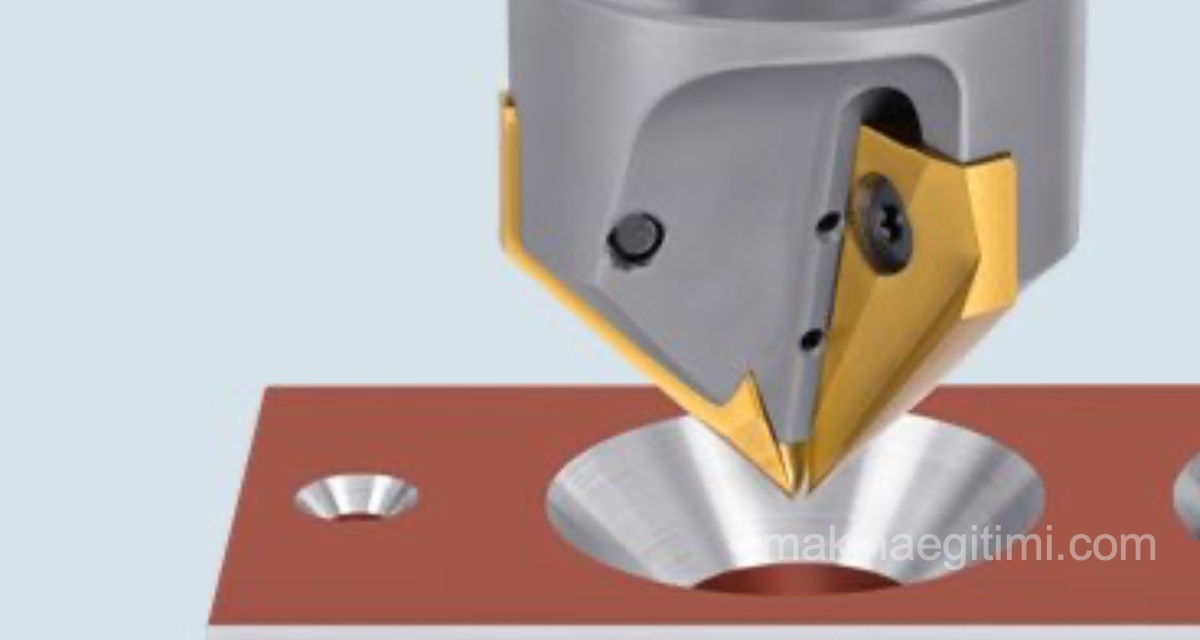
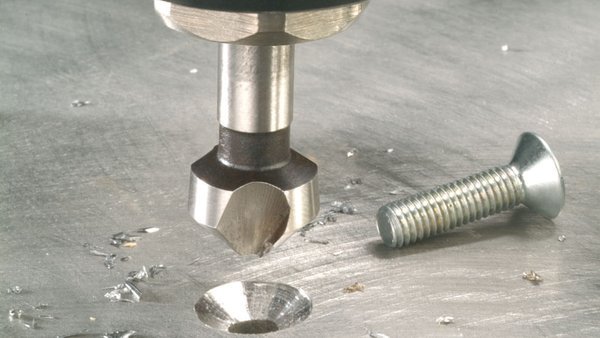
For example, to form a conical countersink for flat-head (countersunk) bolts, or to produce a conical or profiled countersink.
Standard Cone Angles
The most commonly used cone angles in countersinking are 60, 82, and 90 degrees.
Flat-Head Screw Fit
Countersinking is done to allow flat-head (countersunk) screws to sit flush with the surface.
Deburring Purpose
Countersink drills are also frequently used to remove sharp burrs at hole edges.
Countersink Drill
Compared to drills, countersink tools have a smaller clearance angle and a larger clearance surface. In this way, the countersink’s cutting edges rest against the hole, and a vibration-free surface is achieved. The cutting speed should be chosen smaller than for drilling, while the feed rate can be chosen larger.
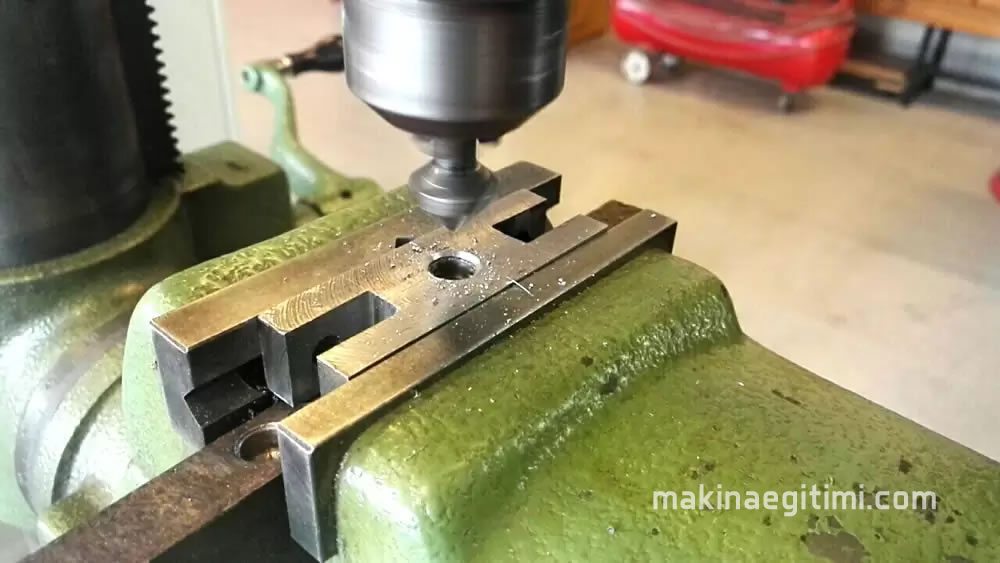
Countersink drills are made of high-speed steel, and are also equipped with hard-metal cutting inserts (tips) or hard-metal rotating inserts. Large countersinks are also used as hole-enlarging tools. For machining long-chipping materials such as copper or aluminum alloys, the tools have a larger rake angle and a smaller wedge angle, resulting in a greater chip removal volume.
Straight (Flat) Countersink Drill
Used in flat countersinking operations, for example to produce bearing surfaces and seating surfaces for bolts and nuts.
A detachable-insert straight countersink drill cuts by attaching the cutting head onto a moving pilot shaft, for flat countersinking in hard-to-reach places on the inside of the workpiece.
Countersink Drill with a Pilot Pin

Used to countersink bolt head seats (recesses), either flat or profiled. There are straight and conical countersink drills with either a fixed or an interchangeable pilot pin. The pilot pin guides itself inside a previously drilled hole. Interchangeable pilot pins make it easier to redress the countersink and allow it to be used on different hole diameters. (above)
Conical Countersink Drill
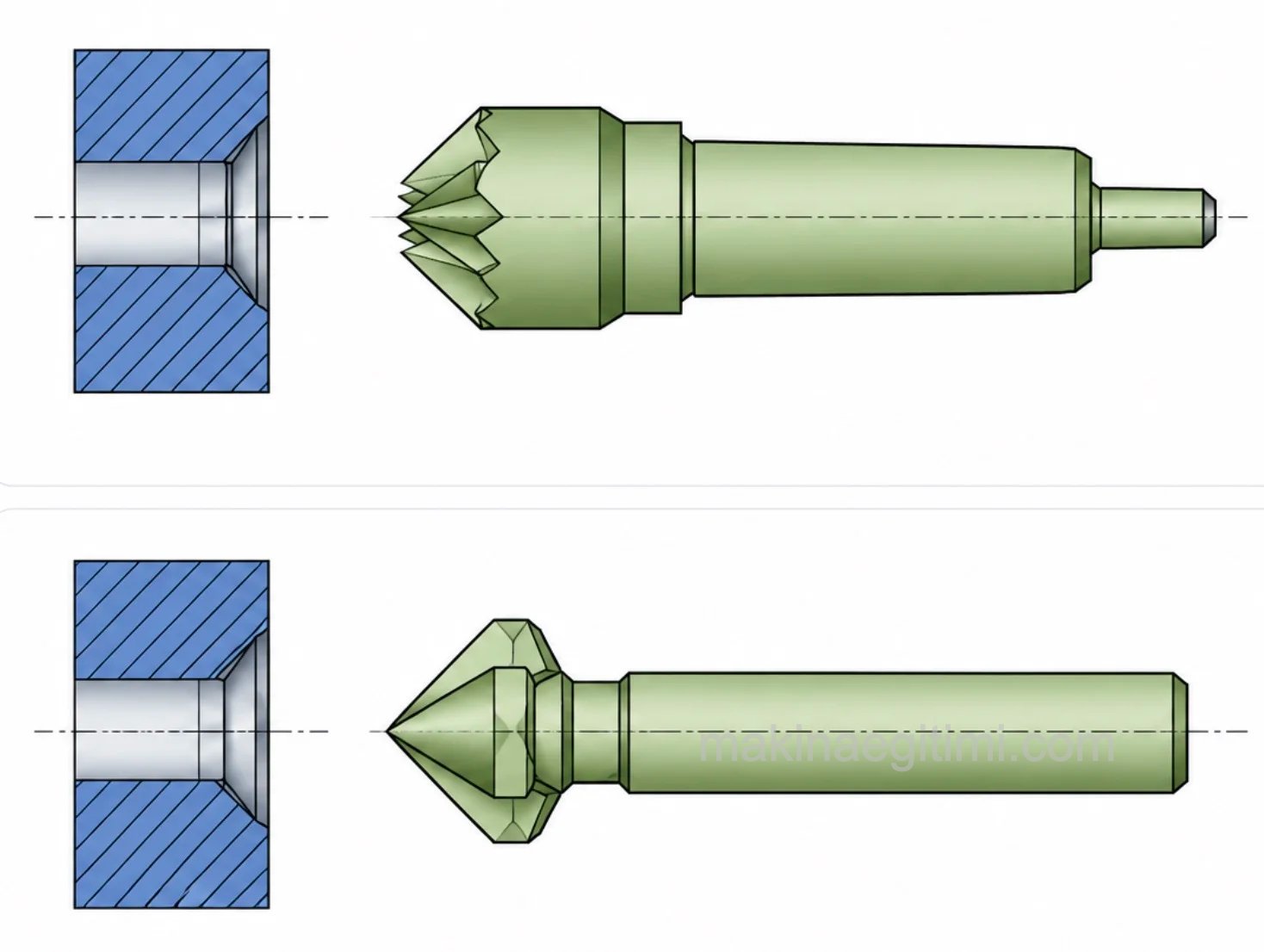
Used for forming conical countersinks for bolts and rivets, and for deburring hole edges. (above). Point angles are standardized. It’s 60° for deburring, 75° for rivet heads, 90° for flat-head bolts, and 120° for sheet metal rivets.
While Form B conical countersink drills are preferred for deburring, Form C three-flute conical countersink drills perform better and vibration-free in deep countersinks, because the chips are conveyed helically through the flute.
Countersink That Accepts an Interchangeable Twist Drill
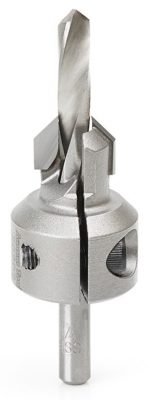
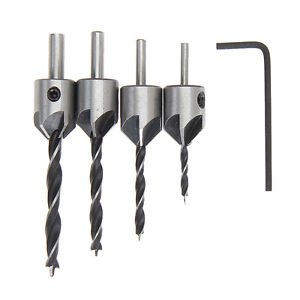
Generally used in serial production stages, this is a countersink that can accept an HSS twist drill mounted onto it.
Adjustable Countersink Drill

On this type of countersink drill, the length (drilling depth) of the mounted twist drill can be adjusted.
Carbide-Tipped Countersink Drill

Countersink drills used commercially for countersinking hard materials, made long-lasting through the use of detachable carbide tips.

Related Questions
A flat-head screw protrudes from the surface in a straight hole. A conically countersunk hole allows the screw head to sit flush and smooth with the surface.
Sharp burrs left on the hole edge after drilling create a safety hazard and prevent parts from seating properly. The countersink drill’s conical tip lightly cuts away these burrs, leaving a clean edge.
Related Posts