

In this article, we’ll cover a comparison of waterjet cutting with other cutting methods. We’ll look at the advantages and weaknesses of waterjet cutting compared to other cutting methods.
Waterjet & Milling
Milling is, simply put, the method of cutting metals using a cutter that advances while rotating around its own axis. To cut and drill around a workpiece, an abrasive cutter is much faster, easier to program, and cheaper than using blind holes, drilling, and tapping.

When high-precision workpieces need to be cut, an abrasive cutter is a machine tool that can be used to produce a near-net-shape finished product in a single pass, without thermal effects.
Waterjet & Flame Cutting
Flame cutting is also a widely used cutting process in the metal industry. Its cutting thickness range is very wide, but compared to waterjet cutting it has an obvious thermal effect, and poorer cutting surface quality and accuracy.

With an abrasive cutter, surface quality is generally better, and there is no slag on the back of the workpiece, which reduces secondary machining. Additionally, the ability to cut in water at high melting temperatures can make it easier to cut some special materials such as alloys and composite materials.
Waterjet & Laser Cutting
The investment required for laser cutting equipment is large. The cutting speed of a laser is higher than that of waterjet. However, when cutting with a laser, it causes arc marks and thermal effects on the cutting seam.
Additionally, laser cutting is not ideal for some materials such as aluminum, copper, and other non-ferrous metals and alloys — especially for cutting thick metal sheets, the cutting surface is not ideal, and it may not even be able to cut at all.

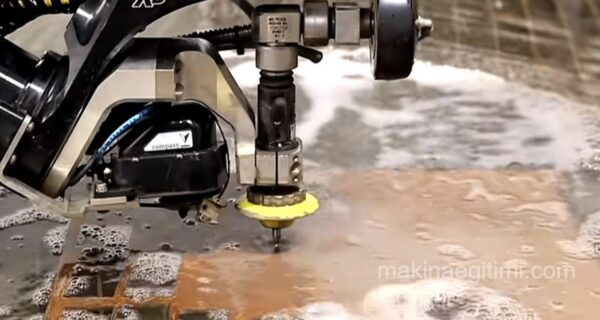
Waterjet cutting has the advantages of small investment, low operating cost, a wide variety of cuttable materials, high efficiency, and convenient operation and maintenance.
Waterjet is better than laser in some respects
- There is no limit on cutting thickness.
- Reflective materials such as brass and aluminum can also be cut.
- The heat generated is cooled automatically, so there is no adverse thermal effect on the cut material.
- More cutting heads can easily be added to increase production capacity.
- Laser equipment maintenance is more specialized and difficult.
- A complete waterjet equipment set costs about half, or even a third, of a laser’s cost.
Waterjet & Plasma Cutting
Plasma cutting has a noticeable thermal effect, low precision, and the cut surface is not easy to rework.

Waterjet cutting is cold cutting — there is no thermal deformation, the cut surface is of high quality, no secondary processing is required, and if secondary processing is needed, it’s easy to do.
Waterjet & Wire EDM
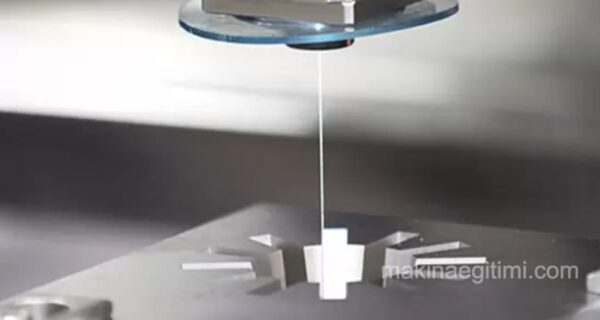
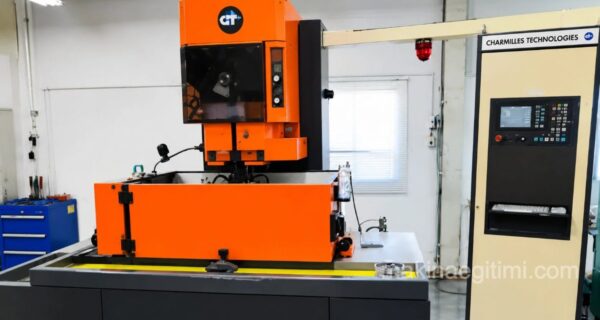
Wire EDM (electrical discharge machining), simply put, is a cutting method performed with machines that use an electrically charged wire to cut metals.

Cutting with electrical discharge machines for metal processing has higher accuracy, but the speed is very slow. Sometimes other cutting methods, such as drilling and tapping, are also needed. Additionally, the cutting size is greatly limited. Waterjet cutting, with its fast cutting speed and flexible processing size, can drill and cut all types of materials.
Waterjet & Cutting with Punch Dies
Cutting with die-cutting molds can be used with high yield and high speed for some metal parts (especially thin sheet materials), but requires special molds and cutters. Compared to this cutting method, waterjet cutting is more flexible and can be used to cut a workpiece of any shape at any time.

Especially when it comes to thick material and high hardness, using punching and cutting dies is difficult or even impossible, while the waterjet cutting method is more ideal;
Conclusion
Generally speaking, when laser, plasma, flame, wire cutting, sawing, milling, and other machining methods can essentially meet the requirements of the machining technology, waterjet cutting is not suitable.
After all, the operating cost of waterjet cutting is high. The nozzle, guide sleeve, and high-pressure seal are imported consumables and are expensive.
Waterjet Cutting Precision
Waterjet cutting tolerance can be as precise as ±0.1 mm, depending on calibration.
Laser Cutting Speed
On thin sheet materials, laser cutting generally works at much higher speed than waterjet.
Plasma Cutting Cost
Plasma cutting stands out for its lower starting cost compared to waterjet and laser on thick metal sheets.
Related Questions
In flame cutting, the material is melted with high heat, which leaves distortion and slag at the cut edge. Waterjet, on the other hand, cuts by abrading the material without heating it, so the edge comes out much cleaner and smoother.
Waterjet stands out in situations where the material must not be affected by heat, or with very hard/thick materials. Milling is more practical for heat-resistant materials that require higher precision and speed.
Related Posts
 What Is Wire EDM, How Does It Work?
  Where Are 3D Scanners Used
  What Is Electrical Discharge Machining (EDM). Machining with EDM
  Industrial 3D Scanners
  Laser or Waterjet, Which Is Better?
  Advantages and Disadvantages of 3D Printers
  Applications of Lasers
  Laser Cleaning: Removing Rust, Dirt, and Grease