
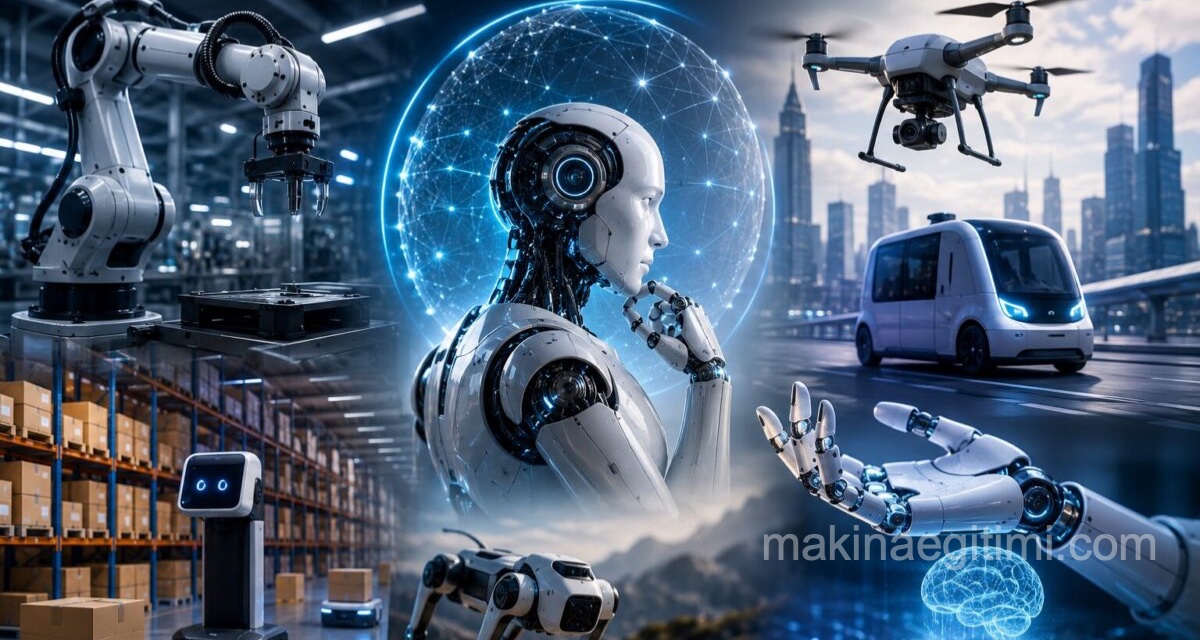
The 2026 developments in robotics technology show that the sector has moved beyond being purely a mechanical engineering field and has become an intersection of artificial intelligence, semiconductor manufacturing, and cloud computing. In this article, we take a technical look at the hardware advances, investment movements, and industry events that stood out in robotics technology throughout 2026.
The Rise of the “Physical AI” Concept
The most notable conceptual shift in robotics technology in 2026 is the growing prevalence of the term “physical AI.” This concept refers to integrating large language models and vision-language-action models directly into robot hardware so robots can perform real-time perception, reasoning, and motion planning. This approach aims to transform robots from pre-programmed, repetitive-motion machines into generalist systems capable of adapting to new situations they encounter.
A Leap on the Hardware Side: Robotics Processors
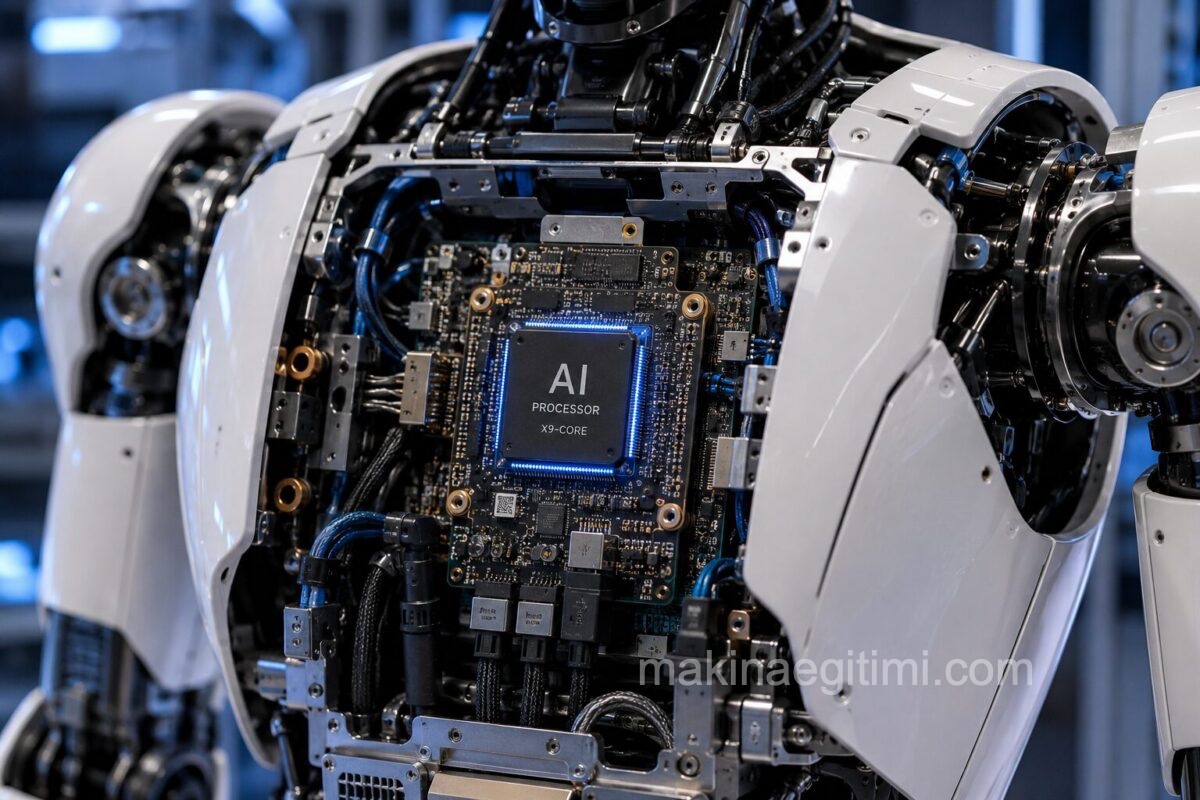
One of the most critical developments underpinning the physical AI trend is the arrival of processors built specifically for robots. NVIDIA’s Jetson Thor processor, built on the Blackwell architecture, delivers 2,070 FP4 teraflops of compute within a 130-watt power envelope.
This processor delivers roughly 7.5 times more AI compute power than the previous-generation Jetson Orin. Boston Dynamics is integrating Jetson Thor into its humanoid robot Atlas, aiming to bring server-level compute power directly into the robot’s own body.
Companies such as Agility Robotics, Amazon Robotics, Figure, and Caterpillar are among the early adopters of this platform. Other chipmakers, such as AMD, have also joined the race to develop dedicated hardware for physical AI.
Growth in Investment Volume
Capital flowing into the robotics and physical AI sector gained clear momentum in 2026. According to PitchBook data, startups developing machines capable of moving through and performing tasks in the physical world raised a total of $16.3 billion across 492 funding rounds in the first quarter of the year alone. This figure clearly demonstrates investors’ expanding interest, shifting from digital AI toward physical AI.
During this period, a UK-based humanoid robotics startup reaching a billion-dollar valuation showed that Europe, too, could have a say in this competition. Samsung, meanwhile, has made robotics one of its future growth priorities, establishing a new robotics unit reporting directly to top management.
Industry Events and Exhibitions
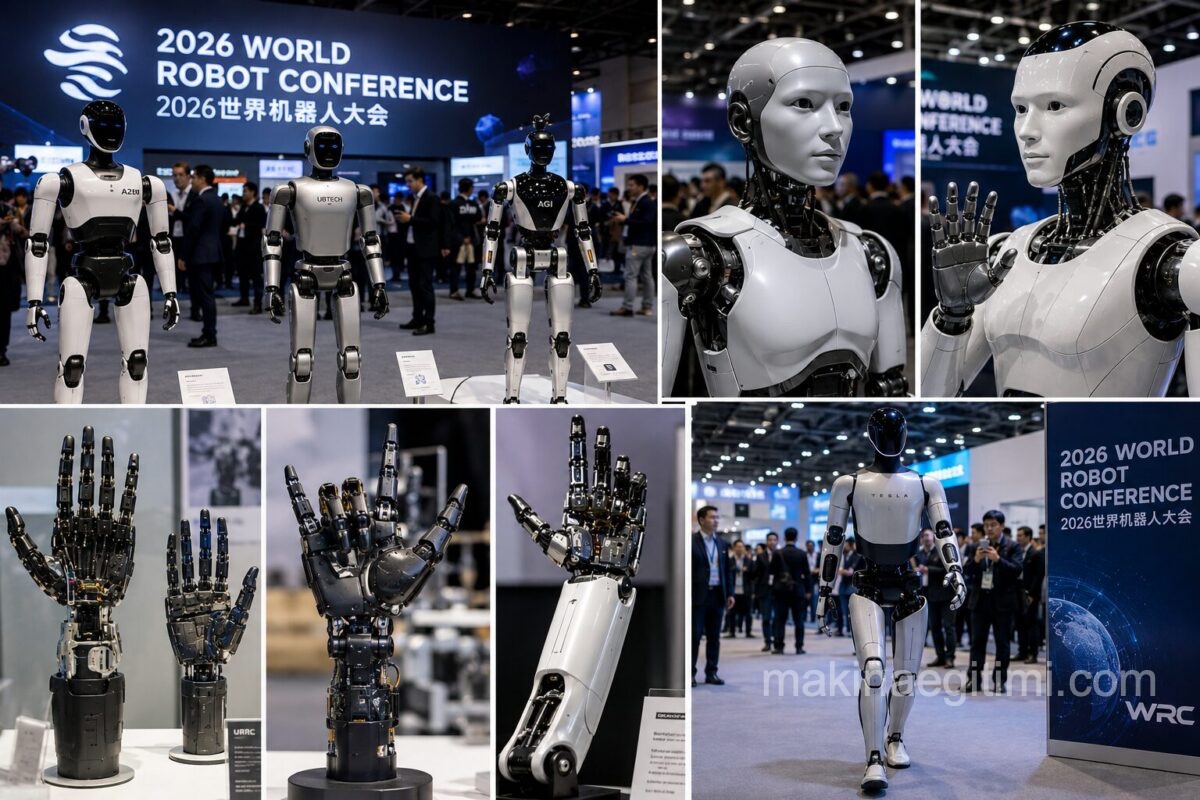
2026 was also a busy year in terms of international events showcasing robotics technology. At the World Robot Conference held in Beijing in August, robotic hands, four-legged robot dogs, and various humanoid platforms were exhibited, and visitors had the opportunity to try out remotely controlled robotic arms.
In Turkey, the WIN EURASIA trade fair brought attention to the growing role of AI-powered automation systems, digital twin technologies, and autonomous mobile robots in manufacturing processes.
Ease of Programming in Industrial Automation
Another notable trend on the industrial robotics side in 2026 is the simplification of robot programming methods. Robot programming processes that traditionally required long lines of code can now be carried out by having the operator show the robot the task to be performed and simply define reference points.
This approach shortens robot commissioning times and makes it easier for smaller manufacturers to adopt automation as well. That said, the need for robot integration and periodic maintenance services continues; it is emphasized that industrial robots that receive proper maintenance can operate without interruption for many years.
Expansion into New Application Areas Such as Healthcare and Agriculture
The physical AI infrastructure is not limited to humanoid robots alone; it has also spread into areas such as surgical assistance systems, smart tractors, and delivery robots. This development shows that robotics technology has moved beyond being a narrow industrial niche and now advances across diverse sectors — healthcare, agriculture, logistics, and retail — through a shared hardware and software foundation.

Related Videos
- Introducing NVIDIA Jetson AGX Thor: The Ultimate Platform for Physical AI and Robotics (NVIDIA, official announcement)
- Agility Robotics’ Digit Demo at Automate 2025 (official demo video)
- Introducing Figure 03 (Figure AI, official announcement)

Introducing NVIDIA® Jetson AGX Thor™: The Ultimate Platform for Physical AI and Robotics
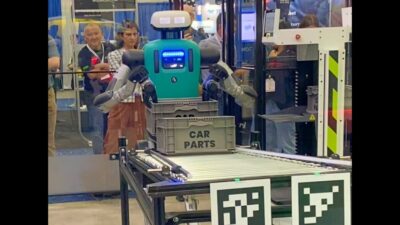
Agility Robotics' Digit Demo at Automate 2025

Introducing Figure 03 Figure
Conclusion
The 2026 developments in robotics technology show that the physical AI concept is driving a simultaneous transformation across hardware, software, and investment ecosystems. The arrival of dedicated robotics processors, the acceleration of capital flows, and the simplification of programming processes all point to robotics technology reaching a broader user base in the period ahead.
Frequently Asked Questions
Physical AI is an approach that integrates large AI models into robot hardware so robots can perform real-time perception, reasoning, and motion planning.
Jetson Thor is a robotics processor platform developed by NVIDIA, designed for physical AI applications, that provides robots with real-time compute power.
According to PitchBook data, physical AI and robotics startups raised a total of $16.3 billion across 492 funding rounds in the first quarter of 2026.
The World Robot Conference is an international event showcasing the latest developments in robotics technology, held in Beijing in 2026, featuring humanoid robots, robotic hands, and four-legged robots.
In next-generation systems, instead of writing long lines of code, the task to be performed by the robot can be defined by having the operator demonstrate it and set reference points, which shortens commissioning time.
Related Companies (External Links)
- NVIDIA: https://www.nvidia.com
- Boston Dynamics: https://bostondynamics.com
- Agility Robotics: https://www.agilityrobotics.com
- Figure AI: https://www.figure.ai
- AMD: https://www.amd.com
- Samsung Electronics: https://www.samsung.com
- Caterpillar Inc.: https://www.caterpillar.com
Related Posts
 The History and Evolution of Robotics: From Ancient Automata to AI-Powered Robots
 Robot Ethics and Social Impact: The Legal and Social Dimensions of Robotics Technology
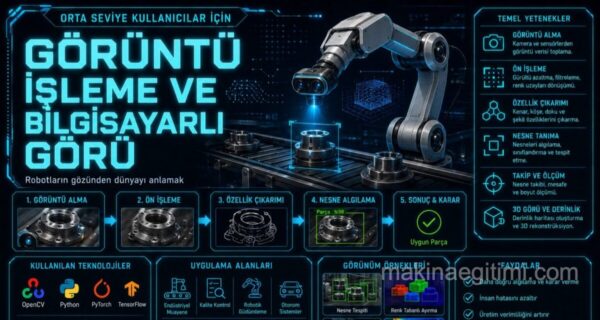 Robot Perception Through Image Processing and Computer Vision
 Industrial Robot Applications: Sector Use Cases and Technical Features
 Robot Films Worth Watching: The Best Recent Robot-Themed Movies
 How to Build a Robot? Part 3: Software and Control Algorithms
 Robot Kinematics and Dynamics: Foundations of Mathematical Modeling
 Sensor Fusion and Filtering: Combining Data in Robotic Perception Systems