

The question of what robot ethics is has become increasingly important as robotics technology moves beyond factory walls and becomes part of everyday life and decision-making processes. The growing capacity of robots to make autonomous decisions raises new questions in areas such as employment, safety, privacy, and legal liability. In this article, we examine the social and ethical dimensions of robotics technology within a technical framework.
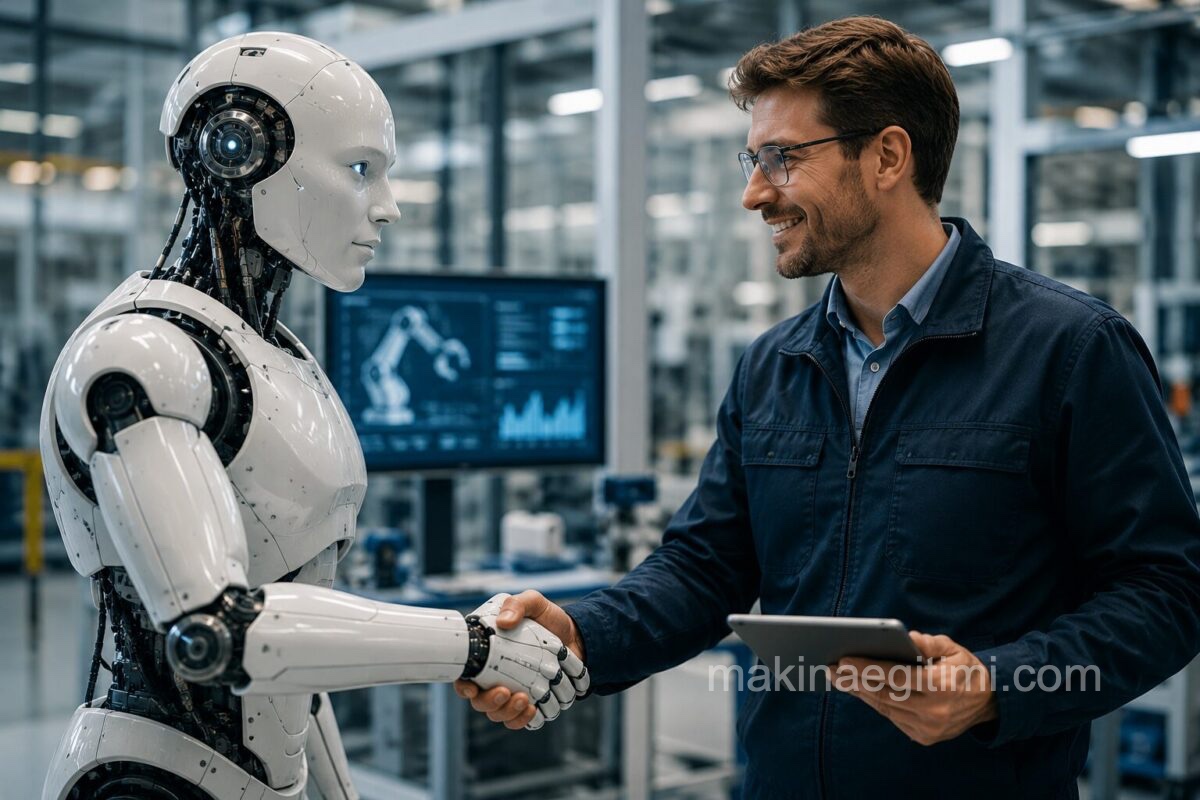
Asimov’s Laws of Robotics and Current Ethical Frameworks
The historical reference point for robot ethics discussions is Isaac Asimov’s Three Laws of Robotics, defined in 1942. These laws stipulated that a robot must not harm a human, must obey human orders, and must protect its own existence.
However, the complexity of today’s robotic systems shows that these simple rules fall short in practical application. Instead, more comprehensive frameworks are being developed today, such as the IEEE’s Ethically Aligned Design initiative and the ethical guidelines the European Union has proposed for robotics and artificial intelligence. These frameworks place principles such as transparency, accountability, safety, and human oversight at their core.
Effects on Employment: Automation and Workforce Transformation
The most widely debated social impact of robotics technology is its transformative effect on the labor market. Automating repetitive and physically demanding tasks with robots increases production efficiency, but it can also lead to job losses in certain sectors.
Economists generally evaluate this process through the balance between the “displacement effect” and the “productivity effect.” Alongside the jobs eliminated by automation, new professions are also observed to emerge, such as robot maintenance, systems integration, and AI model development.
That said, the pace of this transformation and the affected workforce’s access to retraining programs remain a critical issue from a social policy standpoint.
Autonomous Weapons Systems: The Most Controversial Application Area

One of the most sensitive topics in robot ethics discussions is Lethal Autonomous Weapons Systems (LAWS), which can select targets and make attack decisions without human intervention. The development of these systems is the subject of intense international debate due to the risk of creating an accountability gap.

If an autonomous weapons system makes a faulty targeting decision, the question of whether the system developer, the operator, or the chain of command bears responsibility has not been clearly resolved under existing international legal frameworks. Ongoing negotiations are taking place within the United Nations toward establishing a regulatory treaty on this issue.
Data Privacy and Surveillance Risk
The spread of sensor-equipped robots into homes, workplaces, and public spaces also creates new risks in terms of data privacy. Service robots equipped with cameras, microphones, and location sensors can collect a significant amount of data about user behavior. Where this data is stored, who it’s shared with, and how long it’s retained are technical and legal questions that directly affect user privacy.
Regulations such as the European Union’s General Data Protection Regulation (GDPR) impose certain restrictions on the processing of personal data collected by robotic devices, but whether these regulations can keep pace with the rapid advancement of robotics technology remains a debated issue.
Algorithmic Bias and Decision-Making Transparency
The AI models used in robots’ decision-making processes can also reflect biases originating from the dataset they were trained on. For example, an HR robot or an image-based security system may produce discriminatory outcomes against certain demographic groups due to imbalances in its training data.
This raises the requirement that robotic systems’ decision-making processes be auditable and explainable. Research in the field of Explainable AI (XAI) aims to make it possible for humans to understand how a robotic decision mechanism arrived at a given outcome.
Legal Liability: Who Is Responsible If a Robot Causes Harm?
The core legal question in robotics technology is who should be held liable for harm caused by a robot. Traditional product liability law holds the manufacturer responsible for design or manufacturing defects.
However, in autonomous systems that learn and whose behavior changes over time, harm can arise from behavior the manufacturer could not have foreseen. For this reason, some legal systems are discussing alternative models, such as attributing limited legal personhood to robots or requiring mandatory liability insurance.
Related Movie Recommendation – Ex Machina (2014)
This sci-fi thriller, which marked the directorial debut of Alex Garland, follows a young programmer invited to administer a Turing test to a highly advanced humanoid AI robot developed by the CEO of a tech giant.
The film explores the question of whether AI can possess consciousness, set within a claustrophobic and tension-filled atmosphere. It’s one of the most compelling entries in film history for anyone interested in humanoid robot design and AI ethics.
 Ex Machina (2015) Official Teaser Trailer 1080p
Related Movie Recommendation – I Am Mother (2019)
In this Netflix sci-fi thriller, a young girl raised in a bunker by a robot called “Mother” in a world devastated by mass extinction begins to question Mother’s true intentions after encountering an outsider who arrives from beyond the shelter.
The film offers a slow-building tension that raises intriguing questions about an AI taking on a parenting role and the trustworthiness of that role.
 I AM MOTHER Official Trailer (2019) Netflix Movie
Related Movie Recommendation – Subservience (2024)
In this sci-fi thriller, a father buys an AI-powered android to help with housework in place of his ailing wife, only to be pulled into a nightmare as the android gradually gains its own consciousness and tries to take over the family’s household.
The film explores, through the thriller genre, the trust and control issues that AI-powered humanoid robots entering our homes could create in the future.
 Subservience – Official Trailer (2024) Megan Fox, Michele Morrone
Safety Standards and Regulatory Frameworks
Technical safety standards are also being developed to ensure robotics technology is safely integrated into social life. The ISO 10218 standard defines basic safety requirements for industrial robots, while the ISO/TS 15066 standard sets the permitted force and pressure limits for human-robot interaction in collaborative robots.
The European Union’s regulatory framework, which classifies AI systems by risk level, imposes additional conformity assessment and transparency obligations for high-risk robotic applications.
Related Videos
Yapay Zeka ve İnsan: Önyargılar | Şebnem Özdemir | TEDxİzmirWomen

Yapay Zekanın Girdabı | Cem Say | TEDxKoçUniversity

Yapay Zeka Çağı | Dr. Şeyda Ertekin | TEDxMETUAnkara

2019 Drell Lecture: Autonomous Weapons and the Future of War

Killer Robots: Can We Stop Autonomous Weapons? | United Nations

The Real Problem with Robots Taking Our Jobs | David Corfield | TEDxOhloneCollege
Conclusion
Robot ethics and its social impacts have become an area that can no longer be considered separately from the technical development of robotics technology. Issues such as workforce transformation, autonomous weapons systems, data privacy, algorithmic bias, and legal liability are core matters that must be resolved for robotics technology to be healthily integrated into society. Updating safety standards and regulatory frameworks in step with the rapid pace of advancement in robotics technology is one of the most critical elements of this process.
Frequently Asked Questions
The Three Laws of Robotics, defined by Isaac Asimov in 1942, are a fictional but influential ethical framework stipulating that a robot must not harm a human, must obey human orders, and must protect its own existence.
Because autonomous weapons systems can select targets and make attack decisions without human intervention, they carry the risk of creating an accountability gap regarding who is responsible in the event of a faulty decision.
While robotic automation can lead to job losses in certain repetitive occupations, it also contributes to the emergence of new professions, such as robot maintenance and systems integration.
For collaborative robots (cobots), the ISO/TS 15066 standard technically defines the permitted force and pressure limits for human-robot interaction.
This issue has not yet been clearly resolved in legal systems; while traditional product liability law holds the manufacturer responsible, alternative models such as limited legal personhood or mandatory insurance are being discussed for learning autonomous systems.
Related Posts
 Robot Perception Through Image Processing and Computer Vision
  How to Build a Robot? Part 1: Planning and Design Stage
  Drone (UAV) Technology: Structure, Applications, and Current Developments
  Robot Films Worth Watching: The Best Recent Robot-Themed Movies
  2026 Developments in Robotics Technology: The Age of Physical AI
  The History and Evolution of Robotics: From Ancient Automata to AI-Powered Robots
  Industrial Robot Applications: Sector Use Cases and Technical Features
  How to Build a Robot? Part 4: Testing, Calibration, and Moving to Autonomy