

Picture a child growing up in a small industrial town in Indiana, in the middle of a large family. He’s on stage by the age of six, and before he’s even ten, he’s the lead singer of a group known around the world. But this story isn’t just about extraordinary talent—it’s also the story of someone who spent his childhood on stage and in the studio. This child would later be known as the “King of Pop”: Michael Jackson.
In this article, we take a journey—both inspiring and, at times, heartbreaking—from Jackson’s modest home in Indiana to Motown’s dazzling stages, and on to Thriller, the album that broke the record for “best-selling album of all time.”
Childhood: A Star Born From a Family’s Dream
Michael Jackson was born on August 29, 1958, in Gary, Indiana, the seventh child in a family of nine children. His father, Joseph Jackson, decided to turn his sons into a music group at a young age. This group would later become known as the Jackson 5. Michael was already performing on stage with the group at just five years old, and by six or seven he was already the lead singer.
An interesting detail: it’s well known that Jackson had a disciplined, and at times harsh, childhood. His father ran rehearsals with military precision. In later interviews, Michael expressed that he had complicated feelings about this period; the perfectionism in his stage performances was, to a large degree, rooted in this intense childhood training.

After signing with Motown Records in 1968, the Jackson 5 scored their first number-one hit within a year with “I Want You Back.” Michael was only eleven years old, and he was already a star recognized by millions.
Solo Career and a Turning Point: Off the Wall
The album Off the Wall, released in 1979, was the first major step in Jackson’s transformation from child star to independent artist. This album, his first collaboration with producer Quincy Jones, masterfully blended disco and funk. Tracks like “Don’t Stop ‘Til You Get Enough” showed that Jackson had now found his own voice and vision.
This collaboration also marked the beginning of one of the most important partnerships in music history—Jackson and Jones working together would, three years later, result in an album that would make history.
Thriller: The Best-Selling Album of All Time
Released in 1982, Thriller wasn’t just an album—it was an event that changed the course of popular culture. Tracks like “Billie Jean,” “Beat It,” and “Thriller” climbed to the top one after another. With an estimated sales figure of over 70 million copies, the album still holds the title of the best-selling album in the world today.
A few striking details:
- The music video for “Billie Jean” was the first video by a Black artist to receive heavy rotation on MTV, and it played an important role in breaking down the racial barriers of the era.
- The “Thriller” short film was directed by John Landis and, at 14 minutes long, was essentially a mini feature film. In 2009, it was officially added to the U.S. Library of Congress’s National Film Registry as a work “worthy of preservation.”
- The guitar solo on “Beat It” was played by rock legend Eddie Van Halen—proof of how easily Jackson could cross the boundaries between genres.
The Moonwalk: The Legend of a Single Step
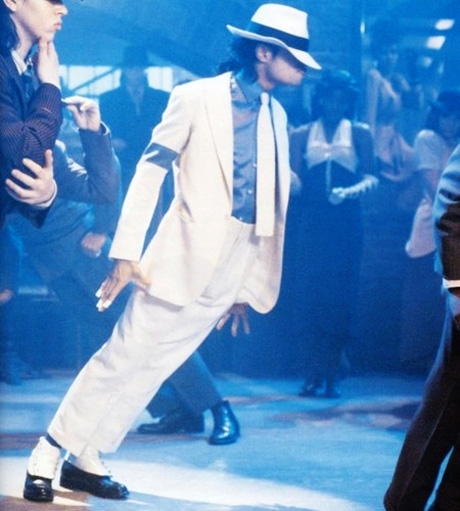
One of Michael Jackson’s most recognizable signatures was, without a doubt, the “moonwalk” move.
First debuted in 1983 during his performance of “Billie Jean” at Motown’s 25th anniversary celebration, this move gave the illusion of walking forward while sliding backward.
The move’s roots actually lie in street dance and mime, but Jackson adapted it so fluidly and gracefully that it became a symbol recognized around the world. After that night’s performance, phone lines were practically jammed with fans’ stunned reactions.

A Detail People Often Wonder About: Where Does the “King of Pop” Title Come From?
This title was actually never officially claimed by Jackson himself. However, it became popular after his close friend Elizabeth Taylor introduced him this way at an awards ceremony in 1989.
Over time, the media and fans embraced the name, and the hundreds of millions of albums Jackson sold throughout his career showed he had earned the title.
After the Peak: The Difficult Years
Jackson’s story wasn’t made up of bright stage lights alone. In 1993 and 2003, allegations of child abuse were raised against him. The 1993 case was settled between the parties before going to trial; in the second case, heard in 2005, Jackson was acquitted of all the charges against him. These proceedings seriously damaged both his career and his public image, and the subject is still debated today.
During these years, there was also a visible decline in Jackson’s health. It’s known that he struggled with insomnia for a long time and turned to powerful medications as a result. During the same period, it also became public that he faced serious financial trouble due to his lavish lifestyle and legal expenses.
On June 25, 2009, ahead of his planned “This Is It” concert series, he died suddenly of cardiac arrest at his home. The cause of death was determined to be an overdose of the anesthetic drug propofol, administered by his personal physician, Conrad Murray; Murray was later found guilty of involuntary manslaughter and sentenced to prison. Jackson’s death plunged millions of fans around the world into mourning and remains etched in memory as one of the most talked-about losses in pop music history.
8 Michael Jackson Tracks You Should Listen to Today
The best way to truly feel Michael Jackson’s musical journey is to listen to it. Here are eight suggestions to get started, with links you can watch directly:
- Jackson 5 – I Want You Back (1969, child stardom)
- Michael Jackson – Don’t Stop ‘Til You Get Enough (1979, the start of his solo career)
- Michael Jackson – Beat It (1983, rock meets pop)
- Michael Jackson – Billie Jean (1983, the MTV revolution)



- Michael Jackson – Thriller (1983, the most famous music video ever)
- Michael Jackson – Smooth Criminal (1988, the anti-gravity lean)
- Michael Jackson – Man in the Mirror (1988, one of his most heartfelt songs)
- Michael Jackson – Black or White (1991, a theme of racial unity)


Listening to these tracks in order, you can clearly hear how an eleven-year-old child star gradually transformed into one of the most influential names in pop music.
His Legacy: How It Lives On Today
Michael Jackson’s influence isn’t limited to the albums he sold. From choreography to the very concept of the music video, from production techniques to stage costumes, he deeply influenced generations of artists that followed.
From Beyoncé to Justin Timberlake, from Bruno Mars to The Weeknd, many modern artists openly acknowledge that they carry Jackson’s influence in their own performances. This makes him not just a name from one era, but someone who permanently shaped the visual and sonic language of popular music.
Frequently Asked Questions
Michael Jackson was born on August 29, 1958, in Gary, Indiana, in the United States.
Jackson began performing with the Jackson 5, the group he formed with his brothers, at just five or six years old, and the group achieved national fame after signing with Motown Records in 1969.
Thriller (1982) holds the title of the best-selling album in the world, with an estimated 70 million-plus copies sold, and with tracks like “Billie Jean” and “Beat It” it permanently changed popular music and music video culture.
Although the move’s roots lie in street dance and mime, Jackson introduced it to the world during his 1983 performance of “Billie Jean” and made it his own signature move.
The title became popular after his close friend Elizabeth Taylor introduced him this way at an awards ceremony in 1989, and it was gradually embraced around the world.
Related Posts
 What Is the Difference Between Classical Guitar and Acoustic Guitar?
 The History of the Piano: A 300-Year-Old Sound Born from a Hammer
 The Story of The Beatles: From Liverpool to a Worldwide Legend
 Beethoven’s Battle With Deafness: An Incredible Story of Perseverance
 The Birth and Golden Age of Rock ‘n’ Roll: From Memphis to the World
 The Birth and Golden Age of Reggae: From Jamaica to the World
 The History of the Guitar: The Journey from Its Origins to the Electric Guitar
 Music Terms: Tempo, Harmony, Chord, Syncopation and More