
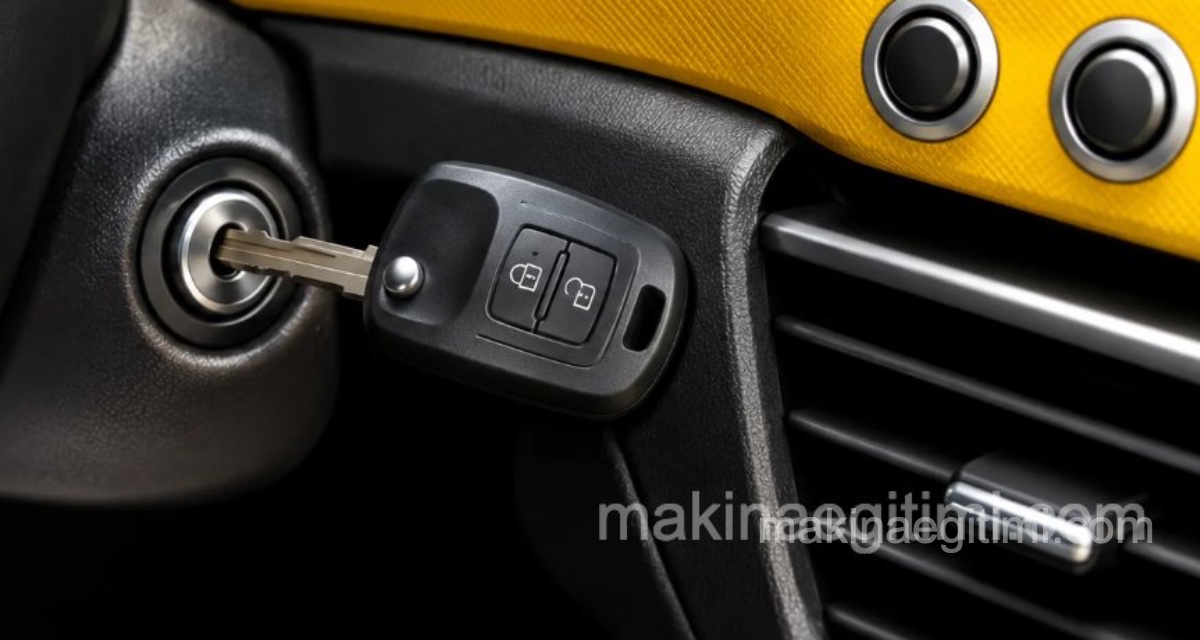
You get in your vehicle, turn the key. The starter motor spins normally, but the engine just won’t start. A situation like this can worry pretty much anyone. Fortunately, this problem doesn’t always point to something big and expensive. Sometimes a simple battery connection issue, or a small problem in the ignition or fuel system, can be what’s keeping the vehicle from starting.
In this article, we’ll cover, in plain language, the most common reasons a vehicle cranks but won’t start, along with the basic checks a driver can do on their own.
Want to first understand how the ignition system works, to get a sense of why the engine isn’t starting? You can check out our article titled “What Is a Vehicle Ignition System, How Does It Work?“
What Does “Cranking” Mean?
Cranking means the starter motor is turning the engine over. In other words;
- You hear the starter motor when you turn the key.
- The engine feels like it’s turning over.
- But the engine doesn’t catch and settle into idle.
In this case, the problem is usually related to fuel, ignition, or the electronic engine management system.
Possible Reasons the Car Cranks But Won’t Start
You May Be Out of Fuel
Let’s start with the simplest possibility. The fuel gauge could be faulty, or there might not be enough fuel left in the tank to run the engine. Especially if the vehicle is parked on a slope, the small amount of remaining fuel in the tank may not be reachable by the pump.
Check the Following:
- Is the fuel gauge working correctly?
- Is there enough fuel in the tank?
The Battery May Be Weak
Even if the starter motor is turning, if the battery can’t supply enough voltage, the engine can struggle to start. Signs that indicate a weak battery:
- Dim headlights
- A dim-looking dashboard display
- The starter turning slower than normal
Corrosion or looseness at the battery terminals can also cause similar problems.
The Ignition System May Be Faulty
In gasoline engines, the spark plugs need to produce a spark for the fuel to burn. If the ignition system can’t do its job, the engine won’t start. The problem could be in one of these parts:
- Ignition coil
- Spark plugs
- Spark plug wires (on vehicles that have them)
- Electronic ignition system
With faults like these, the check engine light will often come on as well.
Fuel Pump Failure
The fuel pump sends fuel from the tank to the engine. If the pump isn’t working, fuel can’t reach the cylinders and the engine won’t start.
Signs of a fuel pump failure:
- You don’t hear the pump when you turn the key to the “on” position.
- The starter motor turns normally, but the engine doesn’t start.
- The vehicle suddenly stalls while driving.
The Fuel Filter May Be Clogged
Dirt and sediment build up in the fuel filter over time. If the filter becomes fully clogged, not enough fuel can reach the engine. In this case;
- The vehicle starts with difficulty.
- The vehicle doesn’t respond well to the throttle.
- Or the vehicle stalls shortly after starting.
Crankshaft Position Sensor Failure
In modern vehicles, the information from the crankshaft position sensor is critical for the engine to run. If this sensor fails, the engine control unit can cut off ignition and fuel injection.
Signs of a crankshaft position sensor failure:
The starter motor turns normally, but the engine never starts at all. Or it starts occasionally and then stalls again. The check engine light is on.
Immobilizer (Vehicle Security System)
In some cases, the problem isn’t mechanical at all — it’s related to the security system. If the key’s chip can’t be read, the vehicle can crank, but the engine will stall within a few seconds, or may not start at all.

If the key icon on the dashboard is flashing, this can be a sign of that.
Fuse or Relay Failure
A fuse belonging to the fuel pump, ignition system, or engine control unit may have blown. This might not be obvious from the outside, but it can prevent the engine from starting. For example, the headlights work, the interior lighting works — the electrical system seems normal — but if a fuse specific to the ignition system has blown, it can be hard to notice this at first. Check it just in case.
Battery Voltage
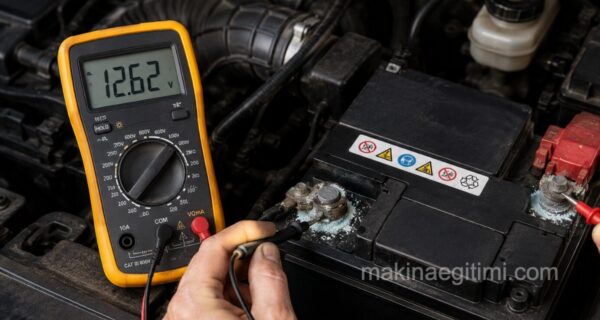
A healthy battery’s voltage should be between 12.4-12.7V with the engine off; below 12V indicates a weak charge.
Starter Motor Current
The starter motor draws a high current of 200-600 amps while cranking; a weak battery can’t meet this demand.
Fuel Pump Sound
Not hearing a 2-3 second hum from the fuel pump when the ignition is turned on can indicate a pump or fuel circuit fault.
What Can You Check as the Driver?
Before calling a mechanic, you can perform these simple checks:

- Make sure there’s enough fuel in the tank. ✅
- Check whether the battery terminals are loose or corroded. ✅
- Look to see whether the check engine light or an immobilizer warning is showing on the dashboard. ✅
- Visually check whether there’s a loose electrical connector in the engine bay. ✅
- Make sure the wrong type of fuel wasn’t put in during your last fill-up. ✅
Beyond these checks, don’t try to work on the ignition system or electronic components yourself.
When Should You Call a Tow Truck?
In the following situations, it’s not a good idea to keep forcing the vehicle to start:
- If the engine won’t start at all despite cranking for a long time.
- If the engine seems to start but immediately stalls.
- If there are serious fault warnings on the dashboard.
- If you notice a burning smell from the engine bay.
- If you notice a fuel leak.
In situations like these, getting professional help is the safest option.
How Can You Prevent Your Vehicle From Failing to Start?
Some simple maintenance habits can prevent problems like these.
- Get your periodic maintenance done on time.
- Have your battery checked regularly.
- Replace spark plugs at the manufacturer’s recommended mileage.
- Don’t neglect the fuel filter.
- Make a habit of using quality fuel.
- Don’t ignore warning lights.
In conclusion;
A vehicle failing to start despite the starter motor turning can stem from many different causes — the fuel system, the ignition system, the battery, sensors, or the electronic security system. The root cause isn’t always a major failure, but figuring out the right diagnosis requires carefully evaluating the symptoms. If the vehicle still won’t start after you’ve done the simple checks, the right approach is to get help from a qualified mechanic, so as not to risk turning it into a bigger problem.
Frequently Asked Questions
The starter motor turning shows that enough power is coming from the battery; the problem is usually in the fuel, ignition, or engine management system. It’s not that the engine can’t turn over on its own — it’s turning, but it isn’t catching.
Even if there’s fuel in the tank, if the fuel pump is faulty or the fuel filter is clogged, fuel can’t reach the engine. In that case, even though the gauge shows full, the engine won’t start because it isn’t getting enough fuel.
Related Posts
 What Is a Vehicle Ignition System, How Does It Work? What Are Its Failures?
  How to Save Fuel in Vehicles
  How Is Car Window Fogging Prevented
  How to Clean Leather Seats. What Should Leather Seats Be Cleaned With?
  What Is an Intake Manifold? Its Job, and Diagnosing a Fault
  Ways to Tell If Your Car Battery Is Dead
  Vehicle Dashboard Warning Lights and Their Meanings, Illustrated
  How to Jump-Start a Battery, Illustrated