
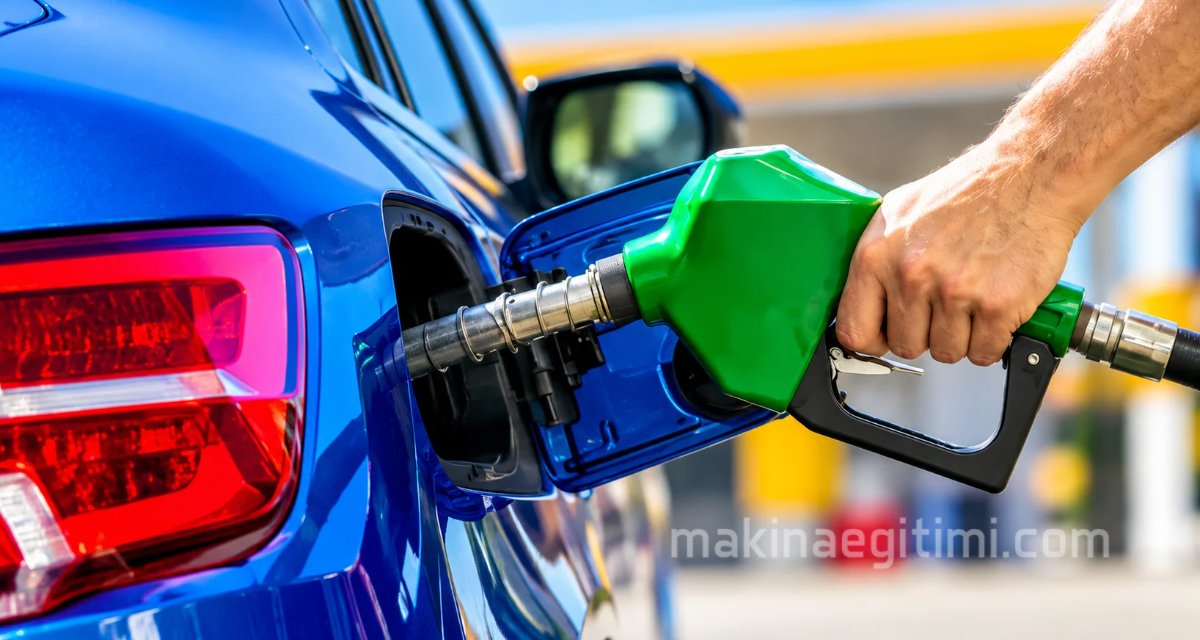
Due to growing environmental concerns, the use of ethanol as an engine fuel or additive is rapidly gaining popularity. Ethanol’s properties closely resemble those of petroleum. It can also be obtained from various plants, making it a renewable fuel.
Properties of Ethyl Alcohol (Ethanol)
Chemically, ethanol, or ethyl alcohol (C2H5OH), is a clear, colorless, flammable liquid commonly used in alcoholic beverages. Ethanol is a type of alcohol produced from plant materials such as corn, wheat, and sugarcane. Ethanol is generally used as a fuel either on its own or blended with gasoline. It has an octane rating of 108, higher than standard gasoline. Because it helps reduce emissions of certain pollutants like carbon monoxide, it’s also used as a gasoline additive. Ethanol is also used in the production of a wide range of products, including chemicals, pharmaceuticals, and personal care products.
Ethanol is an alternative to fossil fuels, and is generally promoted as a “green” energy source because it’s renewable and can be produced from plant materials. However, ethanol production can also have negative environmental effects, such as deforestation and water pollution. Additionally, ethanol has a lower energy content than gasoline, making it less efficient as a fuel.
What Is Ethyl Alcohol Made From?
Ethanol can be produced from petroleum products or from biomass. In the first case, ethylene is the raw material, while in the second case, various plant-based materials serve the purpose. Ethanol obtained from plant-based material is called bio-ethanol. Sugarcane, corn, potatoes, sweet potatoes, and agricultural waste are among the main raw materials for bio-ethanol production. Fermenting this type of plant material yields ethanol.
Terminology of Ethanol Fuels
Worldwide, the automotive industry has adopted a standard terminology, EX, to designate ethanol fuels. Here, E stands for Ethanol. X is a number showing the percentage of ethanol in the fuel by volume. According to this terminology, E10 means a fuel containing 10% ethanol by volume.
Similarly, E50 and E85 refer to fuels containing 50% and 85% ethanol by volume.
Octane Boost
When blended into gasoline, ethanol increases the fuel’s octane rating, helping reduce engine knock.
E10/E85 Blends
Common ethanol fuel blends are E10, containing 10% ethanol, and formulations reaching E85, containing 85%.
Renewable Source
Ethanol is generally obtained through fermentation from agricultural products such as corn or sugarcane.
Advantages of Blending Ethyl Alcohol (Ethanol) into Gasoline
- Ethanol has a higher octane rating than gasoline. So, gasoline containing ethanol reduces the engine’s tendency to knock.
- Ethanol is cheaper compared to gasoline. Therefore, an ethanol blend offers a cheap alternative to gasoline.
- Due to its possible bio-origin, it’s a renewable energy source.
- Since burning ethanol produces less CO and SOx, it helps reduce vehicle pollution.
Disadvantages of Ethanol-Gasoline Blends
- Ethanol’s energy content is lower than gasoline’s (almost 35%). For this reason, vehicles running on ethanol have lower mileage performance.
- Ethanol is inherently corrosive. For this reason, using a higher proportion of ethanol can corrode engine parts.
- Natural rubber dissolves in ethanol. For this reason, if present, natural rubber components need to be replaced with certain special types of rubber.
- Ethanol has a high affinity for water, which leads to “phase separation.” This means that if ethanol-blended gasoline comes into contact with water, the ethanol portion completely separates from the gasoline. This causes two separate water and gasoline layers. This can cause the engine to stall.
Related Questions
Since ethanol contains oxygen in its structure, it helps the fuel burn more completely and efficiently during combustion. More complete combustion means fewer harmful gases like carbon monoxide are formed.
A high octane rating means the fuel is more resistant to early, uncontrolled combustion (knocking) inside the engine. This especially helps high-compression-ratio engines run more safely and efficiently.
Related Posts
 What the Markings on a Car Tire Mean
 How Hydraulic Brakes Work
 What Is a Starter Motor, What Does It Do?
 Main Components and Advantages of Electric Vehicles
 If the Engine Won’t Start, the Reason. Reasons the Engine Won’t Start
 Vehicle Drivetrain: Components, How It Works, and Common Failures
 How to Choose Engine Oil
 What Is the ABS Braking System, What Does It Do, How Does It Work