
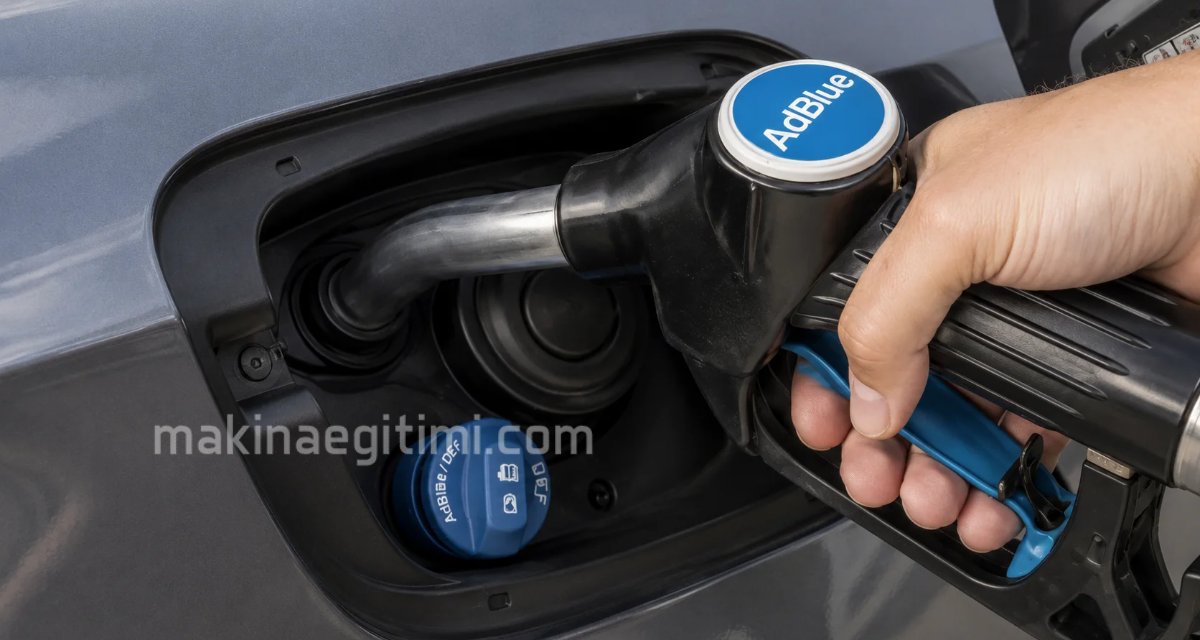
What Is AdBlue
AdBlue is a urea solution used in selective catalytic reduction (SCR) systems to reduce nitrogen oxide emissions in diesel engines. It is injected into the exhaust stream, where it reacts with nitrogen oxides to form water and nitrogen.
AdBlue is the trademark name for the solution, but it’s also known as diesel exhaust fluid (DEF). It’s used in heavy-duty vehicles like trucks and buses, as well as some passenger vehicles equipped with SCR technology.
SCR (selective catalytic reduction system) is an emission control system (similar to EGR) developed to reduce nitrogen oxides (NOx) in exhaust gas. AdBlue is the name of the emission fluid used in this system.

What Is the Composition of AdBlue Fluid?
AdBlue is a urea solution, meaning it essentially consists of urea (NH2CONH2) dissolved in demineralized water. Urea is synthesized from ammonia and carbon dioxide, and the solution is approximately 32.5% urea by weight. The solution must meet the ISO 22241 standard, which specifies AdBlue’s concentration, purity, and physical properties.
The solution generally contains 67.5% deionized water and 32.5% urea, a non-toxic, colorless, and non-flammable liquid, and is stored in a separate tank in the vehicle. Some AdBlue solutions may also contain small amounts of corrosion inhibitor, biocide, and anti-icing additives. To prevent the product from freezing and microbial growth, the solution must be stored and transported at temperatures between -11°C and +38°C.
Urea Concentration
AdBlue is a standardized fluid consisting of 32.5%-pure urea and deionized water (ISO 22241).
NOx Reduction Rate
With the help of AdBlue, the SCR system can reduce NOx emissions by 70-90%.
Freezing Point
AdBlue freezes at around -11°C, which is why most vehicles are designed with a heated tank.
What Does AdBlue Do?
AdBlue is a fluid used to neutralize environmentally harmful NOx gases found in exhaust gases. The SCR system used in heavy-duty diesel vehicles has also started to be used in diesel passenger cars with the introduction of the European Emission Standard Euro 6.

The aqueous urea solution (AdBlue) is sprayed into the hot exhaust gas before it enters the SCR.
This way, the mixture of exhaust gas and AdBlue that enters the SCR is converted into nitrogen and water vapor within the system before being expelled through the exhaust.
AdBlue is a non-toxic solution used to chemically reduce the NOx emissions produced by diesel-fueled vehicles.
What Happens If AdBlue Runs Out?
If the AdBlue level in a vehicle’s SCR system drops below a certain level, the engine’s electronic control unit (ECU) will display a warning message and may switch to “limp home” mode, in which power is limited to protect the engine.
Why Does an AdBlue Warning Appear on the Vehicle’s Dashboard?
This is to prevent the SCR system from operating without enough AdBlue, which could damage the system and potentially cause higher emissions. If the AdBlue level is allowed to drop too low, the vehicle may not be able to start. For this reason, it’s important to regularly check the AdBlue level and refill it when needed, to make sure the SCR system is working properly.
In summary, if AdBlue drops to a critical level, your vehicle will first warn you on the dashboard that the AdBlue level is low. If this AdBlue warning is ignored, once it runs out completely after some time, the vehicle will stop and refuse to start, in order to avoid damaging the system.
Why Should AdBlue Be Kept Clean?
If AdBlue is not stored properly, it can become contaminated, which can lead to many problems. Contaminated AdBlue can damage the SCR system, reducing its effectiveness and potentially causing the engine to enter “limp home” mode, in which power is limited to protect the engine.
In addition, contaminated AdBlue can cause crystallization to form in the system, which can clog the injectors and potentially cause them to fail. To avoid these problems, it’s important to store AdBlue in a clean, dry place, away from direct sunlight and extreme temperatures, and to use it before its expiration date.
Related Questions
AdBlue’s job isn’t to burn fuel — it’s to neutralize the nitrogen oxides produced by combustion. Since this reaction can only occur inside the exhaust gas, within the SCR system, it’s added directly to the exhaust stream.
To comply with emissions regulations, manufacturers design the system to restrict the engine’s performance or prevent it from starting once AdBlue runs out. This is a measure to prevent the driver from neglecting emissions control.
Related Posts
 What Is a Vehicle Ignition System, How Does It Work? What Are Its Failures?
 If the Engine Won’t Start, the Reason. Reasons the Engine Won’t Start
 What Does a Vehicle Rear Spoiler Do?
 Front-Wheel-Drive Vehicles: Advantages and Disadvantages
 What Is a Coilover (Coil Spring Shock Absorber)? What Is It For?
 Why Do Electric Cars Use a Single Gear?
 Engine Lubrication System and Its Parts
 What Is an Intake Manifold? Its Job, and Diagnosing a Fault