
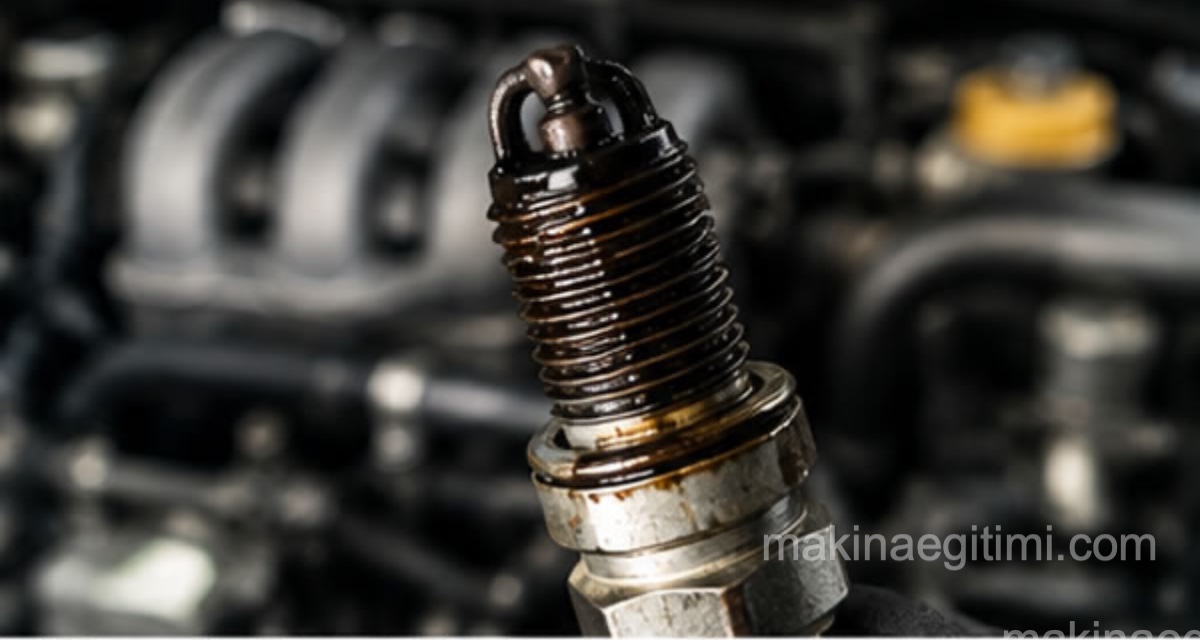
In this article, we’ll give detailed information about spark plug cleaning. For those wondering how spark plug cleaning is done, we’ll cover methods of cleaning spark plugs, cleaning with a spark plug cleaning machine, and cleaning without a machine.
The spark plug’s job is to transmit the high voltage generated by the ignition coil to the combustion chamber, and to ignite the compressed fuel-air mixture via an electric spark between its electrodes.
Spark Plug Cleaning
Spark plug cleaning is important for your vehicle’s engine to fire properly. Over time, problems such as oil fouling occur on spark plugs, and the plug can no longer perform its ignition function properly.
For our article on spark plug oil fouling, see: Spark Plug Oil Fouling. Causes and Symptoms of Spark Plug Oil Fouling
When should spark plugs be checked for cleanliness?
Spark plugs should be checked:
When you have your engine’s ignition timing adjusted,
When you have an engine test done,
When you buy a used vehicle.
The service life of a spark plug is 10,000 km. Newer-type spark plugs (platinum-tipped or iridium) have a much longer service life. Spark plug service lives of up to 80,000-100,000 km are possible.
A spark plug that has been dropped or cleaned should always be checked, and its gap should be measured. A spark plug with cracks or chips in its porcelain insulator should not be used.

What should the spark plug gap be? How is this gap adjusted?
The spark plug gap should be set according to the manufacturer’s catalog value. Generally, the spark plug gap is about 0.8-1 mm. The gap is measured and checked with the help of a feeler gauge.
Cause of Carbon Buildup
Black carbon buildup on spark plugs is generally caused by a rich fuel mixture or the use of low-quality fuel.
Wire Brush Risk
Cleaning a spark plug with a wire brush can cause microscopic damage to the electrode surface, harming ignition performance.
Replacement Recommendation
For standard spark plugs, it’s recommended to replace them at a certain mileage (usually 20,000-30,000 km) rather than clean them.
Methods of Cleaning Spark Plugs

What are spark plugs cleaned with, and how?
Spark plugs are cleaned in a spark plug cleaning machine by blasting compressed air and abrasive grit. If you don’t have a spark plug cleaning machine, it’s done through manual cleaning, the details of which we explain below.
How Is Spark Plug Cleaning Done
Above, you can see a video about spark plug cleaning. The video covers the details we’ll explain below.

If there’s excessive carbon buildup, a propane torch can be used for spark plug cleaning
The spark plug is held upright so debris falls away.
If there’s excessive carbon deposit on the spark plugs, the deposits can be burned off with a propane torch or something similar. The plug’s electrode is cleaned of carbon deposits with fine sandpaper.
Never bend the ground electrode — the spark plug gap must not be disturbed.

Another method besides burning is cleaning the deposits with a brush. The fouled areas are cleaned with a clean toothbrush or a wire brush.

Spark plugs can be cleaned with spark plug cleaning fluid, or if you don’t have that, with injector (carburetor) cleaning fluid, or with alcohol or gasoline, or with brake-parts cleaner spray (widely available in industrial supply shops), again using a clean toothbrush.

After the deposits are cleaned off, the plug is wiped with a clean, dry cloth. If you have one, it can be dried with a hair dryer. Again, if you have access to one, air from a compressor can also be used.
Related Questions
The layer of oil on the spark plug weakens or entirely prevents the spark that needs to form between the electrodes. This leads to the fuel-air mixture not igniting properly, and as a result, the engine running weakly or roughly.
These materials withstand much higher temperature and wear than the metal used in standard spark plugs. This durability makes the electrode tip erode more slowly, allowing the plug to keep doing its job for far more kilometers.
Related Posts
 Car Cranks But Won’t Start: What Could Be the Cause?
 Piston Ring Wear in an Engine
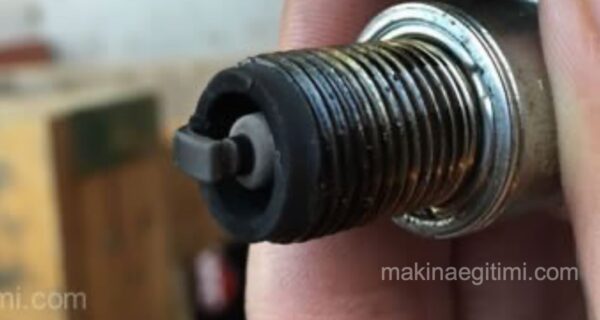 Spark Plug Lifespan. How Do You Know When Its Time to Replace It?
 How to Tell a Shock Absorber Has a Fault. Shock Absorber Fault Diagnosis
 Why Does an Engine Misfire? Engine Misfire Problem
 How to Choose Engine Oil
 Inspection and Replacement Times for Vehicle Parts
 If the Engine Won’t Start, the Reason. Reasons the Engine Won’t Start