
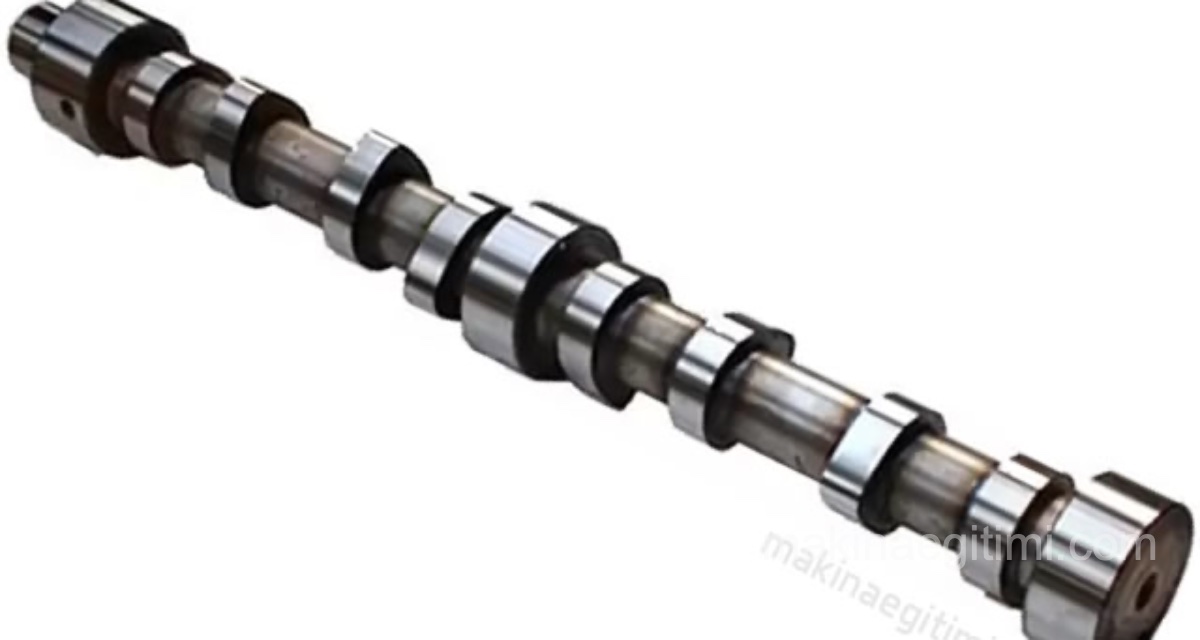
In this article, in the vehicle maintenance and repair section, we’ll talk about camshaft failures. We’ll cover why camshaft failures occur, what causes them, and how they can be prevented.
What Are Camshaft Failures
Since the camshaft is a solid steel component, it is prone to wear or breakage. In most engines, other parts will wear out before the camshaft does. Still, there are a few common camshaft problems that can occur.

Worn camshaft lobes won’t open the valves as much as intended, which will cause a drop in engine performance and misfiring in the cylinders. As a result, this will also lead to higher emissions and random misfires due to insufficient fuel pressure.
Camshaft damage is also one of the types of camshaft failure. This can result from using engine oil with the wrong viscosity. We’re talking about a long path from the oil pump all the way up to the top of the cylinder head. On cold mornings when the oil is thick, it can take a few seconds for adequate oil pressure to reach inside the cam. For this reason, most vehicle manufacturers recommend using 5W-30 oil instead of 10W-30 or 10W-40 for driving in cold weather.

As you can see in the image above, the camshaft can also break. While this kind of breakage seems impossible under normal conditions, the failure of another part triggered a chain of failures that broke the camshaft.

As a result of the timing belt breaking, the valve timing is thrown off, and a valve that should normally be up stays down.

And the valve bends. Since most of the force coming from the piston is absorbed by the valve, this situation doesn’t affect the camshaft very much.

However, in engine types where the valves operate perpendicular to the piston, when the piston strikes the valve, the valve won’t bend, and it will transmit all the force coming from the piston straight up to the camshaft. In this case, the camshaft will break.
How to Prevent Camshaft Failures
In the example above, we mentioned that a broken timing belt can lead to camshaft failure. You can check out our article covering in detail what happens if a timing belt breaks, SEE: What happens if a timing belt breaks. For this reason, absolutely do not neglect the maintenance schedule for engine parts. Don’t skip your vehicle’s periodic maintenance.
By following the manufacturer’s recommendations regarding oil change intervals, oil type, and oil viscosity, preventing the engine from overheating, and performing regular engine oil changes with quality engine oil, you can prevent camshaft failures.
Insufficient Lubrication
One of the leading causes of camshaft failures is excessive friction caused by insufficient or dirty engine oil.
Timing Belt Effect
A timing belt with the wrong tension can throw off the camshaft’s synchronization, leading to serious engine failures.
Abnormal Noise Symptom
A ticking noise coming from the camshaft usually indicates bearing wear or a lubrication problem.
Related Questions
Worn lobes can no longer open the valves as much as designed. This insufficient opening prevents enough air-fuel mixture from entering the cylinders, reducing the engine’s power and efficiency.
The camshaft is one of the points farthest from the oil pump and the last to receive lubrication. Using the wrong, too-thick oil delays it from reaching this point fast enough, which can cause the shaft to wear from inadequate lubrication.
Related Posts
 Engine Knocking Noise
 How Is Spark Plug Cleaning Done. Ways to Clean Spark Plugs
 What Is a Diesel Particulate Filter Fault. How Is It Detected
 Preventing and Removing Mold Inside a Vehicle
 When Is Shock Absorber Replacement Time?
 Fuel Pump Failure Symptoms
 How to Clean Leather Seats. What Should Leather Seats Be Cleaned With?
 Why Does the Battery Warning Light Come On? Signs of a Battery Fault