
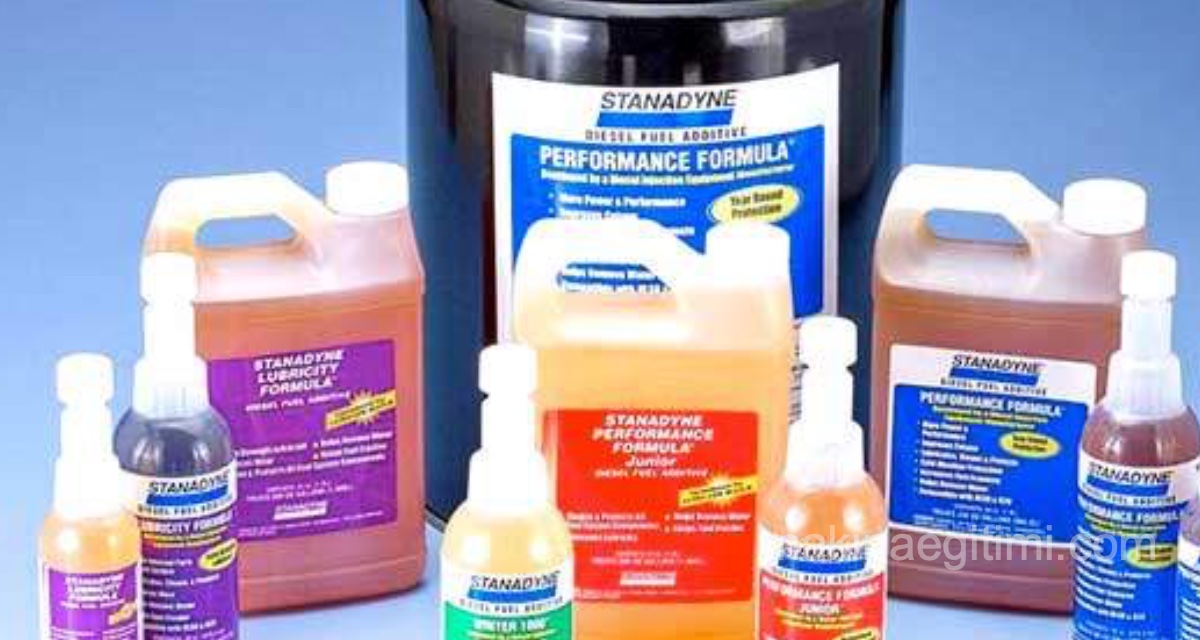
Do you use a fuel additive for your engine? A question many people wonder about is this: Is it necessary to use a fuel additive? Do fuel additives actually work? Do they really deliver what they promise? In this article, for those wondering what fuel additives are for, we’ll take a look at the benefits of fuel additives.

What Are Fuel Additives For?
Fuel additives go by different names — fuel system cleaner, injector cleaner, carburetor cleaner, diesel treatment, and so on — but they all share the same purpose: improving your vehicle’s engine performance. So what are fuel additives for?
Your fuel system is responsible for delivering the right amount of gasoline and oxygen to your engine through a number of fuel injector nozzles. If the fuel system isn’t cleaned, one or more of these nozzles will clog, meaning the ratio of gasoline to oxygen won’t be optimal. As a result, the engine won’t behave the way it should.

Yes, there’s a lot of confusion about whether fuel additives actually work. If you go by TV commercials, using a fuel additive seems almost mandatory. But we know that ads aren’t always honest or consumer-friendly. The truth is: if your car is new, using a fuel additive is unnecessary. The same is true for used cars that are well maintained and running well.
However, if your car has been neglected, poorly maintained, or ignored, fuel additives can be beneficial.
Benefits of Fuel Additives
The benefits of fuel additives are that they help solve problems like carbon and soot buildup between engine parts. They’re made to clean and lubricate engine components (including piston rings). When used in the right amount, what they can do is bring your car’s engine as close as possible to how it was when you first bought it.

Yes, in old, poorly maintained vehicles, the benefits of fuel additives are noticeable to a meaningful degree. They improve vehicle performance. They provide relatively better fuel economy. They improve driving quality. They help alleviate problems like engine noise and performance loss caused by grime and friction.
Injector-Cleaning Effect
Fuel additives can improve injection efficiency by dissolving deposits that build up in the injectors.
Octane-Boosting Additives
Some fuel additives help reduce engine knock by raising the octane rating of the gasoline.
Recommendation for Regular Use
For fuel additives to be effective, regular use at specific intervals is generally recommended.
Which Fuel Additive Should You Use?
The truth is, while some fuel additives promise everything, like an all-inclusive resort, if you go with this type — the “all-in-one” kind that claims to work on nearly everything in your engine — you won’t notice any visible improvement.
If you choose a specific, quality fuel additive designed to work on just one problem, you’ll have better luck here. Here’s what to look for.
For example, if you want a fuel treatment that can prevent fuel separation and engine corrosion (especially if your car has been sitting idle for a long time), choose Fuel Stabilizers.
If you need/want an additive that can reduce hard starting, especially if you’re looking for something to keep your car’s diesel fuel filters from clogging when it’s cold, turn to Anti-Gel Diesel Additives.

Clogged fuel injector nozzles reduce fuel efficiency in the engine. You may experience problems like an irregular idle, or in more advanced cases the engine failing to hold an idle at all, reduced power, and difficulty reaching higher speeds.

If you want a treatment that will prevent (and stop) your fuel injectors from sticking, go with Fuel Injector Cleaners.

If you want an additive that can raise your car’s fuel octane rating while lubricating the valves, choose an Octane Booster type additive.
Choosing special-purpose fuel additives like these is far more effective than the “all-in-one” type additives currently on the market. Follow the instructions carefully, make sure you only put the recommended amount in the tank, and check your car’s owner’s manual whenever in doubt.
Does a Fuel Additive Save Gas?
Watch out for additives that claim they can increase fuel mileage. Some vehicle fuel additives claim to significantly increase your vehicle’s fuel mileage. But this is mostly just fiction.
These types don’t actually improve fuel efficiency. At most, what they can do is clean out clogged engine parts and help keep them clean. This lets the engine perform the way it’s supposed to, and as a result, ultimately improves fuel efficiency. So this type of additive doesn’t perform miracles. What they do is clean out oil, dirt, dust particles, and rust trapped between the engine’s fuel system components. As a result, this will improve performance in old, poorly maintained engines. Engine noise caused by friction will also decrease.
If asked whether you should use a fuel additive or focus on ideal vehicle maintenance, we’d say: proper, consistent engine maintenance. Most of the time, the effectiveness of these chemicals is really just a side effect of having a fuel-efficient vehicle. If you’re a smart driver who knows how to save fuel, the fuel-saving techniques you’ll apply are far more effective than what these additives claim in their ads.
For our article on saving fuel, see: How to Save Fuel
Perhaps the best thing you can do is use the money you’d spend on another bottle of additive to pay for your car’s regular maintenance and next service check instead. Follow your car’s maintenance schedule regularly. Know which part needs maintenance or replacement, and when. Have your service checks done regularly. This is far better than adding chemicals your car may not have needed in the first place.
In this article in the vehicle maintenance section, we tried to inform drivers curious about what fuel additives are for. Looking forward to meeting you in future articles.
Related Questions
In these vehicles, significant grime may have built up in the injectors and fuel system over time. The additive cleans out these deposits and produces a noticeable improvement in performance, while the difference is much smaller in a system that’s already clean.
A clogged nozzle prevents fuel and air from being delivered to the engine in the correct ratio. This imbalance keeps the engine from achieving the optimal combustion it needs, leading to power loss or rough running.
Related Posts
 Car Cranks But Won’t Start: What Could Be the Cause?
 Is It Harmful to Drive Off Without Warming Up the Engine?
 How to Check Radiator Coolant
 Information About Vehicle AC Maintenance
 Why Does an Engine Develop an Oil Leak?
 If the Engine Won’t Start, the Reason. Reasons the Engine Won’t Start
 How Is Engine Oil and Oil Filter Change Done?
 Diesel DPF Problems Explained: Why Short Trips Kill Your Particulate Filter