Close Menu
  • MAKİNELER ve İMALAT
    • Tools & Equipment
    • Computer-Aided Drawing
    • CAD/CAM Education
    • CNC Machine Programming
    • Casting Technologies
    • Electrical & Electronics Technologies
    • Hydraulics & Pneumatics
    • Manufacturing Processes
    • Manufacturing Technologies
    • Occupational Safety
    • Mold & Die Design
    • Solid Modeling
    • Welding Technology
    • Machine Elements
    • Mechanical Trade Drawing
    • Materials Science
    • Automotive & Vehicle Technologies
    • Robotics Technologies
    • Health Technologies
    • Defense & Aerospace Technologies
    • Descriptive Geometry
    • Technical Drawing
    • Software & Hardware Technologies
    • Innovative Manufacturing Methods
  • TEKNOLOJİ ve YAŞAM
    • OTOMOBİLLER ve TAŞIT
      • Vehicle & Engine Knowledge
      • Safe Driving
      • Sürüş Destek Sistemleri
    • Genel Kültür
      • Movies & TV Shows
      • Görsel ve Grafik Sanat
      • Books & Literature
      • Music
      • Sports
      • History
      • History of Technology
    • GÜNDELİK YAŞAM TEKNOLOJİLERİ
    • Hobbies & Entertainment
    • Internet Technologies
    • Health
    • Mobile Technologies
Makine Eğitimi
  • Machines & Manufacturing
    Machine Elements
    Hydraulics & Pneumatics
    Technical Drawing
    Computer-Aided Design & Manufacturing
    Basic Manufacturing Processes
    Manufacturing Processes
    Industry Technologies
    Other Technical Courses
    Motion & Power Transmission
    Simple Machines
    Chains & Sprockets
    Shafts & Journals
    Gears
    Cams
    Couplings
    Belts & Pulleys
    Springs
    Bearings
    Keys
    Fastening Joining
    Retaining Rings
    Screws, Bolts & Nuts
    Cotter Pins
    Flanges
    Welding
    Rivets
    Pins & Bolts
    Washers
    Calculators
    Gear Ratio Calculator
    Spring Constant Calculator
    Belt Pulley Ratio Calculator
    Other Machine Elements
    Slides & Linear Guides
    Brakes
    Flywheels
    Clamps
    Shock Absorbers
    Gaskets & O-Rings
    Seals & Sealing Elements
    Hydraulics
    Introduction to Hydraulics & Principles
    Hydraulic Systems & Applications
    Accumulators
    Filters
    Motors
    Pumps
    Valves
    Pneumatics
    Introduction to Pneumatics & Principles
    Pneumatic Systems & Applications
    Pneumatic Circuit Components
    Valves
    Cylinders
    Silencers
    Motors
    Compressors
    Dryers
    Conditioning Units
    Common Topics & Maintenance
    Hydraulic & Pneumatic Maintenance
    Study Notes, Exams & Tests
    Technical Drawing
    Introduction to Technical Drawing
    Geometric Drawings
    Perspective & Projection
    Orthographic Views
    Dimensioning
    Sectioning
    Assembly & Detail Drawings
    Tolerances
    Surface Finish Symbols
    Mechanical Engineering Drawing
    Screws, Bolts & Nuts
    Pulley Drawings
    Gear Drawings
    Shafts & Journals
    Bearing Drawings
    Pins & Bolts
    Spring Drawings
    Welds in Technical Drawing
    Washers
    Cotter Pins
    Technical Drawing Exercises
    Mechanical Drawing Exercises
    Gear Exercises
    View Extraction Exercises
    Pulley Exercises
    Pin & Bolt Exercises
    Threaded Fastening Exercises
    Descriptive Geometry
    Computer-Aided Drawing
    AutoCAD Drawing Lessons
    Solid Modeling & Animation
    Solid Model Drawing Files
    Solid Model Assembly Examples
    Solid Model Drawing Lessons
    3D CAD Software Reviews
    Solid Modeling Exercises
    CNC Programming
    CAM
    Measurement & Inspection
    Dial Indicators
    Calipers
    Gauges
    Micrometers
    Materials Science
    Steels
    Cast Iron
    Aluminum
    Plastics
    Material Testing & Hardness Measurement
    Occupational Safety
    Workshop Safety
    Safety When Working With Electricity
    Machine Safety Rules
    Hand Operations
    Filing
    Marking
    Cutting Operations
    Reaming
    Tapping
    Threading With a Die
    Drill Bit Sharpening
    Working With Machines
    Basic Turning Operations
    Basic Milling Operations
    Shaper Machine
    Machining
    Turning
    Milling
    Grinding
    Innovative Manufacturing Methods
    EDM (Electrical Discharge Machining)
    Laser Machining
    Waterjet Machining
    3D Printing
    3D Scanners
    Welding
    Rolling
    Casting
    Mold & Die Design
    Mechanical & Hydraulic Presses
    Blanking & Piercing Dies
    Bending Dies
    Drawing Dies
    Plastic Injection Molds
    Extrusion Dies
    Compound Dies
    Progressive Dies
    Blow Molds
    Spinning Dies
    Spray Molds
    Manufacturing of Machine Parts
    Automotive & Vehicle Technologies
    Motor Vehicle Manufacturing
    Raw Material Production
    History of Technology
    Health & Medical Technologies
    Defense & Aerospace
    Robotics Technologies
    Software & Hardware Technologies
    Mechanics - Strength of Materials
    Physics Topics
  • Technology & Life
    Hobbies & Entertainment
    Sports
    Music
    Vehicle & Engine Knowledge
    Vehicle Maintenance & Repair
    Safe Driving
    Driver Assistance Systems
    History
    Movies & TV Shows
    Books & Literature
    Computers & Internet
    Computer Tips
    Software Reviews
    Hardware & Peripherals
    Practical & Safe Internet Use
    Visual & Graphic Art
    Mobile Technologies
    Travel
    Science
    Health
    First Aid Knowledge
    Everyday Technologies
Makine Eğitimi
Home»Innovative Manufacturing Methods»Where Are 3D Scanners Used
29 August 2026

Where Are 3D Scanners Used

Where Are 3D Scanners Used

Article topic: What are the applications of 3D scanners. Where are they used. In which fields is 3D scanning preferred? We’ll cover these topics.

  • Applications of 3D Scanners
    • Reverse Engineering
    • The Medical Industry
    • Forensics and Crime Scene Investigation
    • Archaeology and Cultural Heritage Preservation
    • 3D Effects for Films and Games – Virtual Reality
      • Creating a Digital Game Character with a 3D Scanner
  • Related Questions

3D scanners are used in a wide range of industries, from manufacturing to healthcare to VR. Restoring heavy machinery, performing quality control on mechanical parts, designing customized prosthetic devices, creating visual effects for films, developing characters for video games — high-precision 3D physical object models are at the center of all such projects.

Applications of 3D Scanners

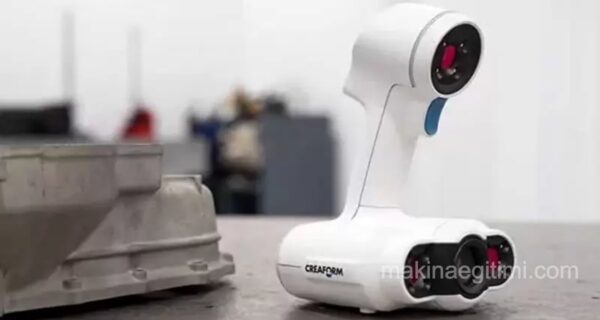
Innovative 3D scanners are widely used in industrial design, engineering, and manufacturing due to their ability to capture the necessary data quickly and precisely.

Powerful 3D scanning solutions, useful at every stage of product design, testing, development, launch, and post-launch maintenance, significantly speed up workflow, help avoid costly errors, and increase productivity.

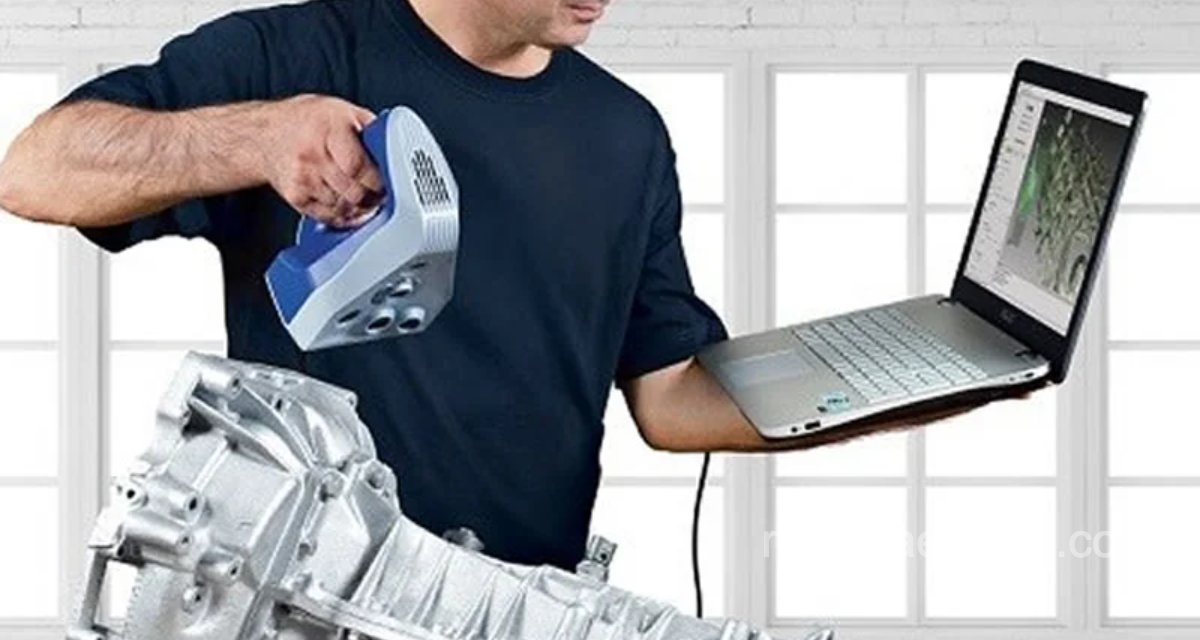
portable 3D scanner

Reverse Engineering

Reverse engineering is critically important for many industries, such as manufacturing, automotive, aerospace, and, more broadly, healthcare.

In the video below, a wireless handheld 3D scanner was used to digitally capture a Volvo’s undercarriage in 10 minutes. The 3D model was then transferred to Geomagic Design X, and the vehicle’s exhaust system was redesigned in under an hour.

The Medical Industry

With the help of 3D scanning, healthcare professionals can now perform a complete body scan effortlessly and quickly

Creating custom healthcare solutions like back braces, implants, prosthetics, and even personalized wheelchairs is also faster and easier. The necessary data can be easily captured by a 3D scanner, processed in specialized 3D software, and then sent for production via a milling machine or 3D printer.

applications of 3D scanners - doctor
applications of 3D scanning

When 3D scanners are used from the start of prosthetic arm and leg design, prosthetics that best suit the person’s body and preferences can be produced.

use of 3D scanners in medicine and dentistry

One of the applications of 3D scanners is dentistry, in areas such as designing prosthetics and implants suited to the patient’s anatomical structure.

Forensics and Crime Scene Investigation

In forensics, 3D scanning is used for various forensic applications, such as capturing an entire crime scene or specific parts of it before it’s collected as photographic evidence.

3D scanning is also excellent for digitizing recovered evidence, and for creating simulations where numerous crime scenarios can be reconstructed and analyzed, and so on.

3d scanner forensics crime scene investigation

Archaeology and Cultural Heritage Preservation

Other fields applying 3D scanning technologies across many workflows include archaeology and heritage preservation.

From reconstructing items from a small fragment found during an excavation, to creating online museums with hundreds of exhibits, 3D scanning technologies are fundamentally changing the way we preserve, exhibit, and learn about archaeology and heritage preservation.

where are 3D scanners used

3D Effects for Films and Games – Virtual Reality

Used for creating visually striking special effects in films, developing immersive, ultra-realistic VR (virtual reality) applications, and even designing a beautiful evening gown, 3D scanning helps turn dreams into reality in an entirely new way.

For example, say you’re a 3D game designer and you want to adapt a real-life character into the game. A 3D scanner will make your job significantly easier.

where are 3d scanners used

Creating a Digital Game Character with a 3D Scanner

Thanks to 3D scanners, we can bring a real-life character into the digital world, turning them into a hero of the gaming world.

A video explaining how to make a simple game with a 3D scanner (above)

Reverse Engineering


3D scanners are frequently used in reverse engineering to create CAD data for a discontinued part.

Use for Quality Control


In industry, 3D scanning is used in quality control to verify that manufactured parts meet design tolerances.

Digitizing Cultural Heritage


3D scanning technology is also used by museums to create digital archives of historical artifacts and sculptures.

Related Questions

An old or broken part with no technical drawing on hand can be scanned and turned into a digital model. Through this model, producing or improving the part becomes possible again.

By scanning the relevant area of a patient’s body, a prosthetic or orthopedic device can be designed with dimensions specific to that exact person. This provides a much better fit than standard manufacturing.

Related Posts

Applications of Lasers Applications of Lasers 3D printer with filament spools and printed parts beside a piggy bank, coin stacks and a downward green arrow Tips for Reducing 3D Printing Costs Lazer Kaynağı, Özellikleri ve Çalışma Prensibi Laser Welding, Its Properties and Working Principle Lazer Kaynağının Avantaj ve Dezavantajları Advantages and Disadvantages of Laser Welding Eklemeli İmalat (3D Baskı) Nedir? Yöntemleri ve Kullanım Alanları What Is Additive Manufacturing (3D Printing)? Methods and Applications What Is 3D Scanning 3D Scanning – What Is 3D Scanning? Su Jeti Neyi Kesebilir Neyi Kesemez? What Can a Waterjet Cut? What Can It Not Cut? What Is Sinker EDM, How Does It Work? What Is Sinker EDM, How Does It Work. Where Is It Used
3D Scanners
Share. Facebook Twitter WhatsApp Tumblr Email Telegram Copy Link

Leave A Reply Cancel Reply

How Does a Vehicle’s Charging System Work? Components, Jobs, and Failures
What Is a Timing Belt? What Does It Do?
  • Contact
  • Terms of Service
  • Privacy & Cookie Policy

Type above and press Enter to search. Press Esc to cancel.