Close Menu
  • MAKİNELER ve İMALAT
    • Tools & Equipment
    • Computer-Aided Drawing
    • CAD/CAM Education
    • CNC Machine Programming
    • Casting Technologies
    • Electrical & Electronics Technologies
    • Hydraulics & Pneumatics
    • Manufacturing Processes
    • Manufacturing Technologies
    • Occupational Safety
    • Mold & Die Design
    • Solid Modeling
    • Welding Technology
    • Machine Elements
    • Mechanical Trade Drawing
    • Materials Science
    • Automotive & Vehicle Technologies
    • Robotics Technologies
    • Health Technologies
    • Defense & Aerospace Technologies
    • Descriptive Geometry
    • Technical Drawing
    • Software & Hardware Technologies
    • Innovative Manufacturing Methods
  • TEKNOLOJİ ve YAŞAM
    • OTOMOBİLLER ve TAŞIT
      • Vehicle & Engine Knowledge
      • Safe Driving
      • Sürüş Destek Sistemleri
    • Genel Kültür
      • Movies & TV Shows
      • Görsel ve Grafik Sanat
      • Books & Literature
      • Music
      • Sports
      • History
      • History of Technology
    • GÜNDELİK YAŞAM TEKNOLOJİLERİ
    • Hobbies & Entertainment
    • Internet Technologies
    • Health
    • Mobile Technologies
Makine Eğitimi
  • Machines & Manufacturing
    Machine Elements
    Hydraulics & Pneumatics
    Technical Drawing
    Computer-Aided Design & Manufacturing
    Basic Manufacturing Processes
    Manufacturing Processes
    Industry Technologies
    Other Technical Courses
    Motion & Power Transmission
    Simple Machines
    Chains & Sprockets
    Shafts & Journals
    Gears
    Cams
    Couplings
    Belts & Pulleys
    Springs
    Bearings
    Keys
    Fastening Joining
    Retaining Rings
    Screws, Bolts & Nuts
    Cotter Pins
    Flanges
    Welding
    Rivets
    Pins & Bolts
    Washers
    Calculators
    Gear Ratio Calculator
    Spring Constant Calculator
    Belt Pulley Ratio Calculator
    Other Machine Elements
    Slides & Linear Guides
    Brakes
    Flywheels
    Clamps
    Shock Absorbers
    Gaskets & O-Rings
    Seals & Sealing Elements
    Hydraulics
    Introduction to Hydraulics & Principles
    Hydraulic Systems & Applications
    Accumulators
    Filters
    Motors
    Pumps
    Valves
    Pneumatics
    Introduction to Pneumatics & Principles
    Pneumatic Systems & Applications
    Pneumatic Circuit Components
    Valves
    Cylinders
    Silencers
    Motors
    Compressors
    Dryers
    Conditioning Units
    Common Topics & Maintenance
    Hydraulic & Pneumatic Maintenance
    Study Notes, Exams & Tests
    Technical Drawing
    Introduction to Technical Drawing
    Geometric Drawings
    Perspective & Projection
    Orthographic Views
    Dimensioning
    Sectioning
    Assembly & Detail Drawings
    Tolerances
    Surface Finish Symbols
    Mechanical Engineering Drawing
    Screws, Bolts & Nuts
    Pulley Drawings
    Gear Drawings
    Shafts & Journals
    Bearing Drawings
    Pins & Bolts
    Spring Drawings
    Welds in Technical Drawing
    Washers
    Cotter Pins
    Technical Drawing Exercises
    Mechanical Drawing Exercises
    Gear Exercises
    View Extraction Exercises
    Pulley Exercises
    Pin & Bolt Exercises
    Threaded Fastening Exercises
    Descriptive Geometry
    Computer-Aided Drawing
    AutoCAD Drawing Lessons
    Computer-Aided Drawing Exams
    Solid Modeling & Animation
    Solid Model Drawing Files
    Solid Model Assembly Examples
    Solid Model Drawing Lessons
    3D CAD Software Reviews
    Solid Modeling Exercises
    CNC Programming
    CAM
    Measurement & Inspection
    Dial Indicators
    Calipers
    Gauges
    Micrometers
    Materials Science
    Steels
    Cast Iron
    Aluminum
    Plastics
    Material Testing & Hardness Measurement
    Occupational Safety
    Workshop Safety
    Safety When Working With Electricity
    Machine Safety Rules
    Hand Operations
    Filing
    Marking
    Cutting Operations
    Reaming
    Tapping
    Threading With a Die
    Drill Bit Sharpening
    Working With Machines
    Basic Turning Operations
    Basic Milling Operations
    Shaper Machine
    Machining
    Turning
    Milling
    Grinding
    Innovative Manufacturing Methods
    EDM (Electrical Discharge Machining)
    Laser Machining
    Waterjet Machining
    3D Printing
    3D Scanners
    Welding
    Rolling
    Casting
    Mold & Die Design
    Mechanical & Hydraulic Presses
    Blanking & Piercing Dies
    Bending Dies
    Drawing Dies
    Plastic Injection Molds
    Extrusion Dies
    Compound Dies
    Progressive Dies
    Blow Molds
    Spinning Dies
    Spray Molds
    Manufacturing of Machine Parts
    Automotive & Vehicle Technologies
    Motor Vehicle Manufacturing
    Raw Material Production
    History of Technology
    Health & Medical Technologies
    Defense & Aerospace
    Robotics Technologies
    Software & Hardware Technologies
    Mechanics - Strength of Materials
    Physics Topics
  • Technology & Life
    Hobbies & Entertainment
    Sports
    Music
    Vehicle & Engine Knowledge
    Vehicle Maintenance & Repair
    Safe Driving
    Driver Assistance Systems
    History
    Movies & TV Shows
    Books & Literature
    Computers & Internet
    Computer Tips
    Software Reviews
    Hardware & Peripherals
    Practical & Safe Internet Use
    Visual & Graphic Art
    Mobile Technologies
    Travel
    Science
    Health
    First Aid Knowledge
    Everyday Technologies
Makine Eğitimi
Home»Automotive & Vehicle Technologies»Anti-Pinch Electric Vehicle Windows
30 August 2026

Anti-Pinch Electric Vehicle Windows

anti-pinch window

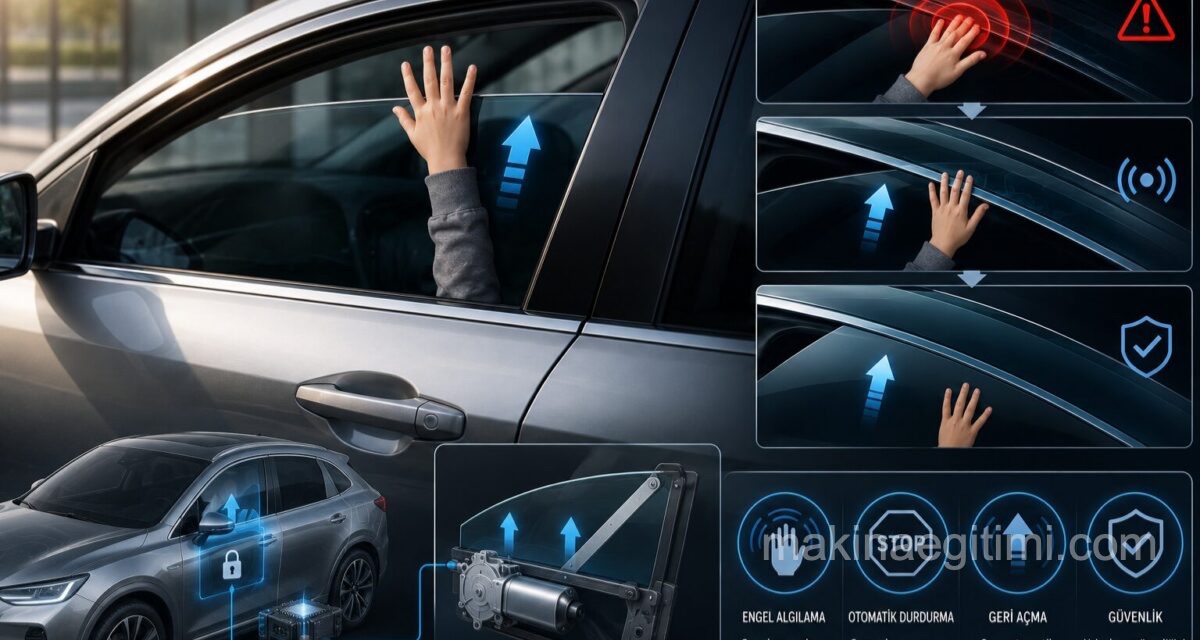
Anti-pinch technology is a safety system used in the power windows of modern vehicles. A power window is a window that uses an electric motor to operate. As the name suggests, this technology prevents the power window from closing accidentally. If the system detects any obstacle in the window’s path, it prevents the window glass from moving further upward. This way, potential injuries to passengers are prevented.

  • Why Anti-Pinch Windows Became Necessary
  • How Does Anti-Pinch Technology Work?
  • Video of Anti-Pinch Technology in Action
  • Related Questions

Why Anti-Pinch Windows Became Necessary

First of all, power windows are becoming very popular today, and you’ll find them very commonly even in budget vehicles. As these windows’ popularity began to increase, some deadly safety concerns about their use came into focus. It all started with a series of child strangulation cases caused by the use of power windows.

anti-pinch window

Children generally prefer to watch the outside through the car window, and for this reason try to stick their neck or hands out of it. So in such a situation, if anyone accidentally operates the window switch, the window begins to close, causing the child to be strangled or injured. The risk also arises in power windows programmed to work without even the switch being pressed. To avoid this kind of mishap, engineers invented anti-pinch technology.

Current Detection Method


Anti-pinch windows detect that an obstacle has been encountered by sensing a sudden increase in motor current.

Automatic Retraction


When an obstacle is detected, the window automatically lowers a few centimeters to prevent pinching.

Legal Requirement


In many vehicles manufactured in Europe, anti-pinch window systems have become mandatory under safety standards.

How Does Anti-Pinch Technology Work?

In a window equipped with anti-pinch technology, the electric motor is fitted with a sensor that can detect the resistance force acting against the window’s movement. As soon as the motor detects an obstacle, the winding process immediately stops and begins operating in the opposite direction. As a result, power windows with this technology work in a way that prevents any injury to the passenger.

In many countries around the world, the use of anti-pinch technology is mandatory.

Video of Anti-Pinch Technology in Action

Related Questions

The system continuously monitors the power the window motor normally draws. When the window hits an obstacle, the motor senses more resistance than expected; this sudden change is treated as a sign of an obstacle, and the window is stopped.

Children may stick an arm or their neck out while looking out of the car window. If the window is closed accidentally, this can lead to serious injury, which is why the system was developed to eliminate this risk.

Related Posts

LED headlight technology in vehicles Features and Advantages of LED Headlights Fuel Cell Electric Vehicles (FCEV) Fuel Cell Electric Vehicles (FCEV) what is an ivt transmission Hyundai IVT – Intelligent Variable Transmission Technology robots and automobile production Robotic Welding Applications on the Automotive Assembly Line robots and automobile production How Are Robotic Welding Cells Used in Automotive Production? 4100 AC mega mining shovel walkthrough MEGA MACHINES – 4100 AC Walkthrough modern agricultural machinery State-of-the-Art High-Efficiency Agricultural Machinery how the adaptive braking system works What Is the Adaptive Braking System. How Does It Work
Share. Facebook Twitter WhatsApp Tumblr Email Telegram Copy Link

Leave A Reply Cancel Reply


Anti-Pinch Electric Vehicle Windows
The ‘Mosts’ of Olympic History
  • Contact
  • Terms of Service
  • Privacy & Cookie Policy

Type above and press Enter to search. Press Esc to cancel.