
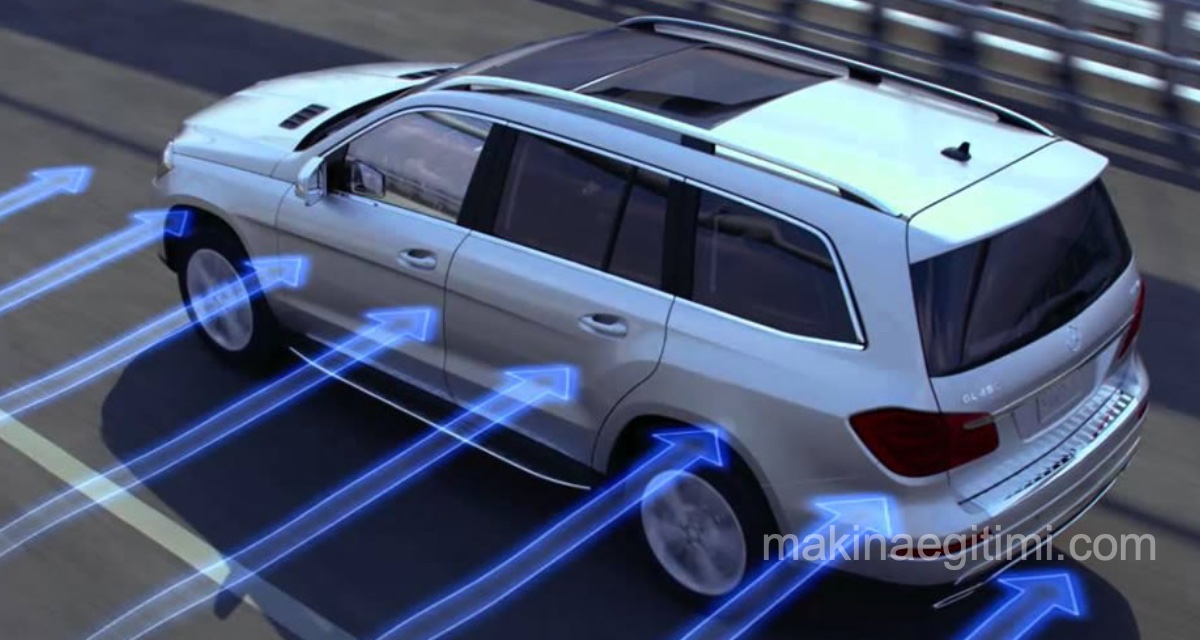
Crosswind Assist, or side wind assist, is a system found in some newer-generation vehicles. It prevents the vehicle from losing control and drifting due to a sudden, powerful gust of wind. In this article, we’ll cover the following topics:
What Does Crosswind Assist Do
You’ll generally observe that vehicles traveling at high speed are quite sensitive to crosswinds. For this reason, there’s a chance the driver could lose control of the vehicle. You’ll experience this more often when the vehicle is on a narrow bridge, or when a larger vehicle, like a truck, passes a smaller one.

Your vehicle can drift out of its lane due to large wind pressure coming from the side. Leaving your lane naturally increases the chance of an accident. This is where Crosswind Assist steps in to prevent this kind of risky situation.
The Working Principle of Crosswind Assist
This system’s operation is based on a simple principle: the effect of any undesirable force can be minimized by applying a counter-force, that is, a force acting in the opposite direction.
Similarly, Crosswind Assist applies a resistance force by intelligently braking the wheels on the side facing the wind. This prevents the vehicle’s undesired yaw motion, and the vehicle isn’t thrown out of its lane. To carry out this task, it uses the Electronic Stability Program (ESP) hardware.

The most advanced form of this system has the ability to change the damping rate of the suspension struts. This lets it control the vehicle more precisely.
Limitations
This system works most effectively when the wind direction is perpendicular to the vehicle body. For strong wind moving in a random direction, the corrective braking applied by the system may not be one hundred percent accurate.
Lateral Wind Detection
Crosswind Assist detects sudden lateral wind effects using the vehicle’s yaw sensors and ESP system.
Automatic Steering Correction
When the system detects strong crosswind, it applies selective braking to the wheels or light steering assist to keep the vehicle on course.
Effectiveness on Bridges and at Tunnel Exits
Crosswind Assist is especially beneficial in scenarios like bridge crossings and tunnel exits, where sudden wind changes occur.
Related Questions
The system creates a force in the opposite direction by lightly braking the wheels on the side the wind is coming from. This counter-force balances out the wind’s push on the vehicle, helping it stay in its lane.
These types of locations have a higher chance of sudden, powerful crosswinds or air-pressure changes. The system provides extra protection against these sudden forces that could cause the vehicle to suddenly change direction.
Related Posts
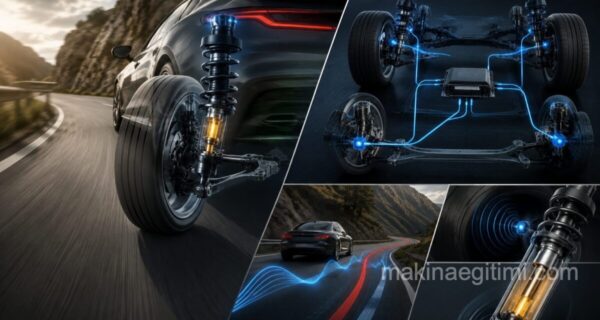 Electronic Damping System (EDS) in Vehicles
 Drive By Wire Technology in Vehicles
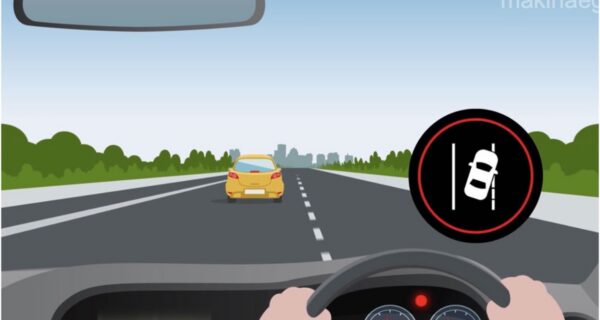 Lane Departure Warning System in Vehicles
 What Is Reverse Assist, How Does It Work?
 Digital Side Mirrors and Their Advantages
 What Is Traffic Sign Assist. How Does It Work
 What Is Lane Keeping Assist, How Does It Work?
 What Is Lane Centering Assist, How Does It Work?