
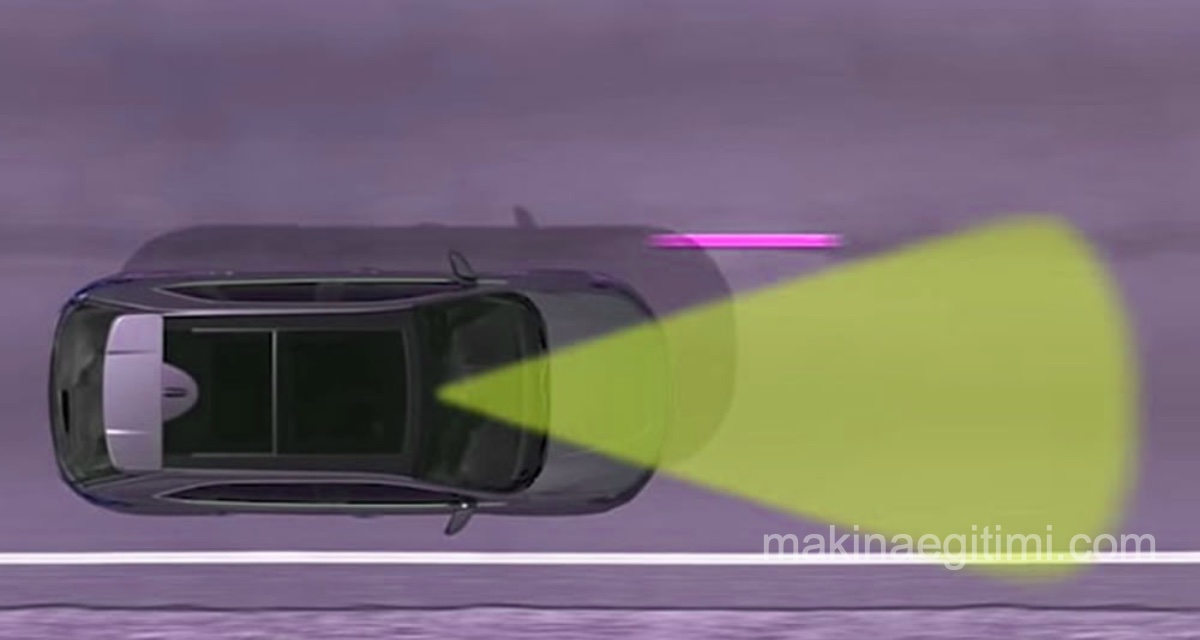
What Is Lane Centering Assist?
Lane Centering Assist (also known as lane centering assist) is one of the vital systems in ADAS. ADAS stands for Advanced Driver Assistance System. It plays a critical role in keeping vehicles centered within a single lane by taking cues from lane markings.
First of all, Lane Centering Assist has comprehensive functionality in autonomous driving. This driver assistance system continuously checks the left and right lanes and keeps the vehicle centered.

Additionally, driver distraction and fatigue can cause unintentional drifting over lane lines. This kind of behavior mostly occurs on long and tiring trips. Even a small deviation can lead to a disastrous situation. Under these conditions, Lane Centering helps keep the vehicle in its lane by actively monitoring lane markings. This way, the system always keeps passengers, drivers, and vehicles safe.
System Components
The system primarily consists of a multi-purpose camera. This camera combines artificial intelligence with classic image processing. As a result, it produces the most accurate picture of the surroundings, especially lane markings.
The second key component is the electro-hydraulic steering system. This system provides active speed-based driving assistance. It also provides a dynamic feedback feature and various other driver assistance systems.
Continuous Steering Support
Unlike lane departure warning, lane centering applies light steering torque continuously to keep the vehicle in the middle of the lane.
Semi-Autonomous Driving Level
When combined with adaptive cruise control, this system is one of the core components of SAE Level 2 semi-autonomous driving.
Hands-On Detection Sensor
For safety, the steering wheel includes a hands-on detection sensor; if hands leave the wheel for too long, the system issues a warning.
How Does Lane Centering Assist Work?
Various vehicle manufacturers have their own lane centering technology. We’ll cover this technology’s general outline here. The lane centering system actively monitors lane markings along with the vehicle’s position, and takes corrective action if needed.

The system also automatically steers the vehicle, keeping it in the middle of the lane without manual intervention. Generally, these systems use cameras to capture a real-time visual data feed. The system also detects lane markings, boundaries, and other vehicles. It then compares this data with the vehicle’s position within the lane.
The system also uses other tools, such as radar, lidar, infrared, or other sensors, to capture data. Lane Centering Assist can also work alongside Adaptive Cruise Control, thanks to Sensor Data Fusion. This opens the door to a semi-autonomous driving experience.
Adaptive Cruise Control maintains a steady speed relative to flowing traffic. Lane Centering, meanwhile, keeps the vehicle in its lane. A combination of the two creates a new semi-autonomous driving experience.
The Difference Between Lane Departure Warning and Lane Change Alert
The Lane Departure Warning system is significantly different from Lane Centering Assist technology. The Lane Departure Warning system alerts the driver with audible, visual, or haptic feedback. Meanwhile, the system takes control of the vehicle on its own. Both systems are fundamentally very different.
Advantages of Lane Centering Assist
Lane Centering Assist continuously keeps the vehicle in the middle of the lane without any manual intervention. As a result, the system is useful on long and tiring trips.
The system also keeps the vehicle and its occupants safe. It doesn’t just prevent driving errors. The system prevents unintentional driving behaviors and improves safety.
In conclusion, Lane Centering Assist is a great technology that keeps you and your loved ones safe on the road. What’s more, it will certainly bring us one step closer to autonomous driving.
Related Questions
Lane departure warning only alerts the driver audibly or visually, without touching the steering. Lane centering assist, on the other hand, actively intervenes with the steering to keep the vehicle in the middle of the lane.
Distraction and fatigue increase on long, monotonous roads, which can lead to small lane deviations. The system continuously corrects these deviations, lightening the load on the driver.
Related Posts
 What Is Garage Park Assist, How Does It Work?
  What Is Lane Keeping Assist, How Does It Work?
  MBUX Hyperscreen: A Dashboard Beyond Imagination
  What Is Crosswind Assist in Vehicles. How Does It Work
  What Is Nissan Active Trace Control? What Does It Do?
  What Is the Automatic Start-Stop System, What Does It Do?
  Electric Power Assisted Steering (EPS)
  What Is TCS in Vehicles? What Does It Do? How Does It Work?