
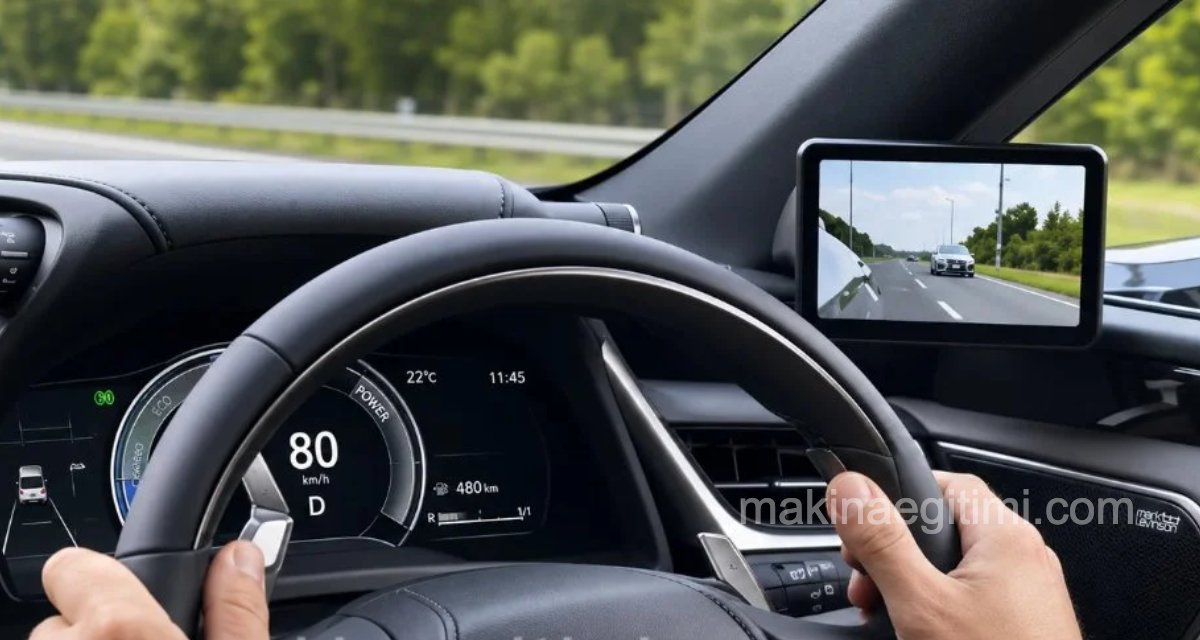
Side mirrors play an important role in driver safety on the road. Toyota Motor Corporation introduced digital side mirrors on its cars. The Lexus ES is the latest car to offer these mirrors. The new Lexus ES uses cameras instead of traditional side mirrors.
Drivers need to be constantly aware of their surroundings, especially while turning and passing. However, traditional side mirrors haven’t received any major update in the last several years. They’re a neglected part of the car. So, Lexus is taking old technology to the next level.
How Do Digital Side Mirrors Work?
Digital side mirrors don’t have a glass mirror. Instead, they consist of cameras and screens. There are two rear-facing cameras that replace traditional side mirrors. The cameras transmit live footage to a five-inch screen. The screens are positioned next to the A-pillar. These cameras’ line of sight is the same as traditional side mirrors. However, while traditional mirrors are outside the car, the screens are inside.
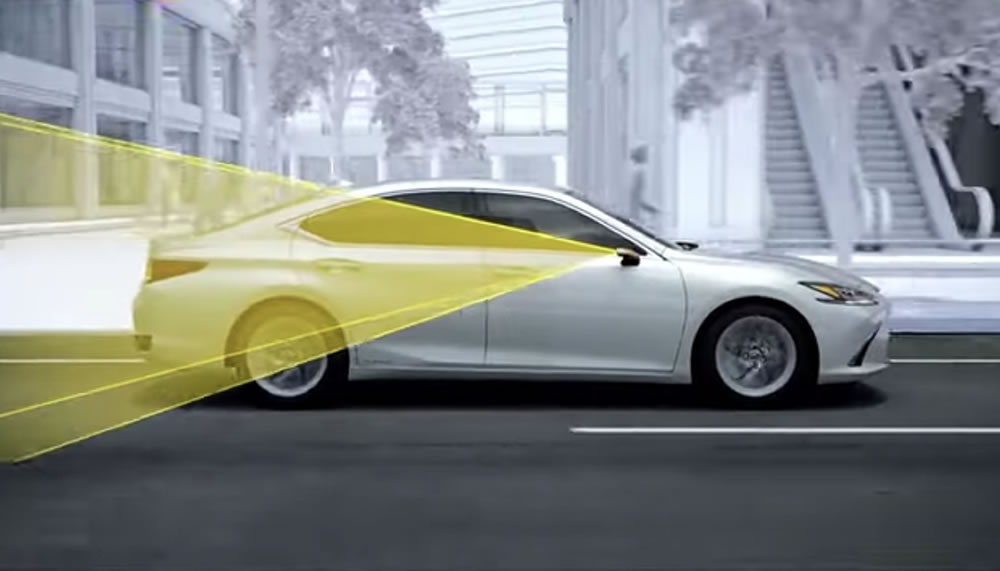
Digital side-view cameras give a more detailed view of the surroundings. However, traditional mirrors lose visibility due to rain and snow. On the other hand, these mirrors have a better design that doesn’t collect rain or snow. As a result, the view remains unaffected. This way, you can see the rear better and have more safety.
Wider Field of View
Digital side mirrors offer a much wider field of view than classic mirrors, reducing blind spots.
Reduced Air Resistance
Traditional mirrors replaced with small cameras reduce the vehicle’s aerodynamic drag, contributing to fuel efficiency.
Night Vision Performance
Digital systems provide an advantage in night driving by automatically brightening the image in low-light conditions.
Advantages of Vehicle Digital Side Mirrors
Digital side mirrors automatically improve the view to the left, right, or rear. That is, when the left turn signal becomes active, it improves the view of the left camera/screen. Similarly, these mirrors also change angle when turning right or reversing. Therefore, this functionality increases the visibility of the surroundings and provides the driver with better vision.

Digital cameras require less space. Therefore, these mirrors also don’t obstruct the view. The mirrors’ small size also helps improve aerodynamics. This results in very little air resistance.
Additionally, the driver can manually improve the view around the vehicle. This way, the driver is more aware of the car’s surroundings than ever before. The cameras keep working in adverse weather and low-light conditions. This way, they provide better visibility.
Related Questions
The camera can magnify the image it displays on the screen and automatically adjust to different lighting conditions. A glass mirror, on the other hand, only offers a fixed-size image dependent solely on the reflected light.
This position is close to the angle where the driver’s eye naturally shifts between the road and the side mirrors. Placing the screen here prevents the driver from taking their eyes off the road too much to access the information.
Related Posts
 What Is Crosswind Assist in Vehicles. How Does It Work
  Roll Stability Control System (RSC) in Vehicles
  What Is Traffic Sign Assist. How Does It Work
  What Is Garage Park Assist, How Does It Work?
  What Is Home Zone Park Assist, How Does It Work?
  Lane Departure Warning System in Vehicles
  What Is Nissan Active Trace Control? What Does It Do?
  What Is EBD? What Does It Do? How Does It Work?