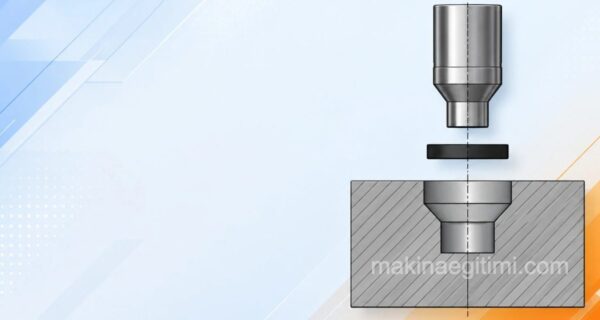
In all drawing die operations, the trimming or correction amount is taken to be greater than the calculated value.
Otherwise, it may not be possible to obtain the flange at the mouth of a part drawn without a trimming allowance. The figure below shows the drawn container and the trimming amount.

There’s no fixed value for the trimming amount given to the rough flange to be drawn. The trimming amount is determined based on the type of material being drawn, the draw depth, and the values found from the initial trial draw.
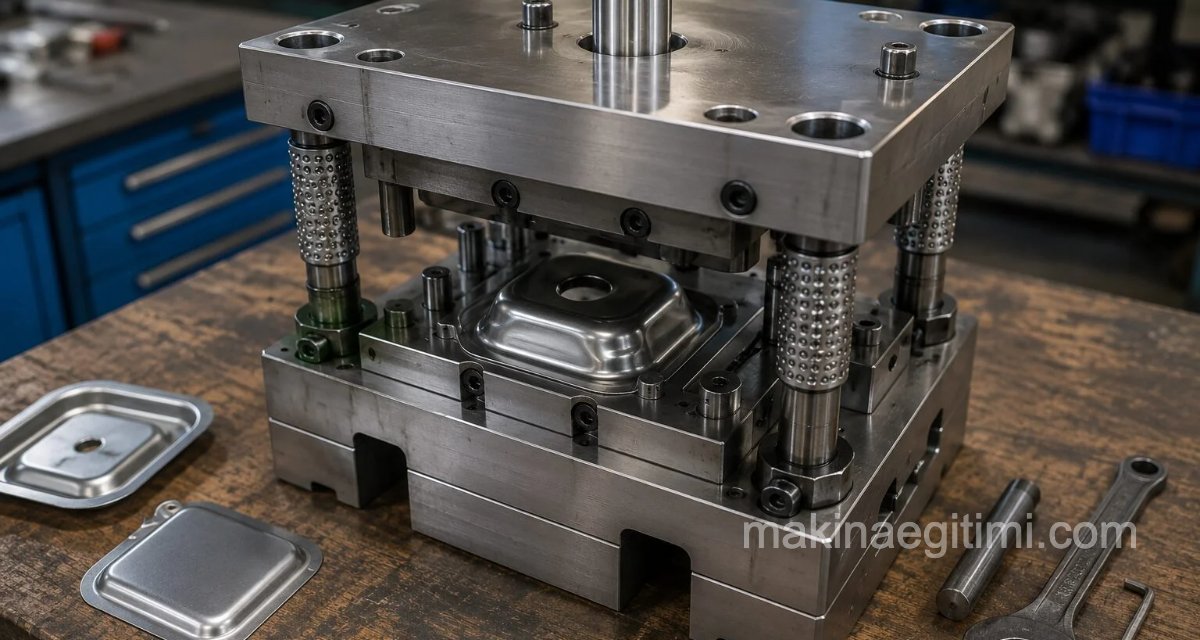
One of the causes of unsuitable flange or container-mouth dimension variation is the uneven plastic deformation of the material inside the die during drawing. The die’s mouth radius or the punch’s nose radius dimensions affect the material’s plastic deformation. Besides these, the following factors also affect the material’s plastic deformation.
1 — Variation in the coefficient of friction between the die, the material being drawn, and the punch,
2 — The blank holder force applied in the drawing die not being distributed equally across all surfaces,
3 — The part to be molded not being placed symmetrically within the die,
4 — The effect of the rolling direction of the part to be molded, and as a result, the drawn container tearing due to excessive elongation in some areas and insufficient elongation in others.
3 —- In staged draws, the calculation not being done exactly, and similar reasons should be taken into account.
Related Posts