

Reverse Engineering Applications
Reverse engineering: being able to manufacture a new, similar product by making use of a pre-existing object. In the images below, we see an example of reverse engineering.
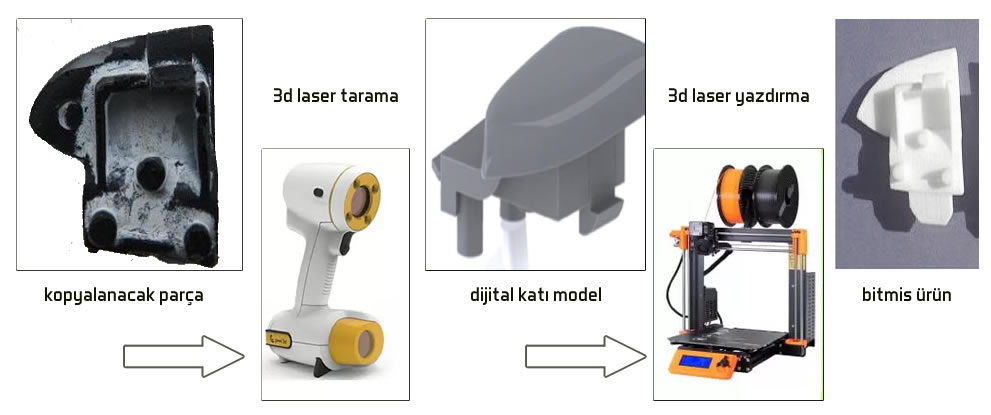
The process of reproducing a plastic button used in electrical/electronics through reverse engineering. (above)
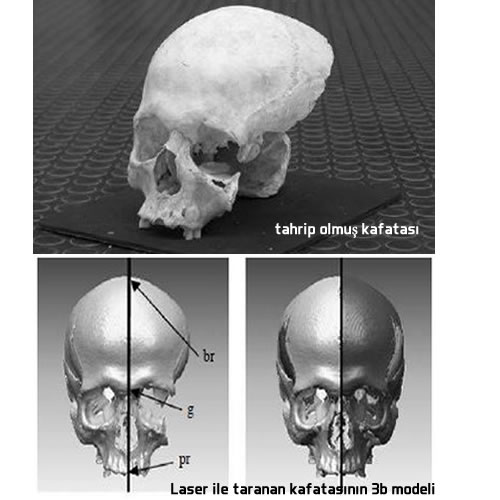
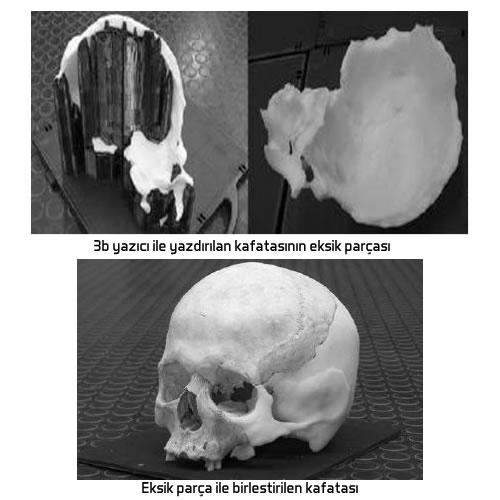
Recreating the missing portion of a physically damaged skull using reverse engineering, computer-aided design, and rapid prototyping. (above)
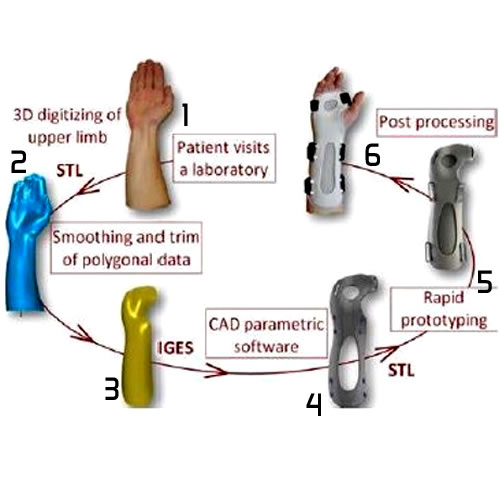
The design process for a right-arm orthosis (above)

A prototype orthosis made with FDM technology and its finished form (above)
Advances in Metal 3D Printing
Metal 3D printing technologies are increasingly being used to manufacture more complex parts in the aerospace and medical sectors.
Increase in Print Speed
New-generation 3D printers can achieve much higher print speeds than traditional FDM methods.
Bioprinting Applications
3D printing technology is being researched in tissue engineering to produce organ prototypes using cells and biomaterials.
3D Printer Technology in the Future
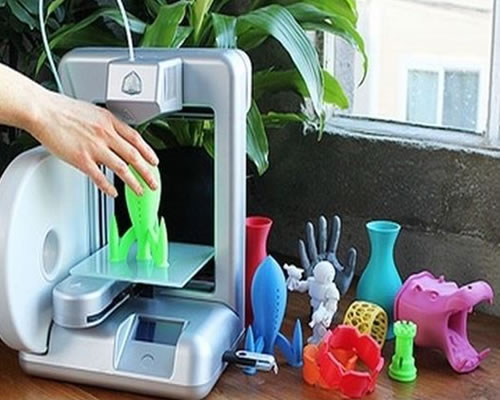
Children will have the chance to make their own toys using a 3D toy data file downloaded from the internet.
Or, when any part of a household appliance breaks, instead of ordering the part directly from the factory, it will be enough to simply pay for the required geometry and material data.
Flawless Prosthetics and Implants Will Be Printed
In the field of medicine, patient-specific titanium bone parts, materials suited for orthodontic use, and prosthetic manufacturing will become widespread.
Orthodontics: The specialty branch of dentistry that diagnoses and manages the alignment of misaligned and crowded teeth, and works to prevent and treat this condition.

3D Printers Will Save Lives
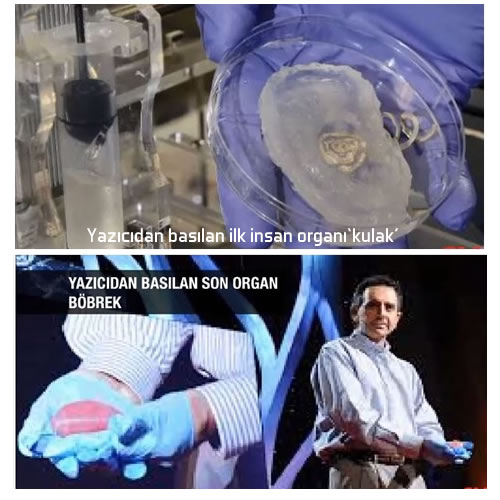
Scientists at Oxford University have succeeded in producing human stem cells with a 3D printer, to be used in the future for creating organs.
This means that in the near future, organs that people need could be produced with three-dimensional printers in a way compatible with the human body.
Personalization Will Become More Important
Thanks to three-dimensional printing technology, the products we buy will be able to have all the features we want.
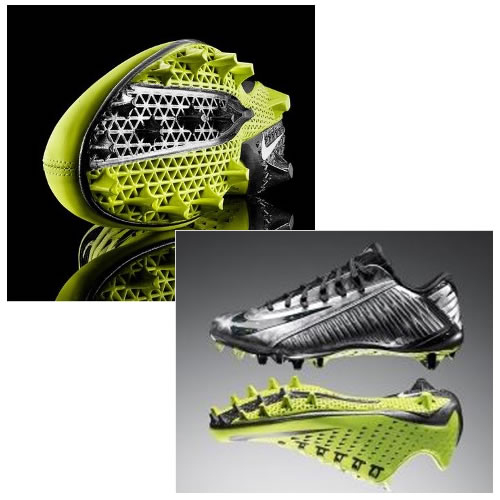
For example, shoes suited to a person’s foot shape or clothes tailored to their expectations could easily be produced.

Product Innovation Will Accelerate Even Further
From new automobile designs to household goods, design will speed up across a wide range of fields, and so the pace of innovation will increase as well.
A possible error in a product could be spotted and corrected with 3D printers while the product is still at the design stage.
During the 2014 Super Bowl games, shoes were specially designed to give athletes an extra edge in acceleration.
3D Printers Will Play a Critical Role in Architecture and Construction
A California-based architecture firm carried out a project pushing the limits of 3D printers, and the result was load-bearing columns capable of withstanding earthquakes.
In Amsterdam, a company called MX3D used robotic 3D printers to manufacture a bridge over a river for people to walk on.

Every Machine Will Essentially Become a Factory
Let’s explain it this way: right now, when you order a part for a broken appliance at home, you have to reach out to the importer company. If they have the part in stock, they deliver it to you within a few days; if not, they try to source it.
Once 3D printers become widespread, you’ll be able to produce the part at home yourself, if you wish, through the digital sharing of its data.

Or digital service providers will emerge to do this job for you. Just like printing a file you’ve uploaded to a flash drive at a print shop, you’ll send them the digital data and wait for your part to be printed. This will both ease companies’ logistics and storage burdens, and provide convenience for you.
3D Printers Will Also Play an Important Role in Micro-Manufacturing
Using 3D printers, a microscopic race car was produced that is impossible to see with the naked eye and can only be viewed with an electron microscope.
This shows that 3D printers will be effective in micro-manufacturing and R&D work in the future.

Related Questions
First, the existing part or a similar sample is scanned and converted into a digital model. From this digital model, a copy close to the original can be produced directly with a 3D printer.
Specialized bioprinters lay down a gel-like material containing cells, layer by layer, into the desired shape, just like plastic. This allows tissue-like structures to be produced that consist of living cells.
Related Posts
 Materials Used in 3D Printing
  Professional 3D Scanners and Their Applications
  Properties of Laser Beams and Their Working Principle
  What Is Sinker EDM, How Does It Work. Where Is It Used
  Electrical Discharge Machining (EDM) Machines
  What Determines the Color of Laser Beams?
  Laser Cutting Working Principle, Advantages and Disadvantages
  Waterjet Cutting Basics