

More than 126 years of modern Olympic history has become an archive not just of medals, but of incredible human stories. Some athletes have pushed the limits of youth, becoming champions at just thirteen years old, while others have managed to reach the top step of the podium even in their sixties. In this article, we’ve brought together the Olympics’ most striking “records” — and the stories behind them.
Most Gold Medals: Michael Phelps’s Unreachable Record
The most talked-about record in Olympic history undoubtedly belongs to American swimmer Michael Phelps. Phelps won a total of 23 gold medals across the five Olympics he competed in between 2004 and 2016; his total medal count reaches 28. This figure, nearly double that of his closest competitor, is considered the most dominant individual achievement in Olympic history.

Phelps’s most unforgettable performance came at the 2008 Beijing Olympics, where he won eight gold medals in a single Olympics, surpassing the record of seven golds Mark Spitz had set in 1972. Achieving this feat by swimming 17 races in just nine days is a striking example of the limits of athletic endurance.
The Oldest Olympic Champion: Gold at Age 64
The oldest gold medalist in modern Olympic history is Swedish shooter Oscar Swahn. Swahn won a gold medal in the “running deer” shooting event at the 1912 Stockholm Olympics at 64 years and 258 days old; this record has never been broken to this day. Swahn’s Olympic story didn’t end there either: at the 1920 Antwerp Olympics, at age 72, he won another silver medal, earning him both the title of oldest Olympic medalist and oldest athlete ever to compete at an Olympics.
A Flood of Records: Naim Süleymanoğlu’s Seoul Performance
At the 1988 Seoul Olympics, Naim Süleymanoğlu delivered one of the most unforgettable performances in weightlifting history. Known as the “Pocket Hercules,” this athlete, standing just 1.47 meters tall, lifted 152.5 kg in the snatch and 190 kg in the clean and jerk in the 60 kg category, breaking the world record in both lifts.

His combined total of 342.5 kg left his closest competitor behind by an incredible 30 kilograms. This performance earned Turkey its first-ever Olympic gold medal in weightlifting.
The athlete’s return home was described by the press of the time as “one of the biggest celebrations in Turkish history.” Süleymanoğlu repeated this success at the 1992 and 1996 Olympics as well, earning the title of the first weightlifter to win gold medals at three consecutive Olympics.

Most Medals by a Woman: Larisa Latynina’s Unforgettable Legacy
Before Phelps broke the record, the title of most-decorated Olympian in history had been held for a full 48 years by Soviet gymnast Larisa Latynina. Latynina won a total of 18 medals — 9 gold, 5 silver, and 4 bronze — across the three Olympics she competed in between 1956 and 1964. Even though Phelps surpassed this record in 2008, Latynina still holds the title of most decorated female Olympian; she’s also remembered as one of the most successful figures in the history of gymnastics.
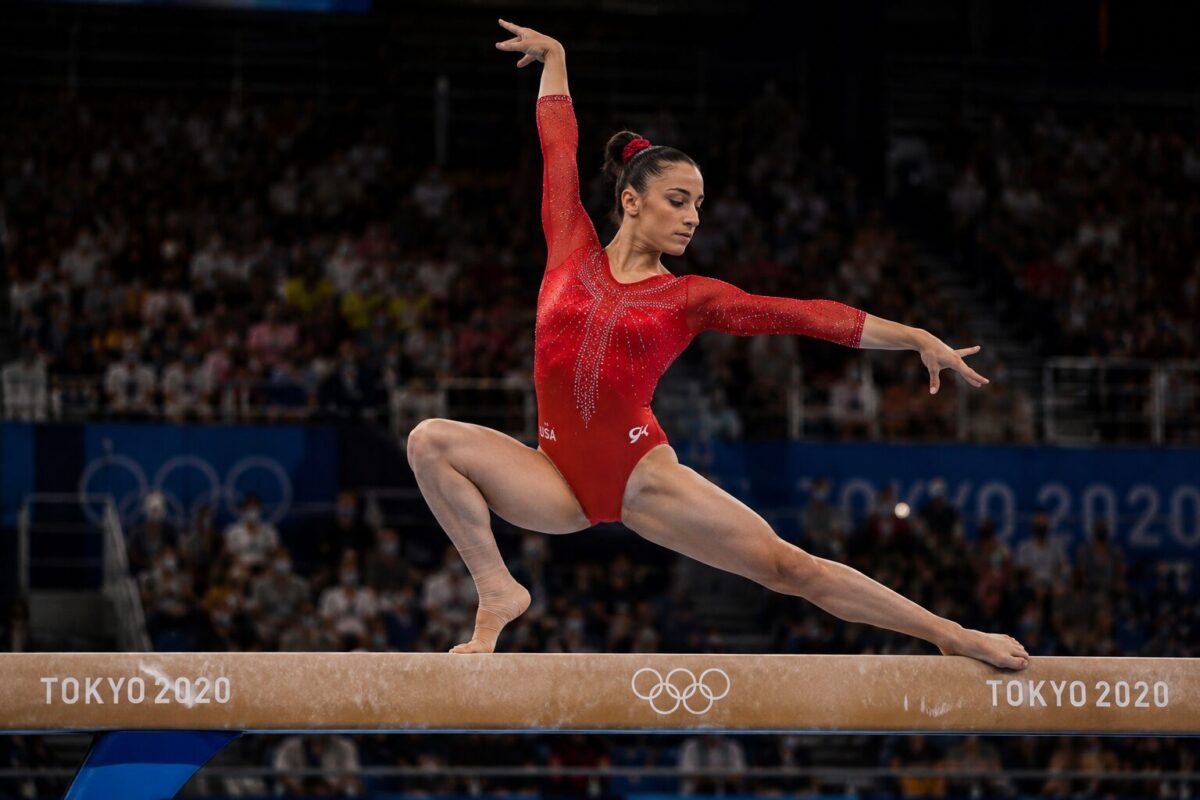
A more contemporary name in this field is American gymnast Simone Biles. With her total medal count from both world championships and the Olympics, Biles holds the title of most decorated gymnast in history; being the first athlete to perform multiple skills of the highest difficulty level named after herself also makes her one of the most influential figures in modern gymnastics.
Champion in Both Summer and Winter: Eddie Eagan’s Unmatched Achievement
Perhaps the most unusual “record” in Olympic history belongs to American athlete Eddie Eagan. Years after winning a gold medal in boxing at the 1920 Antwerp Olympics, Eagan won another gold medal, this time as part of a four-man bobsled team, at the 1932 Lake Placid Winter Olympics.
This achievement made him the only athlete to win gold medals at both the Summer and Winter Olympics; reaching the top in two such different sports is considered an example of versatility that has never been repeated in Olympic history.
The Youngest Olympic Champions: At the Top While Still a Child
The youngest individual champion in Olympic history is American diver Marjorie Gestring. Gestring won a gold medal in the 3-meter springboard diving event at the 1936 Berlin Olympics at just 13 years and 268 days old.
In team events, the record is even more striking: South Korean short-track speed skater Kim Yun-mi won a gold medal in the 3,000-meter relay at the 1994 Lillehammer Winter Olympics at 13 years and 85 days old. This performance was so controversial that the International Skating Union was later forced to raise the minimum age limit to 15.
An Athletic Defiance on a Political Stage: Jesse Owens
One of the most meaningful “records” in Olympic history carries not just athletic but also historical significance. American athlete Jesse Owens won four gold medals — in the 100 meters, 200 meters, long jump, and 4×100 meter relay — at the 1936 Berlin Olympics, in an environment where Nazi Germany was trying to prove the “superiority of the Aryan race.”

Owens’s achievement went down in history as one of the most powerful athletic responses ever delivered to Adolf Hitler’s racist ideology, right on the field, making him one of the most symbolic athletes not just of an era, but of Olympic history itself.
The Youngest Olympic Medalist: A Legend at Age Ten
One of the most striking records dates back to the first modern Olympics in 1896. Greek gymnast Dimitrios Loundras, at just 10 years and 218 days old, won a bronze medal in the parallel bars team event; this achievement made him the youngest medalist in Olympic history. Given today’s strict age restrictions, this record is thought to be one that can never be broken again.
The Fastest Human: Usain Bolt’s Olympic Legacy
Jamaican sprinter Usain Bolt won gold and set a world record at the 2008 Beijing Olympics by running the 100 meters in 9.69 seconds; he achieved this time despite slowing down to celebrate in the final 20 meters of the race. Bolt then improved his own Olympic record at the 2012 London Olympics, running 9.63 seconds.

Bolt’s absolute world record of 9.58 seconds wasn’t set at the Olympics, but at the 2009 Berlin World Championships; so the Olympic record and the absolute world record are actually two different figures.
The Athlete with the Most Olympic Appearances
Canadian equestrian athlete Ian Millar competed in a total of 10 different Olympics from 1972 to 2012, earning the title of athlete with the most Olympic appearances in any sport. This record is also proof that equestrian sports can be performed at a top level to a much more advanced age compared to many other sports.
When Were the First Modern Olympics Held?
The first modern Olympics were held in 1896 in Athens, the capital of Greece. Launched under the leadership of French educator Pierre de Coubertin, these first games were attended by only about 241 athletes from 14 countries; today that number reaches thousands of athletes from more than 200 countries.
Women did not take part in the first modern Olympics; they first began competing at the 1900 Paris Olympics, mainly in a limited number of events such as tennis and golf.
The Most Successful Country: The USA’s Long-Standing Lead
In terms of total medal count, the United States is the most successful country in modern Olympic history, holding a clear lead in medals accumulated across both the Summer and Winter Games. Behind this success lie factors such as the strong infrastructure of the collegiate sports system and heavy investment across various sports.

Frequently Asked Questions
American swimmer Michael Phelps holds the title of most gold-medaled Olympian in history, with a total of 23 gold medals won between 2004 and 2016.
The youngest individual champion is American diver Marjorie Gestring, who won gold in 1936 at just 13 years and 268 days old.
Swedish shooter Oscar Swahn holds this record, having won a gold medal in 1912 at 64 years and 258 days old.
The first modern Olympics were held in 1896 in Athens, Greece, with the participation of about 241 athletes from 14 countries.
The United States is the most successful country in modern Olympic history in terms of total medals won across both the Summer and Winter Olympics.
Related Posts
 Lionel Messi’s Legendary Body Feints
 Why Is Kenya So Successful at Long-Distance Running?
 Hagi or Zidane? Comparing Two Legendary Playmakers
 The Story of Muhammad Ali: From a Stolen Bicycle to Sportsman of the Century
 The Jaw-Dropping Dribbles That Send Football Crowds Wild
 Who Is Eric the Eel? The Funniest Moment in Olympic Swimming History
 Michael Jordan: The Story of Basketball’s Greatest Name
 What Is a Panenka Penalty? The Best Panenka Penalties